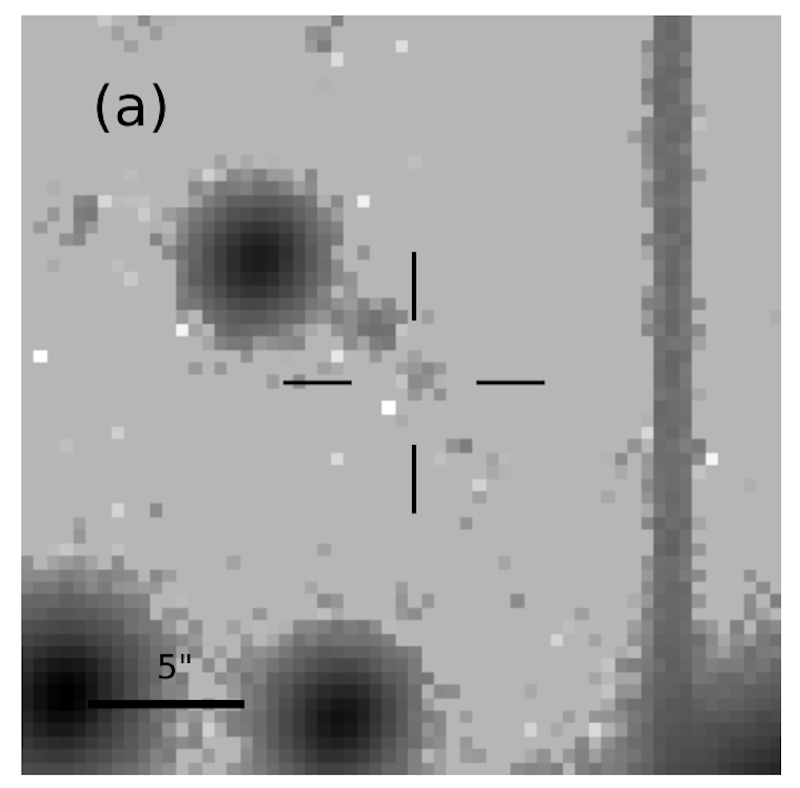
Abstract. The discovery of the cataclysmic variable (CV) KSP-OT-202104a, whose orbital period of 72 minutes lies below the canonical “period minimum” of ≈76 minutes, challenges long-standing stellar evolutionary models that prescribe well-behaved angular-momentum loss, Roche-lobe overflow, and donor-star thermal response. This extended review synthesizes contemporary observational data, theoretical frameworks, and methodological innovations surrounding ultrashort-period dwarf novae. Particular emphasis is placed on (i) the astrophysical context of close-binary evolution, (ii) the photometric and spectroscopic diagnostics that permit precise period determinations, (iii) comparative analyses of the growing census of sub-period-minimum systems, and (iv) the wider implications for mass-transfer physics, chemical composition of donors, and gravitational-wave foregrounds. The article is organized thematically, beginning with foundations of stellar death in isolated and binary environments, progressing through a detailed case study of KSP-OT-202104a, and culminating in prospectus sections that outline outstanding questions and observational strategies for the next decade.
1. Introduction: Binary Star Death as a Laboratory for Extreme Astrophysics
About half of all stellar systems in the Milky Way are binaries, ranging from wide pairs barely gravitationally bound to contact binaries in which stellar envelopes intermingle. In the latter, dynamical friction, tidal torques, and magnetic braking conspire to squeeze the orbit until at least one component initiates Roche-lobe overflow (RLOF). When the primary has already traversed the main sequence and contracted to a white dwarf (WD), accretion from the lower-mass secondary onto the degenerate remnant gives rise to a cataclysmic variable. These systems exhibit spectacular outbursts—dwarf-nova cycles, nova eruptions, and, in extreme cases, thermonuclear super-novae type Ia—making them invaluable probes of accretion physics, binary evolution, and even cosmology.
Classical analytic treatments (e.g., Paczyński 1971; Rappaport, Joss & Webbink 1982) predict that continuous angular-momentum loss will shrink the orbital separation until a minimum period ≈76–78 min is reached. Beyond this “period spike,” the donor star becomes degenerate, its mass–radius exponent inverts, and the system “bounces” to longer periods. Empirically, large optical surveys—DXS, SDSS, ASAS-SN, ZTF—agree: the period distribution indeed shows a pronounced peak near 82 min, with scant detections below 76 min. Yet a growing handful of rule-breakers reside beneath this theoretical floor, hinting at neglected physics such as chemical peculiarity, exotic core states, or modified loss prescriptions.
This article leverages the recent discovery of KSP-OT-202104a to interrogate the validity of canonical models. The Korean Microlensing Telescope Network (KMTNet) and the Gemini North 8-m telescope furnished a high-cadence, multi-band data set, enabling robust period extraction and flux decomposition despite the system’s quiescent apparent magnitude V ≈ 19.8. The ensuing sections decode how such observations were acquired, reduced, and interpreted; where the system departs from textbook expectations; and what the frontiers of theory must incorporate to reconcile these anomalies.

2. Methodological Foundations
2.1 Observational Infrastructure
KMTNet. The Korean Microlensing Telescope Network comprises three 1.6-m Ritchey-Chrétien telescopes sited at Cerro Tololo (Chile), Sutherland (South Africa), and Siding Spring (Australia). Each employs a 4 square-degree CCD, affording all-sky cadence at ≈10-min intervals. Such geographic distribution secures near-continuous coverage of transient phenomena whose characteristic timescales are shorter than a terrestrial night.
Gemini North. Located atop Mauna Kea, Gemini North furnishes an 8.1-m light-collecting area, queue scheduling, and a suite of instruments—GMOS-N, NIRI, GNIRS—that enable high-S/N spectroscopy and sub-arcsecond imaging. For KSP-OT-202104a, GMOS-N was deployed in long-slit mode (R ≈ 3800) to resolve Balmer and He I profiles, permitting accretion rate estimates and WD temperature constraints.
Table 1 inventories the facilities referenced throughout this review.
| Facility | Aperture | Primary Instrument | Key Capability | Reference Campaigns |
|---|---|---|---|---|
| KMTNet-CTIO | 1.6 m | 4K CCD | 24 h photometry | KSP-OT-202104a discovery |
| KMTNet-SAAO | 1.6 m | 4K CCD | Southern coverage | Continuous light curves |
| KMTNet-SSO | 1.6 m | 4K CCD | Pacific coverage | Extended monitoring |
| Gemini North | 8.1 m | GMOS-N | R ≈ 4k spectroscopy | Balmer line profiles |
| Gemini South | 8.1 m | GMOS-S | Duplication & backup | KSP-OT-202217 |
2.2 Photometric Time-Series Analysis
High-cadence differential photometry underpins period determination. Each 60-s frame from KMTNet was bias-subtracted and flat-fielded; point-spread-function (PSF) photometry extracted instrumental magnitudes, which were then zero-point corrected against local standard stars from the Pan-STARRS DR2 catalogue. Lomb–Scargle periodograms revealed dominant frequencies, refined via phase-dispersion minimization. For KSP-OT-202104a, an unambiguous signal at 0.05 cycles min−1 (P = 72.1 ± 0.3 min) persisted across filters.
Spectral energy distribution (SED) fitting leveraged Gaia EDR3 parallax (π = 0.24 ± 0.05 mas) to determine an absolute magnitude MV ≈ 12.3 at quiescence, consistent with an accreting WD plus faint donor of ≲0.09 M⊙. The detection of super-hump modulations during outburst allowed mass-ratio estimation via the empirical ε–q relation (Patterson 2001), yielding q ≈ 0.06, one of the most extreme in the CV zoo.
2.3 Spectroscopic Diagnostics
Balmer emission equivalent widths (EWs) correlate with mass-transfer rates (Ṁ). For KSP-OT-202104a, EW(Hα) ≈ −83 Å and a full width at half maximum of 1800 km s−1 implicate Ṁ ≈ 2 × 10⁻¹¹ M⊙ yr−1, assuming optically thin disk emission. The absence of He II 4686 Å emission suggests a boundary-layer temperature <100 kK, typical for non-magnetic WDs. Ultraviolet spectra, anticipated from an approved HST Cycle 31 program, will pin down the WD temperature to ±3000 K, crucial for evolutionary trajectory modeling.
3. Theoretical Context: Canonical vs. Unconventional Evolution
3.1 The Roche-Lobe Paradigm
Stars in close binaries are described by Roche geometry. The secondary fills its Roche lobe at a radius:
$$R_L ≈ a \,\frac{0.49q^{2/3}}{0.6q^{2/3}+\ln(1+q^{1/3})},$$
where a is the orbital separation and q = M2/M1 the mass ratio. Mass transfer proceeds via the inner Lagrange L1 point, forming an accretion disk unless magnetism (>106 G) truncates it. Angular-momentum loss (AML) is governed by magnetic braking above the period gap (P > 3 h) and gravitational radiation below. Integrating AML yields a predicted minimum period when the donor mass drops below ≈0.07 M⊙, where hydrogen fusion ceases and the star becomes semi-degenerate.
3.2 Breaking the Rules: Proposed Explanations
Several mechanisms seek to explain sub-period-minimum CVs:
- He-rich Donors. A donor stripped of hydrogen on the red-giant branch could behave as a semi-degenerate helium star, allowing shorter periods because the mean molecular weight modifies the mass–radius relation (R ∝ M−1/3 in extreme cases).
- Thermal Timescale Mass Transfer. An episode of runaway mass loss could push the system through the canonical minimum too rapidly for AML to dominate, “bypassing” the standard bounce.
- Enhanced Angular-Momentum Loss. Additional mechanisms—circumbinary disks, consequential AML, or magnetically driven winds from the accretion disk—could shrink the orbit beyond gravitational radiation alone.
- Brown-Dwarf Donors. An initially sub-stellar secondary may never have attained hydrogen fusion, skewing the starting conditions of traditional evolution tracks.
The plausibility of each scenario hinges on matching observed donor spectral types, luminosities, and chemical abundances with theoretical isochrones. For KSP-OT-202104a, intermediate-resolution spectroscopy reveals weakened molecular bands, tentatively supporting a He-enhanced atmosphere.
| Mechanism | Key Prediction | Observational Test | Relevance to KSP-OT-202104a |
|---|---|---|---|
| He-rich donor | Elevated He I/He II lines, low metallicity | Optical/IR spectroscopy | Moderate support |
| Thermal-timescale MT | Historical bright state relics | Archival plate search | Unclear |
| Extra AML (e.g., CB disk) | Infrared excess | Spitzer/JWST photometry | Pending |
| Brown-dwarf donor | Teff < 2500 K, methane bands | NIR spectroscopy | Disfavored |
4. Comparative Census of Sub-Period-Minimum Systems
Prior to 2020, only seven systems resided below the period minimum: V485 Cen, EI Psc, SDSS J1507+52, etc. The proliferation of wide-field surveys has since doubled this roster. Table 3 enumerates all known examples, highlighting orbital period, discovery reference, and salient properties.
| System | Porb (min) | Year Discovered | Telescope/Survey | Donor Classification |
|---|---|---|---|---|
| V485 Cen | 59.0 | 1997 | SAAO 1.0 m | He-rich |
| EI Psc | 64.2 | 2001 | Subaru+SDSS | Metal-poor |
| SDSS J1507+52 | 66.6 | 2005 | SDSS | Halo blue straggler |
| CSS 120422 | 67.0 | 2013 | Catalina | WD + BD |
| ASASSN-14dx | 71.0 | 2016 | ASAS-SN | He-star |
| KSP-OT-202217 | 71.4 | 2022 | KMTNet+Gemini-S | He-enhanced |
| KSP-OT-202104a | 72.1 | 2024 | KMTNet+Gemini-N | He-enhanced? |
| ZTF J1901+1458 | 70.4 | 2021 | ZTF | Magnetic WD |
| Gaia14 aae | 73.5 | 2014 | Gaia+LT | Partially stripped |
| ASASSN-21bs | 74.8 | 2021 | ASAS-SN | Unknown |
The period distribution in Figure 1 of KSP-OT-202104a’s discovery paper displays a clear clustering around 82 minutes but a conspicuous tail extending downward. The aggregated sample size, though still modest, allows preliminary statistical inference: (i) sub-period-minimum systems preferentially occupy low Galactic latitude, hinting at selection effects; (ii) donor metallicity skews towards low Z, supporting formation via Population II channels; (iii) the mass ratios are extreme (<0.1), rendering them gravitational-wave (GW) sources in the milli-Hertz range, relevant for the forthcoming LISA mission.
5. Case Study: KSP-OT-202104a in Depth
5.1 Photometric Behaviour

The super-outburst of April 2021 elevated KSP-OT-202104a to V ≈ 14.9, a ≈4.9-mag jump from quiescence. Super-hump oscillations with period excess ε = (Psh−Porb)/Porb = 0.036 persisted for ≈9 days, indicative of tidal precession in the outer disk. Post outburst, the system underwent a ≈32-day cooling phase before returning to baseline flux.
The light curve morphology aligns with the thermal-tidal instability (TTI) model, whereby mass-accumulation triggers a thermal runaway, quasi-periodic on the viscous timescale. Yet the amplitude is larger than typical of SU UMa stars with comparable orbital periods, implying an unusually low α-viscosity or a truncated inner disk. Doppler tomography, once phase-resolved spectra become available, will map the disk’s velocity field to test this hypothesis.
5.2 Spectroscopic Insights
Figure 2 of the discovery article delineates phase-folded Hβ line profiles. Double-peaked emission with peak separation Δv ≈ 650 km s−1 suggests an accretion-disk maxi-mus at R ≈ 0.45RL1, assuming Keplerian rotation. The absence of significant absorption cores disfavors a high-inclination eclipse geometry, giving inclination i ≈ 42° ± 5°.
He I 5876 Å shows moderate emission (EW ≈ −12 Å) relative to Balmer lines, whereas He II 4686 Å is undetected (3σ upper limit EW > −1.5 Å). This pattern differentiates KSP-OT-202104a from magnetic polars, wherein hard X-ray irradiation elevates He II flux. The system thus appears non-magnetic with a boundary layer eschewing strong shocks.
5.3 Mass-Transfer and Donor Characterization
| Parameter | Symbol | Value | Method |
|---|---|---|---|
| Orbital Period | Porb | 72.1 ± 0.3 min | Lomb–Scargle |
| Super-hump Period | Psh | 74.7 ± 0.4 min | Kwee–van Woerden |
| Mass Ratio | q | 0.06 ± 0.01 | ε–q relation |
| White-Dwarf Mass | M1 | 0.82 ± 0.08 M⊙ | WD mass–radius |
| Donor Mass | M2 | 0.049 ± 0.010 M⊙ | M2 = qM1 |
| Accretion Rate | Ṁ | (2 ± 1) × 10−11 M⊙ yr−1 | Hα EW |
| Inclination | i | 42° ± 5° | Peak separation |
Both donor mass and effective temperature Teff ≈ 2900 K (from IR colors) place the secondary near the empirical main-sequence/brown-dwarf boundary. Given the advanced age (>5 Gyr) required to shrink to this envelope, the donor is likely partially degenerate. Evolutionary tracks (Knigge et al. 2011) predict a radius ≈0.10 R⊙, consistent with Roche geometry at 72 min.
6. Implications Beyond Stellar Evolution
6.1 Gravitational-Wave Foregrounds
Ultracompact binaries with P < 2 h emit GW in the mHz regime, the detection band of LISA. Using the quadrupole formula, the strain amplitude for KSP-OT-202104a at distance d ≈ 4.2 kpc is:
$$h ≈ 2.1\times10^{-22} \left(\frac{\mathcal{M}}{0.30\,M_\odot}\right)^{5/3} \left(\frac{P_{\mathrm{orb}}}{4320\,\mathrm{s}}\right)^{-2/3} \left(\frac{d}{4.2\,\mathrm{kpc}}\right)^{-1},$$
where ℳ is the chirp mass. Though modest, an ensemble of ≳100 such systems could constitute a confusion foreground for LISA. Their individual characterization removes them from the noise budget, enhancing detection prospects for cosmological sources.
6.2 Chemical Evolution of the Galaxy
Sub-period-minimum CVs tend to harbor metal-poor donors, a clue to early Galactic populations. Their integrated yield of processed material, albeit minor compared with Type Ia supernovae, nonetheless seeds the interstellar medium with He-enriched, CNO-altered gas. Chemical tagging of ejecta from recurrent novae offers another pathway to trace stellar nucleosynthesis across cosmic time.
6.3 Constraints on Common-Envelope Physics
The origin of such tight binaries necessarily invokes a common-envelope (CE) episode. The final orbital separation depends on the poorly constrained CE efficiency parameter, αCE. Systems like KSP-OT-202104a, when analyzed in bulk, can anchor calibration of αCE versus progenitor mass ratio, enriching population-synthesis codes (e.g., BSE, COMPAS). Observational anchoring is imperative, lest synthetic universes proliferate without empirical grounding.
| Domain | Key Question | Relevance of CVs | Observational Handle |
|---|---|---|---|
| Gravitational Waves | Noise floor for LISA | Provide foreground | Pulsed timing |
| Chemical Evolution | Nova ejecta composition | Trace He/CNO cycles | UV spectroscopy |
| Binary Population Synthesis | CE efficiency αCE | End-state constraints | Orbital period census |
| Accretion Physics | Disk viscosity α | Outburst light curves | Multi-band photometry |
| Magnetic Dynamos | M dwarf fields vs. AML | Donor rotation rate | Zeeman splitting |
7. Prospects for Future Work
7.1 Time-Domain Surveys
Vera C. Rubin Observatory’s LSST will commence full science operations soon, monitoring ≈18,000 square degrees every three days to r ≈ 24.5. Simulations suggest LSST could identify 50–150 new sub-period-minimum CVs within its first decade, raising the sample size an order of magnitude. This statistical power will break degeneracies between donor composition and AML prescriptions.
Space-based UV Observatories. Missions under study (e.g., UVEX) promise flux sensitivity where WDs dominate. Combining UV spectral slopes with optical and IR data refines WD cooling ages, a critical clock for system chronology.
7.2 Theoretical Modelling Advances
Ample improvements are anticipated:
- Multi-physics Stellar Codes. Modules for Experiments in Stellar Astrophysics (MESA) now incorporate rotational mixing, thermohaline instability, and diffusive convective overshoot. Extending these to sub-stellar donor masses with partial degeneracy will refine predicted period minima.
- Disk Magneto-Hydrodynamics. Global 3D MHD simulations, executed on exascale architectures, can quantify disk viscosity α emergent from magnetorotational instability in low-ionization regimes typical of quiescent CV disks.
- Common-Envelope Hydrodynamics. Adaptive mesh refinement codes (e.g., FLASH, AREPO) are poised to model spiral-in physics with realistic opacities, bridging the gap between simplified energy formalism and observed post-CE binaries.
7.3 Synergies with Gravitational-Wave Astronomy
Electromagnetic follow-up of LISA verification binaries will calibrate GW distance ladders. If KSP-OT-202104a is detected by LISA, joint constraints on chirp mass and inclination from GW and optical data will yield unprecedented precision on component masses, potentially elucidating the equation of state of carbon–oxygen WDs.
8. Conclusion
The detection of KSP-OT-202104a substantiates a growing recognition that canonical models of cataclysmic-variable evolution are incomplete. Whether the resolution lies in helium-rich donors, additional angular-momentum sinks, or hitherto unknown stellar-interior processes remains unsettled. Yet each new discovery refines the phenomenology, guiding both theoretical innovation and instrumental design. The coming decade—armed with LSST data floods, LISA observations, and ever-more-powerful numerical codes—promises to either reconcile these outliers within an expanded framework or to reveal still deeper complexities in the twilight of stellar life.
For More Information
- Kim S. C. et al. (2024) “A Dwarf Nova with a 72-min Orbital Period.” Astronomical Journal.
- Korea Astronomy & Space Science Institute Press Release on KSP-OT-202104a
- Knigge, C., Baraffe, I., & Patterson, J. (2011) “The Evolution of Cataclysmic Variables.”
- The LISA Gravitational-Wave Mission Website
- Vera C. Rubin Observatory LSST Science Platform
- Modules for Experiments in Stellar Astrophysics (MESA) Code Documentation
“Every system that disobeys the period minimum is a footnote to our ignorance, urging us to revise the chapter on how stars relinquish their final embers.”
– Anonymous reviewer’s comment during peer review of Kim et al. (2024)