Amazon Leo Passes 300 Satellites with Atlas and Ariane Launches
Washington — A pair of launches this week has pushed the number of Amazon Leo satellites deployed to more than 300, but the company is still far short of a looming milestone in its FCC license.
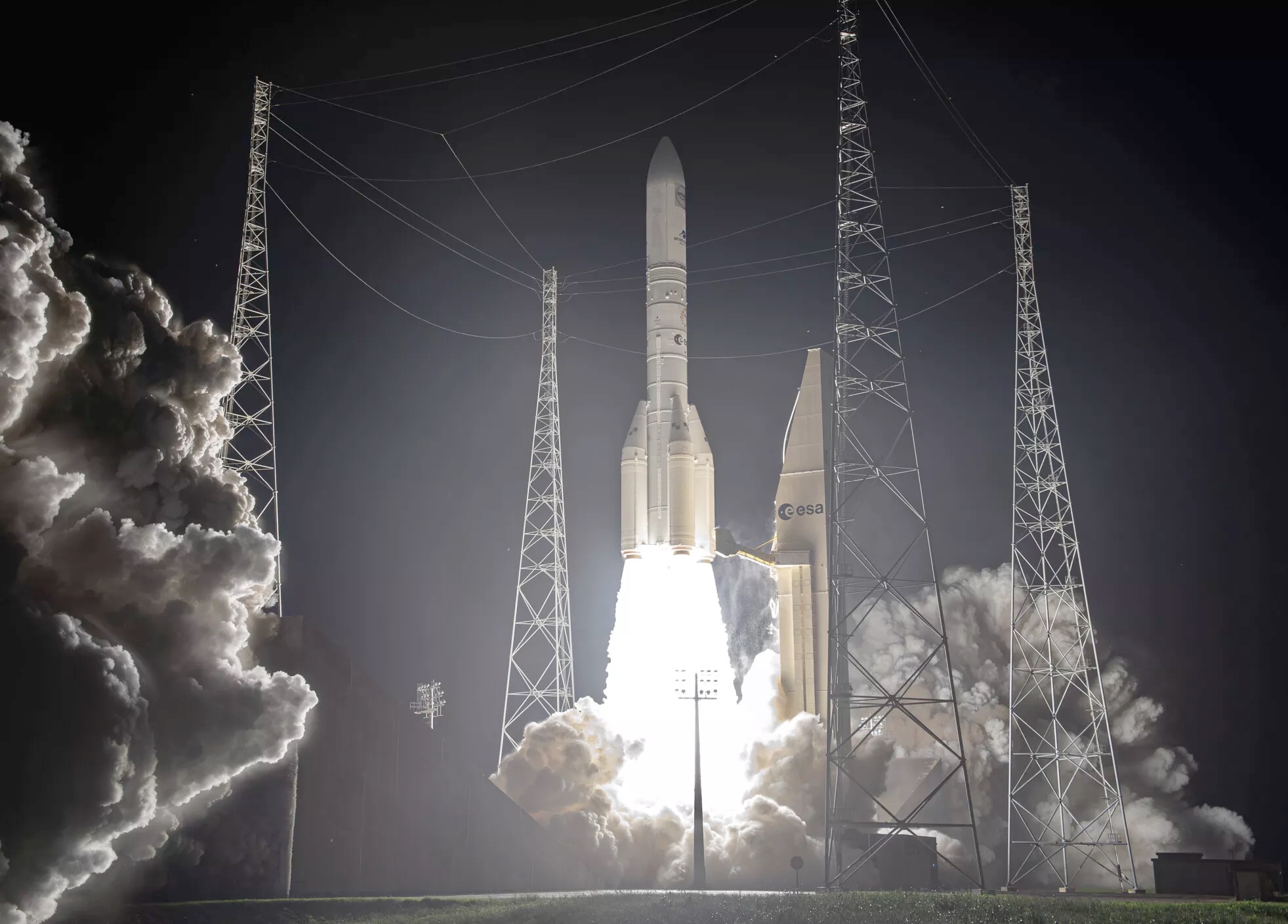
An Ariane 64 lifted off from Kourou, French Guiana, at 4:57 a.m. Eastern April 30 on a mission designated VA 268 by launch operator Arianespace and LE-02 by its customer, Amazon. The vehicle successfully deployed 32 Amazon Leo satellites into a 465-kilometer parking orbit nearly two hours later.
That launch followed the liftoff of an Atlas 5 551 from Cape Canaveral, Florida, at 8:53 p.m. Eastern April 27. That rocket placed 29 Amazon Leo satellites into orbit on what Amazon called the LA-06 mission.
With these two launches, Amazon has now successfully sent a total of 302 satellites for its broadband constellation, previously known as Project Kuiper. Notably, this number represents less than 10% of the total planned network of 3,232 satellites.
The FCC Deadline Challenge
The company faces a critical deadline of July 30 in its FCC license, which mandates that it must have at least half of its constellation deployed by that date. To accommodate this need, Amazon had requested the FCC in January to either extend its deadline by two years or allow a waiver, citing a “near-term shortage in launch capacity.”
Despite this, Amazon's final goal—deploying the entire constellation by July 2029—remains unchanged.
Enhanced Launch Strategies
In response to the mounting pressure, Amazon announced in a March update that it would double its annual launch rate to more than 20 flights. Notably, they plan to implement vehicle upgrades that will increase the number of satellites launched per mission on the Atlas 5 and Ariane 6 rockets. Furthermore, Amazon disclosed its acquisition of 10 additional Falcon 9 launches in its filings to the FCC.
Challenges with Launch Capacity
However, Amazon continues to grapple with launch capacity shortages worsened by recent mishaps. These include:
- A failure of ULA's Vulcan rocket post-launch on February 27, resulting in its grounding after one of its four solid rocket boosters shed debris.
- Blue Origin's New Glenn suffered an upper stage failure on an April 19 launch, which left an AST SpaceMobile satellite trapped in a low, unrecoverable orbit. CEO Dave Limp noted that one of the two BE-3U engines underperformed and failed to generate sufficient thrust during a critical second burn.
Launching into the Future
Both New Glenn and Vulcan are pivotal for the deployment of the Amazon Leo constellation. In 2022, Amazon signed contracts for 38 Vulcan launches, with each capable of carrying at least 40 satellites, along with 12 New Glenn launches projected to each carry at least 48 satellites. The New Glenn contract included options for an additional 15 launches. In its January FCC filing, Amazon noted it now holds contracts for a total of 24 New Glenn launches.
Upcoming Launch Plans
Amazon indicated that its subsequent launch will be conducted on an Atlas 5, projected for May 22. Additionally, the next Ariane 6 launch will be the first utilizing upgraded solid rocket motors, referred to as P160C, which will enhance the vehicle's performance and its satellite-carrying capacity. However, Amazon and Arianespace have not disclosed the increase in the number of satellites for either this or upcoming launches.
Conclusion
Amazon's efforts to build and expand its Leo constellation remain vigorous despite external challenges and tight deadlines. As the company navigates its launch strategies and overcomes possible setbacks, the expansion of its satellite network will be crucial for competing in the burgeoning broadband space market.