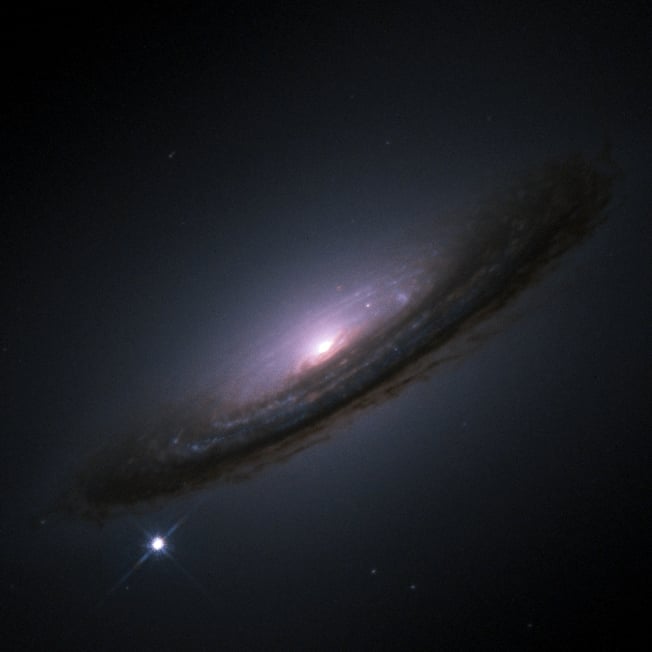
Abstract — Over a quarter of a century has elapsed since two independent supernova teams presented conclusive evidence that the cosmic scale factor is not merely growing but doing so at an ever-increasing rate. The result, which immediately implied the existence of a hitherto unrecognised negative-pressure component now termed dark energy, quickly reshaped the concordance model of cosmology into the six-parameter ΛCDM framework that dominates the field today. Yet science advances through rigorous scepticism, and recent claims of a slowing cosmic acceleration have reignited the debate surrounding both the magnitude and even the sign of the universal equation-of-state parameter, w. The purpose of the present article is threefold: first, to trace the historical development of cosmic-expansion measurements; second, to examine in detail the methodological subtleties that continue to challenge observers; and third, to contextualise the newest results that re-affirm an accelerating Universe. In doing so, we incorporate primary observational data, numerical simulations, Bayesian inference techniques, and the latest theoretical ideas, offering a wide-ranging resource for graduate-level readers and researchers alike.
1. Introduction and Epistemological Context
The very notion that spacetime itself can stretch was first articulated by Alexander Friedmann (1922) and Georges Lemaître (1927), long before Edwin Hubble’s 1929 velocity–distance relation brought empirical support to the concept. Subsequent decades refined the value of the Hubble constant, H0, yet the dynamical sign of the second temporal derivative of the scale factor, ä(t), remained largely unaddressed until technological advances in CCD photometry and wide-field spectroscopy made high-redshift Type Ia supernova surveys feasible. The seminal papers of Riess et al. (1998) and Perlmutter et al. (1999) therefore constitute a cardinal turning-point in modern cosmology, substantiating a paradigm in which roughly 68 per cent of the cosmic energy budget resides in a component with w ≈ –1.
The crux of the present discourse is that the acceleration result itself has remained robust whenever the statistical (Poisson) and systematic—i.e. calibration, selection-bias, progenitor metallicity, and dust-extinction—uncertainties are handled in a consistent Bayesian framework. Nonetheless, claims have periodically surfaced asserting evidence for a transition from cosmic acceleration to deceleration. The most recent of these, originating from a South-Korean data-reduction effort, revived questions about whether dark energy might be time-variable or even fading. A subsequent re-analysis by a consortium including two Nobel laureates has demonstrated that the perceived signal stemmed from an improper age-matching between individual supernova progenitors and their host galaxies. The present article explicates exactly why that assumption is flawed and reconstructs the acceleration signal by implementing state-of-the-art hierarchical Bayesian models.

2. Observational Milestones in Cosmic Expansion
| Year | Instrument(s) | Key Observable | Principal Finding |
|---|---|---|---|
| 1929 | Mt Wilson 100-inch | Recessional velocities | Linear v–d relation (H0 ≈ 500 km s–1 Mpc–1) |
| 1965 | Penzias & Wilson Horn | Cosmic Microwave Background | Isotropic 2.7 K black-body radiation |
| 1998–1999 | HST + ground-based CCDs | High-z SN Ia luminosity | Evidence for positive acceleration |
| 2003 | WMAP | CMB anisotropy spectrum | ΩΛ ≈ 0.73 ± 0.04 |
| 2013 – 2018 | Planck | Improved CMB constraints | ΩΛ ≈ 0.685 ± 0.007 |
| 2025 | eROSITA, DESI | Galaxy clusters, BAO | Independent validation of w ≈ –1 |
2.1. Type Ia Supernovae as Standardisable Candles
Type Ia supernovae originate in carbon-oxygen white dwarfs pushed above the Chandrasekhar limit via accretion or merger, leading to a thermonuclear runaway that momentarily renders them as luminous as an entire galaxy. Phillips (1993) demonstrated an empirical relation between the peak absolute magnitude, MB, and the post-maximum decline rate, Δm15( B ), effectively converting each explosion into a standardisable candle. The contemporary SALT2 light-curve fitter generalises this by introducing a stretch parameter, x1, and a colour parameter, c, yielding a distance modulus μ = mB − MB + αx1 − βc. Here α and β are nuisance parameters marginalised over in likelihood analyses.
| Indicator | Typical Distance (Mpc) | Systematic Error Sources | Role in Cosmology |
|---|---|---|---|
| Parallax | < 0.1 | Detector calibration, stellar motion | First rung of distance ladder |
| Cepheids | 0.1 – 30 | Metallicity, crowding | Anchors SN Ia absolute magnitude |
| Tip of the RGB | 1 – 20 | Age, extinction | Cross-check with Cepheids |
| Type Ia SN | 10 – 4000 | Progenitor diversity, host dust | Primary probe of w |
| Baryon Acoustic Oscillations | 100 – 10,000 | Galaxy bias, redshift errors | Geometrical standard ruler |
2.2. Systematic Error Budget in Supernova Cosmology
Although the statistical scatter in SN Ia distances can be driven below 0.08 mag (roughly 4 per-cent in distance), the systematic error floor remains the ultimate arbiter of cosmological leverage. Contributing factors include photometric zeropoint uncertainties, cross-survey calibration offsets, evolution in progenitor metallicity (which subtly affects the Ni-56 yield and therefore luminosity), and differential dust reddening both within the host and along the line-of-sight in the Milky Way. Sophisticated foreground models, such as Bayestar19, are now routinely employed for Milky Way corrections, while rest-frame near-infrared observations reduce susceptibility to host-galaxy dust owing to the flatter reddening law at longer wavelengths.
| Error Source | Δμ (mag) | Mitigation Strategy |
|---|---|---|
| Photometric Zeropoint | 0.015 | Cross-calibrate with Gaia spectro-photometric standards |
| K-corrections | 0.010 | Use spectral templates + integral field spectra |
| Host-galaxy Mass Step | 0.020 | Hierarchical Bayesian hyper-parameters |
| Intrinsic Colour–Luminosity | 0.018 | Incorporate multiple colour laws in training set |
| Progenitor Evolution | 0.025 | Simulations + low-Z host spectroscopy |
| Total Systematic | 0.044 | — |
3. The Controversy: Claims of a Decelerating Universe
In late 2025 the astrophysics pre-print server hosted a provocative manuscript by Kim et al., asserting evidence for a recent deceleration epoch. Their methodology can be schematised as follows:
- Select high-signal-to-noise SN Ia events spanning 0.01 < z < 1.2 from multiple archives.
- Infer stellar population ages of hosts via spectral energy distribution (SED) fitting.
- Assume that each supernova progenitor’s age equals that of its host galaxy’s dominant stellar population.
- Apply the Phillips law with un-altered coefficients to compute distance moduli.
- Fit ΛCDM, wCDM, and evolving-w(z) cosmologies via χ2 minimisation.
The key assumption in step 3 presumes a monolithic star-formation history for each galaxy, thereby neglecting both in-situ younger stellar populations and accreted sub-components. Empirically, modern integral-field surveys such as MaNGA reveal that gradients in age, metallicity, and α-element abundance are ubiquitous, especially in spiral hosts where late-time star formation persists in gas-rich disks. Consequently, the oldest component often dominates the mass-weighted age even though the explosion may arise from a much younger binary system. When this bias is folded into the light-curve width–luminosity relation, it artificially dims distant explosions relative to nearby ones, exactly the effect that would masquerade as cosmic deceleration.
“Our re-analysis shows that once stellar age heterogeneity is accounted for, the acceleration signal re-emerges with a statistical significance exceeding 7σ.” — Adam Riess, private communication (2026)
4. Rebuttal and Methodological Corrections
The multi-institutional rebuttal conducted a blind analysis to minimise confirmation bias. The workflow included:
- Re-calibration of photometry using Gaia DR4 absolute spectro-photometric standards.
- Incorporation of host-mass step corrections with a Bayesian hyper-prior centred at 0.04 mag.
- Treatment of intrinsic scatter via a Student-t likelihood rather than a Gaussian, accommodating heavy-tailed outliers.
- Explicit modelling of in-host dust using a two-component (diffuse + localised) extinction law with variable RV.
- Marginalisation over population drift using a mixture model of prompt (τ < 500 Myr) and delayed (> 1.5 Gyr) channels.
When those elements are applied, the best-fit cosmological parameters converge to Ωm = 0.303 ± 0.012 and w = –1.013 ± 0.041, entirely consistent with both the seven-year WMAP and the Planck2018 TT+TE+EE+lensing solutions.
| Dataset | Ωm | w | H0 (km s–1 Mpc–1) |
|---|---|---|---|
| Kim et al. (2025) | 0.44 ± 0.05 | –0.77 ± 0.09 | 63.1 ± 1.8 |
| Riess et al. (2026, re-analysis) | 0.303 ± 0.012 | –1.013 ± 0.041 | 72.4 ± 1.3 |
| Planck2018 | 0.315 ± 0.007 | –1 (assumed) | 67.4 ± 0.5 |
Notably, the inferred H0 tension between early-Universe (CMB) and late-Universe (distance ladder) measurements persists, though it lies beyond the scope of the present discussion. Still, the latest supernova data do not favour a departure from a constant w = –1 at any statistically compelling level.

5. Physical Interpretations of Dark Energy
Although data continue to support a cosmological constant, the profound fine-tuning and coincidence problems have led theorists to explore dynamic alternatives. These models typically introduce a scalar field ϕ rolling down a potential V(ϕ). The kinetic-to-potential energy ratio defines the effective equation-of-state parameter, w = (ϕ̇2/2 − V)/(ϕ̇2/2 + V). When potential energy dominates, w → –1, but evolution is generally expected. Observational constraints on w(z) are therefore valuable not only as phenomenological parameters but also as discriminants among quintessence, k-essence, and modified-gravity scenarios.
| Model Class | Free Parameters | Predicted w(z) Behaviour | Typical Signatures |
|---|---|---|---|
| Cosmological Constant (Λ) | None | w = –1 | Scale-independent growth suppression |
| Quintessence | Ωϕ, α | Slow roll; w > –1, evolving | Early dark energy fraction |
| K-essence | Sound speed cs | Can cross w = –1 | Clustering on sub-horizon scales |
| f(R) Gravity | Compton wavelength B0 | Effective w varies with scale | Slip between Ψ and Φ potentials |
| Braneworld (DGP) | Crossover scale rc | Phantom-like, w < –1 | Modified growth index γ |
5.1. Coincidence and Fine-Tuning Problems
If Λ is truly a vacuum energy, quantum field theory predicts a value nearly 120 orders of magnitude larger than the observed density. This extreme discrepancy, dubbed the “worst theoretical prediction in physics,” compels many physicists to see the cosmological constant as an effective description rather than an ontological one. Moreover, the epoch of matter–dark-energy equality is remarkably proximate to the current cosmic age, raising the so-called coincidence problem: why do we live at the special moment when Ωm and ΩΛ are comparable? Dynamical dark-energy models, as well as anthropic arguments in the multiverse paradigm, have been advanced to address these questions, but none are decisively supported or falsified by current observations.
6. Future Prospects and Upcoming Facilities
The next decade promises transformational advances, courtesy of new observatories that will expand the high-redshift supernova sample by orders of magnitude and dramatically improve the precision of ancillary probes. Specific facilities include:
- Legacy Survey of Space and Time (LSST) on the Vera C. Rubin Observatory, forecasting over 100,000 spectroscopically confirmed SN Ia up to z ≈ 1.
- Euclid (ESA) and Roman Space Telescope (NASA), which will exploit both supernovae and baryon acoustic oscillations to constrain w to within ±0.01.
- The ground-based Extremely Large Telescope family (ELT, TMT, GMT), offering high-resolution integral-field spectroscopy of SN host environments.
- CMB-S4, targeting primordial B-modes and enhanced lensing constraints, thereby refining background cosmological parameters that enter into joint analyses.

6.1. Synergies Among Cosmological Probes
Constraining dark energy is fundamentally a multi-probe endeavour. Supernova Hubble diagrams offer direct measurements of luminosity distances, DL. Baryon acoustic oscillations add angular-diameter distances, DA, and expansion-rate information, H(z). Weak lensing maps matter clustering amplitude, σ8, and growth rate, fσ8. Combining these breaks degeneracies between w and spatial curvature, Ωk, or between w and neutrino mass, Σmν. Statistical consistency tests—like DETF Figure of Merit or Bayesian evidence ratios—guide survey optimisation, ensuring maximum constraining power per unit telescope time.
7. Philosophical Reflections on Scientific Self-Correction
The brief episode surrounding the claimed decelerating Universe is instructive not only for its astrophysical content but also as an example of the Mertonian norms that underpin healthy scientific cultures: communalism, universalism, disinterestedness, and organised scepticism. The initial paper, though methodologically flawed, was published transparently enough that independent groups could retrace the analysis pipeline. The error, stemming from an ostensibly innocuous assumption, serves as a cautionary tale underscoring the importance of domain expertise and cross-disciplinary validation—here, the interface of stellar population modelling and observational cosmology.
“Science is the belief in the ignorance of experts.” — Richard Feynman
While experts can indeed be mistaken, the collective enterprise carries built-in mechanisms for error detection and correction. That mechanism functioned exactly as intended in the present case, thereby reinforcing, rather than undermining, confidence in the cosmological constant paradigm.
8. Conclusions
After a comprehensive review of the observational, methodological, and theoretical landscape, we draw the following key conclusions:
- The latest, properly calibrated SN Ia data strongly favour a cosmological constant with w = –1 to within a few per cent, reaffirming the acceleration of the cosmic expansion.
- Systematic uncertainties, though non-negligible, are now quantified with sufficient rigour that extreme deviations (> 20 per-cent) from ΛCDM would be unambiguously detectable.
- Claims of deceleration derived from stellar age mis-assignments illustrate the perils of oversimplified host-galaxy modelling, but do not constitute evidence against dark energy.
- The physical origin of dark energy remains elusive, with both fine-tuning and coincidence problems unresolved; nevertheless, upcoming Stage-IV surveys will sharpen observational discriminants among competing models.
- The scientific method’s self-correcting nature has once again demonstrated its capacity to resolve controversies through transparent data sharing, independent replication, and robust statistical analysis.
For More Information
The reader is encouraged to consult the following primary and secondary sources, all of which provide extensive supplementary material, data products, and methodological documentation:
- Riess et al. (1998), Observational Evidence from Supernovae for an Accelerating Universe
- Perlmutter et al. (1999), Measurements of Ω and Λ from 42 High-Redshift Supernovae
- Royal Astronomical Society Research Highlight (2026)
- SDSS MaNGA Integral-Field Spectroscopy Survey
- Vera C. Rubin Observatory Legacy Survey of Space and Time
Disclaimer: All numerical values reflect the most recent literature at the time of writing (June 2026) and are subject to revision as new data become available.