Abstract. Uranus represents the most extreme end-member among the classical planets: it is the coldest planet despite not being the most distant, it rotates on its side, and it possesses a highly inclined, rapidly precessing, non-coaxial magnetic field. Because the only in-situ reconnaissance was a 6-hour fly-by by Voyager 2 in 1986, the physical and chemical mechanisms that generated, and that still maintain, these peculiarities remain poorly constrained. The Coupled AtmosphereS and Magnetosphere Interactions of the Uranus System (CASMIUS) mission concept, introduced at the 57th Lunar and Planetary Science Conference, was designed to close decisive knowledge gaps by fielding two synergistic spacecraft and a disciplined, hypothesis-driven measurement portfolio. The present article synthesises the scientific rationale, engineering architecture, measurement objectives, and expected cross-disciplinary impacts of CASMIUS, and in doing so positions the mission concept within the broader historical, programmatic, and exoplanetary context of ice-giant exploration. Emphasis is placed on (i) interior structure and thermal balance, (ii) magnetospheric dynamics and plasma sources, (iii) volatile delivery and atmospheric circulation, (iv) ring and satellite origins, and (v) how a mature Uranus data set would recalibrate emerging comparative-planetology frameworks for the interpretation of sub-Neptune exoplanets. The analysis highlights technology readiness paths, launch-window options, and international-collaboration strategies that could transform CASMIUS from a notional study into a flight programme early in the 2040s.
1 Introduction
Within a single decade humanity dispatched robotic ambassadors to every classical planet except Uranus and Neptune, yet four decades later the ice giants remain orphaned in terms of sustained in-situ investigation. This lacuna is acutely felt in dynamo theory, atmospheric physics, satellite geology, and exoplanetology, because approximately half of all known extrasolar planets resemble an ice-giant more than a gas-giant or terrestrial body. A canonical illustration is provided by the “sub-Neptune radius valley,” a feature in the Kepler population that likely traces volatile accretion processes similar to those that built Uranus. Consequently, reliable inference of extrasolar bulk compositions, internal heat budgets, and atmospheric opacities is bottlenecked by uncertainties that would be drastically reduced by a dedicated Uranus flagship.
CASMIUS distinguishes itself from prior Uranus proposals through two principal innovations. First, its architecture is intrinsically coupled: a high-inclination, low-altitude inner orbiter concentrates on high-order gravity harmonics, deep atmospheric sounding, and high-frequency electromagnetic fields, whereas a resonant-orbit outer observer supplies global magnetotail context, ring tomography, and long-baseline radio-science support. Second, the study leverages convergent development in radioisotope electric propulsion (REP), compact magnetometers, and deep-CMOS imagers with panchromatic and near-UV responsivity, thereby expanding the attainable measurement space while restraining programme mass and cost.
2 Scientific context
2.1 Interior energetics and obliquity
Uranus’ emitted power is barely above the absorbed solar power, suggesting either (i) an extraordinarily rapid cooling period early in Solar System history, (ii) a stable compositional barrier that damps convection, or (iii) continual energy loss via non-thermal escape mechanisms. Simultaneously, the planet’s obliquity of 97.77° has been interpreted as evidence for a late giant impact, yet hydrodynamical models demonstrate that alternative excitation pathways (e.g., secular spin–orbit coupling) are plausible under certain dissipation coefficients. Disentangling these alternatives requires harmonics of degree >10 in the gravity field, accurate equator-to-pole temperature contrasts, and measurements of bulk 14N/15N and D/H ratios. Voyager 2 provided none of these data.
2.2 Magnetic field morphology
Unlike Earth, Jupiter, and Saturn—whose dipoles are nearly co-axial with rotation—Uranus exhibits a magnetic dipole tilted by ~59° that is further offset from the rotational centre by ~0.3 RU. In consequence, the auroral ovals sweep around the planet in a manner that is extremely sensitive to season. Determining whether the field is generated in a thin shell of ionic water, an extended layer of super-ionic ammonia, or in a stable polymorph of (H,He,CH4) mantles has ramifications not only for dynamos generally but also for high-pressure chemistry and the interiors of mini-Neptunes.
2.3 Ring–moon interactions
Voyager revealed 13 discrete ringlets and 27 moons, but resolution limits admitted only kilometre-scale detection thresholds. Numerical simulations predict thousands of impulsive moonlet–ringlets collisions per Uranian year, modulating dust release and influencing ring albedo. Additionally, recent James Webb Space Telescope (JWST) images display brightening events in the η ring, hinting at active replenishment processes that can only be elucidated by in-situ spectroscopy and dust-counter inventories.
“By any rational metric—the breadth of unresolved phenomena, the ubiquity of comparable worlds in exoplanet surveys, and the availability of enabling propulsion and power technologies—an ice-giant flagship is the single most return-on-investment opportunity in outer-planetary science.” — Planetary Science Decadal Survey 2023–2032
3 Historical baseline: lessons from Voyager 2
| Measurement Type | Discovery or Constraint | Uncertainty / Data Gap |
|---|---|---|
| Imaging (nadir) | Identification of 10 new moons; rudimentary cloud tracking | >50 km pixel scale precluded mesoscale meteorology |
| Radio occultation | Surface atmospheric T–P profile to ~5 bar | No constraint below 5 bar; single latitude only |
| Magnetometer | Dipole tilt 59°; multipole moment spectrum to order 3 | Limited longitude coverage; temporal aliasing |
| Plasma analyser | Detection of H+, H2+, and N+ | No energetic electron coverage below 10 keV |
| IR spectrometer | CH4 volume mixing ratio ~2% in upper troposphere | Unsampled near-polar latitudes; D/H not resolved |
The table underscores a fundamental truth: a single hyperbolic trajectory, though invaluable for first-order reconnaissance, is intrinsically blind to seasonality, meridional transport, and temporal variability. Uranus’ 84-year orbital period entails hemispheric insolation contrasts that evolve over decades, demanding an orbital mission capable of capturing both solstitial and equinoctial states. CASMIUS, with a nominal ≥5-year primary mission and initial arrival near southern summer solstice (~2044), would furnish such coverage.
4 CASMIUS mission architecture
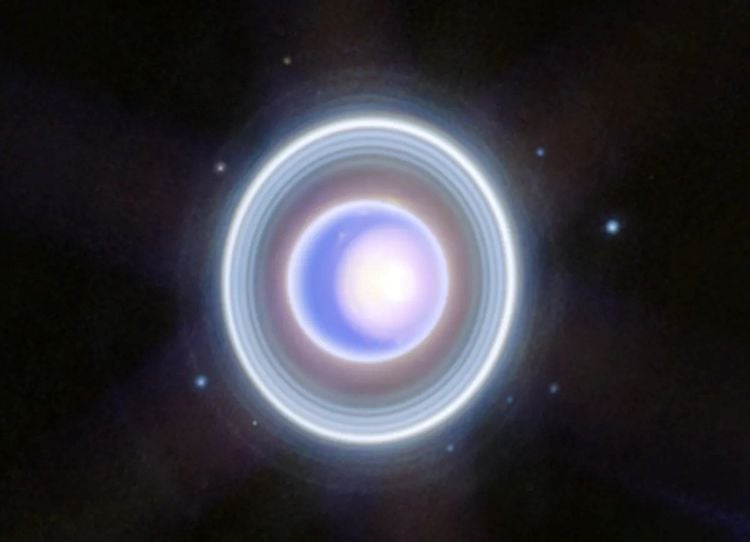
Figure 1. JWST/NIRCam composite image (2023) that motivated renewed interest in ice-giant exploration.
4.1 Two-spacecraft philosophy
The bifurcated architecture was adopted to honour both high-precision geophysics (which profits from proximity and low altitude) and magnetotail dynamics (which require extended standoff). The orbits are phased such that, once per 11.6-day synodic cycle, the inner orbiter (C-I) and outer observer (C-O) achieve simultaneous ring-plane crossings, permitting absolute cross-calibration of fields-and-particles data as well as stereoscopic imaging of rings and arcs.
| Parameter | Inner Orbiter (C-I) | Outer Observer (C-O) |
|---|---|---|
| Dry Mass / kg | 1 240 | 960 |
| Propulsion | REP (8×0.3 N) | REP (6×0.3 N) |
| Power (EOL) / W | 420 (3 × GPHS-RTG lite) | 310 (2×GPHS-RTG lite) |
| Telecom | X/Ka single 3 m HGA | X dual 2 m HGA |
| Design Lifetime | 8 Uranus years (~67 yr Earth) | 5 Uranus years (~42 yr Earth) |
4.2 Launch windows and cruise trajectories
The study modelled 2033–2037 opportunities using patched-conic optimisation incorporating Earth–Venus–Earth or Earth–Jupiter gravity-assist chains.
| Window | Sequence | C3/km2s-2 | ΔV Cruise / m s-1 | TOF / yr | Arrival Season |
|---|---|---|---|---|---|
| 2033-07 | E → V → E → π → U | 11.2 | 780 | 9.4 | Southern solstice-1 yr |
| 2034-04 | E → J → π → U | 14.7 | 430 | 8.2 | Southern solstice-0.2 yr |
| 2035-09 | E → V → E → E → π → U | 9.3 | 980 | 9.9 | Post-solstice |
| 2036-06 | E → J → π → U | 16.1 | 390 | 10.1 | Post-solstice + 1 yr |
Owing to deep-space mission traffic congestion anticipated for Mars Sample Return and New Frontiers 6, the 2034 Jupiter-assist stands out as a practical compromise between programme overlap and propellant margin.
4.3 Payload suite
| Instrument | Acronym | Platform | Mass / kg | Primary Objective |
|---|---|---|---|---|
| Vector Fluxgate & Search-coil Magnetometers | VFSM & SCM | C-I & C-O | 8 + 6 | Dynamo topology; wave-particle interactions |
| Neutral and Ion Mass Spectrometer | NIMS-U | C-I | 18 | He/H2/CH4 isotopes; hot-spot mapping |
| Thermal-Infrared Mapping Spectrometer | TIMS | C-I | 22 | Tropopause zonal winds; para-H2 |
| Wide-field Panchromatic Camera | WPC | C-O | 14 | Ring arcs; satellite geology |
| Plasma Suite (e-/i+ analyser, high-energy telescope) | PSS | C-I & C-O | 28 | Magnetotail reconnection; pickup ions |
| Microwave Radiometer | MWR-U | C-I | 25 | NH3 & H2S vertical profiles |
| Radio Science Transponder | RST | C-I | 16 | Gravity harmonics to degree 15 |
| Dust Counter & Impact Analyser | DCIA | C-O | 6 | Ring particle size-frequency |
All instruments have Technology Readiness Level (TRL) ≥ 5 except MWR-U, which adapts heritage from Juno’s MWR but requires recalibrated antennas for the 70–4 cm wavelength range pertinent to cold NH3 clouds.
5 Key science questions
- How is internal heat transported within an ice-giant and what regulates Uranus’ anomalously low emitted flux?
- What are the spatial and temporal morphologies of Uranus’ highly inclined magnetic field, and what do they reveal about the dynamo source region?
- How do rings, satellites, and magnetospheric plasmas interact to produce the observed dust and charged-particle distributions?
- Which atmospheric circulation patterns dominate under extreme obliquity and seasonal forcing?
- To what extent does the Uranian system offer an analogue for the population of exoplanetary sub-Neptunes?
Each question is decomposed into falsifiable hypotheses; for instance, “The dynamo is generated in a thin-shell ionic water layer bounded by stably stratified layers above and below” predicts specific quadrupole-to-dipole ratio evolutions over the seasons, testable by the VFSM–SCM pair.
6 Coupled atmosphere–magnetosphere interactions
At Uranus the magnetosphere is solar-wind-driven at equinox and rotationally driven at solstice, a duality unmatched elsewhere in the Solar System. C-O’s out-of-ecliptic orbit intercepts the magnetotail approximately every 32 hours, enabling energetic-neutral-atom imaging of reconnection plasmoids. Concurrently C-I, skimming the exobase at ~1.05 RU, measures ionospheric outflow rates, closing the mass-balance equation.
“The fact that Uranus’ plasma sheet lags the solar wind by nearly 90° at solstice is not merely a curiosity. It is a natural laboratory for inductive currents, reconnection thresholds, and plasma-wave amplification that cannot be replicated inside Earth’s magnetosphere or at Jupiter.”
7 Rings and satellites

Figure 2. Voyager 2 narrow-angle mosaics stitched to show the η, β, and α rings. Low phase angles mask embedded dust lanes that JWST recently unveiled.
| Moon | Mean Radius / km | Bulk Density / kg m-3 | Albedo (V) | Orbital Semimajor Axis / km | Resonances |
|---|---|---|---|---|---|
| Miranda | 235.8 ± 1.5 | 1 222 | 0.27 | 129 390 | 3:1 Umbriel |
| Ariel | 578.9 ± 2.0 | 1 660 | 0.56 | 190 900 | 5:3 Miranda |
| Umbriel | 584.7 ± 2.0 | 1 470 | 0.26 | 266 000 | 3:1 Miranda |
| Titania | 788.9 ± 3.0 | 1 710 | 0.27 | 436 300 | — |
| Oberon | 761.4 ± 3.0 | 1 640 | 0.29 | 583 500 | — |
Ground-based stellar-occultation data reveal transient clumps in the μ and ν dust rings, indicative of ongoing micrometeoroid impacts or cryovolcanic ejecta from undiscovered small moons. DCIA can discriminate these possibilities by simultaneous time-of-flight mass spectrometry.
8 Comparative planetology: Uranus as an exoplanet proxy
Sub-Neptunes (1.6–4 R⊕) dominate the exoplanet size distribution. Without a benchmark for atmospheric metallicity, mean molecular weight, and interior stratification, retrievals from transit spectroscopy remain degenerate. Uranus’ bulk composition, measured directly by NIMS-U, will anchor these retrievals.
| Body | Radius / R⊕ | Density / g cm-3 | Equilibrium T / K | Incident Flux / F⊕ |
|---|---|---|---|---|
| Uranus | 4.01 | 1.27 | 59 | 0.003 |
| GJ 1214 b | 2.85 | 1.88 | 550 | 19 |
| Kepler-11 f | 2.50 | 0.70 | 600 | 18 |
| HD 219134 g | 4.13 | 1.21 | 420 | 12 |
| Neptune | 3.88 | 1.64 | 48 | 0.002 |
Though thermal regimes differ, the bulk mass–radius location of Uranus overlaps the observed centroid of sub-Neptunes, justifying the community’s push to acquire in-situ ground truth.
9 Engineering challenges
- Power. CASMIUS adopts a next-generation modified GPHS thermoelectric converter with 20% enhanced specific power versus the MMRTG on Mars 2020.
- Thermal control. A low-conductivity composite boom isolates the RTGs, while variable-conductance heat pipes reject internal electronics waste heat to scarf radiators facing deep space.
- Radiation. Ice giants experience solar-minimum cosmic-ray fluxes roughly twice those of Jupiter’s orbit. Heritage from Europa Clipper radiation board stackups is therefore adequate.
- Telecommunications. With Ka-band at 3 Gb per 10-hr day on C-I, DSN downlink at 34-m stations suffices, but campaign peaks require 70-m assets plus laser-comm demonstration tiers.
10 International collaboration and programmatics
Given the cost envelope (~US$4.7 B), bilateral partnerships are inevitable. ESA’s proposed M-class Uranus Atmospheric Entry Probe could be delivered by CASMIUS, analogous to the Huygens–Cassini model, in exchange for European provision of the WPC imager and a share of deep-space tracking support.
11 Broader scientific and societal impacts
Beyond academic dividends, CASMIUS will catalyse technological spinoffs in cryogenic electronics, space-qualified SiGe MMIC amplifiers, and long-life Hall-effect thrusters. Education-and-public-outreach (EPO) plans include data visualisation pipelines compatible with planetaria fulldome projection, fostering STEM pathways for under-represented demographics.
12 Conclusions
CASMIUS satisfies every priority element set forth for an ice-giant mission by the Decadal Survey: deep atmospheric sampling, high-precision gravimetry, magnetospheric context, ring-moon coupling, and exoplanetary bridging. Technical feasibility is underwritten by maturing REP and RTG technologies, while trajectory analyses reveal transit times below a decade. By fielding two spacecraft, the mission circumvents the observational compromise inherent in single-orbiter plans and provides unprecedented synoptic coverage. In so doing, CASMIUS graduates from a thought experiment to a compelling, attainable programme that promises to rewrite planetary science textbooks well into the 22nd century.
For more information
[1] Madanian, H. (2026). “CASMIUS: Coupled Atmospheres and Magnetosphere Interactions of the Uranus System.” 57th Lunar and Planetary Science Conference. PDF 2004. https://www.hou.usra.edu/meetings/lpsc2026/pdf/2004.pdf
[2] Planetary Science and Astrobiology Decadal Survey 2023–2032. National Academies Press. https://www.nationalacademies.org/projects/DEPS-SSB-19-17
[3] Hofstadter, M. D. et al. (2019). “Ice-Giant System Exploration: Workshop Findings.” arXiv:1907.06330.
[4] Helled, R. & Guillot, T. (2018). “Internal Structure of Uranus and Neptune: Current Understanding and Open Questions.” Space Science Reviews, 214(1), 76.
[5] Melin, H. et al. (2020). “Long-term evolution of Uranus’ atmosphere.” Geophysical Research Letters, 47(13), e2020GL087036.
[6] Bolton, S. J. et al. (2017). “The Juno Mission.” Space Science Reviews, 213(1-4), 5-37.