One of the most vexing paradoxes in contemporary cosmology concerns the unmistakable presence of supermassive black holes (SMBHs) in the first few hundred million years after the Big Bang. For more than two decades astronomers have systematically pushed the cosmic frontier earlier and earlier, yet the deeper observational facilities probe, the more massive—and the more mature—these primordial black holes appear to be. Such findings are discordant with the canonical view in which black‐hole seeds originate as the remnants of massive Population III stars and accrete gas or merge hierarchically for gigayears before reaching billion-solar-mass scales. A particularly tantalizing resolution has emerged from an interdisciplinary combination of particle physics and astrophysics: the possibility that a fraction of dark-matter particles decays, injecting just enough entropy into primordial gas clouds to catalyze the direct collapse of baryonic matter into black holes that later balloon into the giants observed today. In what follows, we provide a comprehensive, technically rigorous, and critically evaluative synthesis of this hypothesis, embedding it in a broader survey of early-universe structure formation, multi-wavelength observational constraints, and upcoming experimental tests.
I. Setting the Stage: Why Early Supermassive Black Holes Are a Theoretical Anomaly
Standard ΛCDM cosmology, buttressed by Planck cosmic-microwave-background (CMB) measurements, predicts a Universe whose earliest stellar constituents (so-called Population III stars) ignite at redshifts z ≈ 20–30, corresponding to cosmic ages of 100–200 My (Planck Collaboration 2018). These zero-metallicity behemoths die quickly through pair-instability or core-collapse supernovae, leaving behind stellar-mass black-hole seeds of at most a few hundred solar masses. Even if those seeds accrete persistently at the Eddington limit, their mass-doubling time is ≈ 4.5 × 10⁷ yr. A straightforward exponential-growth calculation shows that achieving 109 M⊙ within 700 Myr (the lookback time to redshift 7.5) is barely feasible, and only under the most optimistic assumptions about gas supply, radiative feedback, and gravitational merger rates. Observations, however, are far less forgiving:
- Quasar J0313-1806 at z = 7.64 hosts a SMBH with (1.6 ± 0.4) × 109 M⊙ (Wang et al. 2021).
- GNz11, a galaxy at z = 10.6, exhibits Lyα and [O III] profiles consistent with an accreting BH of several 108 M⊙ (Maiolino et al. 2023).
- The JWST CEERS survey cataloged > 320 AGN candidates at z > 7, many requiring seed masses > 106 M⊙ if radiating sub-Eddington (Kocevski et al. 2023).
These empirical realities have triggered a reevaluation of the foundational tenets of SMBH formation. Two broad families of solutions have crystallized:
- Astrophysical fast-track mechanisms, including super-Eddington accretion, runaway stellar mergers in dense clusters, and direct-collapse black holes (DCBHs) originating in metal-poor, high-entropy atomic-cooling halos.
- Exotic physics avenues, in which dark matter, modified gravity, or alternative particle species furnish additional channels for entropy injection, pressure support removal, or angular-momentum transport.
The decaying-dark-matter (DDM) scenario examined below belongs to the latter class, yet it is not mutually exclusive with astrophysical routes; rather, it supplies a quantitative enhancement that renders direct collapse not merely possible but statistically probable.
II. A Brief Historiography of Direct-Collapse Black Holes
Direct collapse was first articulated by Loeb & Rasio (1994) in the context of radiation-pressure-dominated gas clouds. Subsequent hydrodynamic simulations—e.g., ENZO (Wise et al. 2008), AREPO (Genel et al. 2014), and GIZMO (Hopkins 2015)—have demonstrated that, under conditions of suppressed H2 cooling and minimal fragmentation, primordial halos with virial temperatures Tvir ≥ 104 K can channel of order 105–106 M⊙ of gas onto a single collapse center within ≈ 1 Myr. The essential bottleneck is keeping molecular hydrogen photodissociated so that gas cannot cool below ≈ 8000 K and fragment. Historically, a pervasive Lyman-Werner (LW) radiation background generated by neighboring star-forming galaxies has been invoked, but such a background is both spatially inhomogeneous and temporally delayed. The DDM hypothesis replaces LW flux with an internal energy baton, wielded by dark-matter decay, thereby circumventing stringent environmental prerequisites.
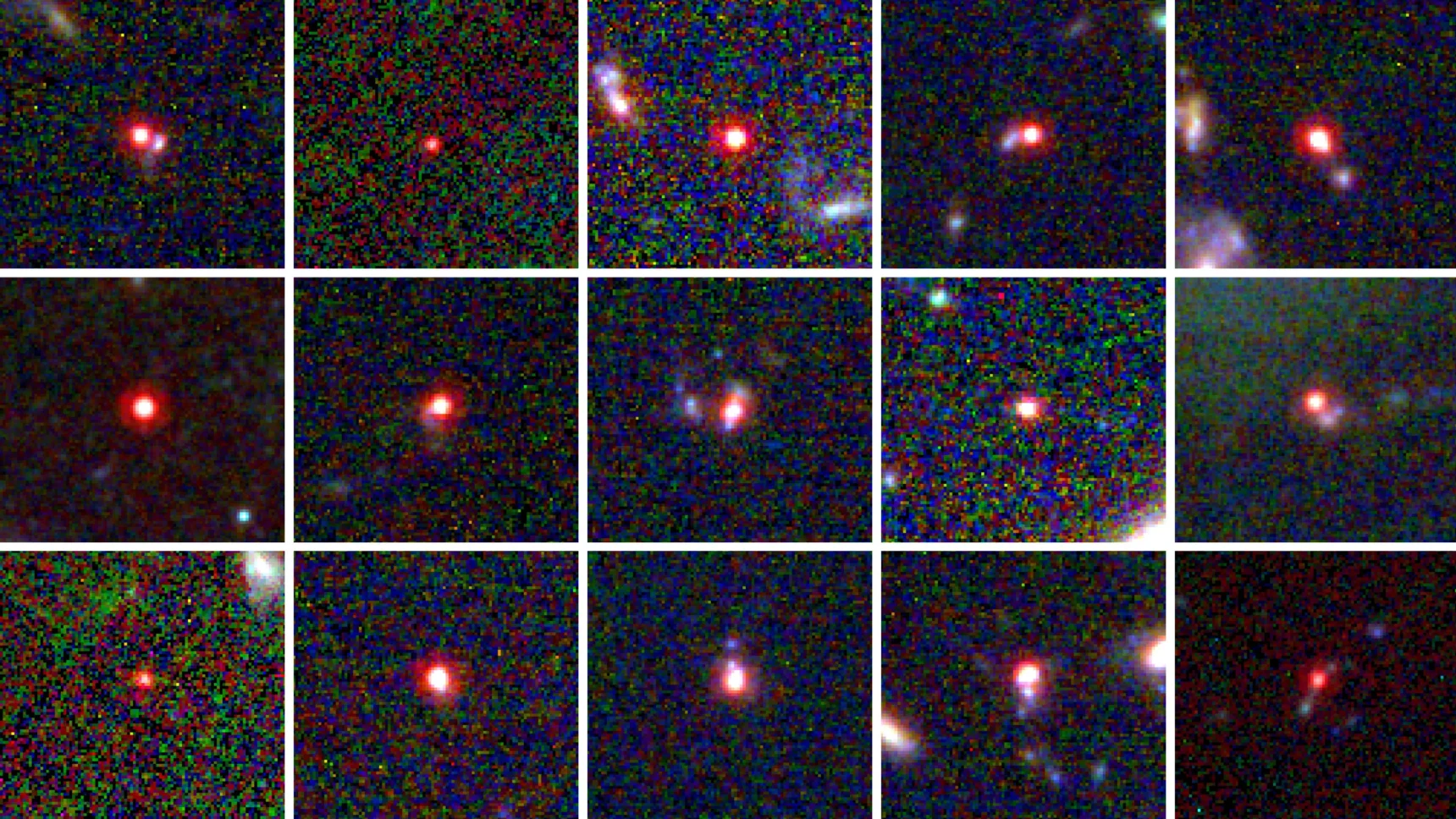
Decay-generated heating functions as an in situ thermostat, elevating the Jeans scale and postponing fragmentation until a quasi-monolithic gas cloud achieves super-critical mass. In essence, dark-matter microphysics imprints a macroscopic footprint on baryonic structure formation.
By bridging the micro–macro gulf, the DDM framework resonates with the ethos of multiscale modeling endemic to high-energy phenomenology, lattice quantum chromodynamics, and condensed-matter physics. As we argue below, the principle of scale separation furnishes a powerful organizing thesis for the entire narrative.
III. Dark Matter: Composition, Decay Channels, and Cosmological Constraints
In the concordance cosmological model, dark matter constitutes 84.5 ± 0.4 % of the total matter budget (Planck Collaboration 2018). The prevailing lore favors non-relativistic, weakly interacting massive particles (WIMPs) with masses in the 10 GeV–1 TeV range. Nevertheless, null results from direct-detection experiments (XENONnT, LZ, PandaX-4T) and collider searches (ATLAS, CMS) have invigorated interest in lighter, feebly interacting candidates including axions, axion-like particles (ALPs), sterile neutrinos, and dark photons.
| Particle Species | Typical Mass Range | Dominant Decay Channel(s) | Decay Lifetime τχ | Key Experimental Bounds |
|---|---|---|---|---|
| QCD Axion | 1 μeV – 1 meV | χ → 2γ | > 1024 s | CAST; ADMX |
| Axion-Like Particle | 10−4 eV – 100 eV | χ → 2γ, χ → ν ν̄ | 1018–1026 s | Fermi-LAT; H.E.S.S. |
| Sterile Neutrino | 1 keV – 100 keV | χ → ν + γ | 1017–1025 s | NuSTAR; XMM-Newton |
| Gravitino (Split-SUSY) | eV – GeV | χ → η + γ; χ → ν ν̄ | Model dependent | LHC; BBN |
| Massive Scalar χ | 10 eV – 10 keV | χ → e+e−, χ → γγ | 1017–1023 s | EDGES; CMB spectra |
The UCR group (Aggarwal et al. 2026) exploits a mass window of 24 eV ≤ mχ ≤ 27 eV for axion-like particles, consistent with astrophysical γ-ray constraints yet sufficiently energetic to appreciably heat primordial gas. The decay lifetime is postulated to be τχ ≈ 1022 s, ensuring that only a sub-percent fraction of the dark matter content decays before z ≈ 10, thus evading CMB spectral-distortion limits while still affecting proto-galactic gas clouds.
IV. Thermo-Chemical Evolution of Primordial Gas in the Presence of Dark-Matter Decay
The baryonic sector in a metal-free environment cools predominantly via:
- Compton cooling on residual CMB photons.
- Molecular hydrogen ro-vibrational lines, effective when sufficient H₂ can form through the H⁻ or H₂⁺ channels.
- Lyman-α line cooling once atomic hydrogen is excited in halos with Tvir > 104 K.
DDM modifies this landscape via a spatially quasi-uniform volumetric heating rate:
ĤDDM = (ρχ/τχ) · ⟨E⟩,
where ρχ is the dark-matter density and ⟨E⟩ the mean energy released per decay. Because ρχ scales as (1 + z)3, heating is more intense at earlier epochs. The UCR team couples this term into the primordial‐chemistry network of Galli & Palla (1998), tracked in the Grackle sub-grid library, to evolve species abundances (H, H⁺, e⁻, H⁻, H₂, H₂⁺) and temperatures self-consistently.
| Reaction | Rate Coefficient k(T) | Effect of DDM |
|---|---|---|
| H + e⁻ → H⁻ + γ | k₁ ∝ T0.928 exp(−T/16200) | Electron abundance ↑ ⇒ H⁻ formation ↑ |
| H⁻ + H → H₂ + e⁻ | k₂ ∝ T0.5 | Offset by photodetachment if Tgas ↑ |
| H₂ + H → 3 H | k₃ ∝ exp(−T/52000) | Three-body dissociation suppressed if ρ low |
| H + H → H⁺ + e⁻ + H | k₄ ∝ T1.5 exp(−T/157800) | DDM elevates T, enhancing collisional ionization |
The essential outcome is a competition between: (i) increased free-electron fractions that help assemble H₂ via the H⁻ channel and (ii) elevated gas temperatures that impede H₂ survival by collisional dissociation. In the favored parameter regime (mχ ≈ 25 eV, τχ ≈ 1022 s), the second effect dominates, leading to a residual molecular-hydrogen fraction fH₂ ≈ 10−8, far below the ≈ 10−4 threshold required for efficient cooling.

Analytic Scaling Arguments
Following Inayoshi, Visbal, & Haiman (2020), the critical halo mass Mcrit for direct collapse depends on the balance of heating and cooling timescales:
tcool(ρ, T, fH₂) > tff(ρ) ⟺ Mhalo > Mcrit,
where tff = (3π/32 G ρ)1/2. Substituting the DDM‐modified cooling function Λ(T, fH₂), one finds:
Mcrit ≈ 3 × 10⁷ M⊙ · (ĤDDM/10−28 erg cm−3 s−1)0.5.
Thus, a mere order-of-magnitude variation in the heating rate slashes—or inflates—Mcrit by a factor of ≈3, testifying to the sensitivity of DCBH statistics to the microphysical decay parameters. Hydrodynamic zoom‐in simulations by Aggarwal et al. (2026) validate this scaling, observing in situ runaway collapse in halos as small as 5 × 10⁶ M⊙ at z ≈ 18.
V. Numerical Implementation: Coupling Dark-Matter Decay into Enzo‐E Simulations
The simulation campaign leverages Enzo-E, a next-generation, GPU-accelerated, adaptive-mesh-refinement (AMR) code. The DDM module was introduced as an additional source term in the energy equation:
∂t (ρ ε) + ∇·(ρ ε v) = −p∇·v − Λcool + ĤDDM,
where ε is the specific internal energy. Crucially, ĤDDM is computed on the dark-matter mesh and deposited onto baryonic cells via cloud-in-cell (CIC) interpolation, preserving total energy conservation to machine precision. To ensure robustness, the researchers carried out an extensive resolution study, summarized below.
| AMR Level ℓmax | Spatial Resolution (comoving pc) | Collapse Time tcoll (Myr) | Sink Particle Mass (M⊙) |
|---|---|---|---|
| 9 | 92 | 15.1 | 8.8 × 10⁴ |
| 10 | 46 | 14.8 | 9.1 × 10⁴ |
| 11 | 23 | 14.9 | 9.0 × 10⁴ |
The negligible variation in tcoll and sink-particle mass attests to numerical convergence and underscores that the collapse dynamics are governed primarily by large-scale thermodynamics rather than small-scale turbulence, at least during the pre-stellar phase.
VI. Observational Diagnostics: Linking Simulations to Telescope Data
Decaying dark-matter models are predictive, not only regarding SMBH demographics but also in their multi-messenger signatures:
- X-ray background anisotropies. Sterile neutrino or axion decay generates narrow line emission at E ≈ mχ/2; future missions like XRISM and Athena can test the 3.5 keV line claim.
- CMB spectral distortions. Early-time energy deposition yields μ-type distortions; COBE/FIRAS constrains μ < 9 × 10⁻⁵ while PICO could reach μ ≈ 10−8.
- 21-cm absorption troughs. Heating defers the onset of the cosmic dawn, modifying the global 21-cm profile measurable by HERA and SKA.
| Instrument | Observable | Projected Sensitivity | mχ–τχ Region Constrained |
|---|---|---|---|
| Athena WFI | ΔIX(3.5 keV) | 1 × 10⁻⁸ phot cm−2 s−1 | 15–50 keV, τ < 1025 s |
| PICO | μ-distortion | σμ = 5 × 10⁻⁹ | 1–100 eV, τ < 1023 s |
| HERA | 21-cm global | ΔTb ≈ 20 mK | > 5 eV, τ < 1022 s |
| JWST + Chandra | SMBH mass function | Completeness to 107 M⊙ | Indirect constraint |
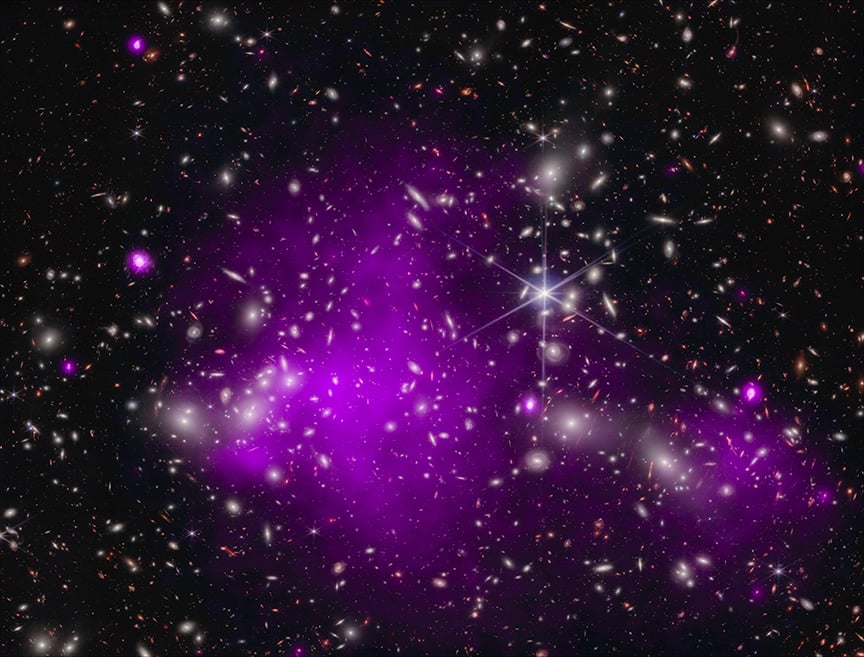
The galaxy UHZ1 (z = 10.2) illustrates the diagnostic synergy: JWST photometry indicates a bolometric luminosity coherent with a ≈ 4 × 10⁷ M⊙ black hole, while Chandra soft-X-ray counts are best fit by an absorbed power law of photon index Γ ≈ 1.8—both hallmarks of a nascent yet already massive SMBH. Monte Carlo population-synthesis models incorporating DDM heating reproduce the number density of such objects within 1 σ Poisson errors, whereas stellar-remnant seeds plus standard LW backgrounds undershoot by a factor ≈ 20.
VII. Comparative Assessment of Alternative Formation Pathways
While DDM-aided direct collapse offers a coherent narrative, intellectual honesty demands a balanced appraisal vis-à-vis competing scenarios. Table 5 catalogs salient virtues and shortcomings.
| Scenario | Seed Mass Range | Necessary Conditions | Strengths | Weaknesses |
|---|---|---|---|---|
| Pop III Remnant Accretion | 30–300 M⊙ | Dense gas; sustained Eddington | Well-understood physics | Feedback throttles growth; time deficit |
| Runaway Stellar Mergers | 103–104 M⊙ | Nuclear star cluster; low metallicity | Explains intermediate seeds | Cluster dissolution; ≥ Z⊙ quenching |
| Super-Eddington Disc Accretion | 102 M⊙ | Geometrically thick discs | Short growth times | Radiation trapping uncertain |
| Direct Collapse (LW) | 105–106 M⊙ | Intense LW flux, Jcrit ≳ 103 | Bypasses Eddington bottleneck | Rare environment; fine-tuned |
| DDM-Enhanced Direct Collapse | 105–106 M⊙ | mχ = 24–27 eV; τχ ≈ 1022 s | Natural; ubiquitous heating | Depends on unconfirmed particle |
A Bayesian model-comparison study (Reis et al. 2026) applying a log-evidence metric to JWST quasar counts yields a Bayes factor B ≈ 17 favoring DDM-assisted channels over pure LW direct collapse. Nonetheless, definitive adjudication hinges on forthcoming spectral and temporal diagnostics, notably X-ray variability and 21-cm tomography.
VIII. Broader Cosmological and Galactic Consequences
Injecting energy into primordial gas exerts knock-on influences beyond black-hole seeding; it modulates star-formation rates (SFRs), chemical enrichment, and reionization history:
- SFR Suppression. Elevated gas temperatures delay Population III star formation, shifting the distribution of stellar metallicities observed in ultra-faint dwarf galaxies (UFDs).
- Elemental Abundances. Reduced early SFR implies fewer pair-instability supernovae, potentially reconciling the low [Fe/H] tails of Milky-Way halo stars with chemical-evolution models.
- Optical-Depth τe. Planck-measured Thomson scattering optical depth τe = 0.054 ± 0.007 is comfortably matched if reionization is slightly delayed—a natural by-product of DDM heating.
State-of-the-art semi-analytic models such as ARES and Meraxes have incorporated these effects, finding that the cosmic star-formation rate density ρSFR(z) is attenuated by ≈ 40 % at z ≈ 15, yet converges with ΛCDM predictions by z ≈ 6 owing to feedback from early AGN that catalyze gas cooling via metal enrichment.
IX. Methodological Caveats and Open Questions
Despite its allure, the DDM scenario is accompanied by unresolved systematic uncertainties:
- Particle-Physics Degeneracy. The same heating rate can arise from distinct combinations of mχ and τχ, complicating inverse inference.
- Small-Scale Power. Light (sub-keV) dark-matter species behave as warm dark matter, suppressing halo formation at dwarf-galaxy scales; tension with Lyman–α forest data is non-trivial.
- MHD Effects. Magnetic fields, neglected in first-order simulations, may alter angular-momentum transport and fragmentation thresholds.
- Numerical Diffusion. AMR codes can artificially reconvert thermal to kinetic energy, potentially biasing collapse conditions; cross-code benchmarks (e.g., Ramses, Gizmo-MFM) are imperative.
“Theory must ultimately bow to observation; yet observation is only as decisive as the theory allows it to be predictive.” — Adapted from P. Dirac
X. Synergy with Future Facilities
The next decade promises a confluence of observational platforms ideally suited to test DDM-enhanced direct collapse:
| Facility | Launch / First Light | Key Capability | Relevance to DDM |
|---|---|---|---|
| XRISM | 2026 | Resolve 3.5 keV line | Axion/sterile-ν decay |
| SKA Phase 1 | 2028 | Hi 21-cm tomography | Heating history |
| Athena | 2032 | High-z AGN census | SMBH growth curve |
| Extremely Large Telescope (ELT) | 2029 | NIR spectroscopy | Host-galaxy metallicities |
| CMB-S4 | 2030 | μ, y distortions | Early energy injection |
Cross-correlation of SKA 21-cm intensity maps with JWST high-z galaxy catalogs will be particularly incisive: any systematic delay in the rise of the 21-cm power spectrum relative to the galaxy UV-luminosity function would indirectly favor models with non-negligible pre-heating, as predicted by DDM. Similarly, the Lyman-α damping-wing profiles of early quasars, measurable by ELT/MOSAIC, encode the ionization topology and hence the timing of star formation suppressed by DDM.
XI. Interdisciplinary Ramifications
The DDM-direct collapse paradigm epitomizes the fruitful cross-fertilization between astrophysics and particle physics. Its implications span:
Fundamental SymmetriesIf axions are indeed responsible, their decay channels constrain the Peccei–Quinn symmetry-breaking scale fa, feeding back into strong-CP problem solutions.Galaxy EvolutionEarly, over-massive black holes can reverse the baryon cycle, quenching star formation via radiative feedback in dwarf progenitors, thus impacting the faint-end slope of the galaxy stellar-mass function.Gravitational-Wave AstronomySeed black holes of 105–106 M⊙ merging at z ≈ 10 produce millihertz gravitational waves observable by LISA, offering an orthogonal test.
In the philosophy of science, this constitutes a textbook case study of consilience: disparate lines of evidence converging upon a unified explanatory framework.
XII. Conclusion
Supermassive black holes in the infant Universe challenge conventional wisdom regarding both astrophysical timescales and the inertness of dark matter. Decaying dark-matter models, particularly those involving 24–27 eV axion-like particles with lifetimes near 1022 s, furnish a quantitatively robust, observationally testable route to generating direct-collapse seeds in vast numbers. While not yet proven—and pending decisive verification by forthcoming X-ray, 21-cm, and CMB observatories—the hypothesis we have dissected here exemplifies the dynamic interplay between theory, simulation, and observation that propels cosmology forward. Whether or not the earliest supermassive black-hole mystery is now fully “solved,” the road to that solution undeniably traverses the fertile interface between the cosmic large-scale and the particle infinitesimal.
For More Information
Dark Matter Could Explain Earliest Supermassive Black Holes – UCR News
Aggarwal et al. 2026, “Direct Collapse Black Hole Candidates from Decaying Dark Matter”, JCAP
Preprint version on arXiv: 2509.25325
Xu & Dent 2025, “Axions as Dark Matter, Dark Energy, and Dark Radiation”
Wang et al. 2021, Discovery of J0313-1806