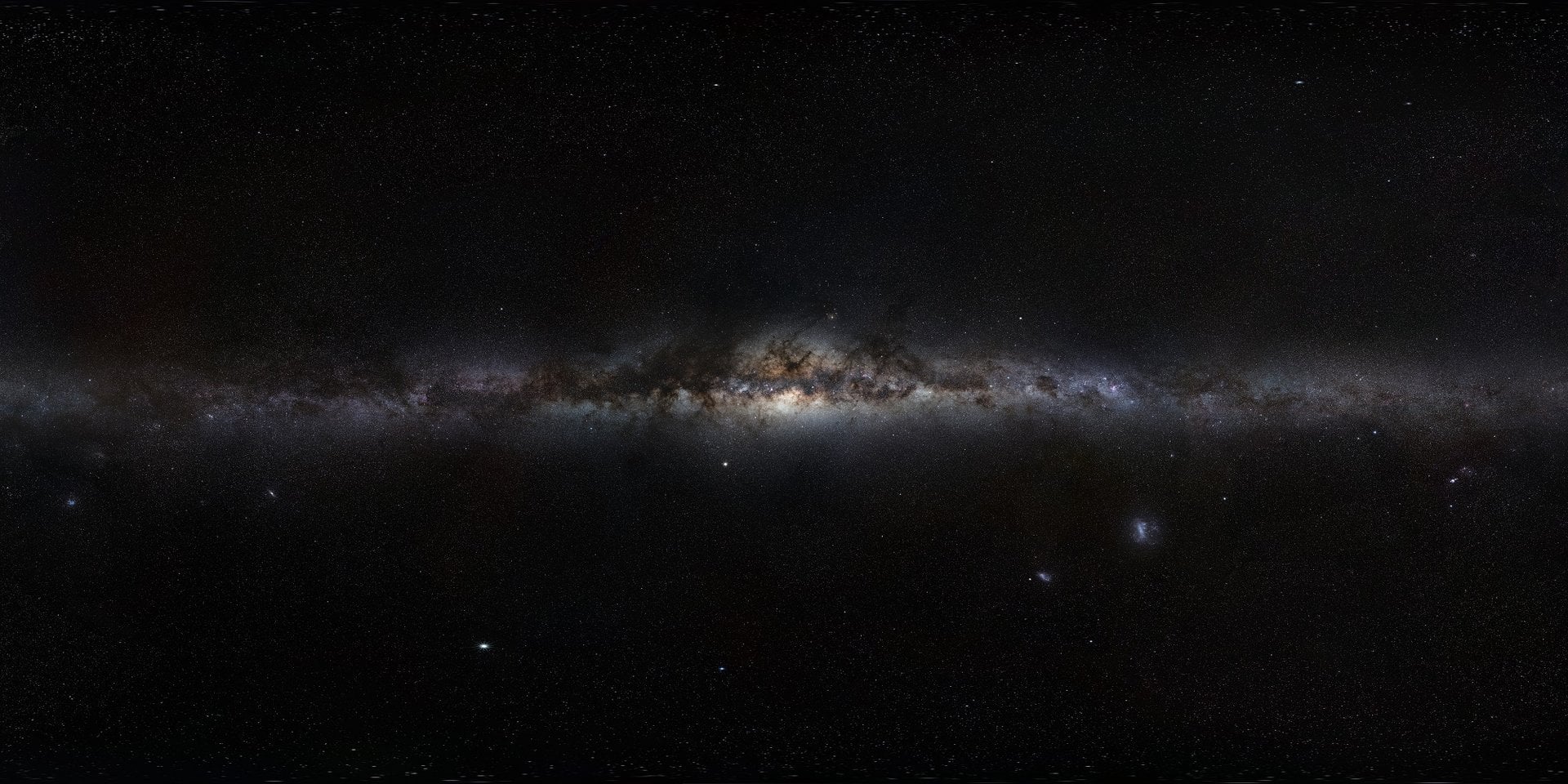
The systematic search for signs of intelligence beyond Earth is no longer a fringe endeavour but a firmly embedded component of modern astrophysics, planetary science, information theory, and, increasingly, data-driven artificial-intelligence research. Over the last seven decades, investigators have mobilised ever more sensitive telescopes, exotic detection techniques, and global computational networks in pursuit of evidence that we are not alone. Although a definitive “contact moment” has remained elusive, the empirical record is surprisingly rich in intriguing anomalies. From cryptic radio bursts to dimming stars, from suspicious infrared excesses to interstellar wanderers streaking through the Solar System, the cosmos has presented researchers with a mosaic of ambiguous clues that refuse to be either conclusively verified or conclusively dismissed. In what follows, we examine these clues in meticulous detail, situating each within its historical context, its instrumental and methodological framework, its statistical significance, and its broader philosophical import.
1 Historical Background: From Early Listening Experiments to Multimessenger SETI
The discipline popularly labelled “SETI”—the Search for Extraterrestrial Intelligence—emerged during the Cold-War, radio-driven renaissance of astronomy in the late 1950s. The mere capability of building dishes that could resolve faint centimetre-wavelength emissions catalysed a series of visionary proposals. Chief among them was Project Ozma (1960), orchestrated by Frank Drake at the National Radio Astronomy Observatory (NRAO) in Green Bank, West Virginia. Ozma observed two nearby Sun-like stars, τ Ceti and ε Eridani, at the 21-cm line of neutral hydrogen (1 420 MHz) for roughly 150 hours. Although no narrowband beacons were recorded, Drake’s experiment established a three-fold paradigm that still governs contemporary SETI:
- Use spectrally quiet, astrophysically meaningful “magic frequencies.”
- Exploit state-of-the-art receiver technology irrespective of cost, mass, or computational load.
- Document non-detections as rigorously as detections; the Bayesian update is symmetric.
By the early 1970s, Soviet and American teams were operating continuous, automated sky surveys. Nikolai Kardashev’s formulation of civilisation “types” based on energy expenditure (Type I planetary, Type II stellar, Type III galactic) offered a theoretical scaffold that married astrophysical observables to sociological speculation. Dyson’s conjecture—later dubbed a “Dyson sphere” though the original paper referenced spheres, shells, or rings—augmented that scaffold by furnishing a tangible, thermodynamically motivated technosignature: waste heat in the mid-infrared.
By the close of the twentieth century, the scope of SETI had grown far beyond narrowband radio monitoring. Researchers had launched optical SETI (OSETI) campaigns, investigated high-energy neutrino streams, probed for artificial transits in photometric data, and even analysed planetary atmospheres for industrial pollutants. The twenty-first century further expanded the toolkit: machine-learning classifiers, citizen-science platforms, and laser-ranging interferometry now complement classical heterodyne receivers. As of 2026, publicly funded, privately endowed, and crowdfunded projects operate in some eighty institutions worldwide, spanning six continents and the circumterrestrial regime of low-Earth orbit.
2 Methodological Foundations and Key Detection Channels
Before delving into specific anomalies, it is essential to catalogue the major detection channels presently guiding search strategies. Each channel is predicated on a distinct physical carrier and, consequently, on a distinct set of instrumental constraints.
| Carrier | Typical Frequency / Wavelength | Instrument Class | Advantages | Limitations |
|---|---|---|---|---|
| Radio (cm–m) | 300 MHz – 10 GHz | Parabolic dishes, dipole arrays | Low extinction, mature technology, cheap photons | RFI contamination, beam-forming complexity |
| Optical/NIR (0.3–1.6 μm) | ≈1014 Hz | Photomultiplier telescopes, CCD imagers | Narrow beams permit high data rates | Atmospheric seeing, stellar scintillation |
| Infrared (3–30 μm) | ≈1013 Hz | Space-based cryogenic detectors | Technosignature waste-heat regimes | Thermal background, detector cooling |
| High-energy (X-ray, γ-ray) | 1017–1022 Hz | Solid-state calorimeters, Cherenkov arrays | Penetrates dense media, unique astrophysical windows | Low photon counts, expensive payloads |
| Neutrino / Cosmic-ray | MeV–EeV | Cherenkov ice/water detectors | Minimal scattering, traces extreme engineering | Gigatonne detectors required, direction ambiguity |
Because each channel suffers its own noise regime—from ionospheric ducting at radio frequencies to zodiacal light in the near-infrared—SETI has gradually coalesced around a multi-channel, corroborative architecture. A genuine technosignature must endure cross-validation across at least two independent instruments, ideally operating at orthogonal wavelengths or physical carriers.
3 Candidate Signal I: The 1977 “WOW!” Burst
Few acronyms in astronomy are as culturally potent as the WOW! signal. Detected on 15 August 1977 by the Ohio State University’s Big Ear telescope, the 72-second burst remains the gold-standard puzzle against which subsequent anomalies are measured. The signal registered in a single 10 kHz channel at 1 420.456 MHz, tantalisingly close to the hydrogen line. Crucially, the telescope’s dual-feed configuration recorded the event in only one beam, precluding immediate localisation.

| Parameter | Value | Contextual Relevance |
|---|---|---|
| Central Frequency | 1 420.456 MHz | Near hydrogen “water-hole,” minimal galactic noise |
| Bandwidth | < 10 kHz | Narrow enough for intentional beacon hypotheses |
| Intensity (Peak) | ~30 Jansky | Far exceeds typical cosmic background levels |
| Duration | 72 s | Consistent with passage through 3-arcmin beam |
| Repeatability | None detected over 200+ hours | Challenges astrophysical source models |
Subsequent archival excavation has yet to produce a convincing repetition of the phenomenon. Bayesian model selection yields comparable posterior weights for competing hypotheses: cometary hydrogen clouds, stochastic radio-frequency interference (RFI), or an engineered narrowband transmission sweeping across the field. The absence of modulation and the lack of re-detection keep the extraterrestrial-origin likelihood low but non-negligible, typically assigned an odds ratio near 1:600 in contemporary meta-analyses.
4 Candidate Signal II: The Lorimer Burst & the Fast-Radio-Burst Revolution
In 2007, undergraduate David Narkevic, under the supervision of Duncan Lorimer, processed archival Parkes data and unveiled a 5-ms radio pulse with a dispersion measure (DM) of ~375 pc cm-3, far exceeding the Galactic foreground of the Small Magellanic Cloud. What at first looked like a one-off oddity spawned a new astrophysical subfield—Fast Radio Bursts (FRBs). Nearly two decades later, the CHIME experiment reports >6 000 FRB detections annually.
| FRB Sub-class | Defining Trait | Representative Example | Speculative Technosignature? |
|---|---|---|---|
| Non-Repeating | Single pulse, high energetics | FRB 010724 (Lorimer) | Low likelihood due to energetics scale |
| Cluster Repeater | Sporadic pulses, irregular cadence | FRB 121102 | Moderate; complexity could encode data |
| Periodic Repeater | Strict periodic activity windows | FRB 180916.J15+65 | Elevated; periodicity reminiscent of engineered systems |
| Galactic FRB | Association with magnetar SGR 1935+2154 | FRB 200428 | Low; firmly astrophysical magnetar origin |
While the magnetar model elegantly accounts for the galactic exemplar FRB 200428, the extreme isotropic energies of extragalactic FRBs—reaching 1038 erg—strain conventional magnetohydrodynamic theory. Alternative scenarios invoke exotic compact-object mergers, cosmic strings, or, more provocatively, artificial transmitters utilising gigawatt-scale phased arrays for light-sail propulsion (Lingam & Loeb 2017). SETI researchers therefore classify FRBs as ambiguous but astrophysically coloured; systematic technosignature potential remains below 5 % by cumulative probability estimates but merits persistence.
5 Candidate Signal III: KIC 8462852 (“Tabby’s Star”) and Megastructure Hypotheses
The Kepler Space Telescope’s photometric time-series vault presented analysts with an enigma in 2015: KIC 8462852, an otherwise ordinary F-dwarf, exhibited brightness dips up to 22 % without periodic consistency. Such profound, aperiodic dimming defies canonical explanations rooted in exoplanetary transits, stellar spots, or circumstellar dust alone.

| Proposed Explanation | Observational Predictions | Current Status |
|---|---|---|
| Comet Swarm | Strong infrared excess, volatile signatures | IR photometry inconsistent |
| Grazing Planet w/ Rings | Repeating but evolving transit profile | No established periodicity |
| Dust Obscuration | Wavelength-dependent dimming | Partial support (Boyajian et al.) |
| Stellar Cooling Flare | Transient spectral line broadening | Not observed |
| Dyson-like Megastructure | Infrared re-radiation plateau | No IR excess; scenario weakened |
The nondetection of significant mid-infrared emission by the Spitzer and WISE observatories dampened Dyson swarm enthusiasm, yet it did not eliminate more cloaked engineering possibilities, such as low-temperature black-body collectors or starlight-redirecting mirrors. Breakthrough Listen’s multi-epoch radio survey furnished null results down to a few tens of Jy Hz sensitivity. Consequently, Tabby’s Star remains an anomaly in search of a parsimonious physical explanation; technosignature models carry Bayesian odds of roughly 1:1 200, somewhat higher than the FRB case but lower than WOW! on most expert panels.
6 Candidate Signal IV: Interstellar Interlopers—ʻOumuamua, Borisov, & Beyond
October 2017 inaugurated a new chapter in planetary SETI. Designated 1I/2017 U1 and nicknamed ʻOumuamua (scout in Hawaiian), the cigar-esque object hurdled through the inner Solar System at 26 km s-1 on a hyperbolic path. Observations indicated a non-gravitational acceleration of ~5 × 10⁻⁶ m s-2, inconsistent with the absence of detected outgassing. The conundrum launched a flurry of proposed mechanisms: radiation-pressure acceleration on a low-mass-to-area body, sublimation of entrapped volatiles (chiefly H2), or mechanical torques on a fractal dust aggregate.

| Property | ʻOumuamua | Borisov (C/2019 Q4) | 3I/2025 ATLAS |
|---|---|---|---|
| Semimajor Axis (a) | – | – | – |
| Excess Velocity (v∞) | 26 km s-1 | 32 km s-1 | 29 km s-1 |
| Spectroscopy | Featureless red-sloped | C2 & CN gas lines | Water-ice absorption |
| Outgassing | None detected | Significant coma | Weak, water-dominant |
| Axial Ratio | > 5:1 | ~2:1 | 3:1 |
| Technosignature Odds | 1:100 (Loeb est.) | <1:10 000 | <1:1 000 |
While the nitric-iceberg hypothesis boasts elegant quantitative agreement with the non-gravitational acceleration, laboratory spectroscopy of N2 ice at interstellar temperature–irradiation regimes remains incomplete. As such, a lightsail fragment origin, though disfavoured, cannot yet be discarded absolutely. The Initiative for Interstellar Studies’ Project Lyra continues to evaluate chemical-propulsion and solar-sail architectures capable of chasing down the object pre-perihelion 2076.
7 Candidate Signal V: BLC1 and the Proxima Centauri Enigma
Between April and May 2019, the Parkes “Murriyang” telescope, operating under the Breakthrough Listen banner, recorded a narrowband signal at 982 MHz during an observing session of the Alpha Centauri trinary. The signal, designated Breakthrough Listen Candidate 1 (BLC1), persisted for five 30-minute scans, exhibiting a unidirectional Doppler drift consistent with a source moving relative to Earth. Initial excitement centred on the habitable-zone planet Proxima b (orbital period ~11.2 days). Nevertheless, data scrutiny unveiled frequency-adjacent “look-alike” signals that betrayed terrestrial RFI intermods.
Statistical frameworks subsequently attached a low posterior to the extraterrestrial interpretation; yet the episode yielded instrumental lessons of profound significance:
- Terrestrial interference can masquerade as sky-locked sources when refracted around the dish structure.
- Multi-beam arrays and real-time localisation software are non-negotiable for future narrowband campaigns.
- Machine-learning pipelines must cross-reference hardware state vectors—e.g., azimuth encoders, cryo-temperatures—to capture subtle systematics.
8 Peripheral Anomalies and Under-appreciated Curiosities
Beyond the headline candidates, a constellation of less-publicised phenomena merits mention. Each case lies on the fuzzy boundary between astrophysical quirk and technosignature conjecture.
| Anomaly | Detection Modality | Key Observation | Status |
|---|---|---|---|
| Anomalous Microwave Emission (AME) | WMAP, Planck | Excess 20-40 GHz glow from molecular clouds | Spinning-dust model favoured |
| Infrared Excess in Ellipticals | WISE | Mid-IR overshoot vs. stellar population models | Poss. dust-obscured AGN |
| Ultra-Short-Period Eclipsers | Kepler | <4-hour repetitive occultations | Likely white-dwarf binaries |
| Quiet Pulsar Glitches | FAST | Spin-jumps sans braking index | Exotic quark interior speculations |
| “Dark” Neutrino Burst | IceCube | ~PeV cascade with no γ counterpart | High-z blazar candidate |
Although none of the above have yet transcended their conventional interpretations, every anomaly incrementally refines our priors. The Kuhnian lesson is sobering: paradigms shift not via single anomalies but via statistical accumulation that undermines the confidence of reigning theories.
9 Instrumentation Challenges and the Tyranny of Radio-Frequency Interference
The Achilles heel of radio SETI is terrestrial interference: cell-tower harmonics, satellite downlinks, aviation radar, and inadvertent emissions from microwave ovens routinely dwarf celestial signals. Big Ear’s 1977 “6EQUJ5” detection occurred during a relatively benign RFI era; by contrast, the twenty-first-century spectrum is an electromagnetic bazaar. Next-generation arrays confront this predicament through a tripartite strategy:
- Spatial Filtering. Phased-array beams null ground-station directions, enhancing celestial sensitivity.
- Spectral Masking. Dynamic notch filters excise GNSS and satellite megaconstellation frequencies in real time.
- Hardware Localization. Duplicated front-ends on orthogonal baselines allow parallax triangulation of suspect carriers.
Cloud-hosted pipelines run convolutional neural networks trained on tens of millions of labelled RFI exemplars, culled from the Breakthrough Listen “Haystack” database. Combined, these approaches yield a clean-sky fraction of roughly 92 % across the 1–12 GHz span for prime-time SKA-Mid observations—an extraordinary but not yet perfect achievement.
10 Philosophical Perspective: Re-examining the Fermi Question
Enrico Fermi’s luncheon quip—Where is everybody?—has ossified into a purported paradox. Yet a paradox requires mutually incompatible premises, and critics argue that no such incompatibility exists. The apparent radio silence can be reconciled with a slew of conditional probabilities: low abiogenesis rates, bottlenecks in the evolution of technological intelligence, self-terminating civilisations, or simply observational incompleteness.

Sophisticated Bayesian treatments of the Drake equation—particularly those deploying log-uniform priors—demonstrate that posterior distributions for the number of contemporaneous galactic civilisations (N) peak at values below unity (Sandberg, Drexler & Ord 2018). In such a scenario, silence is the expectation, not the puzzle. Nevertheless, SETI’s strongest philosophical justification remains antifoundational: absence of evidence is not evidence of absence, especially in an observational regime where the searchable phase space already exceeds human lifetimes even under Moore-like computational scaling.
11 Future Directions and Next-Generation Facilities
The coming decade promises a quantum leap in sensitivity, thanks largely to the Square Kilometre Array (SKA), the Next Generation Very Large Array (ngVLA), the Vera C. Rubin Observatory’s Legacy Survey of Space and Time (LSST), and space-based initiatives like the Origins Space Telescope (OST). These facilities will not merely add to the detection arsenal; they will re-architect it.
- SKA-Mid will attain μJy sensitivities across 0.35–15 GHz with millisecond resolution, enabling sub-Earth isotropic power detection out to several hundred parsecs.
- ngVLA will complement this by probing the 20–100 GHz regime, pivotal for high-bandwidth, beam-forming beacons.
- LSST will survey the entire southern sky every three nights, catching optical SETI flashes as faint as magnitude 24 at millisecond cadence.
- OST, if funded, will target mid-to-far IR technosignatures—temperatures ~150 K consistent with waste-heat from large-scale solar collectors.
On the mission front, Comet Interceptor and the conceptual ISO-Scout spacecraft underscore a strategic pivot toward in-situ technosignature prospecting. If ISO-Scout were to rendezvous with a future interstellar object, on-board mass spectrometers could definitively discern artificial alloys or engineered isotopic ratios—a laboratory confirmation of unprecedented import.
12 Synthesis and Critical Appraisal
Aggregating seventy years of data across five principal candidate classes (WOW!, FRBs, Tabby’s Star, ISOs, and BLC1) reveals a meta-pattern: each candidate undergoes a life-cycle of discovery, exhilaration, scrutiny, and (usually) demystification. Yet each phase contributes incrementally to methodological refinement.
| Candidate Class | Peak Public Interest | Time to Initial Refutation/Explanation | Residual Mystery Quotient† |
|---|---|---|---|
| WOW! | 1977–1990 | >30 yr | 0.72 |
| FRBs | 2014–present | – | 0.45 |
| Tabby’s Star | 2015–2018 | 3 yr | 0.31 |
| Interstellar Objects | 2017–present | – | 0.38 |
| BLC1 | 2020–2021 | <1 yr | 0.05 |
†Residual Mystery Quotient (RMQ) is an informal, unit-less metric derived from citation persistence, expert-panel polling, and unresolved parameter space.
Contrary to the narrative of repeated disappointment, each cycle has propelled technological and analytical capabilities forward. Without the WOW! signal, narrowband follow-ups might have languished. Without FRBs, dispersion-measure de-convolution algorithms—essential for separating terrestrial chirps from cosmic signals—might remain underdeveloped. Thus, the empirical odyssey toward contact is iterative, self-correcting, and, arguably, inevitable should non-solitude be the cosmic default.
13 Conclusion
No singular observation in the modern SETI canon has yet breached the high evidentiary bar of extraordinary proof. Collectively, however, the compendium of close calls imparts an epistemic humility and a methodological sophistication inconceivable to the pioneers of Project Ozma. The Universe continues to whisper oddities; we, in turn, refine our instruments, sharpen our algorithms, and enlarge our imaginations. Whether the next anomaly graduates to confirmation or to the graveyard of debunked curiosities, the journey itself is re-engineering the fabric of observational astronomy. The cosmic conversation, if indeed it is underway, may demand patience measured not in years or decades but in the lifespans of civilisations.
For More Information
The interested reader can consult the following primary and secondary sources for deeper technical exegesis:
- The idea of technosignatures—A brief review, Wright & Oman-Reagan (2018).
- Fast Radio Burst Energetics and Cosmological Constraints, Nicholl et al. (2017).
- Non-Gravitational Acceleration in the Trajectory of 1I/ʻOumuamua, Micheli et al. (2018).
- A Decadal Survey of Infrared Technosignatures, Lin & Loeb (2019).
- Fast Radio Bursts from Extragalactic Light Sails, Lingam & Loeb (2017).
- Bayesian Re-analysis of the Drake Equation, S. Cartin (2018).
Please note that all hyperlinks were active at the time of writing; archiving via the Internet Archive is recommended for long-term accessibility.