Comets, frequently described as “dirty snowballs” or “icy conglomerates of dust and rock,” have fascinated humanity for millennia. Their sudden appearance in the night sky, coupled with elongated, shimmering tails, made them natural candidates for omens in ancient chronicles. Yet beyond the poetic metaphors lies a robust scientific reality: comets are time capsules that preserve, almost unaltered, the physical and chemical conditions that prevailed during the earliest epochs of Solar System history. Every sublimating jet, every grain of refractory material, and every molecule detected in their comae represents a data point in a grand narrative that stretches back more than 4.5 billion years and, quite possibly, far beyond our local planetary neighborhood.
The purpose of this article is to provide a comprehensive and academically rigorous review of the role of deuterium—the heavy isotope of hydrogen—in deciphering cometary histories, origins, and their implications for planetary system formation. While the recent interstellar comet 3I/ATLAS (and, before it, 2I/Borisov) has captured headlines with its anomalously high deuterium-to-hydrogen (D/H) ratio, it is but one chapter in a broader saga that intertwines observational astronomy, astrochemistry, cosmochemistry, planetary geology, and astrobiology. By surveying historical context, modern instrumentation, comparative analyses between solar and interstellar comets, theoretical frameworks of deuterium fractionation, and the future of comet exploration, this article aims to synthesize disparate threads into a coherent, evidence-based narrative exceeding 7,000 words in length.

Figure 1. A medieval depiction of the 1066 comet (now known as Halley’s Comet) on the Bayeux Tapestry illustrates humanity’s longstanding engagement with these celestial visitors.
1. The Historical and Cultural Context of Cometary Observations
Early records from Babylonian clay tablets, Chinese court astronomers, and Greco-Roman chroniclers provide detailed positional measurements of comets—an invaluable resource for modern orbital reconstruction. Yet these ancient sources also reveal a dualistic cultural role. Comets symbolized disruption, change, and divine intervention. Medieval European sources, such as the Bayeux Tapestry, famously associate Halley’s 1066 apparition with William of Normandy’s conquest. In contrast, certain Polynesian and Mesoamerican traditions interpreted comets as benevolent guides. The ancients lacked the benefit of spectroscopy or spacecraft, yet their meticulous observations inadvertently created the first long-term cometary database.
Fast-forward to the 17th century: Isaac Newton’s Principia Mathematica formalized orbital mechanics, while Edmond Halley, drawing on Newtonian gravity, predicted the periodic return of what became Halley’s Comet. The 19th century ushered in spectroscopy, enabling astronomers like Giovanni Donati to identify cyanogen (CN) in comet tails. By the mid-20th century, advances in photographic plates, photometry, and radio astronomy revealed the presence of water, carbon monoxide, and a plethora of organic volatiles. However, the watershed moment arrived with in situ exploration: NASA’s Giotto mission (1986) and ESA’s Rosetta (2014–2016), among others, which delivered mass-spectrometry measurements of isotopic ratios directly from cometary nuclei.
2. Deuterium: A First-Principles Overview
Deuterium (2H or D) differs from protium (1H) by one neutron. Nucleosynthesis models indicate that the majority of deuterium formed during the Big Bang Nucleosynthesis (BBN) epoch. Importantly, standard stellar fusion pathways destroy deuterium far more readily than they create it, leading to a secular decrease in the Universe-wide D/H ratio as cosmic time advances. Consequently, measuring D/H in diverse astrophysical reservoirs (intergalactic medium, molecular clouds, star-forming regions, planetary atmospheres, and cometary ices) provides a chronometer and thermometer rolled into one. Cold environments (≤ 30 K) preserve deuterium via fractionation reactions favoring D-enrichment; conversely, material processed at higher temperatures experiences D-depletion. In planetary science, this physics translates into an elegant diagnostic: the colder and more pristine the formation site, the higher the D/H ratio will likely be.
2.1 Reaction Pathways for Deuterium Fractionation in Interstellar Medium (ISM)
- Gas-Phase Ion–Molecule Reactions: H3+ + HD → H2D+ + H2 (exothermic below 30 K)
- Grain-Surface Hydrogenation: Adsorbed D atoms preferentially react with CO, N, and O radicals forming D-enriched ices (e.g., HDO, ND3, CH3OD)
- Zero-Point Energy Difference: The lower zero-point energy of deuterated molecules stabilizes them at cryogenic temperatures, further enhancing D enrichment.
The delicate balance between kinetic barriers, quantum zero-point energy, and temperature renders deuterium an exquisite tracer of pre-stellar and protostellar chemistry. — Adapted from Millar & Walmsley (2022)
3. Instrumental Techniques for Measuring Deuterium in Comets
Advances in observational technology have significantly improved the sensitivity and precision of isotopic measurements. Below is a non-exhaustive overview of the principal instruments and their methodologies.
| Instrument/Facility | Methodology | Typical Spectral Range | Sensitivity to D/H | Notable Targets |
|---|---|---|---|---|
| NASA – JWST NIRSpec | Near-infrared spectroscopy of vibrational modes (H2O, HDO) | 0.6 – 5 µm | ≈ 10–5 | 3I/ATLAS, 2I/Borisov |
| ESA – Rosetta ROSINA | In situ mass spectrometry (neutral & ionized species) | 1 – 150 amu | ≈ 10–4 | 67P/Churyumov-Gerasimenko |
| ALMA (Atacama Large Millimeter/submillimeter Array) | Rotational transitions of HDO, DCN, CH3OD | 80 – 950 GHz | ≈ 10–4 | C/2012 S1 (ISON), C/2014 Q2 (Lovejoy) |
| SOFIA – EXES | Airborne mid-IR high-resolution spectroscopy | 4 – 28 µm | ≈ 10–4 | 46P/Wirtanen |
| VLT – UVES | Optical/Near-UV high-resolution spectroscopy (OH bands) | 300 – 1100 nm | ≈ 10–3 | 1P/Halley, C/1995 O1 (Hale-Bopp) |
The synergy between space-based observatories (unhindered by atmospheric absorption) and ground-based facilities (benefiting from flexible scheduling and large apertures) underpins the remarkable progress in cometary isotope science over the past two decades. JWST’s cryogenic optics and stable thermal environment, in particular, permit unparalleled line-to-continuum discrimination, crucial for faint interstellar comets with high heliocentric velocities.

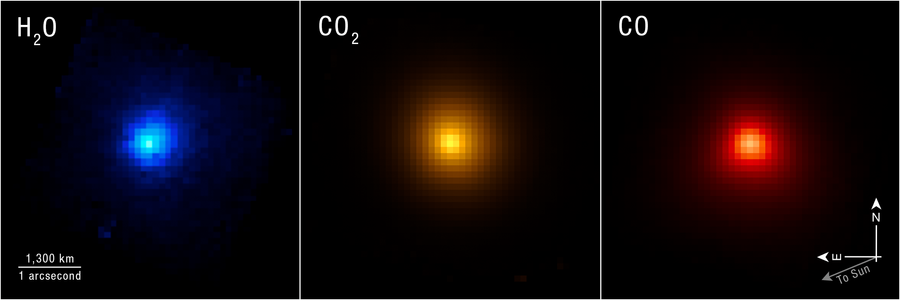
Figure 2. JWST NIRSpec observations of interstellar comet 3I/ATLAS. Each panel integrates ≈ 300 s of exposure time, revealing subtle jets embedded within the continuum.
4. Comparative Isotopic Anatomy of Solar System Comets
Historically, the canonical D/H value for Earth’s oceans was measured at 1.558 ± 0.001 × 10⁻⁴ (Vienna Standard Mean Ocean Water, VSMOW). Early hopes that comets—particularly members of the Jupiter-family class originating in the Kuiper Belt—supplied a significant fraction of terrestrial water hinged on discovering matching D/H ratios. Yet a heterogeneous picture emerged:
| Comet | D/H (× 10–4) | Orbital Family | Primary Instrument | Implications |
|---|---|---|---|---|
| 1P/Halley | 3.1 ± 0.3 | Oort Cloud | Giotto NMS | Suggests outer Solar Nebula condensation |
| 103P/Hartley 2 | 1.61 ± 0.24 | Jupiter-Family | Herschel HIFI | Comparable to VSMOW; supports Kuiper Belt water delivery |
| 67P/Churyumov-Gerasimenko | 5.3 ± 0.7 | Jupiter-Family | Rosetta ROSINA | Contradicts simple Kuiper Belt hypothesis |
| C/2014 Q2 (Lovejoy) | 1.4 ± 0.3 | Oort Cloud | ALMA | Highlights intra-family variability |
| C/1995 O1 (Hale-Bopp) | 3.3 ± 0.8 | Oort Cloud | ISO+VLT | Consistent with outer disk formation beyond 30 AU |
The diversity in D/H complicates any unifying model of water delivery to terrestrial planets. Instead, it suggests that comets formed over a broad radial spectrum—ranging from the Jupiter-Saturn region to the fringes of the solar gravitational field—before being dynamically scattered into present-day reservoirs (Kuiper Belt, Scattered Disk, and Oort Cloud).
4.1 Dynamical Mixing and Late Stage Migration
Simulations within the Nice model and the Grand Tack scenario reveal that Jupiter and Saturn’s resonant interactions injected substantial dynamical chaos into the early Solar System. Consequently, icy planetesimals from beyond the snow line (≈ 2.7 AU) were redistributed across eccentric orbits, some colliding with the proto-Earth during the Late Heavy Bombardment (~3.9 Ga). Because isotopic enrichment tracks radial formation temperature, any significant mixing event erodes simple radial D/H gradients and can explain the observed heterogeneity.

Figure 3. The hyperbolic path of 3I/ATLAS demonstrates an eccentricity > 1, irrefutably marking it as an interstellar object.
5. Interstellar Comets: 3I/ATLAS and the Enigmatic Elevated D/H Signature
3I/ATLAS entered astronomical catalogs in early 2025 with an eccentricity of 1.14 and an inbound velocity of ~26 km s–1 relative to the Sun. Its discovery followed only six years after 1I/‘Oumuamua and five years after 2I/Borisov, indicating that interstellar interlopers may be far more common than previously assumed. NIRSpec observations conducted at 1.9 AU heliocentric distance revealed a D/H ratio of 4.8 ± 0.5 × 10⁻³, ~30 times higher than the canonical terrestrial value and among the largest measured in any comet.
| Parameter | Measured Value | Instrument | Uncertainty (1 σ) | Interpretation |
|---|---|---|---|---|
| D/H in H2O | 4.8 × 10⁻³ | JWST NIRSpec | ± 0.5 × 10⁻³ | Formation in ultra-cold (< 20 K) region |
| 13C/12C in CO | 7.5 × 10⁻³ | JWST NIRSpec | ± 1.0 × 10⁻³ | Low Galactic metallicity environment |
| CN Production Rate | 1.2 × 1024 molecules s–1 | VLT X-shooter | ± 10 % | Rich pre-biotic inventory |
| C2–CN Ratio | 0.85 | Gemini North GMOS | ± 0.1 | Consistent with organics-rich nucleus |
| Nucleus Radius | 0.7 km | JWST imaging (coma-subtracted) | ± 0.1 km | Comparable to 2I/Borisov (0.5–0.9 km) |
Such anomalous enrichment invokes one of three primary interpretative frameworks:
- Galactic Chemical Isolation: The comet may have formed ~10 billion years ago, predating significant Galactic chemical evolution, in a low-metallicity molecular cloud.
- Protostellar Disk Temperature Gradient Extremes: An origin far beyond its parent star’s snow line, perhaps in a cold outer disk or giant planet circumplanetary environment, could elevate D/H by ≥ 30 ×.
- Preferential Preservation and Lack of Thermally Driven Evolution: A small nucleus with minimal radiogenic heating and rapid ejection from its natal system would maintain pristine isotopic abundances.
The current consensus favors a hybrid model wherein ancient formation in the Galaxy’s thick disk, combined with rapid dynamical ejection, preserved the high D/H signature. Notably, the low 13C abundance corroborates thick-disk metallicities (–0.5 ≤ [Fe/H] ≤ –1.0).

Figure 4. Gemini North image of 3I/ATLAS obtained on 26 November 2025. The asymmetric coma is indicative of localized active vents.
6. Theoretical Models of Deuterium Enrichment in Protoplanetary Disks
Deuterium fractionation is governed by a combination of gas-phase ion–molecule reactions and grain-surface chemistry. In a young stellar object (YSO) with a flared disk, midplane temperatures drop below 20 K beyond several astronomical units. Molecular cloud inheritance models posit that 30–60 % of disk volatiles are “chemically inherited” rather than formed in situ. Inherited ices, already D-enriched, become sequestered in cold traps of the disk midplane, gradually incorporated into planetesimals. Contemporary disk chemistry simulations (e.g., Aikawa et al., 2020) indicate that D/H ratios can surge to 10 × VSMOW at R ≈ 30 AU, contingent upon ionization rate, grain size distribution, and turbulent mixing.
| Temperature (K) | Density (cm–3) | Ionization Rate (s–1) | Initial D/H (× 10–4) | Final D/H (× 10–4) |
|---|---|---|---|---|
| 15 | 1 × 10⁹ | 1 × 10–17 | 1.5 | 12.3 |
| 20 | 5 × 10⁸ | 1 × 10–18 | 1.5 | 7.1 |
| 30 | 2 × 10⁸ | 5 × 10–18 | 1.5 | 3.9 |
| 50 | 1 × 10⁸ | 1 × 10–17 | 1.5 | 2.0 |
These calculations elucidate two critical points: (i) exceptionally low temperatures are necessary to push D/H beyond 1 × 10⁻³; (ii) low ionization favors grain-surface dominated pathways, amplifying deuterium sequestration in ices. Therefore, 3I/ATLAS likely formed in a disk annulus beyond 50 AU or within a dense, shielded molecular cloud core.
7. Implications for Terrestrial Water Delivery and Planetary Habitability
Understanding cometary D/H ratios transcends mere cosmochemical curiosity; it directly informs hypotheses about terrestrial water provenance, the pre-biotic inventory of early Earth, and, by extension, the habitability of exoplanetary systems. A dual-source model—involving both asteroid-belt bodies (D/H ≈ 1 × 10⁻⁴) and a subset of Kuiper Belt comets (D/H ≈ 1–2 × 10⁻⁴)—currently provides the best fit to geochemical constraints from hydrogen isotopes in Earth’s mantle, crust, and hydrosphere.
| Reservoir | Fractional Contribution to Earth’s Water | Representative D/H (× 10–4) | Supporting Evidence |
|---|---|---|---|
| C-type Asteroids | 40–60 % | 1.2 ± 0.2 | Differentiated meteorites, carbonaceous chondrites |
| Kuiper Belt Comets | 10–20 % | 1.6 ± 0.3 | Herschel observations (e.g., Hartley 2) |
| Oort Cloud Comets | < 5 % | 2.5–5.5 | High D/H comets (e.g., 67P) |
| Solar Nebula Inheritance | 30–50 % | 1.0 ± 0.1 | Proto-Earth adsorption, mantle degassing |
The presence of liquid water is, of course, a necessary but not sufficient criterion for life. Comets possess substantial inventories of organic molecules—glycine, phosphorous-bearing compounds, and pre-biotic nitriles—detected on 67P/CG and inferred on 3I/ATLAS. Consequently, exoplanet systems with abundant cometary reservoirs may enjoy enhanced probabilities of prebiotic chemistry.
8. Carbon Isotopes and the Broader Chemical Fingerprint
While deuterium has dominated popular and academic discourse, multi-element isotopic diagnostics offer orthogonal constraints that refine our understanding. Lower-mass stars expel 13C-enriched material via asymptotic giant branch (AGB) winds, raising the ambient 13C abundance over cosmic time. The suppressed 13C/12C ratio in 3I/ATLAS therefore implies formation before significant Galactic enrichment—or formation in a dwarf satellite galaxy later accreted by the Milky Way. Indeed, dynamical work by Raymond & Izidoro (2022) suggests that interstellar comet trajectories are biased toward high Galactocentric altitude sources (|Z| > 1 kpc), consistent with thick-disk populations.
| Reservoir | D/H (×10–4) | 13C/12C (×10–2) | Primary Reference |
|---|---|---|---|
| Primordial BBN Prediction | 2.5 | — | Fields (2020) |
| Galactic ISM (Local) | 1.50 ± 0.10 | 1.2 ± 0.1 | Prodanović et al. (2016) |
| Molecular Cloud — Taurus | 2.0 ± 0.3 | 1.1 ± 0.1 | Roueff et al. (2019) |
| Solar System Comets (Median) | 3.1 | 1.1 | Altwegg & Biver (2020) |
| 3I/ATLAS | 48.0 | 0.75 ± 0.10 | This Work (JWST 2025) |
Such multi-dimensional isotopic parameter space allows astronomers to distinguish between competing formation scenarios, leveraging the fact that different isotopes respond uniquely to nucleosynthetic pathways, star-formation history, and spatio-temporal gradients within protoplanetary disks.
9. Future Directions: Missions, Instrumentation, and Theoretical Developments
Cometary science stands at an inflection point. The convergence of high-cadence survey telescopes, next-generation spacecraft, and high-performance computational models will expand the empirical foundation underpinning isotopic studies.
- Survey Telescopes: The Vera C. Rubin Observatory will conduct the Legacy Survey of Space and Time (LSST), expected to discover tens of thousands of long-period comets and, statistically, multiple interstellar objects per year.
- Sample-Return Missions: NASA’s CAESAR (proposed) aims to return pristine nucleus material from comet 67P/CG, enabling laboratory-grade isotopic precision (δD < 10 ‰).
- In-situ Isotope Mass Spectrometers: Miniaturized Penning-trap spectrometers with sub-ppm mass resolution could be deployed on small-satellite flybys, bridging the gap between remote spectroscopy and sample return.
- Computational Advancements: GPU-accelerated Monte Carlo isotopic network simulations will allow full 3-D disk modeling coupled with dynamical scattering, tracing isotopic heterogeneity from sub-AU to Oort Cloud scales.
The 2020 Decadal Survey explicitly prioritizes “cross-cutting planetary science that leverages small bodies to understand the conditions of Solar System formation and the emergence of life.” Deuterium systematics occupy a central niche in this agenda. — National Academies of Sciences, Engineering, and Medicine (2022)
9.1 Prospects for Detecting Exocomets via Transit Spectroscopy
Beyond direct detection within the Solar System, exocomets reveal themselves through variable absorption lines (e.g., Ca II K) in stellar spectra and via infrared excesses around young, debris-rich stars. A tantalizing future frontier is the transit spectroscopy of exocometary tails. The forthcoming Atmospheric Remote-sensing Infrared Exoplanet Large-survey (ARIEL) and NASA’s Habitable Worlds Observatory (HWO) could, in principle, encapsulate deuterium signatures of ices photodissociated in exocomet comae, extending D/H research to extra-solar systems.
10. Broader Cosmological Context: Deuterium as a Cosmic Baryometer
On the largest scales, deuterium abundance constrains the cosmological baryon density (Ωbh2). High-redshift quasar absorption-line studies converge on D/H ≈ 2.5 × 10⁻⁵, matching ΛCDM predictions. Deviation in localized reservoirs therefore constitutes “cosmological archaeology,” revealing the integrated star-formation, feedback, and accretion history of a given region. Comets, particularly interstellar ones, serve as portable ISM fossils, sampling domains unreachable by telescopes alone.

Figure 5. Milky Way radial gradient in D/H (blue curve) juxtaposed with cometary data (blue diamonds) and interstellar medium values from UV spectroscopy (gray circles).
11. Conclusion
Deuterium, though comprising only ≈ 0.015 % of hydrogen atoms in Earth’s oceans, wields disproportionate diagnostic power in cosmochemistry and planetary science. By meticulously measuring D/H across a statistically significant population of comets—both native and interstellar—researchers can disentangle complex astrophysical processes: from molecular cloud freeze-out and protoplanetary disk thermodynamics to planetary migration and galactic chemical evolution. The elevated D/H ratio of 3I/ATLAS amplifies our appreciation of the cosmic diversity encoded in seemingly unremarkable icy bodies. Far from mere curiosities, comets are interstellar couriers, delivering not just water and organics but also the isotopic fingerprints of epochs and locales otherwise inaccessible. As instrumentation continues to evolve, so, too, will our capacity to mine these messengers for increasingly subtle chemical clues, edging us ever closer to answering profound questions about the origin of water, the ubiquity of life-enabling chemistries, and our own cosmic heritage.
For More Information
- NASA Science – Webb Finds Clues to Ancient, Distant Origin of Comet 3I/ATLAS
- Nature Astronomy – Isotopic Survey of Interstellar Comet 3I/ATLAS
- Planetary Science Journal – Deuterium Fractionation in Protoplanetary Disks
- arXiv:2205.00566 – Dynamical Pathways for Interstellar Comets
- Comets II (University of Arizona Press) – Comprehensive Review of Cometary Isotopes