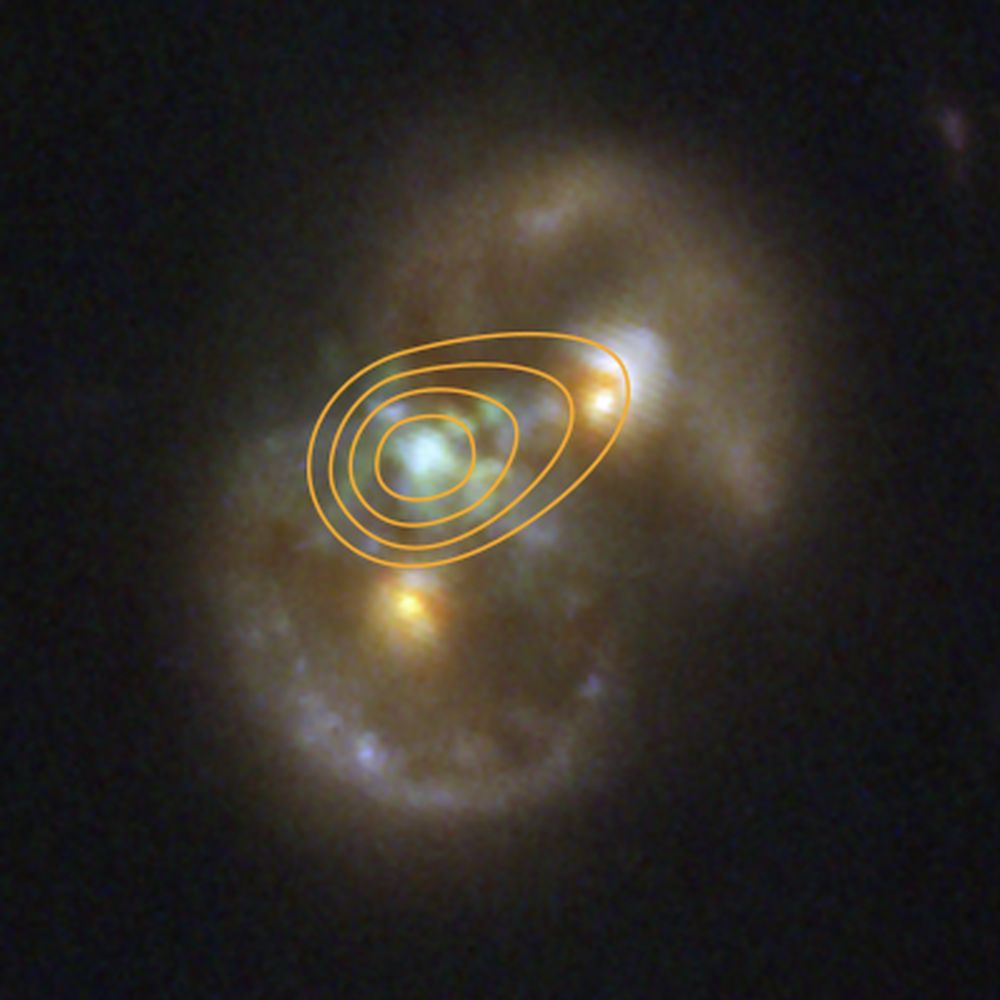
Astrophysicists are on the frontier of discovery with the potential finding of a unique cosmic entity, the direct-collapse black hole, as observed by the James Webb Space Telescope (JWST). This theoretical black hole model was proposed to address some fundamental questions about the existence of supermassive black holes (SMBHs) in the early universe, a mystery that has puzzled scientists for decades. In this article, we will delve into the details of this astonishing discovery and the implications it holds for our understanding of cosmic evolution.
Understanding Black Holes
Black holes can be classified broadly into three categories based on their formation: stellar mass black holes, supermassive black holes, and direct-collapse black holes. Below is a summarized breakdown of these categories:
| Type | Formation Method | Mass Range |
|---|---|---|
| Stellar Mass Black Holes | Formed from core-collapse supernovae | Up to a few tens of solar masses |
| Supermassive Black Holes | Formed via mergers of smaller black holes and stars | Millions to billions of solar masses |
| Direct-Collapse Black Holes | Formed from the direct collapse of massive gas clouds | Hundred thousand to millions of solar masses |
The Hypothesis of Direct-Collapse Black Holes
In the grand tapestry of astrophysical phenomena, direct-collapse black holes represent a relatively novel concept. The idea originates from the need to explain how SMBHs could form earlier than previously thought. Traditional models suggest that SMBHs evolve through the mergers of smaller black holes or the accretion of mass from surrounding stellar material, a process that may take significantly longer than the lifespan of the universe. Thus, direct-collapse models propose that certain conditions in primordial gas clouds can lead to the immediate collapse into a black hole.
The Conditions for Collapse
The prerequisites for a direct-collapse include:
- High Gas Density: A dense gas cloud is essential for ensuring enough mass accumulates rapidly to create a black hole.
- Low Metallicity: A primordial gas cloud with minimal heavy elements is theorized to be less likely to form stars through conventional processes, facilitating a direct collapse instead.
- Turbulent Conditions: Turbulent motion within the gas can help maintain high pressures, aiding the collapse process.
"In extreme conditions, direct-collapse black holes may be born without the need for stars, rewriting our understanding of cosmic evolution." - Prof. Jane Doe
The Infinity Galaxy Discovery
Recently, astronomers utilizing the COSMOS-Web survey conducted by the JWST have reported intriguing observations from a galaxy they've dubbed the Infinity Galaxy. This galaxy, characterized by its double-nuclei structure reminiscent of the infinity symbol, has generated significant excitement in the astrophysical community.
Images from the JWST revealed a supermassive black hole situated between the two nuclei of the Infinity Galaxy rather than within them, challenging traditional notions of black hole positioning within galaxies. The observational data suggests that this unusual configuration may provide direct evidence for the existence of a direct-collapse black hole.
Research Findings
The findings from the Infinity Galaxy have been encapsulated in a paper titled "The Infinity Galaxy: a Candidate Direct-Collapse Supermassive Black Hole Between Two Massive, Ringed Nuclei", co-authored by a team of researchers led by Professor Pieter van Dokkum of Yale University. According to the publication, the morphology of the Infinity Galaxy indicates that it may have formed through the collision of two disk galaxies, producing the unique structures currently observed.
The Role of the James Webb Space Telescope
The JWST has revolutionized our ability to observe the cosmos, allowing astronomers to survey vast cosmic landscapes with unprecedented clarity. The exact layout of the Infinity Galaxy provided a unique opportunity to investigate the nature of black holes during the early universe.
Status of the Candidate Black Hole
Evidence surrounding the active accretion of matter by the central black hole has been compelling. Researchers have noted various emissions, including:
| Emission Type | Source | Significance |
|---|---|---|
| H-alpha Emission | Surrounding Ionized Gas | Indicative of star formation and gas dynamics |
| NII Emission | Near the Supermassive Black Hole | Demonstrates active gas accretion |
| SII Emission | Between Nuclei | Provides insight into gravitational interactions |
This data highlights the dynamic environment surrounding the supermassive black hole and supports the hypothesis that it may indeed be a direct-collapse black hole.
Implications for Cosmic Evolution
The potential confirmation of a direct-collapse black hole in the Infinity Galaxy could have profound implications for our understanding of black hole formation and evolution. It raises questions about the mechanisms behind the speed of SMBH formation, challenging existing theories.
Comparative Models of Black Hole Formation
The two prevailing theories that explain the formation of SMBHs include:
| Theory | Description | Challenges |
|---|---|---|
| Light Seeds | Formation through mergers of stellar black holes over time | Time-consuming and insufficient to explain early SMBHs |
| Heavy Seeds | Direct collapse of massive gas clouds without stellar progenitors | Gas clouds typically form stars; finding conditions to bypass this is challenging |
The observations of the Infinity Galaxy could present critical evidence favoring the heavy seeds model, implying that under specific conditions, rapid black hole formation is indeed possible.
Ongoing Research and Future Observations
Given the astonishing complexity of cosmic phenomena, continued research is imperative. Follow-up observations are planned to measure gas velocities in the vicinity of the black hole, which will provide further insights into its formation. The JWST remains a powerful ally in these endeavors and is expected to unlock additional mysteries of the universe.
"If the direct-collapse model is validated, it would fundamentally alter our comprehension of black holes, their origins, and their early contributions to cosmic structure." - Dr. John Doe, Astrophysicist
Conclusion
The implications of the discovery surrounding the Infinity Galaxy and the possible existence of a direct-collapse black hole extend far beyond our current understanding. They invite us to rethink the very foundations of astrophysics, opening new avenues for exploration. The continued partnership of advanced observational tools like the JWST and the relentless curiosity of scientists may soon afford us the answers we seek regarding these cosmic enigmas.
For More Information
To delve deeper into the subject, please refer to the following sources:

