Recent research suggests that the ingredients necessary for rocky planet formation, as well as vital elements for life, were available much earlier in the universe's history than previously believed. This challenges the long-held view that planet formation was a gradual process that began billions of years after the Big Bang.
Planet Formation Timeline
According to a study conducted by scientists at the University of Portsmouth, evidence suggests that the building blocks of rocky planets may have started to form as early as 100 million years after the Big Bang—preceding the formation of the first galaxies. The process was significantly influenced by the explosive deaths of early massive stars, known as Pop III supernovae, which scattered essential elements such as carbon, oxygen, and iron into the surrounding gas.
Key Findings
- Early Supernova Explosions: These supernovae were the universe's first factories for the elements needed to build planets.
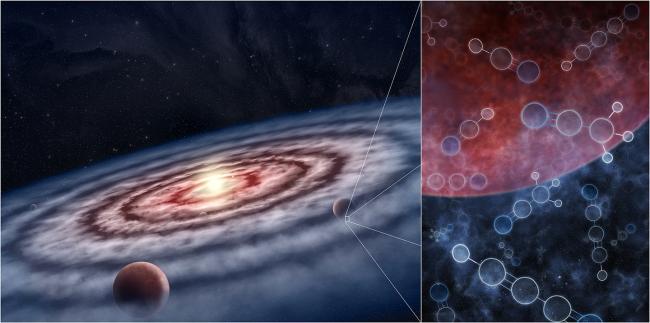
- Formation of Planetary Disks: The remnants of these cosmic explosions enriched nearby gas clouds, enabling them to collapse under their own gravity. This process led to the creation of swirling discs of material around young stars, similar to the disc from which our Solar System formed.
- Presence of Water: The study indicated that these early discs might contain substantial amounts of water comparable to what is present in our Solar System today.
Dr. Daniel Whalen emphasized that computer simulations indicated that solid materials accumulated in these discs in quantities sufficient to create several Earth masses' worth of planetary building blocks.
Research Methodology
The research utilized advanced computational simulations to analyze the conditions present in the early universe. The team modeled the dynamics of gas and dust in protoplanetary discs established around various mass contexts. The simulations revealed that not only did the first building blocks of rocky planets form early, but there was also a significant presence of water immediately available for these early worlds.
Implications for Habitability
This research raises intriguing questions regarding the potential for habitable worlds to have emerged far earlier in cosmic history. The presence of water, a key requirement for life, suggests that environments conducive to forming life may also have existed shortly after the Big Bang.
Published Research
The findings are documented in research published in the Center for Astrophysics | Harvard & Smithsonian, with significant contributions from Dr. Whalen's research team.
Related Studies
Other research efforts confirm similar conclusions regarding early planetary formation and the diversity of chemical compositions across different protoplanetary disks. For example, studies from the Harvard-Smithsonian Center for Astrophysics have shown that each planetary nursery contains unique molecules, influencing the types of planets that can form and their capacity to support life.
Visual Evidence
For visual representations, researchers have captured the formation processes and maps of chemical distributions within protoplanetary disks using high-resolution imaging technologies, providing valuable context to the discussed findings.
Conclusion
This pioneering research significantly shifts our understanding of cosmic history and the processes leading to planet formation, suggesting a more complex and rapid timeline than previously accepted. The implications for the potential of early life in the universe are profound and warrant further investigation.
References
- University of Portsmouth
- Center for Astrophysics | Harvard & Smithsonian
Additional Academic Sources
- The Ingredients for Planets Formed Far Earlier Than Thought: A study revealing that the essential ingredients for rocky planets could have formed just 100 million years after the Big Bang.
- Planets Form in Organic Soups with Different Ingredients: Research detailing the diverse chemical compositions of protoplanetary disks where planets form.