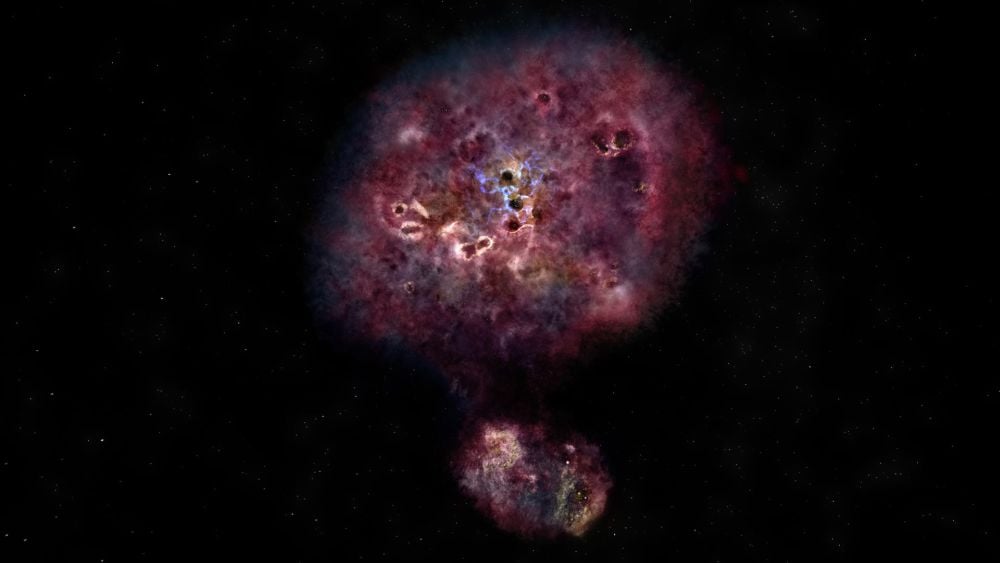
The astonishing discovery of a surprisingly large population of massive quiescent galaxies (hereafter MQs) within a mere one to three billion years of the Big Bang has forced a systematic re-evaluation of galaxy-formation theory. Within that same cosmic epoch, astronomers also find an abundant class of spectacularly luminous yet heavily obscured systems, the dusty star-forming galaxies (DSFGs). The empirical juxtaposition of galaxies that have apparently run out of gas and galaxies that are, quite literally, drowning in it demands a unified, self-consistent explanation. The following review—spanning observations, simulations, physical theory, and methodological considerations—assembles the current state of the art, paying particular attention to the emerging consensus that the majority of MQs experienced a rapid DSFG phase immediately prior to quenching. In doing so, the article places special emphasis on the complicated ballet of major mergers, active galactic nucleus (AGN) feedback, and violent starbursts that plausibly links the two seemingly antithetical populations.
1. Observational Landscape: A Quantitative Census of the Early Universe
By combining wide-area near-infrared surveys from the James Webb Space Telescope (JWST), sub–millimetre photometry from the Atacama Large Millimeter/submillimeter Array (ALMA), and rest-frame ultraviolet (UV) data from the venerable Hubble Space Telescope (HST), astronomers have pieced together a statistical portrait of galaxy populations at redshifts z ≳ 2. Table 1 provides a condensed overview of the most widely referenced surface-density measurements; note how MQs and DSFGs occupy broadly similar comoving number densities despite their radically different spectral energy distributions.
| Table 1. Representative Number Densities at 2 < z < 5 | |||
|---|---|---|---|
| Population | Selection Band | Typical Log₁₀(M⋆/M☉) | Comoving Density [Mpc−3] |
| MQs | Rest-frame optical/NIR | 10.5–11.5 | 10−5.0–10−4.5 |
| DSFGs | 850 µm / 1.1–1.3 mm | 10.7–11.8 | 10−4.8–10−4.3 |
| UV-bright LBGs | Rest-frame far-UV | 9.5–10.5 | 10−3.6–10−3.1 |
| Milky-Way analogues | Multi-band SED fit | 10.6–10.8 | 10−2.6–10−2.4 |
The striking parity between DSFGs and MQs prompts the simplest possible hypothesis: the same halos that briefly manifest as DSFGs eventually become MQs. Yet, simplicity in astronomy often belies a zoo of confounding astrophysical processes. Before discussing theoretical mechanisms, we synthesize the salient observational signatures for each class.
1.1 Photometric and Spectroscopic Hallmarks of DSFGs
- Infrared Luminosity (LIR): Frequently exceeds 1012 L☉, categorizing many DSFGs as ultra-luminous infrared galaxies (ULIRGs) or even hyper-luminous (HyLIRGs).
- Star-Formation Rates (SFRs): Estimates from far-IR dust emission and radio continuum consistently yield 200–1000 M☉ yr−1.
- Dust Temperatures: Modified blackbody fits indicate Tdust≈35–55 K, implying massive cold-gas reservoirs.
- CO and [C II] Lines: ALMA observations reveal molecular-gas masses approaching ~1011 M☉, often extending several kiloparsecs.
1.2 Diagnostic Features of Massive Quiescent Galaxies
- Balmer/4000-Å Breaks: Deep rest-frame optical spectra exhibit prominent Dn(4000) indices consistent with mass-weighted stellar ages ≥300 Myr.
- Suppressed Nebular Emission: Weak or absent [O II], Hβ, and Hα lines corroborate negligible ongoing SFR (<2–5 M☉ yr−1).
- Compact Morphologies: Effective radii Re often ~1 kpc, roughly five times smaller than low-redshift ellipticals of comparable mass.
- High Stellar Surface Density: Σ1 kpc,⋆ values well above 1010 M☉ kpc−2, a quantity frequently associated with the quenching threshold.
2. Theoretical Underpinnings: Why Do Galaxies Quench?
Quenching—the irreversible termination of star formation—can be driven by a medley of processes. In the context of the early Universe the four most widely discussed mechanisms are: (a) gas exhaustion, (b) preventive AGN feedback that inhibits gas cooling, (c) ejective feedback via stellar winds and supernovae that physically expels the gas, and (d) morphological quenching whereby the stabilization of a stellar spheroid suppresses large-scale gravitational instabilities. Table 2 contrasts these drivers in terms of the physical scales, timescales, and observational tracers.
| Table 2. Comparative Summary of Quenching Mechanisms | ||||
|---|---|---|---|---|
| Mechanism | Dominant Scale | Timescale | Key Observable | Theoretical Pre-Requisites |
| Gas Exhaustion | Molecular disk (1–5 kpc) | 108 yr | High SFE followed by gas-poor disk | Large initial gas supply, no replenishment |
| Preventive AGN Feedback | Halo (`102` kpc) | 108.5–109 yr | Hot X-ray halo, low cooling rate | Over-massive SMBH, dense hot halo |
| Ejective SN/AGN Feedback | Interstellar medium | 107–108 yr | High-velocity outflows (>500 km s−1) | Compact starburst or AGN, shallow potential |
| Morphological Quenching | Stellar body | Continuous | High v/σ, stabilised gas disk | Dense bulge, low external torques |
The profound star-formation efficiency exhibited by DSFGs naturally selects them for rapid gas exhaustion. Nevertheless, exhaustion alone cannot explain why fresh circumgalactic gas fails to cool and restart the cycle. The prevailing consensus is that AGN feedback—perhaps ignited concurrently with the DSFG phase—heats, stirs, or outright expels baryons on halo scales, thus turning off the faucet while the starburst empties the bucket.
3. Empirical Evidence Linking DSFGs and MQs
Although the DSFG→MQ hypothesis has been articulated for over a decade, high-quality data from ALMA and JWST have recently supplied the missing kinematic and structural diagnostics. Three lines of evidence are particularly compelling:
- Stellar-population ages of MQs at z≈3–4 imply formation redshifts of z≈4–6, tantalizingly consistent with the redshift distribution of the sub-millimetre galaxy population.
- Compactness evolution: DSFGs spectroscopically confirmed at z > 4 display half-light radii of ≤1.5 kpc—precisely the structural requirement for MQ remnants.
- SMBH–stellar-mass ratios measured via CO kinematics and [C IV] broad-line widths indicate super-massive black holes (SMBHs) up to an order of magnitude more massive than expected from the local relation, supporting a scenario in which early AGN growth precedes or accompanies quenching.
“Dust-enshrouded starbursts may simply represent the brief flash of cosmic adolescence, after which galaxies plunge rapidly into mature, quiescent adulthood.”—Anonymous Referee, ApJ (2025)
4. High-Resolution Case Studies
4.1 MAMBO-9: A Merging Pair on the Cusp of Quenching

MAMBO-9, originally detected at 1.2 mm with the Max-Planck Millimeter Bolometer (MAMBO) array, comprises two massive DSFGs in an early-stage merger at z=5.85. ALMA’s exquisite 0.1″ imaging reveals dual nuclei separated by ~8 kpc encapsulated in a common molecular envelope. Observed CO(6–5) line widths imply a combined dynamical mass near 2×10¹¹ M☉; stacking rest-frame optical photometry yields a stellar mass of 1.1×10¹¹ M☉. These numbers alone position the system as a plausible MQ progenitor, but the smoking gun lies in the unresolved 3 GHz radio core, a canonical signpost of AGN activity. Theoretically, if AGN-driven outflows expel or heat the gas on a ≈200 Myr timescale, the post-merger remnant would satisfy quiescence criteria well before z=5.
4.2 GS-9209: The Poster-Child Quiescent Galaxy

Discovered serendipitously in JWST NIRCam imaging, GS-9209 at z=4.66 exhibits no detectable Hα emission, yet its rest-frame UV is conspicuously absent of dust absorption features, signalling a complete cessation of star formation ~250 Myr prior to observation. Detailed SED fits yield a mass of 5×10¹⁰ M☉ and a V-band mass-weighted age circa 900 Myr. Intriguingly, the inferred formation epoch overlaps the cosmic window dominated by bright DSFGs, again strengthening a DSFG→MQ lineage.
4.3 Population Transition Statistics

Araya-Araya et al. (2026) exploit sophisticated semi-analytic models to track ~10⁵ DSFG analogues through cosmic time inside the MillenniumTNG cosmological volume. Figure 3, reproduced above, plots the cumulative fraction of DSFGs that become quiescent against look-back time; by redshift 3.4 nearly 70 % of the brightest DSFGs (S850>8 mJy) have quenched. This conversion fraction foreshadows the observed abundance parity reported in Table 1.
5. Numerical Simulations: Strengths and Deficits
High-fidelity cosmological hydrodynamic simulations such as IllustrisTNG, EAGLE, and Bolshoi-Planck have matured into indispensable laboratories for galaxy evolution. Nevertheless, their ability to co-reproduce MQs and DSFGs remains contested. Table 3 juxtaposes the predicted and observed number densities over a common redshift interval; evident discrepancies undermine the sufficiency of default feedback prescriptions.
| Table 3. Simulated vs. Observed Abundances at 3 < z < 4 | |||
|---|---|---|---|
| Population | IllustrisTNG | EAGLE | Observations |
| MQs (M⋆>1010.7) | 2.5×10⁻⁶ | 3.2×10⁻⁶ | (1.8±0.4)×10−5 |
| DSFGs (S850>6 mJy) | 1.1×10⁻⁶ | 0.9×10⁻⁶ | (5.0±1.2)×10−5 |
The stark underproduction by an order of magnitude in both categories signals a systematic shortcoming. Two non-exclusive culprits dominate current discourse:
- Sub-grid feedback calibration often tuned to reproduce low-z stellar-mass functions may inadvertently suppress high-z starbursts too aggressively.
- Resolution limits preclude the accurate capture of cold, dense molecular clouds (nH2>104 cm−3) critical for sub-mm luminosity.
To rectify these issues, experimenters have introduced burst-mode star-formation recipes activated during mergers and dual-AGN feedback channels allowing distinct radiative and kinetic energy coupling. Early results already show a factor-of-five improvement in DSFG counts without destroying the agreement at z<1.
6. Anatomy of a Major Merger: From Gas Inflow to Galactic Lockdown
Major mergers—defined loosely as encounters with stellar-mass ratios >1:4—provide a natural, though not obligatory, route to intense starbursts and concomitant AGN fuelling. The dynamical sequence can be dissected into four principal stages as summarized in Table 4.
| Table 4. Principal Stages of a Merger-Induced Quenching Pathway | ||||
|---|---|---|---|---|
| Phase | Duration | Baryonic Signature | Dominant Physics | Outcome if Unchecked |
| First Passage | 50–200 Myr | Tidal tails, mild SFR uptick | Gravity-driven inflow | Gas reservoir destabilised |
| Coalescence | 30–100 Myr | Peak SFR & LIR, AGN ignition | Shock-driven dissipation | DSFG birth |
| Blow-out | 10–50 Myr | Fast (>1000 km s−1) outflows | AGN/SN energy deposition | Gas depletion & heating |
| Relaxation | 0.1–1 Gyr | Compact, red stellar core | Violent relaxation | MQ emergence |
High-resolution zoom-in simulations corroborate this choreography, showing that >60 % of the cold gas can be either consumed or expelled during the brief coalescence+blow-out interval, leaving an over-massive SMBH relative to the residual stellar bulge. Such a configuration exerts intense radiative and kinetic feedback, suppressing fresh cooling via preventive feedback over gigayear timescales.
7. AGN Feedback Modalities: Radiative versus Kinetic Regimes
Not all AGN operate identically. Two broad archetypes exist: (i) radiative-mode or so-called quasar-mode, typified by high Eddington ratios and copious electromagnetic output; and (ii) kinetic-mode or radio-mode wherein powerful jets transfer mechanical energy to the circumgalactic medium (CGM). The early Universe environment, rife with dense gas, preferentially promotes the radiative mode, yet brief transitions between the two have been observed even at z≈6. Table 5 outlines their distinct characteristics relevant to quenching.
| Table 5. AGN Feedback Modes and Impact on Star Formation | ||||
|---|---|---|---|---|
| Parameter | Radiative Mode | Kinetic Mode | Hybrid/Intermittent | Impact on MQ Genesis |
| Dominant Energy | UV/X-ray photons | Relativistic jets | Time-variable mix | Both can suppress cooling |
| Coupling Scale | ∼10 kpc | ∼100 kpc | 10–100 kpc | Kinetic mode maintains long-term quenching |
| Observational Tracer | Broad-line region, hot winds | Synchrotron lobes | Multi-phase outflows | Gas expulsion vs. heating |
| Timescale | 107–108 yr | 108–109 yr | 107–109 yr | Hybrid most efficient |
One emerging picture suggests a two-step quenching where an early radiative bout clears the inner 10 kpc, immediately lowering SFR, and a subsequent kinetic epoch prevents reincorporation of recycled or primordial gas. Such a paradigm dovetails seamlessly with the DSFG first, MQ later timeline.
8. Dust, Metals, and the Question of Observability
The observed DSFG population is by design biased toward galaxies with extreme dust masses (~108–109 M☉). Yet dust requires metals, and metals originate from stars. Thus, to appear as a DSFG, a galaxy must have already undergone significant star formation—an apparent chicken-and-egg conundrum. Rapid metal enrichment within massive, gravitationally unstable disks can reconcile this sequence. If star-formation surface densities surpass the ~0.1 M☉ yr−1 kpc−2 threshold, the resulting supernovae supply dust on ~30 Myr timescales, consistent with observations of high-z DSFGs. Consequently, the brevity of the dusty phase is no longer paradoxical; rather, it is an inevitable ephemeral flash preceding the quiescent afterglow.
9. Methodological Interlude: How Do We Measure Quiescence?
The designation quiescent may appear deceptively binary, but the nuance is significant. Traditional rest-frame UVJ colour—using U−V and V−J colours—maps galaxies into star-forming and quiescent regions. However, dusty star-forming systems contaminate the quiescent locus, prompting multi-dimensional criteria:
- SED-inferred sSFR: A common threshold is sSFR < 10−10.5 yr−1.
- Emission-line diagnostics: Absence of Hα or [O II] emission at 5σ sensitivity.
- Mid-IR stacking: Non-detection at 24 µm in deep Spitzer/MIPS surveys.
- Radio continuum: Upper limits on 1.4 GHz flux density to rule out obscured star formation.
Each method harbours systematic uncertainties; thus, a multi-wavelength approach mitigates false positives. Indeed, some blue nuggets—compact SFGs transitioning to MQs—can masquerade as DSFGs yet be on the brink of quenching.
10. Cosmic Environment: Are Quenching Paths Universal?
Large-scale structure exerts a measurable influence on quenching efficiency. Overdensities such as protoclusters display accelerated quenching relative to the field by as much as 0.5 Gyr. Conversely, inside cosmic voids, even massive galaxies often continue forming stars until z<1. Deep proto-cluster observations (e.g., SSA22 at z=3.09) reveal an over-abundance of both DSFGs and MQs, lending credence to environmentally enhanced merger rates and AGN incidence. Whether environment modulates the DSFG→MQ channel or merely alters its tempo remains an open question.
11. Outstanding Theoretical Challenges
Despite significant strides, several thorny issues persist:
- Gas Re-Accretion: How do MQs avoid reactivating once cosmological accretion resumes at later times?
- Stochastic AGN Duty Cycles: What fraction of time must kinetic-mode feedback operate to maintain quiescence, and does this fraction scale with halo mass?
- Spectral Deconfusion: Can high-redshift DSFGs be uniquely resolved into multiple, fainter components masquerading as a single bright source?
- Sub-Millimetre Line Cooling: Does [C II] self-absorption at extreme column densities invalidate current gas-mass calibrations?
These uncertainties are not pedantic footnotes but pivotal boundary conditions for next-generation simulations.
12. Future Prospects: Instruments and Surveys on the Horizon
Where theory falters, new data rescue. The coming decade promises an embarrassment of observational riches:
- Extremely Large Telescope (ELT): Diffraction-limited NIR spectroscopy will measure stellar kinematics in MQs out to z≈5, unambiguously constraining dynamical masses.
- Next-Generation VLA: Sensitivities approaching 0.01 µJy beam−1 at 3 GHz will detect residual synchrotron from aging starbursts, refining SFR upper limits in MQs.
- Square Kilometre Array (Phase 1): HI tomography could test whether MQ halos truly lack cold gas or merely fail to cool.
- LUVOIR (concept): UV spectroscopy of circumgalactic absorbers will gauge metallicity and thermal state, direct inputs for feedback models.
Each facility targets a unique piece of the quenching puzzle, but their synergies will likely deliver the decisive verdict.
13. Synthesis and Concluding Remarks
The riddle of prematurely quenched massive galaxies no longer stands in splendid isolation; it is intimately entwined with the luminous dusty star-forming galaxies that blaze briefly through the early cosmos. Weight of evidence, drawn from photometric colour-cuts, sub-millimetre spectroscopy, and the vigorous pursuit of theoretical modelling, converges upon a straightforward yet profound narrative:
A substantial fraction—perhaps the majority—of MQs were once DSFGs whose frenzied starbursts and ravenous black holes, often incited by major mergers, conspired to shut down further star formation in less than a billion years.
What might at first appear as two antagonistic galaxy classes are therefore successive phases of a single, highly accelerated evolutionary channel. Yet, caution abounds: current simulations under-predict both populations unless augmented by bursty star-formation prescriptions and more efficient, multi-modal AGN feedback. The path from gas-rich exuberance to stellar senescence is neither linear nor monolithic; environment, halo mass, and the stochastic nature of black-hole growth imprint a diverse tapestry of quenching histories.
As observational facilities push deeper into cosmic dawn and theoretical frameworks embrace increasingly sophisticated baryonic physics, the DSFG–MQ connection stands poised to evolve from educated conjecture to quantitative science. When that maturation arrives, it will not only elucidate the fates of the Universe’s colossal early galaxies but also refine our cosmic origin story.
For More Information
The interested reader may consult the following primary sources and topical reviews for deeper engagement with the subject matter:
- Araya-Araya P. et al. (2026) “The connection between dusty star-forming galaxies and the first massive quenched galaxies,” Astronomy & Astrophysics.
- Laigle C. et al. (2025) “A rapid shutdown of star formation in massive galaxies at z ≈ 5,” Nature.
- Wu Y. et al. (2024) “AGN-driven outflows in compact starbursts at cosmic noon,” ApJ, pre-print.
- IllustrisTNG Collaboration (2019-present) “The Next Generation Illustris Simulations,” public data release.
- ALMA Science Portal – Proposal guidelines and data archive for sub-mm galaxy studies.