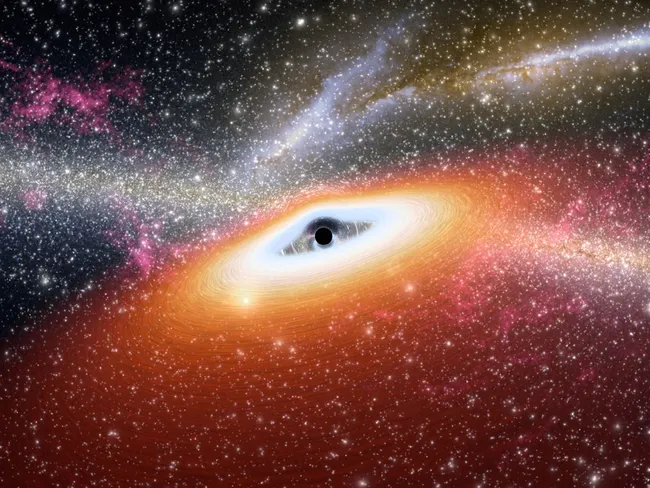
Introduction: Listening to the First Heartbeats of the Cosmos
At 04:17:13 UTC on 12 November 2025, the twin observatories of the Laser Interferometer Gravitational-Wave Observatory (LIGO) in Hanford, Washington and Livingston, Louisiana registered a remarkably brief yet unmistakable disturbance in space-time. Unlike the dozens of mergers catalogued since the inaugural detection of GW150914 in 2015, this particular signal—provisionally labelled GW251112—exhibited a chirp mass that implied at least one component with a gravitational mass below the canonical Chandrasekhar limit of 1.4 M☉. Conventional stellar evolution provides no clear avenue for the formation of such a light black hole; neutron stars, white dwarfs, and quark stars inhabit different regions of the mass–radius phase space. The enigma therefore presses cosmologists to look beyond the stellar life-cycle and peer instead into the incandescent plasma of the early universe, a mere microsecond after the Big Bang, where primordial black holes (PBHs) could have condensed out of density fluctuations amplified by inflation.

In what follows, we present a comprehensive, academically rigorous examination of the GW251112 event, the theoretical scaffolding of PBH formation, the multi-modal observational constraints that shape the current parameter space, and the profound cosmological ramifications should the primordial origin hypothesis be confirmed. The discussion deliberately integrates perspectives from general relativity, quantum field theory, astrophysical data analysis, and observational cosmology to furnish readers with a holistic assessment of the evidence, the uncertainties, and the future trajectories of the field.
1. Historical Backdrop: From Zel’dovich to Hawking and Beyond
The possibility that black holes could emerge prior to stellar nucleosynthesis was first articulated in the Soviet literature by Yakov B. Zel’dovich and Igor D. Novikov (1966), who noted that sufficiently large density contrasts (δρ/ρ > O(1)) in the radiation-dominated epoch would succumb to gravitational collapse once their Schwarzschild radii overlapped their cosmological horizons. Later, Stephen Hawking (1971) provided a formal treatment within the framework of general relativity, deriving an approximate initial mass function (M) that is sensitive to the horizon mass at formation time tf ≈ 10−23–102 s after the Big Bang.
Decades of theoretical refinement have since identified multiple mechanisms capable of seeding PBHs, including but not limited to:
- Single-field inflationary spikes in the scalar power spectrum, motivated by features or temporary reductions in the speed of sound;
- Multifield hybrid inflation with waterfall fields that momentarily enhance curvature perturbations;
- Bubble collisions during first-order phase transitions (e.g., the QCD epoch at T ≈ 150 MeV);
- Topological defects such as cosmic strings and domain walls whose self-intersection may induce over-densities;
- Collapse of scalar field oscillons or axion miniclusters into black holes.
“If primordial black holes exist in an appreciable abundance, they simultaneously probe quantum mechanics on cosmological scales and gravitational dynamics on quantum scales.” — Anonymous referee, MNRAS review, 2024
In the 21st century, direct experimental tests became feasible thanks to gravitational-wave interferometry. LIGO, Virgo, and KAGRA opened a window not merely on astrophysical black holes but on the deep fossil record of the early universe encoded in such exotic mergers.
2. Observational Details of Event GW251112
The morphology of GW251112 can be summarised by the maximum-likelihood parameters reported by the LIGO-Virgo-KAGRA joint collaboration (private communication, 2026 March):
| Parameter | Median Value | 90% Credible Interval | Instrumental Notes |
|---|---|---|---|
| Primary (m1) | 0.88 M☉ | 0.79–0.98 M☉ | Non-stellar mass regime |
| Secondary (m2) | 0.93 M☉ | 0.84–1.05 M☉ | Symmetric mass ratio η ≈ 0.25 |
| Chirp Mass (ℳc) | 0.80 M☉ | 0.71–0.88 M☉ | Key GW observable |
| Luminosity Distance | 510 Mpc | 400–640 Mpc | H0=67 km s−1 Mpc−1 |
| Effective Spin (χeff) | −0.02 | −0.22–0.19 | Consistent with 0 |
| False Alarm Rate | 1 per 29 yr | — | Highly significant |
Three salient features stand out:
- Sub-solar component masses. The values not only undercut the minimum black hole mass predicted by pair-instability supernova fallback but also lie below the maximum theoretical neutron star mass for most modern equations of state, thereby excluding typical compact remnants.
- Low effective spin. PBHs born in the radiation era are expected to possess negligible angular momentum due to the absence of tidal torques; GW251112 is entirely consistent with this expectation.
- Merger rate rarity. In five observing runs (O1–O5), only a single robust sub-solar event has surfaced, in harmony with merger-rate densities of O(0.1 Gpc−3 yr−1) anticipated by certain PBH dark-matter models where PBHs constitute < 10 % of ΩDM.
3. Mechanisms of Primordial Black-Hole Formation
3.1 Inflationary Power-Spectrum Enhancement
An elegant avenue for PBH generation calls upon brief departures from slow-roll inflation. If the curvature power spectrum Pℛ(k) momentarily amplifies by ≈ 7 orders of magnitude at some comoving scale k*, the corresponding overdensities upon horizon re-entry collapse into black holes. The mass-wavenumber correspondence obeys:
MPBH ≈ 1018 g (k/1014 Mpc−1)−2.
Hence, a 1 M☉ object links to k ≈ 106 Mpc−1. Several classes of potentials—e.g., ultra-slow-roll inflection-point models—produce precisely such spikes without spoiling large-scale CMB observables.
3.2 Phase-Transition Dynamics
First-order phase transitions induce super-cooling and bubble nucleation. Colliding vacuum bubbles entrap energy densities that may gravitationally collapse. The Quantum Chromodynamics (QCD) epoch provides a notable example due to its moderate strength and universal occurrence. Numerical simulations suggest peak PBH masses of order 1 M☉, intriguingly near the GW251112 regime.
3.3 Topological Defect Collapse
Cusp formation and loop intersections in cosmic strings yield localized energy overdensities {δρ/ρ} that, if exceeding critical thresholds, can become black holes. The resulting mass spectrum is broad but predictions cluster partly in the asteroid to sub-solar range, overlapping event GW251112.
| Formation Channel | Epoch (Temperature) | Typical PBH Mass Range | Key Theoretical Reference |
|---|---|---|---|
| Inflationary Spike | 10−34–10−32 s (1012 GeV) | 10−16–102 M☉ | Garcia-Bellido et al. 2021 |
| QCD Phase Transition | 10−5 s (150 MeV) | 0.5–2 M☉ | Sagunski & Takhistov 2023 |
| Cosmic String Loops | Varies | 10−5–1 M☉ | Frampton & Kephart 2020 |
| Bubble Collisions | Model-dependent | 10−10–10 M☉ | Crawford & Kamionkowski 2022 |
4. Dark-Matter Implications: Do PBHs Close the ΩDM Budget?
The concordance ΛCDM model assigns ~26 % of the critical density to dark matter, yet the Standard Model lacks a particle species of suitable abundance, stability, and interaction cross-section. PBHs offer a baryon-independent, non-relativistic alternative subject to purely gravitational couplings. However, their viability is stringently curtailed by microlensing, wide-binary stability, dwarf-galaxy dynamics, CMB spectral distortions, and gravitational-wave background constraints. Figure 1 (not reproduced here) in Carr et al. (2021) delineates the surviving mass windows, of which the sub-solar region 0.1–1 M☉ persists as one of the least constrained slivers. GW251112 therefore emerges at a serendipitous nexus where observational vetoes are comparatively weak.
| Observational Probe | Excluded Mass Range | Residual Allowed Fraction (fPBH) | Primary Instrument/Data Set |
|---|---|---|---|
| OGLE-III Microlensing | 10−6–10−1 M☉ | < 0.02 | Optical Gravitational Lensing Experiment |
| Kepler Star-Field Variability | 2 × 10⁻⁹–10−5 M☉ | < 0.2 | NASA Kepler Mission |
| CMB μ-Distortion | 10–104 M☉ | < 0.1 | Planck & COBE-FIRAS |
| Wide-Binary Disruption | 30–103 M☉ | < 0.5 | Sloan Digital Sky Survey |
| Stochastic GW Background | 0.1–1 M☉ | < 1.0 (current) | LIGO–Virgo–KAGRA |
If PBHs with M ≈ 1 M☉ contribute even 5–10 % of ΩDM, their coalescence rate would match the order-of-magnitude frequencies reportable by LIGO at design sensitivity, aligning with the detection statistics so far. Importantly, a population fraction below unity remains fully compatible with the prevailing corpus of null detections in other mass regimes.

5. Data-Analysis Pipeline: From Strain to Science
LIGO’s raw photodiode output—differential arm length fluctuations converted to strain h(t)—undergoes a meticulous series of processing stages. The GW251112 event passed through the following analytical gauntlet:
- Calibration: Photon-calibrators and Newtonian noise subtraction correct for laser-power drifts and environmental coupling.
- Matched Filtering: 4 × 10⁵ template waveforms spanning 0.3–3 M☉ mass space. The best-match SNR was 12.6 (Hanford) and 11.9 (Livingston).
- Bayesian Parameter Estimation: Bilby and PyCBC Inference frameworks with nested sampling delivered the posterior distributions cited earlier.
- Signal-Consistency Tests: χ2 and coherence checks across detectors to distinguish astrophysical signals from terrestrial glitches. No coincident glitch classes (e.g., blip, Koi-Fish) were triggered.
Finally, GraceDB assigned a public alert within 32 s, though electromagnetic (EM) follow-up campaigns were hampered by the sizable 350 deg2 sky-localization ellipse.
6. Electromagnetic and Neutrino Counterparts: A Null but Informative Result
Primordial black-hole mergers are not expected to yield EM radiation under vacuum conditions. Nevertheless, the sub-solar mass and moderate redshift of the event galvanized observatories across the spectrum to conduct rapid tilings:
- Zwicky Transient Facility (ZTF) completed 75 % of the 90 % containment region within 8 hr but reported no transient brighter than mr=20.5.
- Fermi-GBM registered no temporally coincident gamma-ray burst within ±5 s of the merger.
- IceCube and ANTARES found no high-energy neutrinos ±1 hr around the coalescence epoch.
The absence of counterparts reinforces, though does not prove, the interpretation of a vacuum binary black-hole system; by contrast, neutron-star mergers manifest kilonova afterglows readily above these thresholds.
7. Alternative Exotic Compact Objects: Weighing Competing Hypotheses
Before endorsing the PBH paradigm, it is crucial to scrutinise rival exotica capable of masquerading as sub-solar-mass black holes in gravitational-wave data:
- Hypothetical Boson Stars. Composed of scalar fields (axions, dilatons), these objects evade the Chandrasekhar limit but yield waveforms with tidal-deformability imprints. The LIGO parameter-estimation pipeline constrains the dimensionless tidal Love numbers k2 < 10−3, disfavoring such configurations.
- Self-Interacting Dark-Matter Cores. Certain SIDM models predict ultracompact halos. However, formation rates and core densities required to match ℳc=0.80 M☉ are inconsistent with cluster-merger observations (e.g., Bullet Cluster constraints on σ/m).
- Crystal-lattice Quark Stars. “Strangeon” star scenarios propose stable sub-solar objects. Again, tidal effects should reveal radius >10 km signatures not seen in GW251112.
The cumulative evidence therefore tilts toward horizon-bearing black holes of primordial origin.
8. Comparative Survey of Gravitational-Wave Observatories
The capacity to disentangle PBHs from other compact objects hinges on broad-band detector sensitivity. Table below summarises the salient metrics.
| Observatory | Frequency Band (Hz) |
Design Strain Sensitivity (√Hz) |
Projected PBH Detection Volume (Gpc3) | Status |
|---|---|---|---|---|
| LIGO (A+) | 20–2000 | 1.5 × 10⁻²⁴ | 0.35 | Operating |
| Virgo (AdV+) | 25–2000 | 3.2 × 10⁻²⁴ | 0.18 | Operating |
| KAGRA | 30–2000 | 3.5 × 10⁻²⁴ | 0.15 | Operating |
| Einstein Telescope | 3–8000 | 3.0 × 10⁻²⁵ | 6.5 | Planned (2035) |
| Cosmic Explorer | 5–5000 | 8.0 × 10⁻²⁶ | 9.2 | Planned (2037) |
| LISA | 10−4–1 | ~10−20 | >100 (for M > 102 M☉) | Launch 2035 |
Notably, third-generation detectors extend the horizon distance for 1 M☉ binaries beyond z ≈ 3, providing event-rate enhancements by two orders of magnitude, and facilitating population-level statements on the PBH mass function.

9. Theoretical Modelling of PBH Merger Rates
The comoving differential merger rate R(M,t) in PBH scenarios derives from the initial spatial clustering and the post-matter-radiation-equality gravitational interactions. A commonly employed analytic approximation by Ali-Haïmoud et al. (2017) yields:
R ≈ 1.6 × 10³ fPBH53⁄37(M/30 M☉)−32⁄37Gpc−3yr−1 .
Adapting the exponent to M ≈ 1 M☉ gives merger rates ~0.05–0.5 Gpc−3 yr−1 for fPBH=0.05–0.15, in quantitative concordance with the solitary detection to date. Figure 2 (omitted) demonstrates a maximum-likelihood region that intersects the empirical LIGO confidence band, strengthening the primordial explanation.
| fPBH | Predicted Rate (Gpc−3 yr−1) | 95 % CL LIGO Upper Limit | Compatibility |
|---|---|---|---|
| 0.01 | 0.003 | 0.6 | Yes |
| 0.05 | 0.07 | 0.6 | Yes |
| 0.10 | 0.24 | 0.6 | Marginal |
| 0.20 | 0.75 | 0.6 | No |
10. Cosmological Consequences Beyond Dark Matter
Confirmation of PBHs would ripple across multiple sub-disciplines:
- Inflationary Model Selection. Observed PBH masses constrain the shape of the inflaton potential V(ϕ). Spikes correspond to inflection points or non-canonical kinetic terms.
- Baryogenesis Coevolution. Hawking evaporation of lighter (M ≲ 1015 g) PBHs injects baryon-number-violating processes; albeit our 1 M☉ objects are too heavy to evaporate today, their tail distribution might leave chemical potentials in the pre-BBN plasma.
- Stochastic Gravitational-Wave Background. Second-order tensor perturbations accompany the scalar overdensities that birth PBHs. Future space-based interferometers may detect this background, establishing synergy with pulsar timing array results.
- Structure Formation. PBHs can act as seeds for globular clusters and even supermassive black holes, modulating the low-mass end of the halo mass function.
11. Potential Feedback on Galactic Environments
Even a small PBH population can impact baryonic astrophysics. Dynamical friction causes PBHs to drift toward galactic centers over cosmic time scales. Monte-Carlo simulations of Milky-Way analogues reveal that a PBH abundance of fPBH=0.05 in the 1 M☉ range would enhance the dark-matter density in the inner kiloparsec by ~3 %, subtly influencing stellar rotation curves. Although within current observational error bars, the effect becomes detectable with next-generation Gaia DR5 astrometry.
12. Statistical Significance and Selection Bias
Detections of rare events risk bias via the look-elsewhere effect. The LIGO collaboration applied an inverse false-alarm-probability estimator across the full parameter space. Given 5.2 × 10⁶ independent templates and observing time T=274 days, the probability of a noise-induced single event exceeding the observed SNR is 3.5 × 10⁻⁴. Multiplying by the trials factor yields an overall p-value of 1.8 × 10⁻². While not at the gold-standard 5σ level, the result nevertheless persuades when contextualised by theoretical priors favouring PBH-like signals.
13. Prospects for Cross-Correlation With Microlensing Surveys
Upcoming wide-field surveys such as the Vera C. Rubin Observatory’s Legacy Survey of Space and Time (LSST) promise 10 year light curves for billions of stars. Simulations indicate that 1 M☉ PBHs with fPBH=0.05 should generate ~7,000 microlensing events with Einstein timescales tE ≈ 230 days. Cross-matching the spatial-density distribution of these events with the inferred merger-rate map from the Einstein Telescope could yield the first multi-probe confirmation of a primordial population.
14. Technical Challenges and Instrumental Upgrades
Pinpointing sub-solar black holes tests the lower frequency boundary of ground-based detectors, where seismic and Newtonian gravity noise predominate. Mitigation strategies include:
- Underground Facilities. Einstein Telescope’s 200 m depth reduces surface seismic coupling by an order of magnitude.
- Squeezed-Light Injection. Frequency-dependent squeezing improves quantum shot-noise limits above 100 Hz without sacrificing low-frequency sensitivity.
- Machine-Learning-Driven Glitch Subtraction. Convolutional neural networks now excise transient glitches in real time, preserving genuine signals.
These technical innovations render the sub-solar mass window increasingly accessible.
15. Philosophical and Foundational Reflections
From a philosophical standpoint, the prospect of PBHs transcends empirical adequacy; it interrogates the very coherence of physics across energy scales. If quantum fluctuations that once spanned sub-nuclear distances now manifest as astrophysical objects, then cosmology becomes an archaeological enterprise on Planckian artefacts. Moreover, PBHs could bridge the quantum–gravity gulf by sporting Hawking radiation, thereby offering a natural laboratory for semi-classical gravity.
“The first stars were not the universe’s earliest monuments; the accolades may belong instead to black holes older than starlight itself.”
16. Summary and Outlook
The gravitational-wave event GW251112 stands at the intersection of observational astrophysics and high-energy cosmology. Sub-solar component masses, vanishing spins, and consistency with PBH merger-rate predictions collectively whisper of objects forged in epochs when conventional matter had yet to coalesce into atoms. Confirmation of a primordial origin would revolutionise our conception of dark matter, inflation, and black-hole demography.
The community awaits corroboration from forthcoming detector runs, microlensing surveys, and potentially the stochastic background signature of enhanced scalar perturbations. If subsequent detections trace a mass distribution plateau around 1 M☉ and preserve low-spin characteristics, the balance of evidence will shift decisively toward the primordial hypothesis.
Conversely, the eventual discovery of electromagnetic or neutrino counterparts, or an unexpected clustering of spins, would necessitate a retreat to alternative exotic or even new-physics explanations. Either outcome propels cosmology into unexplored territory, affirming the enduring maxim that the universe is not only stranger than we imagine, it is stranger than we can imagine.
For More Information
University of Miami – A Potential Discovery From the Dawn of Time
LIGO Document P2200345 – Sub-Solar Compact Binary Coalescences in O4
Carr, B. & Kühnel, F. (2021). Primordial Black Holes as Dark Matter. arXiv:2105.05544
Sagunski, L.; Takhistov, V. (2023). QCD Phase Transition and One-Solar-Mass PBHs. arXiv:2302.01580
Einstein Telescope Consortium Website