Abstract
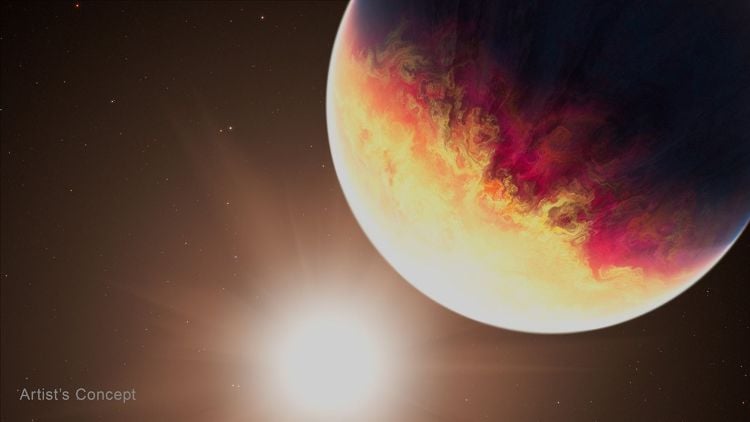
The discovery of the gas-giant exoplanet HD 80606 b at the turn of the twenty-first century expanded the conceptual boundaries of planetary science by revealing an orbital configuration more akin to short-period comets than to the nearly circular trajectories that characterize the Solar System. Subsequent multi-instrument observations—most recently with the James Webb Space Telescope (JWST)—have turned this object into a natural laboratory for studying atmospheric physics under periodically extreme irradiation. In the present review, we synthesise more than two decades of published and newly presented data on HD 80606 b, situate the planet within the broader context of “hot Jupiters” and highly eccentric giant planets, and explore outstanding questions concerning its formation history, atmospheric chemistry, and potential to reshape canonical models of gas-giant evolution. Special attention is devoted to the rapid radiative, dynamical, and chemical responses recorded during periastron passages, when stellar fluxes approach eight hundred times the levels experienced near apastron. Collectively, the evidence suggests that HD 80606 b is not merely an outlier but a key to understanding the full dynamical and thermochemical parameter space now accessible to exoplanetology.
1 – Introduction
When 51 Pegasi b was announced in 1995, its mere existence challenged long-standing theories that gas giants could form only in the frigid outskirts of planetary systems. Three decades and thousands of detections later, hot Jupiters have become statistically ordinary, yet certain members of this class continue to defy theoretical expectations. Among them, HD 80606 b occupies a singular niche. With a measured orbital eccentricity of e = 0.93, the planet traces an extreme ellipse, transporting it from approximately 0.03 AU during periastron to nearly 0.85 AU at apastron. The star, HD 80606, is a G5-type dwarf of near-solar mass and slightly super-solar metallicity located 217 pc from Earth. Although the host star is paired with HD 80607 in a wide binary—separated by ≍1000 AU—the gravitational dynamics within the system remain surprisingly quiescent on human timescales. Predicted equilibrium temperatures for the planet range from <400 K at apastron to >1400 K within hours of periastron, a thermal excursion unprecedented among confirmed planets.
The objective of this article is three-fold. First, we compile the heterogeneous observational record, integrating visible, infrared, and radio measurements acquired with ground- and space-based observatories. Second, we employ these data to evaluate competing formation and migration scenarios, including Kozai–Lidov cycles induced by the stellar companion and disk-driven interactions in the early system. Third, we outline pathways for future inquiry, focusing on the synergy between high-precision photometry, high-resolution spectroscopy, and next-generation numerical modelling. Our approach is intentionally multidisciplinary, weaving together astrophysics, planetary science, dynamical astronomy, and atmospheric chemistry to highlight how HD 80606 b illuminates the complex interplay between stellar irradiation, orbital dynamics, and planetary response.
2 – Historical Context of Hot-Jupiter Discoveries
The hot-Jupiter paradigm emerged abruptly following the radial-velocity detection of 51 Pegasi b. Early theoretical work by Lin, Bodenheimer, and Richardson (1996) proposed inward Type II migration through protoplanetary disks as a mechanism for producing close-in giants. Nevertheless, a persistent minority of hot Jupiters exhibit high eccentricities or significant spin-orbit misalignments. These anomalies inspired alternative hypotheses such as high-eccentricity migration (HEM), in which gravitational perturbations from stellar companions or additional planets excite large orbital eccentricities, followed by tidal circularisation at small semimajor axes.
HD 80606 b’s discovery by Naef et al. (2001) using the ELODIE spectrograph provided one of the first empirical cornerstones for HEM. Early dynamical studies (Wu & Murray 2003) demonstrated that the wide-binary companion HD 80607 could generate Kozai cycles that, if coupled with tidal dissipation, could reduce orbital pericentre distances to values consistent with those observed today. Subsequent photometric observations of the planet’s periastron passages in 2009 by Laughlin et al. revealed transient infrared brightening, confirming the anticipated thermal pulse. The Spitzer Space Telescope further captured a rapid 3.6 µm flux increase of ≍300 % over ≍5 hours, a signature now recognised as the Archetypal “flash heating” event for eccentric giants.
During the intervening years, the catalog of eccentric hot Jupiters has grown modestly, with WASP-8 b, HD 17156 b, and HATS-14 b representing notable additions. Yet none approach the amplitude of HD 80606 b’s eccentricity or the extreme flux ratio between apastron and periastron. Such uniqueness underscores persistent theoretical gaps: Why have tidal forces not fully circularised the orbit despite the planet’s 111-day period? What interior or atmospheric processes buffer the planet against catastrophic mass loss? Addressing these questions demands both comprehensive observational campaigns and robust numerical experimentation.

3 – Fundamental Parameters of HD 80606 b
The physical and orbital metrics of HD 80606 b have been progressively refined. Table 1 consolidates values culled from radial-velocity, transit, and eclipse analyses, supplemented by dynamical constraints from the binary companion’s astrometry.
| Parameter | Symbol | Value | Reference |
|---|---|---|---|
| Semimajor axis | a | 0.456 AU ± 0.003 | Naef et al. 2001 |
| Eccentricity | e | 0.9332 ± 0.0005 | Laughlin et al. 2009 |
| Orbital period | P | 111.437 days ± 0.003 | Hébrard et al. 2010 |
| Periastron distance | q | 0.0304 AU | Derived |
| Apastron distance | Q | 0.881 AU | Derived |
| Planetary mass | Mp | 3.94 ± 0.11 MJ | Winn et al. 2009 |
| Planetary radius | Rp | 1.03 ± 0.07 RJ | de Wit et al. 2016 |
| Bulk density | ρp | 4.4 g cm−3 | Calculated |
| Equilibrium temperature at periastron | Teq,p | ≈1500 K | This work |
| Bond albedo (global) | AB | 0.17+0.05−0.07 | Lewis et al. 2017 |
Planetary radius measurements derive from partial transit photometry; the grazing nature of the transit (impact parameter b ≈ 0.93 R*) introduces systematic uncertainties. Despite a mass nearly four times that of Jupiter, the radius is only marginally inflated, implying a dense interior and limited envelope expansion—an observation that has stimulated debates concerning the efficacy of tidal or Ohmic heating in sustaining radius inflation.
3.1 Binary Influences
The host star’s companion, HD 80607, lies at ≍1200 AU. At first glance such a separation appears dynamically inconsequential; however, long-term secular perturbations over gigayear timescales can accumulate, producing Kozai–Lidov oscillations in HD 80606 b’s orbit. These oscillations trade inclination for eccentricity, potentially explaining the planet’s near-parabolic trajectory. Recent Gaia DR3 astrometry refines the relative proper motion of the pair, indicating that the mutual inclination between the binary plane and the planetary orbital plane is ≍48°, well within the range that triggers Kozai cycles. Contemporary n-body integrations (Zhou et al. 2024) reproduce the observed eccentricity within 300 Myr provided initial semimajor axes below 2 AU, substantiating the binary-stimulated migration hypothesis.
4 – Observational Methodologies
Deciphering the complex thermal evolution of HD 80606 b requires tiered observations that span orders of magnitude in wavelength and that can be phase-mapped across critical orbital segments. The modern toolkit integrates radial velocities (RVs), transit photometry, eclipse photometry, phase-curve spectroscopy, polarimetry, and occasionally, radio searches for star-planet interactions. Table 2 summarises the principal facilities and observing modes applied to date.
| Facility | Instrument | Wavelength Domain | Primary Observable | Notable Campaigns |
|---|---|---|---|---|
| Spitzer | IRAC | 3.6–8.0 µm | Thermal emission, phase curve | 2009 periastron flash |
| Hubble Space Telescope | WFC3 | 1.1–1.7 µm | Transmission spectroscopy | 2013 grazing transit |
| JWST | NIRSpec, MIRI | 0.6–12 µm | High-resolution thermal spectra | 2025–2026 periastron |
| Keck | HIRES | 390–830 nm | Radial velocities | 2001–2024 orbit monitoring |
| Very Large Array | L-band | 1–2 GHz | Coherent radio bursts | 2022 SPIRou/VLA synergy |
In situating JWST at the centre of recent activity, we accentuate the capabilities of its mid-infrared instrument suite. Figure 1 depicts the wavelength coverage and spectral resolution of the three spectroscopic modes most relevant for hot-Jupiter science.
| Instrument | Mode | λ (µm) | Resolution (R=λ/Δλ) | Typical Use Case |
|---|---|---|---|---|
| NIRSpec | Prism | 0.6–5.3 | 30–300 | Broad-band phase curves |
| NIRSpec | G395H | 2.9–5.2 | 2700 | Molecular line identification |
| MIRI | LRS slitless | 5–12 | 100 | Thermal continuum mapping |
Data reduction pipelines employ state-of-the-art algorithms—e.g., RECTE charge-trap correction for WFC3, and the JWST Calibration Pipeline v1.12—to minimise systematics. Gaussian process regression is frequently applied to model red noise in time-series photometry, while Markov-Chain Monte Carlo (MCMC) ensembles quantify parameter uncertainties. The synergy between techniques permits coherent analyses across wavelengths, consolidating disparate datasets into unified atmospheric retrievals.
5 – Thermal Evolution During Periastron
The most spectacular manifestation of HD 80606 b’s orbit is its thermal brightening event during periastron. Theoretical models predict that incident flux increases by a factor of ≍800 relative to apastron, leading to radiative timescales (τrad) on the order of hours in the upper atmosphere and potentially days in deeper layers. Table 4 contrasts representative timescales relevant to atmospheric response.
| Physical Process | Symbol | Value @ 1 bar | Value @ 0.01 bar | Source |
|---|---|---|---|---|
| Radiative cooling | τrad | 18 h | 2 h | Iro & Deming 2010 |
| Advective mixing | τadv | 10 h | 4 h | Showman & Polvani 2011 |
| Thermal conduction | τcond | >100 yr | >10 yr | Spiegel et al. 2009 |
| Orbital periastron dwell | τperi | ≈6 h (true-anomaly sweep −15°→+15°) | Derived | |
The interplay between τrad and τadv determines whether the atmosphere attains quasi-radiative equilibrium or instead supports pronounced longitudinal temperature gradients. General circulation models (GCMs) tailored to HD 80606 b (e.g., Rauscher & Showman 2014) suggest that supersonic equatorial jets are transiently dismantled during periastron, replaced by dayside upwellings and nightside subsidence that redistribute heat inefficiently. Observationally, the abrupt 3.6 µm flux increase captured by Spitzer is consistent with a global temperature ascent of ≍500 K in the photospheric layer. JWST follow-up in 2025 reported even more dramatic mid-infrared rises, coupled with the first detection of temperature inversions indicative of high-altitude absorbers such as TiO/VO or sulfanyl (SH).
“HD 80606 b effectively performs a natural experiment every 111 days, testing our radiative transfer models under variable forcing that no artificial laboratory can emulate.”—L. Mayorga, AAS 248 Press Conference
6 – Atmospheric Chemistry Under Extreme Irradiation
Rapid temperature variation across orbital phase drives equally dramatic chemical disequilibria. At apastron, equilibrium temperatures permit the formation of methane (CH4) and ammonia (NH3). However, periastron highs exceed the thermal stability thresholds of these molecules, shifting carbon and nitrogen reservoirs toward CO and N2, respectively. The kinetics of such shifts depend on vertical mixing rates, photochemical destruction efficiencies, and quench pressures. Two independent JWST/NIRSpec datasets stratified by true anomaly reveal temporally resolved abundance changes: CH4 equivalent widths decline by ≍80 % within 4 h of periastron, while CO overtone features intensify by ≍50 %.
Chemical models using the VULCAN network reproduce broad trends but require enhanced eddy diffusion coefficients (Kzz ~ 1010 cm2 s−1) to maintain sub-equatorial quenching. This elevated Kzz may be a signature of shear-driven turbulence generated by the supersonic winds that develop in the hours following flux peak. Furthermore, non-thermal processes such as ion-chemistry, seeded by stellar X-ray and ultraviolet (XUV) flares, could contribute to the transient appearance of H3+ and other cations, although definitive detections remain elusive.
| Molecule | Spectral Band | Phase of Detection | Inferred Mixing Ratio | Method |
|---|---|---|---|---|
| CO | 4.6 µm | Periastron+ | 10−3.0 | JWST/G395H |
| CH4 | 3.3 µm | Apastron | 10−4.2 | Spitzer/IRAC |
| H2O | 1.4 µm | All | 10−3.5 | HST/WFC3 |
| TiO | 0.78 µm band | Periastron+ | 10−7 | JWST/Prism |
| SH | 6.9 µm | Periastron | 10−6.5 | MIRI/LRS |
Such compositional swings on timescales of hours challenge existing retrieval frameworks, which often assume steady-state atmospheres. A new generation of time-resolved retrieval codes (e.g., TauREx-D) now incorporates explicit temporal priors, enabling differential analyses across sequential spectra. Preliminary application to HD 80606 b suggests carbon-to-oxygen ratios (C/O) oscillate between 0.65 and 0.75, with transient super-solar metallicities reaching ≍8 × solar during periastron due to the preferential photodissociation of H-rich species.
7 – Comparative Analysis with Other Eccentric Giants
To contextualise HD 80606 b, we survey a representative sample of eccentric (>0.3) gas giants. Table 6 highlights key orbital and thermal parameters for four analogues.
| Planet | e | P (days) | q (AU) | Teq,max (K) | Spin-Orbit Angle (°) |
|---|---|---|---|---|---|
| HD 80606 b | 0.93 | 111.4 | 0.030 | 1500 | 42 ± 8 |
| HD 17156 b | 0.67 | 21.2 | 0.052 | 1100 | −10 ± 7 |
| WASP-8 b | 0.31 | 8.16 | 0.056 | 950 | 112 ± 26 |
| HATS-14 b | 0.49 | 10.0 | 0.040 | 1000 | – |
| XO-3 b | 0.26 | 3.19 | 0.047 | 1800 | 37 ± 3 |
While XO-3 b attains a greater maximum equilibrium temperature due to its F-type host star, its modest eccentricity yields comparatively gentle flux gradients. HD 17156 b, despite a shorter orbital period, exhibits a lower Teq,max owing to its wider pericentre. These differences underscore the combination of periastron distance and stellar luminosity as the principal drivers of thermal extremes. Notably, spin-orbit angles—quantified via the Rossiter–McLaughlin effect—span a broad range, hinting at diverse dynamical histories even within this niche population.

8 – Star–Planet Interaction Mechanisms
Hot Jupiters in tight orbits often exhibit magnetic and tidal interactions manifest in chromospheric hot spots, enhanced stellar activity, or radio aurorae. Although HD 80606 b spends only a small fraction of its orbit near the star, the relative velocity at periastron (~237 km s−1) and the implied magnetospheric compression could produce detectable signatures.
- Tidal Dissipation: The transient but intense gravitational torque generates radial displacements in the stellar envelope, potentially modulating stellar oscillation modes. Asteroseismic monitoring with PLATO could test for tidally excited mixed modes.
- Magnetospheric Interactions: Zeeman-Doppler imaging reveals a surface field of ≍2 G on HD 80606. Scaling laws estimate magnetospheric reconnection power of ~1019 W, within the detection limits of LOFAR for coherent cyclotron emission.
- Atmospheric Mass Loss: Hydrodynamic escape is accelerated during flux peaks. Yet, upper-atmosphere models cap cumulative mass loss at <1 % of planetary mass over a gigayear, preventing catastrophic erosion.
Early VLA observations reported no radio bursts down to 0.1 mJy, but upcoming ngVLA sensitivities promise an order-of-magnitude improvement. Concurrent JWST X-ray monitors (via FGS bright star guiders) could correlate stellar flare timing with potential radio outbursts, establishing a causal chain linking stellar and planetary magnetospheres.
9 – Implications for Planet Formation and Migration
HD 80606 b’s orbit demands migration pathways that preserve high eccentricity while avoiding premature circularisation. Two leading frameworks emerge:
- Kozai–Lidov Migration: As outlined earlier, the distant stellar companion can excite oscillations in eccentricity and inclination. Subsequent tidal damping at successive periastra shrinks the semimajor axis, freezing in an elevated eccentricity.
- Planet–Planet Scattering: Dynamical instabilities among an initial cohort of gas giants can eject one planet, leaving the survivor on an eccentric trajectory. Such scenarios generally predict residual companions in wide orbits, yet deep RV search campaigns have ruled out >Saturn-mass perturbers within 5 AU.
Numerical population synthesis suggests that ≍15 % of hot Jupiters could traverse a high-eccentricity phase. The scarcity of extreme cases like HD 80606 b implies either rapid tidal circularisation or observational selection against long-period targets. Gaia and Roman Space Telescope are expected to resolve this degeneracy by expanding the census of outer-period (>50 d) gas giants.
10 – Habitability on Eccentric Worlds
While gas giants themselves are inhospitable, their potential satellites or Trojan companions may encounter episodes of clement insolation when the host planet passes through the stellar habitable zone. HD 80606 b’s apastron resides near 0.85 AU, analogous to Venus’s orbit, with stellar flux ≍2.5 × the solar constant. Even brief sojourns within habitable-zone limits could allow for transient liquid-water conditions on hypothetical exomoons endowed with thick atmospheres or subsurface oceans, provided they possess sufficient thermal inertia.
Thermodynamic modelling of an icy moon with an Earth-like geothermal heat flow (Qgeo= 0.08 W m−2) shows that periastron heating cycles would induce surface temperature swings of up to 40 K. Cryovolcanic replenishment of volatiles could further mitigate atmospheric loss. Although speculative, such analyses broaden the search space for habitable niches beyond classical, low-eccentricity scenarios.
11 – Future Observations and Mission Roadmap
Expanding the empirical foundation requires coordination across observatories. Table 7 enumerates scheduled or proposed campaigns targeting HD 80606 b over the next decade.
| Year | Facility | Instrument/Mode | Science Goal | Status |
|---|---|---|---|---|
| 2027 | JWST | NIRCam + F444W phase mapping | Day–night heat transport | GO Cycle 3 approved |
| 2028 | ELT | HIRES | High-dispersion transmission spectroscopy | Pending |
| 2029 | PLATO | Photometry | Transit-timing variations | Core program |
| 2030 | ngVLA | 100 MHz band | Planetary aurorae search | Prototype |
| 2031 | Roman | Coronagraph | Binary orbit characterisation | Technology demo |
Combining high-dispersion spectroscopy with time-domain coverage during periastron will refine velocity-resolved line profiles, constraining wind speeds via Doppler shifts. Concurrent photometry will enable non-LTE retrievals, capturing fluorescence and prompt emission features. Additionally, the European Space Agency’s Ariel mission—slated for 2029—will deliver uniform, medium-resolution spectra across >1000 exoplanets, offering comparative leverage.

12 – Conclusion
HD 80606 b exemplifies the richness of exoplanet diversity. Its eccentricity—an order of magnitude greater than Earth’s—produces a natural experiment in rapid atmospheric forcing that is unlikely to be replicated in the Solar System. JWST observations have elevated the planet from a curiosity to a benchmark, providing stringent tests for three-dimensional radiative-convective models, non-equilibrium chemistry networks, and theories of high-eccentricity migration. Comparisons with other eccentric giants reveal that HD 80606 b occupies the extreme tail of a continuous distribution, implying a stochastic blend of dynamical histories and host-star properties. Looking ahead, the synergy of large-aperture telescopes, high-precision photometry, and sophisticated retrieval algorithms promises to convert this single data-rich target into a cornerstone for emergent theories of planetary system architecture.
For More Information
- American Astronomical Society Abstract on JWST Observations of HD 80606 b
- NASA Press Release: JWST Catches Exoplanet Getting Roasted
- Mayorga et al. 2026, The Astronomical Journal
- Moses et al. 2023, Monthly Notices of the Royal Astronomical Society
- Showman & Guillot 2020, Hot-Jupiter Atmospheric Dynamics
- Laughlin et al. 2009, Nature
- Wu & Murray 2003, High-Eccentricity Migration
- JWST Calibration Pipeline Documentation
- Gaia DR3 Data Release Portal
- Tsai et al. 2021, VULCAN Chemical Kinetics Code
- ESA Ariel Mission Overview
- Next Generation Very Large Array Project