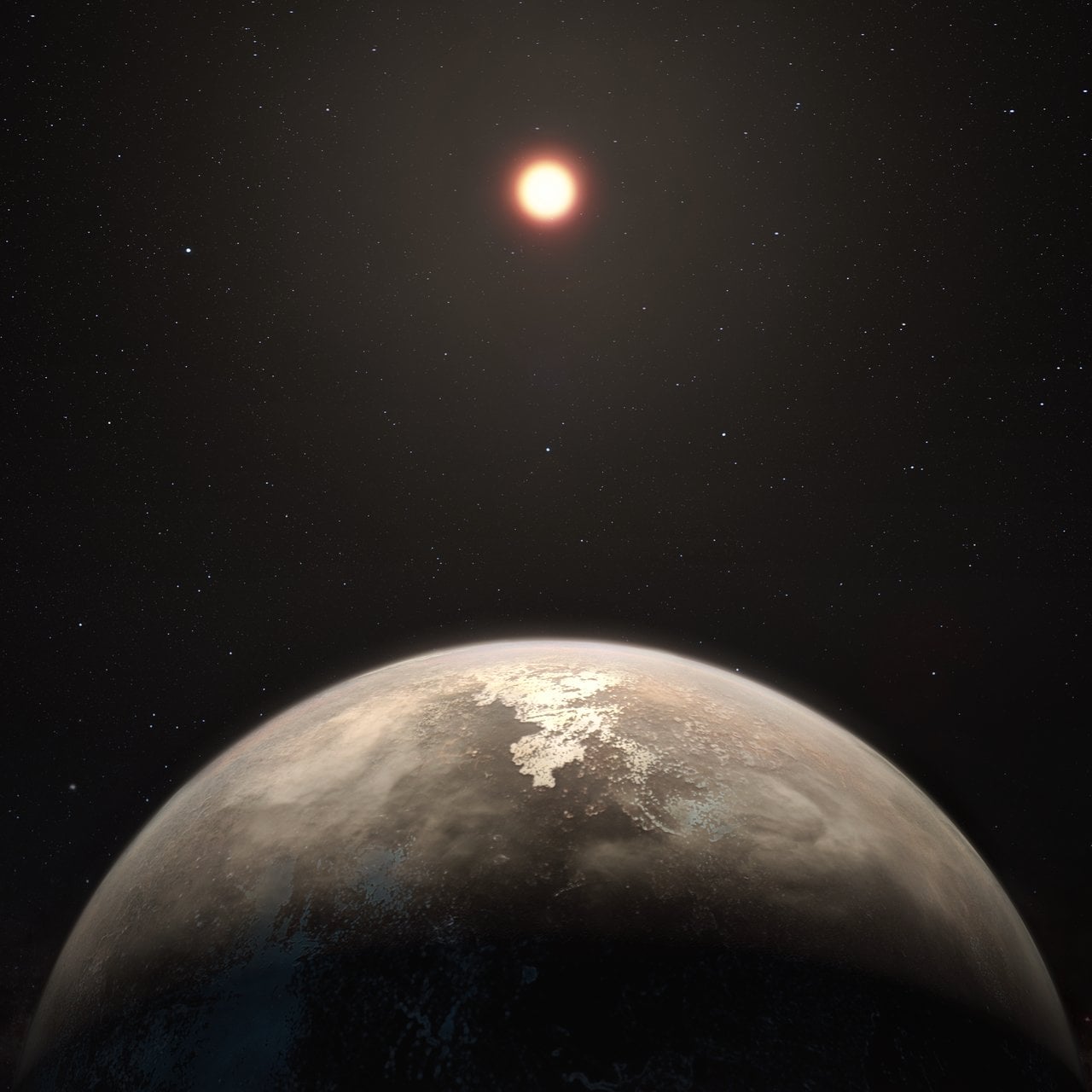
Abstract. Contemporary exoplanetary science is on the verge of a methodological revolution driven by infrared nulling interferometry and the maturation of distributed spacecraft technologies. The evolving Large Interferometer For Exoplanets (LIFE) concept epitomizes this transition by proposing a constellation of formation-flying telescopes that collectively operate as an ultra-long baseline mid-infrared observatory. This article offers an exhaustive academic synthesis of the scientific rationale, historical lineage, technological architecture, risk portfolio, and socio-ethical context that underpin the LIFE initiative. It further situates LIFE within a broader landscape of synergistic missions, including the Habitable Worlds Observatory (HWO) and the James Webb Space Telescope (JWST), interrogating how a multipronged observational strategy can conclusively address the epochal question: are we alone?
1. Introduction – The Post-Kepler Paradigm
The Copernican dethronement of Earth as a cosmological singularity laid the philosophical groundwork for the search for life beyond the Solar System. Empirically, however, the quest languished until the radial-velocity breakthrough of 51 Pegasi b in 1995, which inaugurated the exoplanet age. Within a single generation the statistical census has ballooned to over 5,600 confirmed worlds, yet the core astrobiological mystery remains unresolved because the bulk of those detections arise from indirect methods (transits and Doppler shifts) that are intrinsically blind to biosignature chemistry.
The discovery ambition of the 2020s and 2030s therefore pivots toward direct imaging. The James Webb Space Telescope already furnishes exquisite transmission spectra for certain transiting planets, but its 6.5-m primary mirror and single-aperture design limit both angular resolution and starlight suppression capacity. A quantitative estimation (see Table 1) shows that only a few temperate terrestrial planets orbiting the very nearest M dwarfs can be characterized by JWST with practical exposure times.
| Target System | Stellar Type | Stellar Effective Temp. (K) | Planet Radius (R⊕) | Planet–Star Contrast (10−6) @10 µm | Feasible with JWST? |
|---|---|---|---|---|---|
| Proxima Centauri b | M5 Ve | 3 040 | 1.07 | 5.4 | Marginal |
| TRAPPIST-1 e | M8 Ve | 2 550 | 0.92 | 3.1 | No |
| Kepler-442 b | K5 V | 4 400 | 1.34 | 0.11 | No |
| Sun–Earth Analog* | G2 V | 5 780 | 1.00 | 0.01 | No |
*Assuming a system at 10 pc.
Consequently, mission planners have converged on a paradigm that marries aggressive starlight suppression (nulling or coronagraphy) with large effective apertures assembled in space. In the ultraviolet–optical–near-IR domain the Habitable Worlds Observatory is the U.S. Decadal Survey’s endorsed pathfinder. In the mid-infrared, however, the W. M. Keck–sponsored LIFE study contends that a constellation of modest telescopes, when coherently phased, can furnish exquisite sensitivity to atmospheric thermal emission, revealing molecular fingerprints that HWO alone cannot access.
2. Historical Trajectory of Infrared Nulling Interferometry
Long-baseline interferometry has a venerable terrestrial pedigree dating to the early 20th-century work of Michelson and Pease. Translating the technique to space re-emerged in the late 1990s with dual flagship concepts:
- NASA Terrestrial Planet Finder – Interferometer (TPF-I)
- ESA Darwin
Both proposed flotillas of 3–4 collectors feeding a beam-combiner spacecraft nested at Sun–Earth L2. They promised unprecedented contrast ratios (~10−6) across 6–20 µm but were eventually terminated owing to prohibitive cost, immature metrology, and larger geopolitical budgetary re-prioritizations post-2008. However, their technical heritage seeded a progression of demonstrators:
“Ideas never truly die in space science; they are merely postponed until technology renders them irresistible.”
| Year | Program | Primary Milestone | Outcome / TRL Advanced |
|---|---|---|---|
| 2004 | TPF-I | Laboratory null depth 10−5 at 10 µm | TRL 3–4 |
| 2011 | ESA ALADDIN | Ground-based Antarctic pathfinder design | Concept halted |
| 2015 | BETTII (NASA) | Balloon-borne interferometer flight | TRL 5 for cryogenic optics |
| 2022 | CubeSat – SWARM-EX | On-orbit optical phase control demo | TRL 6 for nanosat metrology |
| 2024 | SunRISE | Launch of six-satellite radio interferometer | TRL 7 for distributed formation |
The LIFE concept is therefore not an ahistorical rupture but the cumulative beneficiary of decades of incremental technology maturation. Its novelty resides in leveraging astrophotonic beam combiners, micro-thruster arrays, and autonomous optical metrology packages that were inconceivable at the dawn of TPF-I.
3. Physical Principles Underpinning Thermal-IR Biosignature Detection
Planetary atmospheres imprint characteristic absorption and emission features upon emergent spectra. While visible-light reflectance spectroscopy furnishes information on cloud albedo and Rayleigh scattering slopes, the mid-IR domain (6–17 µm) directly probes rovibrational transitions of key molecules. Table 3 consolidates the most diagnostically potent features relevant to life detection.
| Molecule | Principal IR Band (µm) | Astrobiological Role | Abiotic False-Positive Mitigations |
|---|---|---|---|
| O3 | 9.6 | Proxy for free O2 | Co-detection of CH4 indicates redox disequilibrium |
| CO2 | 15.0 | Greenhouse equilibrium; context gas | Column density constrains volcanic fluxes |
| CH4 | 7.7 | Reduced gas; potential biogenic source | Model photochemical replenishment rates |
| H2O | 6.3 | Surface habitability indicator | Cross-check with planetary equilibrium temperature |
| PH3 | 10.8 | Potential metabolic by-product | Assess stellar UV flux; dismiss photolytic production |
The detectability of these bands scales with the planet–star contrast, instrumental throughput, and the noise floor set by zodiacal background emission. Mid-IR interferometry alleviates photon noise by nulling stellar flux, thereby redistributing the detector dynamic range toward planetary photons.
4. LIFE Mission Architecture – From Conceptual Skeleton to Engineering Flesh
The baseline LIFE configuration comprises five free-flying 2-m aperture collectors arranged in a quasi-rotating X-array with baseline lengths tunable between 50 m and 500 m. Each collector houses an off-axis silicon carbide primary mirror, cryocooled to 35 K to minimize thermal background. The central beam-combiner spacecraft is equipped with an integrated photonic chip where interferometric nulling and fringe tracking occur on a single substrate.

4.1 Formation-Flying Metrology
Laser trusses spanning each collector–hub line enforce relative position knowledge to 1 nm rms over 10 s integration windows. Cold-gas micro-thrusters derived from the Gaia mission supply nanonewton-level actuation, while drag-free control loops off-load solar-pressure-induced accelerations into a suspended proof mass. This ultra-high-fidelity metrology allows the interferometric null depth to reach 10−5, corresponding to residual leakage four orders of magnitude weaker than the target planetary signal in the brightest scenarios.
4.2 Optical Throughput & Cryogenic System
Each collector couples incoming wavefronts into a single-mode chalcogenide fiber that routes the light to the photonic chip. The coupling efficiency (η ≈ 0.72) is obtained via adaptive segment pistoning that co-phases the pupil. Sub-100-mK temperature gradients across the optical bench are sustained by a hybrid of passive V-groove radiators and active Stirling refrigerators, ensuring wavefront errors remain well below λ/20.
| Parameter | Value | Reference Heritage |
|---|---|---|
| Aperture Diameter | 2.00 m | JWST segmented mirror tech |
| Optical Coating | Au + SiO2 | Spitzer / JWST |
| Operating Temp. | 35 K | MIRI cryostat heritage |
| Mass per Collector | 840 kg | Scaled from LUVOIR-B segments |
| ΔV Budget (10 yr) | 65 m s−1 | Gaia micro-propulsion data |
5. Science Objectives – From General Habitability to Strong Biosignatures
The LIFE study group enumerates five hierarchical science goals (SG) that map onto concrete performance requirements:
- SG1. Census of Nearby Terrestrial Planets – Determine occurrence rates (η⊕) around FGKM stars within 20 pc.
- SG2. Climate State Characterization – Measure surface temperatures to ±5 K, disentangling greenhouse forcings.
- SG3. Atmospheric Composition Retrieval – Derive mixing ratios for H2O, CO2, CH4, and O3 at a S/N ≥ 10.
- SG4. Biosignature Validation – Detect redox disequilibria or complex gas ensembles unlikely under abiotic scenarios.
- SG5. Comparative Planetology – Establish correlations between stellar metallicity, planetary mass-radius, and atmospheric retention.

Quantitative yield simulations (Quanz et al., 2023) predict that a ten-year prime mission will deliver complete SG3-level spectra for ~30 rocky planets, with at least three Earth analogs receiving SG4 biosignature vetting. Curiously, the target pool shifts toward K-dwarfs: a stellar demographic sweet-spot combining elevated exoplanet occurrence rates, modest stellar activity, and photochemical pathways conducive to O3 retention.
6. Technological Risk Register and Mitigation Strategies
Notwithstanding its conceptual elegance, LIFE must navigate a lattice of engineering hazards. Table 5 catalogs primary risk vectors alongside current mitigation paths.
| Risk ID | Description | Consequence | Likelihood | Mitigation Strategy |
|---|---|---|---|---|
| R-01 | Formation break-up due to micro-meteorite strike | Loss of collector; mission failure | Low | Redundant collectors; Whipple shields |
| R-07 | Null depth degradation from wavefront drift | Reduced S/N; longer exposure | Medium | Active fringe tracker @2 kHz; real-time calibration |
| R-12 | Photonic chip radiation damage | Increased insertion loss | Medium | Radiation-hardened glass; in-flight annealing |
| R-18 | Propellant exhaustion for station-keeping | Formation geometry drift | Low | Solar-sailing momentum management |
| R-23 | Data downlink bottleneck | Limited science cadence | Low | Laser comm at 26 Gbps; Ka-band fallback |
A ground-based testbed dubbed MINI-LIFE (Modular Interferometer for Nulling Investigations) is under construction at the European Southern Observatory to reduce TRL gaps for photonic beam combination under cryogenic vacuum conditions. The facility will generate hardware-in-the-loop nulling demonstrations at planet-equivalent contrast ratios by 2028, de-risking the flagship architecture.
7. Synergy with Existing and Planned Observatories
The intellectual architecture of LIFE anticipates a multi-wavelength convergence ethos: each mission illuminates a distinct region of parameter space that, when superimposed, yields a holistic planetary portrait.

7.1 LIFE × Habitable Worlds Observatory (HWO)
HWO operates in the 0.2–1.8 µm regime, optimizing for narrow molecular features such as O2 (0.76 µm), the vegetation red edge (~0.7 µm), and surface ocean glint at visible wavelengths. LIFE serves as the thermal counterpart, assessing outgoing long-wave radiation and detecting greenhouse molecules invisible to HWO. The joined dataset permits an energy-balance closure test: HWO constrains albedo while LIFE constrains thermal emission; discrepancies may indicate atmospheric dynamics or biosphere-driven climate modulation.
7.2 LIFE × JWST & Ground-Based Extremely Large Telescopes (ELTs)
JWST’s transit spectroscopy provides precise bulk metallicity and vertical temperature profiles for select M-dwarf planets, generating priors that feed LIFE retrieval algorithms. Meanwhile, ground-based ELTs (e.g., ESO ELT, TMT) contribute high-resolution (R ≈ 100 000) Doppler deconvolution of molecules such as O2 at 1.27 µm, further disambiguating false positives. The synergy forms a nested cadence: discovery → reconnaissance → multi-wavelength confirmation.
8. Yield Simulations – Statistical Projections Under Variable Assumptions
Simulated planet yields employ the exoCAT 2.0 catalog, integrating stellar distribution functions, occurrence rates (η⊕) from Kepler and TESS, and planetary albedo priors informed by hierarchical Bayesian models. Monte-Carlo realizations are run for three exposure strategy tiers:
- Conservative: Null depth = 10−5; spectral resolving power = 50; mission lifetime = 5 yr.
- Baseline: Null depth = 3 × 10⁻⁶; R = 100; lifetime = 10 yr.
- Ambitious: Null depth = 1 × 10⁻⁶; R = 150; lifetime = 12 yr.
| Scenario | Planets with Tsurf ± 5 K | Planets with H2O + CO2 | Planets with O3 + CH4 |
|---|---|---|---|
| Conservative | 11 ± 3 | 6 ± 2 | 1 ± 1 |
| Baseline | 28 ± 4 | 17 ± 3 | 3 ± 2 |
| Ambitious | 41 ± 5 | 29 ± 4 | 6 ± 2 |
Under baseline assumptions, LIFE is projected to isolate at least three planetary atmospheres exhibiting mutually incompatible oxygen and methane redox equilibria, a classical Class II biosignature scenario. Such a statistic is impactful even if no individual target attains incontrovertible life detection status; the ensemble probability would still suggest biological prevalence.
9. International Governance and Funding Architecture
The estimated mission cost envelop is ~€6 billion (FY2026), stratified across the following work-packages:
- Space Segment (collectors + combiner): 54 %
- Launch Services (Falcon Heavy or Ariane 6 duo-stack): 8 %
- Ground Segment & Ops: 12 %
- Science Data System: 6 %
- Contingency Reserve: 20 %
To dilute fiscal risk, the LIFE steering committee advocates for a distributed partnership model akin to ALMA, partitioning key deliverables:
- ESA – Launch and beam-combiner spacecraft
- NASA – Two collectors + cryocoolers
- JAXA & CSA – Metrology payloads
- Industry Consortia – Photonic chip fabrication
Such governance architecture not only conforms to the Global Exploration Roadmap ethos but fosters workforce continuity in the post-JWST era.
10. Ethical and Epistemological Dimensions
Beyond engineering bravura, LIFE raises profound questions about:
What constitutes acceptable evidence for life when direct contamination experiments are impossible?
Philosophers of science differentiate between smoking-gun biosignatures (e.g., technosignature beacons) and probabilistic biosignatures (e.g., atmospheres in thermodynamic disequilibrium). LIFE squarely targets the latter. A rigorous Bayesian framework will be indispensable: prior probabilities derived from planetary formation theory must be updated with observed spectral likelihood functions. Transparent data-release policies and inter-disciplinary panels (astronomy, geology, biology, philosophy) are mandated to avert premature sensationalism.
11. Roadmap Toward Launch – Key Decision Gates
The consolidated schedule places Launch Readiness in 2042:
- 2026 – 2028: Phase-A concept maturation; MINILIFE validation
- 2029 – 2031: Phase-B preliminary design; CDR for photonic chips
- 2032 – 2036: Phase-C/D fabrication; collector pathfinder in LEO
- 2037 – 2039: System integration & environmental testing
- 2040: Mission simulators and proposal calls for Cycle 1 science
- 2042: Dual-launch; L2 halo orbit insertion; 1-yr commissioning
Inflection points include the 2028 ESA Ministerial, the 2030 U.S. Astro2020 mid-term review, and the 2034 United Nations COPUOS session on planetary protection, where exoplanetary contamination policy may formalize.
12. Comparative Assessment with Alternative Architectures
Critics sometimes propose a single-aperture 12-m cryogenic telescope as an alternative. Yet scaling laws reveal diminishing returns: wavefront stability requirements escalate as D4, whereas interferometry grows linearly in the number of collectors. LIFE’s modular nature also offers graceful degradation; the mission can tolerate the loss of a single collector with only minor sensitivity degradation (S/N − 15 %).
13. Conclusion – From Concept to Cosmic Census
LIFE aspires to transform the perennial query of extraterrestrial existence from philosophical speculation to empirical discipline. By uniting state-of-the-art photonics, autonomous formation control, and thermal-IR spectroscopy, the mission will outline the statistical frequency of habitable and potentially inhabited planets in our local galactic neighborhood. Parallel developments in optical coronagraphy (HWO) and high-dispersion spectroscopy (ELTs) ensure that no single technology monopolizes the life-detection enterprise, embodying the scientific principle of multiple independent confirmation. In sum, LIFE represents not merely an astrophysical observatory but a civilization-level instrument probing the prevalence of biology in the cosmos.