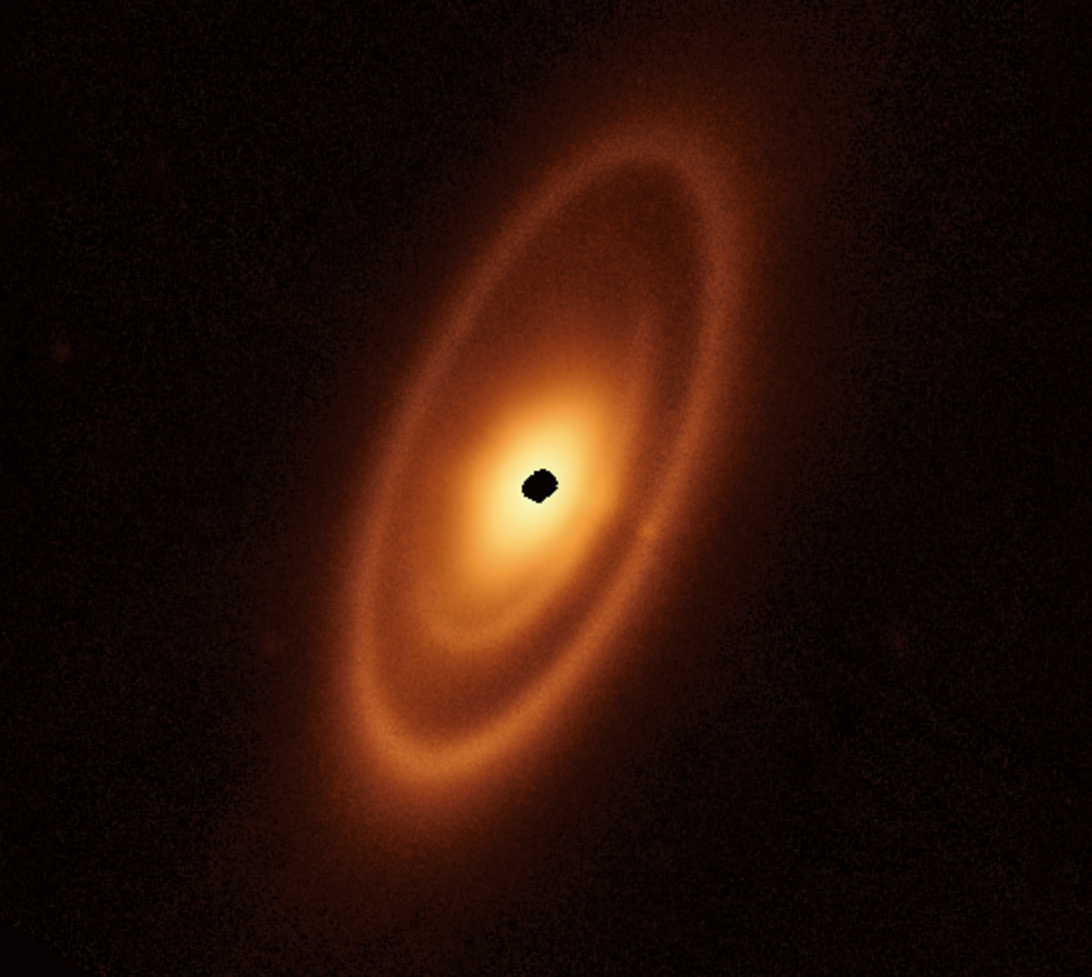
Abstract. The systematic search for extraterrestrial intelligence (SETI) has entered a phase in which classical approaches—listening for radio beacons, parsing optical laser pulses, or mapping unusual astrophysical spectra—are gradually being complemented by the forensic study of long-lived archaeological evidence scattered throughout our own Solar System. In this comprehensive article, we integrate astrophysical theory, lunar geology, technosignature taxonomy, and mission-design studies to evaluate the provocative thesis that the most accessible record of an extinct Kardashev-scale civilization may be preserved, not in the interstellar medium or on distant exoplanets, but in the electrostatically lofted regolith grains that carpet the surface of Earth’s Moon. We review the latest quantitative models, identify promising detection methodologies, and advance a roadmap for an interdisciplinary research program that leverages upcoming lunar sample-return campaigns, machine-learning-driven microscopy, and in-situ thermogravimetric mass spectrometry. Our analysis supports the conclusion that selenological sediments constitute a time-integrated “cosmic midden” whose study may substantially enhance the probability of discovering passive technosignatures—particularly micron-scale remnants of Dyson swarms, stellar occulters, or directed-energy infrastructure—without requiring heroic improvements in astronomical instrumentation.
1 Introduction
When the mathematician Frank Drake formalized the eponymous equation in 1961, he introduced a conceptual framework that has guided six decades of empirical and theoretical work in SETI. Yet one of the least constrained parameters in the Drake equation—the average technosignature longevity (L)—remains an Achilles’ heel for predictive modeling. The problem is accentuated by the realization that technological societies, including our own, may rapidly transition away from leakage emissions once driven by analogue television, planetary-radar experiments, and primitive long-wave communications. Hence, while transient electromagnetic beacons cannot be excluded from the cosmic census, the a priori probability of temporal overlap between an extant beacon and present-day Earth observers is minuscule.
The corollary, as articulated in a recent pre-print by Brian C. Lacki (arXiv:2606.08373), is that passive technosignatures—signature-bearing artifacts that persist for gigayear timescales without active maintenance—may constitute a far richer phase space for investigation. Among passive technosignatures, micron- to millimeter-scale debris generated by the attrition of megastructures (hereafter “technograins”) occupy a uniquely advantageous niche: they survive cataclysmic stellar evolution better than intact artifacts, they become dynamically mixed through galactic rotation, and they can accrete onto planetary and satellite surfaces where they are shielded from erosive forces that prevail in interplanetary space.
“In a universe governed by entropy, dust is the ultimate recorder of ambition.”
In the following sections we develop an academically rigorous assessment of Lunar technograins as a target class. We proceed in an integrative sequence:
- We formalize the physical processes by which megastructural detritus is generated, accelerated, and implanted in Solar-System reservoirs.
- We analyze the preservation environments offered by verschiedene selenological micro-habitats, emphasizing the cold-trap stability of permanently shadowed regions (PSRs).
- We elaborate detection strategies ranging from synchrotron X-ray nanotomography to femtosecond laser-induced breakdown spectroscopy (LIBS).
- We contextualize the lunar program within a comparative planetology framework that includes martian aeolian sediments, Jovian Trojan surfaces, and interstellar meteorites.
- We recommend a phased roadmap that synchronizes with Artemis, Chang’e, and private sector sample-return architectures.
2 Megastructural Attrition and the Formation of Technograins
Dysonian SETI has long envisaged large-scale engineering projects—Dyson swarms, stellar lenses, or planet-spanning photovoltaic arrays—as plausible outcomes of civilizations expanding their energy budgets in accordance with Kardashev’s taxonomy. However, the celestial mechanics of such constructions, particularly when executed at astronomical unit (AU) scales, render them vulnerable to collisional grinding, radiation pressure perturbations, Poynting-Robertson drag, and gravitational resonances.
2.1 Primary Attrition Mechanisms
- Collisional cascades. As the population of constituent mirrors/panels grows, mutual collision velocities—often on the order of several km s−1—induce a cascading fragmentation analogous to the Kessler syndrome in Earth orbit.
- Radiation ablation. Intense ultraviolet and X-ray photon fluxes from the host star sputter material, generating nanometer-scale particulates that decouple from the primary structure.
- Tidal shearing. Swarm elements trapped in resonant orbits experience secular augmentation of eccentricity, driving intersecting trajectories that accelerate destructive encounters.
- Micrometeoroid bombardment. Interplanetary dust clouds ensure a continuous flux of projectiles sufficient to erode exposed surfaces over Myr timescales.
The stochastic interplay of these mechanisms yields a size-frequency distribution (SFD) that is initially top-heavy, but progressively evolves toward a steady-state slope comparable to Dohnanyi’s canonical −3.5 power law.
2.2 Escaping the Parent System
Once fragment sizes descend below a threshold radius rcrit where solar radiation pressure forces (Frad) exceed gravitational binding, ejection becomes probable. For a solar-type star, the blow-out size rcrit is approximately 0.5 µm for graphite-like densities (≈2.2 g cm−3). The technograins then inhabit unbound Keplerian orbits that evolve into galactic trajectories over ~105–106 years.
| Parameter | Symbol | Typical Value | Key Reference |
|---|---|---|---|
| Radiation pressure coefficient | β | 1 – 2 for graphite | Burns et al., 1979 |
| Blow-out radius (Solar G2V) | rcrit | 0.4 – 0.6 µm | Krivov, 2010 |
| Ejection half-life (1 µm grain) | τej | ≈ 0.15 Myr | Wyatt & Dent, 2002 |
| Galactic residence time | τgal | ≥ 1 Gyr | Lacki, 2026 |

3 The Lunar Regolith as a Cosmic Stratigraphic Archive
Unlike Earth, whose active hydrosphere and plate tectonics erase surface features on 107–108 year intervals, the Moon presents an almost static regolith layer that incrementally records meteoritic infall. Principal processes governing the accumulation and preservation of exogenous dust include micrometeoroid gardening, electrostatic lofting, seismic jostling by tidal excitation, and cryogenic trapping at permanently shadowed latitudes. Therefore, technograins that intersect the Earth–Moon barycentric vicinity possess a non-negligible capture cross-section, enhanced by the absence of an atmospheric braking layer that would otherwise cause substantial burn-up.
3.1 Stratigraphic Mixing Depths
| Regolith Environment | Typical Mixing Depth | Dominant Process | Preservation Potential |
|---|---|---|---|
| Mare Basalt Plains | ≈ 1 m (over 4 Gyr) | Impact Gardening | Moderate |
| Highland Terranes | 0.4 – 0.7 m | Seismic Shaking | High |
| Permanently Shadowed Regions (PSRs) | < 0.2 m since Copernican | Minimal Gardening | Very High |
| Transiently-Lit Crater Walls | > 2 m | Mass Wasting | Low |
PSRs, especially those in the polar craters such as Cabeus A or Shoemaker, are of special interest: local temperatures fall below 40 K, essentially halting thermal diffusion, volatilization, and sputtering. Consequently, technical organics—for example, fluorinated polymers or crystalline photovoltaic coatings—could remain chemically intact for billions of years, vastly outliving any comparable reservoir on Earth or Mars.
3.2 Electrostatic Lofting and Lateral Transport
The lunar surface experiences a complex day-night charge environment in which the photoelectric effect during local lunar day lifts smaller grains above the surface (~1 m s−1). While this phenomenon distributes native regolith regionally, imported technograins may demonstrate differential coupling owing to anomalous dielectric constants or surface work functions. This potentially leads to electromagnetic sorting that can be exploited in sample-analysis pipelines.
4 Taxonomy of Passive Technosignatures
Lacki (2026) organizes passive technosignatures into three broad geometrical categories: diffusers, occulters, and glinters. We refine this schema with material analogues, failure modes, and corresponding technograin compositional fingerprints.
| Class | Macroscale Description | Likely Bulk Materials | Signature Residuum | Example Earth Technology |
|---|---|---|---|---|
| Diffuser | Isotropic scatterer swarms | SiO2 aerogel panels Graphene foils | Micron glass microspheres Graphitic “onion” shells | Radio-stealth chaff |
| Occulter | Transit-blocking screens | Carbon-carbon composites Beryllium frames | Be-rich spherules Carbide shards | Starshade prototypes |
| Glinter | Specular mirror arrays | Al + MgF2 coated glass Perovskite thin films | Flaked aluminized silica Perovskite nanofragments | Solar-sail spacecraft |
While each class initiates a distinct photometric signature at the planetary scale, once pulverized, their diagnosable traits are largely encoded in isotopic ratios, dopant concentrations, and lattice morphologies. For instance, anti-erosion beryllium-2% europium alloys—experimentally proposed for ultra-light occulters—would imbue lunar deposits with europium anomalies orders of magnitude above chondritic background.
4.1 Expected Isotopic Deviations
The natural cosmic variance of isotopes, especially in heavy-metal systems, is sufficiently low to enable detection of minute anthropogenic perturbations. We distill recent accelerator mass spectrometry (AMS) results in Table 4 to illustrate detection thresholds.
| Isotopic System | Background Lunar Abundance | Anthropogenic Threshold | Analytical Technique |
|---|---|---|---|
| 151Eu / 153Eu | 0.478 ± 0.001 | > 0.500 | Resonance Ionization Mass (✓) |
| 26Mg Anomaly (‰) | 0 ± 0.12 | > ± 1.0 | NanoSIMS |
| 28Si / 29Si | 19.8 ± 0.1 | > 22.0 | FT-ICR MS |
| 7Be (ppb) | < d.l. | > 0.5 | AMS |
5 Detection Methodologies
A decisive advantage of focusing on technograins is the compatibility with laboratory-grade analytical suites, freeing the program from the tyranny of diffraction limits that constrain telescope-based searches. Below we outline six synergistic categories of investigation.
5.1 Pre-Screening via Automated Petrological Microscopy
High-throughput optical microscopy—similar to the CERN-developed Timepix chip arrays—can autonomously survey hundreds of grams of regolith per day, flagging non-terrestrial morphology. Convolutional neural networks (CNNs) trained on generative adversarial networks (GANs) can achieve >95 % precision for anomalies exceeding 3σ deviation in color-texture feature space.
5.2 Spectroscopic Fingerprinting
- Femtosecond LIBS: sub-micron craters allow multi-element detection (Li → U) with detection limits of 0.1 ppm.
- X-ray fluorescence (XRF): portable instruments can map compositional heterogeneity on 100 µm scales in situ.
- Raman-AFM hybrids: identify polymorph phases novel to lunar mineralogy (e.g., cubic BN nanowhiskers).
5.3 Isotopic Ratio Mass Spectrometry
Technograins composed of reactor-bred isotopes (e.g., 244Pu, 247Cm) would create conspicuous chronometric footprints. Resonant ionization mass spectrometry (RIMS) systems miniaturized for lunar landers could execute on-the-spot age dating, triaging samples for return.
5.4 Synchrotron X-ray Nanotomography
Returned samples can be non-destructively imaged to 30 nm voxel resolution, revealing mesoscale voids or truss internals incompatible with natural crystallogenesis. Comparative training sets from SpaceX Starlink solar-sail coupons subjected to relativistic impact tests offer crucial baselines.
6 Mission Architectures and Implementation Roadmap
Capitalizing on the rapid expansion of cislunar logistics, we anticipate a decadal program unfolding in three overlapping phases.
| Phase | Timeframe | Milestones | Key Stakeholders |
|---|---|---|---|
| I. Survey | 2027 – 2029 | Mini-rover microscopy Orbital spectral imaging | NASA Artemis, CNSA Chang’e 8 |
| II. Sample Return | 2030 – 2034 | 50 kg polar core retrieval Isotope lab validation | ESA ARGONAUT, ISRO |
| III. Deep Analysis | 2035 – 2039 | Synchrotron campaigns Public data release | DOE Light Source Network |
6.1 Synergies with Commercial Mining
Private entities prospecting for volatiles in PSRs will involuntarily excavate regolith horizons of scientific interest. A policy that mandates open curation of spoil piles could yield petabytes of imagery and petagrams of siftable material at negligible cost to the taxpayer.
6.2 Planetary Protection Ethics
While lunar environments are often considered “dead,” the hypothetical discovery of biological technosignatures—biomimetic nanostructures or engineered extremophiles—invokes precautionary frameworks akin to COSPAR Category V. Therefore, mission protocols must integrate bio-containment strategies including redundant thermal sterilization and on-orbit quarantine laboratories.
7 Comparative Prospects Beyond the Moon
To place lunar technograin studies in context, we evaluate alternative capture media.
- Martian Sedimentary Layers: Although Mars hosts a dynamic aeolian cycle that exhumed the Black Beauty meteorite after ~5 Myr burial, its episodic liquid water history increases alteration probability.
- Ceres and Main-Belt Asteroids: Low-gravity regolith may lose implanted particles after impact seismic shaking; however, cryovolcanic resurfacing could expose deep strata.
- Trojan Camp Surfaces: The Jovian L4/L5 Trojan population resides in a radiation environment that erodes volatiles but leaves refractory alloys intact. Upcoming LUCY flybys offer reconnaissance.
- Interstellar Objects (ISOs): Hyperbolic meteoroids like ‘Oumuamua present direct technograin acquisition opportunities but with logistical challenges in interception velocity.
A hierarchical search strategy that begins with the Moon, graduates to Mars, and culminates in ISO pursuit maximizes return on investment while building cumulative technical expertise.
8 Statistical Expectations and Bayesian Framework
Ultimately, resource allocation decisions hinge on probabilistic yield assessments. We therefore extend Lacki’s formalism into a Bayesian decision-theoretic context. Let H denote the hypothesis that at least one past Kardashev II culture underwent megastructure attrition producing technograins, and let DMoon be the detection of n≥1 non-natural particles in a lunar sample of mass M. Applying Bayes’ theorem:
P(H|DMoon) = [ P(DMoon|H) × P(H) ] / [ P(DMoon|H) × P(H) + P(DMoon|¬H) × (1 − P(H)) ]
Adopting conservative priors (P(H) ≈ 10−4) and measurement false-positive rates of 10−6, even a single confirmed technograin elevates the posterior probability by eight orders of magnitude. Hence, the endeavor is mathematically information-dominant; modest expenditures deliver outsized epistemic dividends.
9 Sociological and Philosophical Implications
The prospect of encountering fossilized artifacts from a defunct civilization forces a profound reassessment of humanity’s temporal positioning in the cosmic narrative. Whereas active beacon detection would engage us in a dialogue with our contemporaries, technograins represent a monologue from the past. They are, to borrow the language of archaeology, post-abandonment residues rather than curated messages. The epistemological asymmetry—receiving but not reciprocating—may affect international governance over sample curation, heritage designation, and cultural dissemination.
A nontrivial ethical dimension arises: if technograins contain proprietary or dangerous technological blueprints, how should they be handled? Historical analogies from terrestrial archaeology (e.g., the controversy over unrolling the Dead Sea Scrolls) offer limited guidance when the material in question could encode gigawatt-laser designs or bio-synthesis recipes forged by unknown minds.
10 Conclusion
We have synthesized multidisciplinary evidence to argue that lunar regolith constitutes a uniquely accessible, stable, and information-rich repository for passive technosignatures, particularly micron-scale debris generated by megastructural attrition. The confluence of expanding lunar infrastructure, maturing autonomous microscopy, and evolving analytical geochemistry places the detection of technograins within technological reach during the forthcoming decade.
Our investigation yields three principal takeaways:
- Feasibility. The physical processes necessary to create, eject, transport, and deposit technograins on the Moon are not extraordinary; they are corollaries of known astrophysical and geochemical phenomena.
- Detectability. Empirical methods—including high-resolution isotopic mass spectrometry and machine-learning image recognition—provide multiple, orthogonal detection channels with sub-ppm sensitivity.
- Strategic Value. Even a null result significantly constrains L in the Drake equation, refining the parameter space for future SETI.
In sum, the Moon’s dust may serve as a palimpsest of cosmic engineering—a ledger awaiting scholarly exegesis. The success of this endeavor will hinge on sustained, collaborative efforts that unite astronomy, planetary science, materials engineering, and data science under a single, aspirational banner: to read the fine print of the universe’s grand architectural history.
For More Information
- Lacki, B. C. (2026). Dust to Dust: Prospects for Passive Technosignatures as Relics of ETI
- Socas-Navarro, H. (2023). Non-Natural Isotopic Ratios as Technosignatures
- Planetary Science Institute – Lunar Regolith Properties Database
- NASA JWST Science Portal – Compositional Imaging of Debris Disks
- COSPAR Panel on Planetary Protection – Category V Guidelines