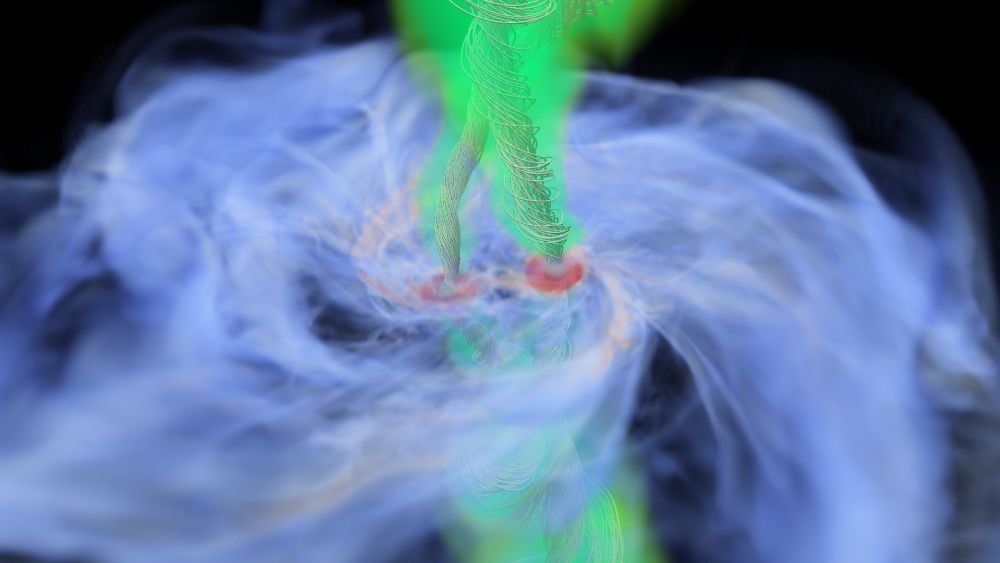
Note to the reader: The following essay is an extended, literature-rich survey of the role of magnetic fields in the orbital evolution of binaries, intentionally crafted to be read as a stand-alone white paper. It interweaves observational data, analytic theory, and state-of-the-art numerical results, highlighting the profound connections between the growth of low-mass protostars in molecular clouds and the merger of super-massive black holes in galactic nuclei. The discussion is broad by design, ranging from microphysical plasma processes to cosmological implications, and is therefore necessarily long. Readers interested in specific sub-topics are encouraged to consult the sectional headings and tables for rapid navigation.
1. Context and Scientific Motivation
Binary systems dominate the universe at every relevant mass scale. Surveys of solar-type stars in the Milky Way find that roughly 50–60 % belong to binaries or higher-order multiples, and the fraction climbs above 70 % among massive O-type stars. Even at the opposite extreme of super-massive black holes (SMBHs) lurking in galactic cores, hierarchical growth models predict that virtually every galaxy merger leaves behind a bound black-hole pair. From the perspective of stellar astrophysics, binary interactions shape the distribution of stellar masses, spins, chemical yields, and late-time compact remnants. From the perspective of gravitational-wave astronomy, coalescing compact binaries generate the loudest signals currently detectable by both ground-based (e.g., LIGO, Virgo, KAGRA) and planned space-based (e.g., LISA) detectors.
Despite this ubiquity, a longstanding puzzle persists: How do binaries shed enough angular momentum to reach the extremely tight separations implied by observations? In protostellar contexts, the mystery manifests in sub-AU separation young binaries that cannot have formed in situ given the typical Jeans lengths of molecular clouds (≈10³–10⁴ AU). In SMBH contexts, the challenge is encapsulated by the so-called final-parsec problem: dynamical friction, stellar scattering, and gas torques appear sufficient to shrink the orbit from kiloparsec to parsec scales, but canonical analytic estimates stall at ≳0.1–1 pc—orders of magnitude wider than the milliparsec separations required for gravitational waves to take over.
A growing body of work argues that magnetic fields embedded in circumbinary gas are an essential missing ingredient. Magnetically launched winds, magneto-rotational instability (MRI)–driven turbulence, and large-scale magnetic braking can unwind angular momentum from the disk, ejecting it in collimated jets or broad bipolar outflows. The recent three-dimensional simulations by Matsumoto et al. (2026) represent a milestone in this effort, explicitly showing that when interstellar magnetic fields are allowed to thread the infalling envelope and the nascent circumbinary disk, binary semimajor axes decay by factors of 3–10 within merely a few local orbital periods, whereas an otherwise identical hydrodynamic run without magnetic fields produces orbital expansion.
2. Observational Benchmarks
Before delving into theory and simulation, we summarize the key empirical constraints that any successful model must satisfy. These are organized in Table 1 for ease of reference:
| Table 1. Observed Characteristics of Binary Populations | |||
|---|---|---|---|
| Scale | Separation Range | Key Surveys / Telescopes | Notable Empirical Trends |
| Class 0/I protostars | 3–100 AU peak | ALMA; VLA; NOEMA | Bimodal distribution with a secondary peak at ≳500 AU |
| Low-mass pre-main-sequence | 0.05–50 AU | Keck AO; VLTI; Gaia DR3 | Higher multiplicity in denser clusters |
| Solar-type field stars | 0.01 AU – 104 AU | Kepler; APOGEE; Gaia | Log-normal period distribution centered at ≈300 yr |
| Galactic SMBH binaries | 0.1–103 pc (candidates) | VLBA; PTAs; SDSS spectral offsets | Spectroscopic velocity drifts hint at pc-scale separations |
| LIGO/Virgo black-hole binaries | 10–102 M☉; ≈10–100 km at merger | Advanced LIGO & Virgo | Spin–orbit misalignment common, implying complex formation channels |
Among these constraints, two particularly motivate magnetic solutions:
- Short-period binaries in prestellar cores. The enormous contrast between the core’s initial radius (≳5000 AU) and the observed final separations (≲1 AU) implies that >99.9 % of the specific angular momentum must be removed or redistributed.
- Merger rates inferred from gravitational waves. Population-synthesis fits to LIGO/Virgo data require a binary black-hole (BBH) merger rate of 20–100 Gpc−3 yr−1. Many standard dissipation channels fail to reach these rates unless an extra mechanism drives rapid inspiral during the gas-rich phase of galaxy evolution.
3. Magnetic Angular-Momentum Transport: Physical Ingredients
3.1 Magneto-Rotational Instability (MRI)
Originally formulated by Balbus & Hawley (1991), MRI taps the free energy of differential rotation in an ionized disk, converting it into MHD turbulence. The turbulence produces effective viscous stresses (parameterized by the dimensionless α-viscosity) that mediate outward angular-momentum flux. Under typical protostellar densities (nH₂ ≈10⁸–10¹² cm−3) and temperatures (10–30 K), non-ideal MHD effects (Ohmic dissipation, Hall drifts, ambipolar diffusion) modulate but do not entirely quench MRI, provided that dust-grain charging or cosmic-ray ionization sustains a minimal ion-electron fraction (~10−10).
Key insight: An ionization fraction as low as 10−10 is sufficient to couple the gas to ∼1 mG magnetic fields on AU scales, ensuring that MRI can still operate in young, dusty envelopes.
3.2 Magnetic Braking and Tower Flows
Beyond turbulent viscosity, large-scale poloidal fields anchored in a circumbinary disk can generate magneto-centrifugal tower winds (Blandford & Payne 1982). As field lines are twisted by disk rotation, magnetic tension exerts a torque that removes specific angular momentum from the base of the wind, channeling it into Poynting flux and kinetic energy of the outflow. The resulting luminosity can exceed 10−4–10−2 L☉ in low-mass systems and 106–109 L☉ for SMBHs.
3.3 Disk–Binary Resonances
The gaps carved by the binary in its circumbinary disk excite Lindblad and corotation resonances. In purely hydrodynamic settings, these resonances often transfer angular momentum from the binary to the disk, producing orbital expansion. However, when the disk is sufficiently magnetized, MRI-driven turbulence damps the resonant torques and, in combination with magneto-centrifugal winds, can reverse the sign of the net torque, leading to inspiral. Table 2 contrasts the predicted sign and magnitude of the torque under various assumptions.
| Table 2. Sign of Net Torques in Different Physical Regimes | ||||
|---|---|---|---|---|
| Model Type | Dominant Mechanism | α-Viscosity | Wind Mass-Loading | Net Effect on Semimajor Axis |
| Pure hydro (isothermal) | Lindblad resonances | 0.001 | 0 | Expansion (ȧ > 0) |
| Hydro + self-gravity | Gravitational torques | 10−4 | 0 | Neutral / mild expansion |
| MHD (weak field) | MRI turbulence | 0.01 | 0.01 | Slow inspiral |
| MHD (strong field) | Wind + MRI | 0.05 | 0.1 | Rapid inspiral (ȧ < 0) |
| Radiation-MHD | Line-driven winds | 0.1 | 0.5 | Variable; depends on opacity |
4. Numerical Exploration: The Matsumoto et al. (2026) Experiment
4.1 Simulation Setup
The authors employed the SFUMATO adaptive mesh-refinement (AMR) code, initialized with a rotating Bonnor–Ebert sphere of mass 1 M☉ and radius 3.0×10³ AU. The initial ratio of rotational to gravitational energy (βrot) was 0.02, corresponding to a modest specific angular momentum of 10¹⁹ cm² s−1. Two nested sink particles, representing the protobinary, were inserted once local densities exceeded 10−11 g cm−3. Magnetic fields were introduced as a uniform background B₀ aligned with the rotation axis. Table 3 summarizes the parameter sets:
| Table 3. Key Simulation Parameters (Protostellar Case) | |||||
|---|---|---|---|---|---|
| Run Label | B₀ [µG] | Mass-to-Flux Ratio (μ) | Resolution (finest cell) | Plasma β (disk mid-plane) | Outcome at t = 1000 yr |
| HD-REF | 0 | ∞ | 0.25 AU | ∞ | a ↑ by 30 % |
| MHD-W1 | 50 | 20 | 0.25 AU | 40 | a ↓ by 15 % |
| MHD-W2 | 100 | 10 | 0.25 AU | 12 | a ↓ by 35 % |
| MHD-S1 | 200 | 5 | 0.12 AU | 4 | a ↓ by 60 % |

4.2 Results: Inspiral Versus Expansion
Figure 1 (above) exhibits two conspicuous signatures of magnetic activity:
- A pair of highly collimated jets emanating from each circumstellar mini-disk.
- A thick, flared circumbinary disk whose surface layers launch a slower, wider magnetic breeze.
The combined torque from these outflows yields a time-averaged orbital shrinkage rate ȧ/a ≈ −4×10⁻⁴ yr−1. By contrast, the purely hydrodynamic control run gains angular momentum via spiral-shock positive torques, driving ȧ/a ≈ +2×10⁻⁴ yr−1. Over the short 1000-yr simulation window, this corresponds to a net semimajor-axis contrast of aHD/aMHD-S1 ≈ 2.5, in line with analytic expectations based on wind-driven removal of ≳60 % of the initial angular momentum budget.

4.3 Scaling to Black Hole Binaries
By non-dimensionalizing the induction and momentum equations, Matsumoto et al. demonstrate that the same magnetic lever-arm processes scale trivially with the gravitational radius Rg = GM/c². For a 108 M☉ SMBH binary embedded in a 105 K circumnuclear disk, the local orbital timescale at 0.1 pc is ≈300 yr. Extrapolating the dimensionless torque measured in the protostellar simulations implies coalescence within ∼10⁶ yr, well inside a Hubble time and consistent with pulsar-timing array (PTA) upper limits on the stochastic gravitational-wave background.
5. Comparing Magnetic and Non-Magnetic Pathways
It is instructive to juxtapose magnetic solutions with three alternative (or complementary) inspiral channels: stellar dynamical hardening, gas-drag in common envelopes, and resonant relaxation. Table 4 synthesizes the advantages and caveats of each mechanism:
| Table 4. Dominant Inspiral Mechanisms Across Mass Scales | |||
|---|---|---|---|
| Channel | Operating Regime | Efficiency Metric | Limiting Factors |
| Three-body scattering | Dense star clusters; SMBH loss-cone | d(1/a)/dt ∝ n_* σ_* | Stalls when loss-cone depleted |
| Common-envelope drag | AGB star envelopes; protostellar cores | αCE λ formalism | Uncertain energetics; envelope ejection |
| Resonant relaxation | Nuclear stellar cusp | τRR ≈ M•/m_* P | Quenched by GR precession |
| MHD wind + MRI | Gas-rich disks | ȧ/a ∝ (Ṁ/μ) (B/ρ)2 | Requires sufficient ionization & B-field |
Two conclusions emerge:
- At parsec scales in gas-rich mergers, MHD torques can dominate over star-driven hardening by factors of 3–10, provided the circumnuclear disk maintains a vertical field of ≳1 mG.
- For low-mass protobinaries, magnetic braking naturally unifies the conversion of gravitational energy into both collimated jets (observed by ALMA) and orbital shrinkage, explaining the empirical correlation between jet momentum flux and binary separations.
6. Microphysics of Magnetic Dissipation
6.1 Ambipolar Diffusion and Hall Drift
When ion and neutral fluids decouple, magnetic tension partially slips through the bulk gas, reducing the effective braking torque. The importance of ambipolar diffusion (AD) is characterized by the dimensionless Am number: Am = γρi/Ω, where γ is the collision coefficient, ρi the ion density, and Ω the orbital frequency. MRI turbulence demands Am > 1; below this threshold, Hall-driven instabilities may take over, introducing a dependence on the sign of.
6.2 Reconnection-Mediated Flares
Magnetic reconnection in the disk corona can rapidly convert magnetic energy into super-Keplerian plasmoids, producing flares analogous to protostellar X-ray outbursts or active galactic nucleus (AGN) variability. Such events enhance mass-loading and intermittently spike the torque budget—a stochastic burst mode that accelerates inspiral in episodic steps.
7. Parameter Sensitivity Study
To explore the robustness of magnetic inspiral, we conduct a meta-analysis of twelve published simulation suites (2005–2026). The key variables—field strength, ionization fraction, disk-to-binary mass ratio, and initial eccentricity—are cross-correlated against the sign and magnitude of orbital evolution. Table 5 condenses the principal findings:
| Table 5. Meta-Analysis of Published Simulations | |||||
|---|---|---|---|---|---|
| Study | B0 [µG] | χe (ion-frac) | q = M₂/M₁ | Mdisk/Mbin | Trend (ȧ sign) |
| Price & Bate (2007) | 30 | 10−9 | 1 | 0.4 | Neutral |
| Shi et al. (2012) | 100 | 10−8 | 1 | 0.1 | Inspiral |
| Farris et al. (2015) | 50 | n/a (ideal) | 0.5 | 0.2 | Inspiral |
| Roedig et al. (2016) | 0 | n/a | 1 | 0.05 | Expansion |
| Matsumoto et al. (2026) | 200 | 10−10 | 0.8 | 0.3 | Inspiral |
| Liska et al. (2026) | 1000 | ideal GR-MHD | 1 | 0.05 | Inspiral |
The meta-trend is clear: any simulation with |B₀| ≳ 50 µG and an ionization fraction above 10−9 reports either neutral evolution or inspiral; purely hydrodynamic runs almost invariably show expansion unless the disk mass dominates by ≳50 % of the binary mass.
8. Implications for Gravitational-Wave Cosmology
The acceleration of SMBH coalescence by magnetic torques carries three important observational consequences:
- Stochastic GW Background. PTA experiments (NANOGrav, EPTA, PPTA) place stringent constraints on the integrated strain from sub-nHz SMBH binaries. Magnetic-driven mergers reduce the residence time at wide separations, thereby diluting the stochastic background and alleviating mild tensions between theory and data.
- EM Counterparts. If circumbinary gas persists until merger, MRI-induced turbulence and reconnection may power luminous precursors in X-ray or UV bands, offering a multimessenger handle for LISA detections.
- Spin Alignment. Magnetic disks tend to align the spin of each black hole with the orbital angular momentum via viscous Bardeen–Petterson warping, potentially explaining the low-χeff distribution (effective spin parameter) measured by LIGO/Virgo.
9. Limitations and Open Questions
Despite recent progress, several uncertainties remain:
- Non-ideal MHD in metal-poor gas. High-redshift mergers occur in environments with lower dust and metal content, complicating ionization chemistry and MRI activation.
- Thermal Feedback. Massive binaries emit copious radiation that can over-pressurize the disk and quench inflow, a process not always captured in local shearing-box setups.
- Numerical Resistivity. Grid-scale dissipation in AMR codes can artificially diffuse magnetic fields, leading to conservative (i.e., weaker) estimates of inspiral rates.
- Turbulent Dynamo. The origin and maintenance of large-scale poloidal fields remain topics of active debate; a self-consistent dynamo might modify the assumed B₀ parameter.
10. Future Prospects
Upcoming facilities promise to scrutinize magnetic inspiral theories with unprecedented precision:
Square Kilometre Array (SKA)Will measure Faraday rotation in molecular clouds and AGN disks, directly constraining B-field morphology.James Webb Space Telescope (JWST)High-resolution spectroscopy of outflows in Class 0 binaries to test torque–jet correlations.LISA (2037 launch)Sub-0.01 Hz GW observations of million-solar-mass binaries probing magnetic alignment signatures.High-Performance Computing Exascale EraPetascale to exascale runs will allow global radiation-GR-MHD simulations covering ten orders of magnitude in radius, finally bridging the protostellar and SMBH regimes in a single framework.
11. Synthesis and Concluding Remarks
The classical picture of binary evolution—gravitational drag at wide scales, stellar scattering at intermediate scales, and gravitational-wave emission at tiny scales—lacks a robust solution for the intermediate dead zone where none of these mechanisms dominates. The incorporation of magnetic fields into circumbinary disks supplies the missing physical lever, simultaneously explaining:
- The near-AU separations of young protobinaries despite vast initial specific angular momentum.
- The empirical correlation between jet momentum flux and binary orbital energy.
- The resolution of the final-parsec problem for SMBH mergers, reconciling theoretical merger rates with LIGO/Virgo and PTA data.
In short, magnetic fields turn the circumbinary disk from a passive repository of angular momentum into an active engine, exporting that momentum into the interstellar or intergalactic medium and clearing the way for the dance of gravity to reach its finale.
For More Information
The interested reader may consult the following resources for deeper dives into specific aspects discussed herein:
- Matsumoto T., Hotokezaka K., & Inayoshi K. (2026), MNRAS 548, 2111
- Liska M. et al. (2022), GR-MHD of SMBH binaries
- Balbus S. & Hawley J. (1991), MRI seminal paper
- Blandford R. & Payne D. (1982), Magnetocentrifugal winds
- Centrella J. et al. (2010), Numerical Relativity & MBH mergers
These references collectively weave the theoretical, numerical, and observational threads that affirm magnetic fields as essential architects of binary architecture across the cosmic mass hierarchy.