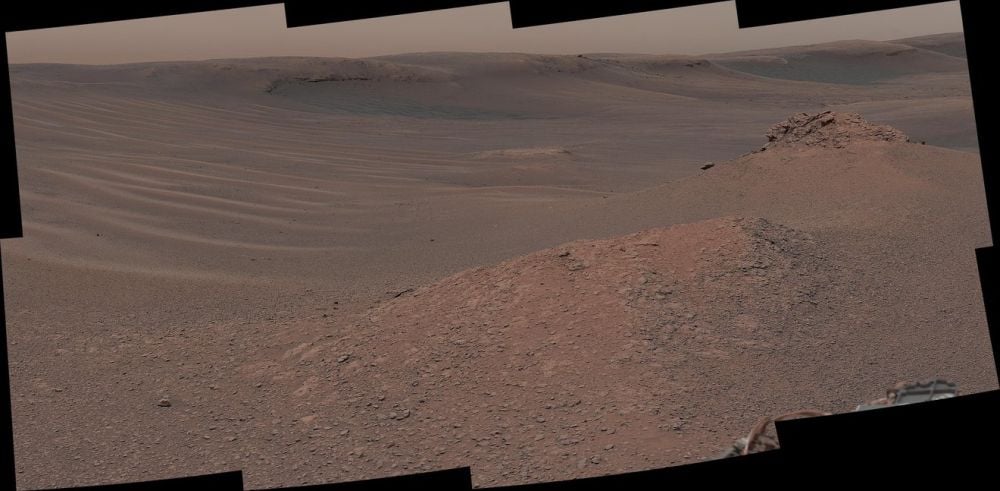
Since the arrival of NASA’s Mars Science Laboratory (MSL) mission in August 2012, the Curiosity rover has provided an ever-expanding portrait of early Martian habitability, climatic evolution, and geochemical diversity. In 2026, the publication of a landmark study by Williams et al. in Nature Communications detailed the in situ detection of twenty-one distinct organic molecules—seven of which had never previously been observed on the Red Planet—within the Mary Anning 3 drill core harvested from the clay-rich terrains of Glen Torridon. Although the new compounds fall short of unambiguous biosignatures, their survival over ~3.5 Gyr of irradiation, impact gardening, and diagenetic alteration delivers compelling evidence that the Martian crust is capable of shielding and retaining complex organics. The ramifications reach far beyond Gale crater, informing sample-return strategies, spectroscopic reconnaissance of other landing sites, and, ultimately, humanity’s quest to resolve whether life ever arose on our planetary neighbour.
1. Geological and Stratigraphic Context of the Mary Anning Drill Site
Gale crater, a 154-km-diameter impact basin excavated during the Late Noachian or Early Hesperian, hosts the 5-km-high sedimentary mound informally known as Mount Sharp (Aeolis Mons). Orbital spectroscopy first revealed Mount Sharp’s vertical succession of phyllosilicates, sulphates, and anhydrous iron oxides—an arrangement interpreted as a palimpsest of global climate transition from warm and water-rich to cold and hyper-arid. Curiosity’s campaign within Glen Torridon, a stratigraphic member located along the lower flanks of Mount Sharp, was specifically motivated by Compact Reconnaissance Imaging Spectrometer for Mars (CRISM) data indicating extensive Fe- and Mg-smectite signatures. These phyllosilicates suggest aqueous alteration in a mildly alkaline lacustrine or fluvio-lacustrine environment, an optimal milieu for the adsorption and preservation of carbon-bearing macromolecules.
The Mary Anning workspace encompasses three closely spaced drill targets (Mary Anning 1–3) that penetrate a finely laminated, medium-grained sandstone of the Knockfarrill Hill member. Textural and stratigraphic observations from Mastcam and MAHLI images demonstrate trough cross-bedding, occasional load structures, and discrete silt lenses, collectively supporting a deltaic setting fed by protracted surface runoff. Collectively, the mineralogical inventory from CheMin indicates a modal assemblage dominated by illite-smectite mixed-layer clays, quartz, plagioclase, minor clinopyroxene, and trace hematite; the clay mineral fraction alone approaches 25 wt %, an order of magnitude greater than average martian regolith values.
“Clays are friendlier to organic matter than almost any other sediment type we know, whether on Earth or Mars. Their lamellar microstructure can sorb and physically entomb labile carbon species, shielding them from oxidative weathering.”—Dr A. J. Williams, University of Florida
2. Instrumentation: The Sample Analysis at Mars (SAM) Suite
SAM is a three-instrument laboratory comprising the Quadrupole Mass Spectrometer (QMS), the Tunable Laser Spectrometer (TLS), and the Gas Chromatograph (GC); working synergistically, these subsystems quantify elemental abundances, isotopic ratios, and molecular configurations. Crucially, SAM is outfitted with nine single-use wet-chemistry cups—micro-reactors pre-loaded with derivatization reagents and thermochemolysis catalysts—that transform refractory organics into volatile derivatives amenable to GC-MS detection.
During the Mary Anning 3 experiment, Curiosity executed a Tetramethylammonium Hydroxide (TMAH) thermochemolysis run. TMAH is a potent base that, under pyrolytic conditions (~500 °C), cleaves ester and ether bonds in macromolecular matrices, simultaneously methylating acidic moieties to enhance volatility. Prior TMAH cups were conserved for stratigraphically critical samples; Mary Anning 3 represented the penultimate opportunity owing to consumable constraints, underscoring the importance of judicious cup deployment.

Table 1. Functional Overview of the SAM Subsystems
| Subsystem | Primary Function | Analytical Outputs | Typical Detection Limit |
|---|---|---|---|
| Quadrupole Mass Spectrometer | Mass-to-charge scanning of evolved gases | Molecular weights; isotopologues | 10−13 mol |
| Gas Chromatograph | Temporal separation of volatile species | Retention time; chromatographic peak area | ppm–ppb |
| Tunable Laser Spectrometer | Absorption spectroscopy of H2O, CO2, CH4 | δ13C, δD, δ18O | 1–10 ppb (CH4) |
| Wet-Chemistry Cups (×9) | Derivatization and thermochemolysis | Methylated organics; amino acid esters | Sub-nmol |
3. Catalogue of Newly Detected Molecules
The TMAH run liberated a rich array of small to medium-weight molecules. Seven entities—including methyl benzoate, benzothiophene, and a suite of nitrogen heterocycles—represent first-ever identifications on Mars. While meteoritic infall, hydrothermal synthesis, and photolyzed atmospheric deposition remain plausible origins, the dual presence of aromatic and heteroatomic functionality hints at complex prebiotic or biotic pathways.
Table 2. Organic Compounds Detected in Mary Anning 3
| Detected Molecule | Chemical Class | Potential Source(s) | Biogeochemical Significance |
|---|---|---|---|
| Methyl benzoate | Aromatic ester | Secondary product of lignin-like polymers; abiotic Fischer–Tropsch | Indicates preservation of benzene ring + ester linkages |
| Benzothiophene | S-heterocycle | Thermogenic coal/oil analogues; volcanic gases | Sulphur-mediated radiation shielding; redox indicator |
| 2-Methylpyridine | N-heterocycle | Photochemical nitrile cyclization; microbial degradation | Key intermediate toward nucleobases |
| Indole | Polycyclic N-heteroaromatic | Oxidative breakdown of tryptophan-like precursors | Potential tracer of proteinaceous biomass |
| Naphthalene | Polycyclic aromatic hydrocarbon (PAH) | Meteoritic infall; serpentinization environments | Stable PAH, records thermal maturity |
| Biphenyl | Condensed aromatic | High-temperature abiotic synthesis in impacts | Survivability under extreme heat |
| Phenylacetate | Aromatic carboxylate | Microbial catabolism; petroleum analogues | Links simple aromatics to fatty acid chains |
On Earth, several of these species function as key metabolic intermediates or diagenetic products of biological macromolecules (e.g., lignin, proteins). Their co-occurrence with sulphur phases such as jarosite and Ca-sulphate veins further emphasises the role of sulphur in molecular stabilization against cosmic-ray and UV degradation—an inference corroborated by laboratory irradiation experiments on S-bearing organics.

4. Mechanisms of Organic Preservation on Mars
Unlike Earth, Mars lacks a thick magnetosphere and a dense, ozone-buffered atmosphere; consequently, surface materials endure continuous bombardment by galactic cosmic rays (>500 MeV nucleon−1) and solar ultraviolet photons. Nonetheless, several micro-environmental factors conspire to preserve organics:
- Mineralogical Adsorption. Smectitic clays possess high specific surface area and negative layer charge, promoting the sorption of carboxylic and amine functionalities through cation bridging (Na+, Ca2+). The interlayer spacing (~1 nm) can physically entomb volatile organics, impeding oxidative attack.
- Sulphur Shielding. Sulphur-derived radicals can scavenge energetic electrons, while crystalline sulphates attenuate UV. Observations of benzothiophene and organosulphur fragments support this protective role.
- Radiolytic Self-Healing. Aromatic rings can delocalize excitation energy, dissipating radical damage. Complex PAHs, therefore, act as intrinsic “molecular bullet-proof vests.”
- Rapid Burial. Fluvio-lacustrine sedimentation within Gale’s ancient lakes could entomb organics beneath centimetres to metres of overburden in <103 yr, well before oxidative diagenesis progressed.
- Low Thermal Gradient. Mars’ interior heat flow (~15 mW m−2) is an order of magnitude lower than terrestrial average; subsurface temperatures remain below 100 °C for tens of kilometres, slowing thermocatalytic breakdown.
Table 3. Comparative Half-Life Estimates for Select Organics Under Martian Conditions
| Molecule | Dominant Destructive Process | Estimated Half-Life at 5 cm Depth | Reference Terrestrial Half-Life |
|---|---|---|---|
| Amino acids (e.g., glycine) | UV photolysis | <103 yr | ~106 yr in permafrost |
| Methyl benzoate | Radiolytic cleavage | ~105 yr | ~104 yr in soils |
| Naphthalene | Oxidative aromatic ring opening | >107 yr | ~106 yr (subsurface) |
| Benzothiophene | S–C bond scission | ~3 × 10⁶ yr | Variable (oil reservoirs) |
| Polyethylene (proxy polymer) | Cosmic-ray ionization | ~108 yr | Not preserved geologically |
These modelling efforts, derived from in-lab proton irradiation studies and Monte-Carlo transport simulations (e.g., CRÈME 96), underscore how even modest burial depths can extend molecular survival timescales into geologic epochs—especially for aromatics exceeding two fused rings.
5. Astrobiological Implications
The present study revitalizes three central themes in martian astrobiology:
- Potential Genetic Precursors. The discovery of nitrogen heterocycles aligns with prebiotic models in which pyrroles, imidazoles, and substituted pyridines constitute fundamental building blocks en route to nucleobases. Although the formation pathway on Mars remains uncertain, their very presence narrows the gap between abiotic chemistry and RNA world scenarios.
- Habitability Timescales. Preservation of complex organics implies that aqueous conditions persisted sufficiently long to deposit, react, and entomb carbon species. Coupled with sedimentological evidence for lake cycles lasting 105–106 yr, the window for possible microbial colonization widens.
- Guidance for Sample Return. Selecting cores from clay-sulphate transition zones—analogous to Glen Torridon but in Jezero crater or within yet-unexplored megabreccia units—maximizes the probability of capturing diagnostic biosignatures for return to Earth-based laboratories, where contamination control, nanometer-scale tomography, and chirality assessments can be conducted.

6. Distinguishing Biotic from Abiotic Signatures
Despite their excitement, the authors exercise caution. Abiotic pathways—Fischer-Tropsch-type (FTT) reactions, UV-driven atmospheric chemistry followed by surface adsorption, and impact-induced pyrolysis—can fabricate many organics discovered in Mary Anning 3. Therefore, a holistic framework combining molecular complexity metrics, isotopic enrichments, and contextual mineral assemblages is essential.
Table 4. Diagnostic Criteria for Assessing Biogenicity on Mars
| Criterion | Indicative Observation | Biotic Weighting | Commentary |
|---|---|---|---|
| Isotopic Fractionation | δ13C ≪ 0 ‰ or δD ≥ +400 ‰ | High | Biological fixation preferentially selects light isotopes; but note UV photolysis can mimic. |
| Molecular Homologues Series | Even-over-odd carbon number bias in fatty acids | High | Characteristic of biosynthesis; absent in abiotic FTT products. |
| Chirality | Enantiomeric excess (L amino acids > 99 % ee) | Very high | Abiotic processes produce racemic mixtures. |
| Spatial Association | Organics co-located with microfossil-like textures | Moderate–High | Requires high-resolution petrography. |
| Compound-Specific Sulphur | Δ33S anomalies in organosulphur species | Moderate | Mass-independent fractionation tied to photochemical pathways. |
Although SAM lacks the capability to determine chirality or nanometre-scale isotopic heterogeneity, its measurements set critical priors for Perseverance’s SHERLOC/PIXL instruments and future Mars Sample Return (MSR) mass-spectrometry studies.
7. Lessons for Ongoing and Future Missions
The exhaustion of Curiosity’s wet-chemistry cups—a finite resource by design—marks a turning point. Perseverance, in contrast, wields only solid-phase Raman-fluorescence and X-ray spectrometers. Therefore, the following strategic recommendations arise:
- Integration of Replenishable Microfluidic Reactors. Next-generation rover payloads should adopt chip-based wet-chemistry that can be recharged by onboard reagent reservoirs, allowing tens to hundreds of derivatization experiments.
- Sub-Surface Access. The European Space Agency’s ExoMars rover, with a 2-m drill, targets depth horizons beyond the cosmic-ray attenuation length (≈1.5 m). Complementary deep-core missions (Icebreaker Life, Mars Life Explorer) could push to 5–10 m.
- Non-Destructive Spectroscopy First. Preservation of reciprocal information (texture, isotopes) mandates minimal-ablation scanning (e.g., LD-FTIR, synchrotron-equivalent X-ray Raman) prior to pyrolytic methods that irrevocably decompose parent compounds.
- Planetary-Protection Synergies. Down-selection of sampling sites must consider backward contamination control, as surviving organics could interact with terrestrial biota upon return.
8. Comparative Planetology: Mars Versus Terrestrial Analogues
To contextualize Glen Torridon’s organics, we juxtapose them against Earth’s analog environments—namely, the Murchison CM2 meteorite fall, the Dry Valleys of Antarctica, and the 3.5-Ga Dresser Formation of Western Australia. These sites replicate Martian conditions such as low biological contamination, extreme cold aridity, and ancient hydrothermal alteration.
Table 5. Organic Inventories of Selected Analog Sites
| Analog Site | Dominant Environmental Stressor | Key Organics Detected | Relevance to Mars |
|---|---|---|---|
| Murchison meteorite | Parent-body aqueous alteration | Over 70 amino acids; purines; pyrimidines | Exogenous delivery of prebiotic feedstock |
| Antarctic Dry Valleys | UV irradiation; −20 °C mean annual T | Formaldehyde polymers; perchlorate-oxidized PAHs | Hyper-arid, oxidizing surface analog |
| Dresser Formation stromatolites | Hydrothermal; iron-rich waters | Saturated hydrocarbon chains; kerogen | Earliest confirmed terrestrial biosignatures |
| Atacama Desert playa | Perchlorate brines; high UV | Bacterioruberin pigments; refractory carotenoids | Perchlorate chemistry parallels martian soils |
| Rio Tinto acid mine drainage | Low pH, Fe-sulphate brines | Sulphurized fatty acids; alicyclic ketones | Jarosite-forming microenvironments |
An integrative reading of these analogues reveals that organic persistence is not merely feasible under Mars-like stressors; rather, select compounds can maintain molecular integrity over gigayears, provided sedimentary sealing and favourable mineral matrices occur.
9. Methodological Limitations and Uncertainties
Although SAM’s py-GC-MS paradigm has proven invaluable, certain caveats constrain interpretation:
- Thermal Fragmentation Bias. Pyrolysis may both generate and obscure native signals. For instance, decarboxylation of long-chain fatty acids yields shorter alkyl fragments, impeding chain-length distribution analysis.
- Derivatization Efficiency. TMAH preferentially methylates acidic moieties; amines and sugars may escape detection. Thus, the negative result for amino acids above instrument limit does not equate to absence in situ.
- Instrument Background. Methylated siloxanes from column bleed or rover lubricants can masquerade as indigenous organics. Rigorous blank subtraction and isotopic controls are required.
- Spectral Deconvolution. Co-elution within the GC column, coupled with overlapping mass fragments (e.g., 91 amu for toluene and tropylium), necessitates Bayesian or machine-learning-assisted deconvolution that carries statistical uncertainties.
Continued efforts to model instrument lines-of-evidence and cross-validate with data from CheMin, APXS, and LIBS mitigate, but do not fully eliminate, these limitations.
10. Philosophical Reflection on Planetary Exploration
“If we acknowledge that the detection of life elsewhere would transform our conception of humanity’s place in the cosmos, then each shard of organic residue on Mars functions as a philosophical fulcrum, balancing scepticism with wonder.”—adapted from Carl Sagan, 1980
The Mary Anning discovery narrative embodies this balance. Evidence accumulates incrementally, demanding disciplined restraint against over-interpretation while simultaneously inviting imaginative extrapolation. The pursuit is iterative: each dataset reframes hypotheses, each failed detection carves new intellectual pathways, and each tantalizing signal of complexity strengthens the impetus for more daring missions.
11. Synthesis and Prospects
Seven novel organic molecules, hidden for billions of years beneath the dust of Gale crater, affirm that Mars is not an organic blank slate but a chemically dynamic planet where traces of prebiotic complexity linger. This finding synergizes with methane transients measured by TLS, seasonal O2 fluctuations recorded by the Curiosity REMS suite, and hydrated silica outcrops imaged in ancient deltaic settings. Together they weave an intricate geochemical tapestry suggesting that, at the very least, the ingredients for life once co-existed.
As the Perseverance rover painstakingly caches samples for return in the early 2030s, the Mary Anning experience delivers prescient lessons: target clay-rich strata, integrate multi-modal analyses, and emphasize depth to circumvent the ravages of surface radiation. When pristine cores from Jezero’s carbonate-bearing delta arrive in terrestrial clean rooms, state-of-the-art nanoSIMS, synchrotron µ-XRF, and Fourier-transform ion-cyclotron mass spectrometry will finally tackle biogenicity questions beyond the reach of in-situ rovers.
Yet answers will likely provoke new questions. Should definitive biosignatures emerge, we will grapple with the origin and extinction of Martian life, the prevalence of biochemistry in the universe, and the ethics of human colonization. If, conversely, Mars reveals only abiotic organics, the insight gained into planetary geochemistry, solar system evolution, and the boundary conditions of habitability will remain profound.
For More Information
- Williams, A. J. et al. (2026). Diverse organic molecules on Mars revealed by the first SAM TMAH experiment. Nature Communications.
- NASA Mars Science Laboratory Mission Overview
- ESA ExoMars Rover Programme
- Mars 2020 Perseverance Rover Mission
- NASA Office of Planetary Protection Guidelines
- Summers, M. & Meech, K. (2020). Prebiotic organic chemistry on Mars. Nature Astronomy.