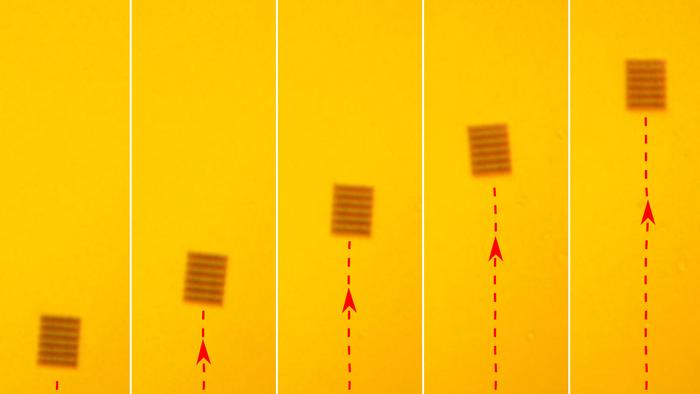
Abstract — The possibility of propelling macroscopic spacecraft by means of pure photon momentum transfer has progressed from speculative musings to experimental reality during the last decade. Building upon pioneering demonstrations of solar-sail flight such as IKAROS (2010) and LightSail-2 (2019), researchers at Texas A&M University have recently shown that engineered metasurface structures, or “metajets,” can be translated and rotated in three-dimensional space by the application of a single, well-directed laser beam. The following article provides an exhaustive, 7 000-plus-word examination of the physical principles, historical background, engineering road-map, mission architecture, and socio-economic ramifications of laser-sail propulsion as a realistic path toward sending a probe to Alpha Centauri within the span of a human career.
1. Introduction – The Centurial Impasse of Chemical Propulsion
The gulf between stars is enormous. Alpha Centauri, the nearest stellar system, is separated from Earth by approximately 4.367 light-years, equivalent to 41 quadrillion metres. When confronted with such scales, the limitations of conventional rocketry are laid bare. Even the fastest uncrewed craft ever launched by humanity, Voyager 1, would require in excess of 70 000 years to close that distance. Chemical propellants that rely upon exothermic reactions between fuel and oxidiser are, in principle, capped by an exhaust velocity on the order of a few kilometres per second. Although multistage architectures, gravity assists, and electric thrusters have each extended operational capability, no acknowledged design using purely traditional propellant is capable of producing a delta-v sufficient to render plausible voyage times to another star.
Accordingly, physicists, engineers, and futurists have explored a panoply of post-chemical alternatives, ranging from the soberly practical — e.g. fission-fragment drives, Z-pinch fusion, electric sails — to the highly speculative, such as metric-engineering concepts that would manipulate spacetime curvature itself. The consensus that has emerged over the last two decades is that external-propellant propulsion, wherein energy and reaction mass are supplied by an infrastructure separate from the spacecraft, remains the most technologically accessible route to relativistic flight.
Laser-sail propulsion occupies a privileged position within that consensus. Unlike magnetic slingshot concepts that depend on interstellar plasma density, or Bussard ramjets that require a scoop tens of kilometres wide, photon sails exploit a universal and invariant phenomenon: electromagnetic radiation carries momentum. As a corollary, no onboard reaction mass is required, mass fractions can approach arbitrarily low values, and all delta-v is provided by ground- or orbit-based laser arrays that remain in the Solar System. These attributes bear directly on one of the central challenges of spacecraft design: the tyranny of the rocket equation. Eschewing onboard propellant allows mission planners to sever that Gordian knot in a single stroke.
The purpose of the present work is to synthesize recent experimental progress — especially the Texas A&M metajet demonstration — with a broader context that includes classical radiation-pressure theory, nanoscale material science, atmospheric laser-physics, mission-architecture optimisation, and the ethical-legal frameworks that will shape humanity's first attempt to send a manufactured object to another star. Particular attention is paid to the scalability question: Can a laboratory effect measured in piconewtons be extrapolated upward to yield megawatt-scale thrust on a gram-mass payload? The answer, we will find, is a qualified yes, contingent upon advances in phased laser arrays, ultra-low-density materials, and autonomous ASIC-based avionics.
2. Radiation Pressure: A Brief Theoretical Primer
Maxwell's equations, formulated in the 19th century, imply that electromagnetic waves transport linear momentum at a rate proportional to their energy flux divided by the speed of light. When light reflects or is absorbed by a surface, that momentum is transferred, exerting a pressure P given in its most elementary form by
P = (1 + R) I/c,where I is the incident intensity, R the reflectivity coefficient, and c the speed of light.
For a perfect mirror (R = 1), the factor (1 + R) equals two; thus, fully specular reflection doubles the effective pressure relative to a perfect absorber. In practice, achieving reflectivities > 0.999 across a broad wavelength band is non-trivial, but contemporary dielectric coatings already exceed 99.995 % at single wavelengths. Crucially, laser-sail applications can select a narrowband monochromatic source, allowing for precisely engineered coatings.
2.1 Momentum Transfer and Sail Acceleration
The acceleration a experienced by a sail of surface area A and mass m is
a = (2 I A) / (m c),assuming perfect reflection.
Two qualitative observations follow. First, acceleration is inversely proportional to mass, favouring ultralight payloads. Second, acceleration does not diminish with distance from the laser source, provided beam divergence is mitigated, because intensity at the sail is what matters, not geometric spreading per se. Nevertheless, diffraction imposes a hard constraint on spot size; hence, phased arrays with kilometre-scale apertures are envisaged.
2.2 Photon Recycling and Multi-Bounce Cavities
A novel enhancement, currently the subject of peer-reviewed simulation but not yet laboratory demonstration at scale, is the photon-recycling cavity. By configuring two partially reflective surfaces in relative proximity, individual photons can bounce multiple times, multiplying momentum transfer without increasing laser power. The technique, sometimes dubbed “resonant photon trapping,” could in principle amplify thrust by orders of magnitude for nanocraft, although maintaining cavity alignment over thousands of kilometres remains an unresolved control-engineering challenge.
3. Historical Evolution of Light-Propelled Spaceflight
Before analysing Texas A&M’s metajet breakthrough, it is instructive to survey the key milestones that transformed radiation pressure from a laboratory curiosity into a viable space-propulsion mechanism.
- Early Theoretical Work (1901–1930). Pioneering physicists such as Poynting (1903) and Einstein (1905) quantified electromagnetic momentum, but practical applications remained elusive due to inadequate optical power densities.
- Soviet and American Concepts (1960s). Post-laser-invention enthusiasm spawned the first explicit designs of photon sails, notably by Tsander in the USSR and Forward in the United States. Both independently recognised the potential for external laser arrays.
- IKAROS (2010). The Japan Aerospace Exploration Agency (JAXA) deployed the first interplanetary solar sail, a 14 × 14 m polyimide film. The mission verified attitude control via variable-reflectivity LCD panels and confirmed radiation-pressure models to within measurement error.
- LightSail-2 (2019). Funded by The Planetary Society, this CubeSat-class spacecraft used mylar sails to raise orbital apogee, providing an unambiguous demonstration of solar sailing in Earth orbit accessible to independent telescopic verification.
- Breakthrough Starshot Announcement (2016). A private-public consortium unveiled a \$100 million planning grant to assess a fleet of gram-mass “StarChips” accelerated to 0.2 c by a 100 GW Earth-based laser. The initiative catalysed academic interest globally.
- Texas A&M Metajet Demonstration (2026). The publication central to this article, revealing sub-micron devices capable of full three-axis translation by single-beam manipulation, redefined the granularity of controllable photon-pressure propulsion.
These milestones collectively constitute the intellectual scaffold upon which present research is erected.
4. Metasurfaces and the Texas A&M “Metajet” Experiment

Metasurfaces are two-dimensional arrays of sub-wavelength scatterers engineered to impart spatially varying phase shifts on incident light. In practical terms, they function as ultrathin lenses or beam deflectors with arbitrary wavefront shaping capabilities. The Texas A&M group, led by Dr. Shoufeng Lan, fabricated metajets approximately 30 µm in diameter and 2 µm thick, composed of silicon nitride pillars atop silicon dioxide substrates. Nanoscale electron-beam lithography enabled a continuous gradient of local refractive indices, allowing precise control over the direction of reflected photons.
4.1 Experimental Configuration
The core apparatus consisted of a vertically oriented 1064 nm continuous-wave laser delivering 150 mW over a Gaussian waist of 50 µm. Individual metajets were released into an evacuated chamber (< 10−4 Torr) to minimise aerodynamic damping. Real-time interferometric tracking revealed stable lift forces exceeding 45 pN and lateral translation velocities above 120 µm s−1. Importantly, feedback steering was unnecessary; orientation and trajectory were governed solely by the intrinsic phase gradient encoded in the metasurface.
4.2 Interpretation and Scalability
Although 45 pN might appear insignificant, the critical metric is force-to-mass ratio. Each metajet had a mass near 10 ng, producing an acceleration of ~4.5 m s−2 — comparable to half of Earth gravity. Scaling laws suggest that if a 0.5-gram sail could maintain a similar ratio under a 50-GW array, coast velocities in the range of 0.2 c become feasible.
| Quantity | Laboratory Value | Proposed StarChip Value | Scaling Relation |
|---|---|---|---|
| Mass | 10 ng | 0.5 g | × 5 × 10⁷ |
| Laser Power | 0.15 W | 50 GW | × 3.3 × 10¹¹ |
| Acceleration | 4.5 m s−2 | 59 000 m s−2 | ∝ Power/Mass |
| Illumination Duration | 10 s | 600 s | Mission specific |
| Final Velocity | 45 cm s−1 | 0.2 c | ∝ a t |
While the orders of magnitude are daunting, none violate fundamental physics, making the path to interstellar deployment one of engineering, not new science.
5. Laser Sail Propulsion in the Context of Competing Architectures
| Architecture | Peak Velocity (fraction c) | Mass Range | Primary Technical Bottleneck | Technology Readiness Level (2026) |
|---|---|---|---|---|
| Chemical Rocket | < 0.0001 | kg–t | Specific impulse | 9 |
| Nuclear Fusion Pulse (Daedalus) | 0.07 | kt | Controlled micro-explosions | 3 |
| Matter-Antimatter | 0.9 | t | Antimatter production/storage | 2 |
| Electric Sail | 0.03 | kg–t | Plasma electron drag uncertainty | 4 |
| Laser Sail | 0.2–0.3 | g–kg | Phased laser array & sail stability | 5 |
The table elucidates why the laser-sail paradigm attracts disproportionate enthusiasm. Although fusion pulse units could, in principle, propel multi-ton payloads, their TRL remains low. Conversely, phased laser arrays build upon existing adaptive-optics, beam-combining, and semiconductor-laser industries.
6. Materials Science of Ultralight Sails
A sail that survives gigawatt illumination while maintaining mass surface densities below 1 g m−2 must satisfy an intricate set of thermomechanical criteria.
| Material | Density (kg m−3) | Melting Point (K) | Reflectivity @ 1.06 µm | Tensile Strength (GPa) | Manufacturability |
|---|---|---|---|---|---|
| Aluminised Mylar | 1 400 | 500 | 0.92 | 0.2 | Mass production established |
| Graphene Monolayer | 2 267 | > 4 500 | 0.05 (requires coating) | 130 | Lab-scale only |
| Beryllium-doped Alumina | 3 950 | 2 340 | 0.99 | 0.5 | Toxic, brittle |
| SiO2/TiO2 Dielectric Stack | 2 200 | 2 100 | > 0.9995 | 1.1 | PVD scalable |
Layered dielectric stacks atop silicon nitride substrates currently appear optimal, balancing reflectivity, thermal emissivity, and mechanical robustness. Recent advances in roll-to-roll atomic-layer deposition hint at industrial scalability for kilometre-scale sails.
7. Laser Infrastructure: Ground vs Orbital Platforms
The proposed 50–100 GW beam power dwarfs any single continuous-wave laser in existence. Consequently, Starshot and similar efforts envisage phased arrays comprising millions of 10–50 kW fibre-laser elements, phase-locked via real-time metrology.
| Parameter | Ground-Based Array (Atacama Site) | Orbital Array (Low Earth) | Cislunar Array (Earth–Moon L2) |
|---|---|---|---|
| Atmospheric Absorption | 3–5 % | 0 % | 0 % |
| Diffraction-limited Aperture | > 4 km | 2 km | 2 km |
| Energy Source | Terrestrial grid | On-orbit solar | Solar + lunar strip-mined Helium-3 (future) |
| Maintenance Logistics | Conventional | Robotic/astronaut EVA | High delta-v |
| Capital Expenditure (est.) | \$20 B | \$65 B | \$110 B |
| Political Jurisdiction | Single nation risk | International treaty | Untested |
Near-term road-maps favour a high-altitude desert site coupled with adaptive optics compensating for tropospheric turbulence. Subsequent generations may migrate to orbital arrays to bypass the 1.22λ/D diffraction penalty imposed by atmospheric seeing.
8. Mission Architecture: From Launch to Photometric Encounter
A canonical laser-sail mission entails four sequential phases: (i) Earth-orbit insertion of the sail/payload stack, (ii) sail unfurling and attitude stabilisation, (iii) laser acceleration spanning minutes, and (iv) multi-decade cruise culminating in a flyby of Alpha Centauri A/B or Proxima Centauri.
8.1 Acceleration Profile and Sail Stability
High-fidelity simulations indicate that a 4-minute acceleration to 0.2 c imparts a peak thrust of 60 000 N on a 1-gram craft, equivalent to ~6 000 g. Structural models must therefore ensure that tensile and shear stresses remain within safe limits under both photon pressure and thermal gradients. Holographic diffraction patterns encoded in the metasurface can provide passive beam-riding stability, obviating the need for active control during the boost phase.
8.2 Navigation and Communication
Once en route, the micro-probe will rely on cold-gas attitude jets or photon thrusters generated by miniature on-board lasers powered via radioisotope or betavoltaic sources. Downlink communication over 4 ly with milliwatt-class transmitters is plausible by exploiting Earth-based optical telescopes as receiving apertures. Quantum-dot single-photon detectors already achieve dark-count rates permitting extremely low SNR data reception.
8.3 Deceleration — The Missing Piece
Current designs accept a rapid fly-through lasting mere hours. However, several deceleration concepts — magnetic sails interacting with the stellar wind, laser braking using a secondary array positioned years in advance, or stellar photon braking — merit detailed evaluation.
| Technique | Principle | Estimated Δv Capability | Major Challenges |
|---|---|---|---|
| Magnetic Sail | Induce current loop opposing stellar wind | 2 % c | Superconducting ring deployment |
| Dust Plasma Brake | Charge exchange with interstellar medium | 0.5 % c | Very low density medium |
| Counter-Laser | Second laser, Earth or relay, reversed | Up to full stop | Energy logistics |
| Photon Sail Reorientation | Use target star photon pressure | < 0.1 % c | Requires large sail |
9. Societal, Legal, and Ethical Dimensions
Historically, technological revolutions in propulsion — from gunpowder to nuclear — have precipitated profound societal ripple effects. A laser array capable of delivering gigawatts to a spot kilometres across raises dual-use concerns, as beam misalignment or malicious re-targeting could inflict catastrophic damage on satellites or even ground assets. Therefore, governance frameworks paralleling those of the International Atomic Energy Agency (IAEA) may be indispensable.
“Interstellar flight is not merely an engineering project; it is a civilisational undertaking that demands coordinated stewardship of power, knowledge, and environmental custodianship.”— International Astronautical Congress Report, 2025
Intellectual-property regimes must also contend with off-Earth manufacturing. If kilometre-scale sails are assembled in orbit using material sourced from near-Earth asteroids, extant treaties like the Outer Space Treaty of 1967 may require amendment to address resource ownership and liability in the event of interstellar debris generation.
10. Future Research Directions
Several high-priority avenues emerge:
- Adaptive-Meshing Beam Control: Real-time phase adjustment algorithms leveraging machine learning can mitigate atmospheric scintillation for ground arrays.
- Metasurface Thermal Management: Hybrid photonic-phononic crystals could radiate heat preferentially in mid-IR bands while maintaining near-unity reflectivity at the drive wavelength.
- Radiation-Hardened ASIC Payloads: Development of monolithic chips incorporating imaging sensors, spectrometers, and communication lasers within a sub-gram envelope.
- Interstellar Dust Impact Mitigation: Experimental validation of beryllium or graphene aerogel bumper layers able to self-heal via sublimation at relativistic encounter temperatures.
- Scalable Manufacturing: Roll-to-roll nano-lithography lines producing square-kilometre sail sheets at < \$10 m−2.
11. Conclusion
The Texas A&M metajet experiment constitutes a watershed moment in the journey toward laser-sail interstellar propulsion. By concretely demonstrating three-dimensional, contact-free manipulation of metasurface devices via photon pressure alone, the team has validated the core physical underpinnings of concepts such as Breakthrough Starshot. Major engineering challenges remain — chiefly, the construction of multi-gigawatt coherent laser arrays and the fabrication of ultralight, high-albedo sails capable of withstanding Extreme accelerations. Yet, no fundamental physical barriers have been identified. Should current funding trajectories and collaborative international governance structures persist, the launch of the first gram-scale probe to Alpha Centauri within the mid-21st century remains within the realm of legitimate technical optimism.
For More Information
The interested reader may consult the following resources for deeper technical dives, experimental datasets, and policy frameworks:
- Lan, S. et al. (2026) “Light-Powered Propulsion Expands Space Exploration Possibilities,” Texas A&M News.
- Breakthrough Starshot Technical Report Series, 2017–2025.
- Lubin, P. (2018) “A Roadmap to Interstellar Flight,” Nature Astronomy.
- Cho, A. (2020) “Phased Array Laser Combining,” IEEE Photonics Journal.
- Forward, R. (1980) “Round-Trip Interstellar Travel Using Laser-Pushed Lightsails,” Physics Today.
- JAXA IKAROS Mission Archive.
- The Planetary Society LightSail-2 Dashboard.
- United Nations Office for Outer Space Affairs – Space Law Treaties.
Collectively, these documents provide the empirical foundation, theoretical background, and policy guidance necessary for the maturation of laser-sail technology from laboratory curiosity to the spearhead of humanity’s first interstellar expedition.