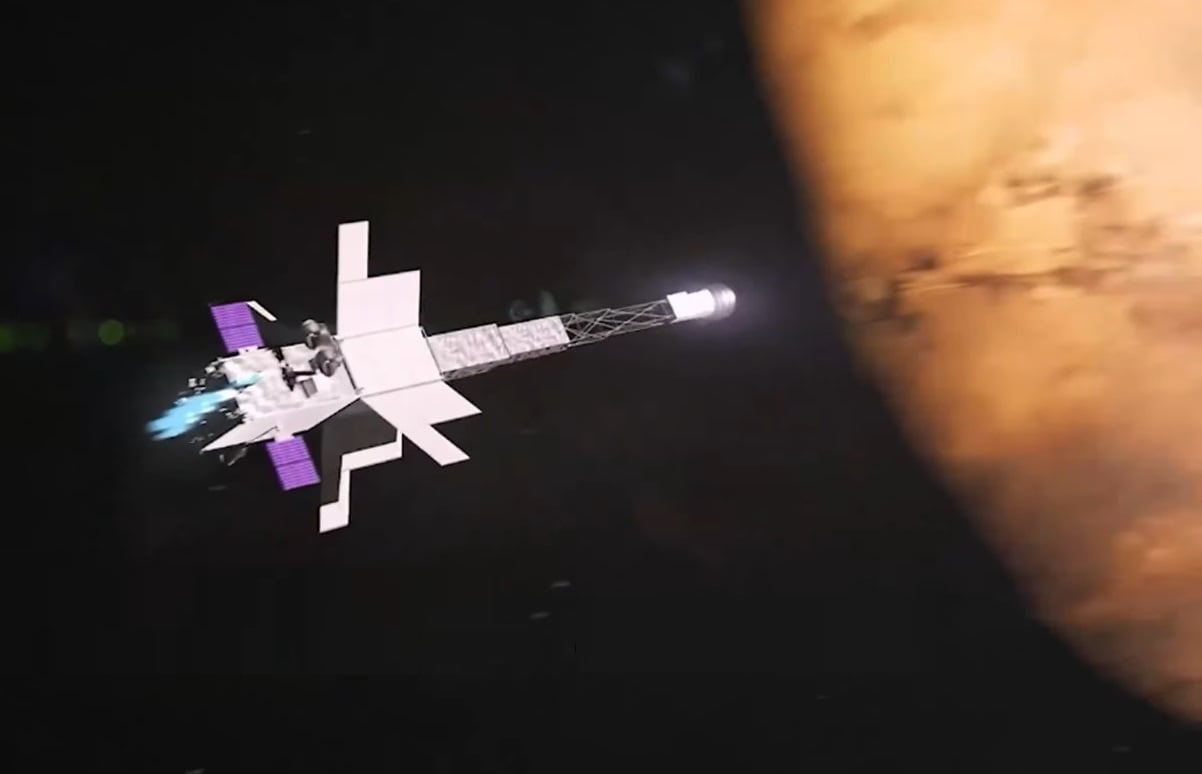
In late March 2026 the National Aeronautics and Space Administration (NASA) released a sweeping strategic outline that combines the establishment of a permanent lunar surface installation with the deployment of a nuclear-electric-propelled spacecraft to Mars before the decade ends. Although the announcement echoes aspirations voiced since the dawn of the Space Age, the specificity of the 2028 deadline, the explicit decision to repurpose previously budgeted Gateway hardware, and the coupling of human and robotic exploration under a single programmatic umbrella collectively mark a profound reconfiguration of American civil‐space priorities. The following analysis unpacks the technical, economic, geopolitical, and socio-environmental dimensions of NASA’s proposal, placing the agency’s newly articulated ambitions within the broader context of lunar base studies, nuclear propulsion research, and commercial-station transition planning. Where necessary, historical antecedents are revisited, contemporary engineering challenges are examined, and probable future developments are projected. The intent is to provide an academically rigorous, evidence-driven appraisal that can inform decision-makers, researchers, industry participants, and an engaged public.
1. Conceptual Foundations and Policy Genesis
Major space initiatives rarely emerge in a vacuum; instead, they crystallise at the intersection of scientific opportunity, industrial capability, political will, and societal imagination. NASA’s 2026 blueprint originates in at least four overlapping streams of influence:
- National Space Policy Direction (2025): A White House policy memorandum issued in December 2025 placed a premium on “persistent cislunar and translunar presence,” explicitly instructing NASA to “pursue surface installations enabling industrial, scientific and security objectives.”
- Competitive Dynamics with the People’s Republic of China: China’s Chang’e programme, China Manned Space Agency (CMSA) road-maps for the International Lunar Research Station (ILRS), and recent joint statements with Russia compelled American planners to emphasise schedule over architectural elegance.
- Commercial Transition Imperative: The approaching retirement of the International Space Station (ISS) has created urgency around the development of viable commercial outposts in Low-Earth Orbit (LEO), re-shuffling agency resources and prompting the quest for a “Core Module” procurement model.
- Technological Maturation of Small Modular Reactors (SMRs): A two-decade research arc involving NASA, the Department of Energy (DoE), and private contractors has reduced perceived barriers to space-rated nuclear power systems, thereby emboldening timelines for nuclear-electric propulsion (NEP).
“Chronological urgency is no longer an affectation; it is an existential parameter. If we cannot deliver within the decade, the strategic consequences will outlive the question of which team built which module.” — Anonymous senior NASA strategist (internal memo, 13 March 2026)
1.1 Road-Map Realignment and the Artemis Sequence
The newly announced plan reorganises the existing Artemis manifest while preserving several mission identifiers.
| Mission | Original Objective (2020 Plan) | Updated Objective (2026 Plan) | Launch NET1 |
|---|---|---|---|
| Artemis IV | Deliver Gateway HALO + PPE, lunar fly-by | First crewed lunar landing of programme phase II | Q2 2028 |
| Artemis V | Gateway crew rotation + surface sortie | Initiate construction of surface “Base Node-Alpha” | Q4 2028 |
| Artemis VI & VII | Not baselined | Expand base habitation volume, deploy fission power-plant demonstrator | 2029–2030 |
| Space Reactor-1 (SR-1) Freedom | ― | Demonstrate 2 MWe NEP stage, deliver three “Skyfall” helicopters to Mars | Late 2028 |
1 “NET” = No Earlier Than.
The re-sequencing is predicated on siphoning substantial hardware—particularly the Power and Propulsion Element (PPE)—away from the original Gateway orbiting platform and employing it as the backbone of the SR-1 spacecraft. Simultaneously NASA intends to acquire a United States–owned ISS Core Module to which future commercial elements could dock before eventual free-flight separation. The pragmatic ethos is not subtle: re-use capital investments, collapse development paths, and shrink integration overhead.
2. Historical Evolution of Lunar Base Concepts
From Project Horizon (1959) to the Flexible Lunar Architecture Studies (FLAS) of the 2010s, space agencies and think tanks have proposed at least two dozen serious lunar-base concepts. A comparative chronology illuminates why NASA’s 2026 strategy is simultaneously familiar and unprecedented.
| Study / Programme | Lead Institution(s) | Primary Power Concept | Habitat Strategy | Estimated Crew Size | Status |
|---|---|---|---|---|---|
| Project Horizon (1959) | U.S. Army | Solar arrays | Buried aluminium modules | ~12 | Concept only |
| Lunar Orbiter Base (1985) | NASA JSC | RTGs | Inflatables w/ regolith shielding | ~8 | Concept only |
| International Lunar Village (2002) | ESA + Roscosmos | Hybrid solar-fuel cells | Pressurised cylinders in lava tube | 4–6 | Concept only |
| ALC (Artemis Lunar Camp, 2020) | NASA | Photovoltaic farms | Hub-&-spoke rigid habitats | ~4 | Superseded |
| Base Node-Alpha (2026 Plan) | NASA + Industry | Kilopower fission-surface reactor | Composite inflatables; additive-manufactured berms | 6–10 (expandable) | Moving toward implementation |
Three features differentiate the 2026 iteration:
- Nuclear Baseline Power: Rather than treating surface fission as a long-range aspiration, the new baseline assumes an initial ~10 kWe Kilopower unit for early construction, scaling to >60 kWe over seven years.
- Integrated Logistics with Mars Testbed: Hardware, control software, and human-robotic operations developed for the lunar site double as proving grounds for Mars surface missions.
- Commercial Plug-In Expectations: The Core Module approach in LEO primes industry for analogous “attach-and-detach” opportunities on the Moon, from propellant depots to private science pods.
2.1 Site Selection Parameters
NASA’s preliminary trade study, circulated among field centres in February 2026, identified four candidate quadrangles, all in the south-polar region between Shackleton and Malapert craters. Evaluation criteria include persistent line-of-sight to Earth (critical for early tele-operations), seasonal lighting regimes for thermal management, proximity to water-ice–bearing permanently shadowed regions (PSRs), and topographical suitability for horizontal landing zones. A simplified excerpt from that study appears below.
| Candidate Area | Latitude / Longitude | Days of Continuous Illumination / Lunar Year | Distance to PSR (km) | Average Slope (deg) | Comms Line-of-Sight to Earth (%) |
|---|---|---|---|---|---|
| Peak of Eternal Light (Shackleton Rim) | 89.8°S – 42°E | ~310 | 2.1 | 4.2 | 78 |
| Malapert Massif Plateau | 85.5°S – 0°E | 270 | 9.4 | 6.3 | 82 |
| Nobile Ridge Sector-A | 85.0°S – 38°W | 295 | 3.7 | 5.0 | 80 |
| Connecting Ridge (de Gerlache-Shackleton) | 88.3°S – 30°E | 320 | 1.9 | 4.7 | 75 |
Although final determination remains pending additional remote-sensing and robotic precursor data, mission planners presently favour the Connecting Ridge due to its uniquely short traverse distance to verified PSR volatiles and its relatively gentle slopes, which simplify heavy-cargo lander requirements.

3. Nuclear-Electric Propulsion: From Principle to Practice
Nuclear propulsion for deep-space missions manifests in two principal flavours: nuclear-thermal propulsion (NTP), in which a fission reactor directly heats a propellant such as liquid hydrogen that expands through a nozzle; and nuclear-electric propulsion (NEP), where reactor output is converted to electricity that powers ion or Hall-effect thrusters. The SR-1 Freedom spacecraft adopts the latter architecture.
3.1 Advantages and Constraints of NEP
- Specific Impulse (Isp): Electric thrusters routinely exceed 2500–4000 seconds, an order of magnitude higher than chemical stages, facilitating substantial mass savings for outer-planet or Mars cargo deliveries.
- Thrust-to-Weight Ratio (T/W): The downside is modest thrust, necessitating long spiral trajectories away from Earth gravity wells and introducing mission-design complexity.
- Thermal Management: Dissipating reactor waste heat in vacuum requires kilometre-class radiator surface areas when megawatt-scale electrical output is desired.
- Reactor Shielding: Separation distance—via boom or long truss—between the crew/avionics modules and the reactor reduces shielding mass but imposes structural challenges.
| Parameter | Solar Electric Propulsion (SEP) | Nuclear Electric Propulsion (NEP) | Chemical (LOX/LH2) |
|---|---|---|---|
| Isp (s) | 1500-3000 | 2500-4500 | 450 |
| End-to-End Efficiency | Photovoltaic dependent | High; solar-independent | High initial thrust |
| Power Density (kW/kg) | 0.02-0.10 | 0.15-0.35 | N/A |
| Optimal Mission Radius | <3 AU | >3 AU; flexible | N/A (staging) |
| Mars Cargo Transit Time2 | 280-330 days | 180-210 days | 210-240 days |
2 Values assume delivery of equivalent 20-tonne payloads on representative minimum-energy windows.
3.2 The Space Reactor-1 (SR-1) Freedom Vehicle
The SR-1 craft is expected to deliver ~2 MWe continuous electrical output, a figure deliberately chosen to test modular scalability for future crewed Mars transfers requiring ≥10 MWe. Illustrative subsystem allocations appear below.
| Subsystem | Mass (kg) | Electrical Allocation (kWe) | Key Technology Provider |
|---|---|---|---|
| Reactor + Shield + Boom | 26,000 | — | BWX Technologies |
| Turbomachinery & Power Conversion | 4,200 | — | Rolls-Royce Space Systems |
| Radiators (deployable panels) | 7,800 | — | Aerojet Thermal |
| Ion Thruster Cluster (16 × 350 kW) | 3,600 | 5,600 | Northrop Grumman |
| Guidance, Nav & Control | 1,100 | 120 | Honeywell |
| Skyfall Payload Stack | 4,300 | 250 | JPL + AeroVironment |
| Margins, Contingency & Launch Adapters | 3,000 | — | — |
| Total | ~50,000 | ~6,000 | — |
Launch will require a super-heavy lift vehicle in the ≥100-tonne-to-LEO class; SpaceX’s Starship or Blue Origin’s New Glenn Variant C are prime contenders. In-orbit assembly is planned at ≈600 km altitude using a combination of robotic arms and minimally crew-tended procedures.

4. The Skyfall Helicopter Dispenser: An Exogeological Force Multiplier
NASA’s Ingenuity technology demonstrator rewrote the operational vocabulary of Mars exploration in 2021–2024. However, the single-rotor, solar-recharged architecture was mass-constrained to 1.8 kg. The Skyfall system scales both payload capacity (to 7 kg per helicopter) and flight endurance (to 15 km sorties) by virtue of a reactor-powered parent vehicle that can off-load pre-charged lithium batteries during atmospheric entry.
4.1 Helicopter Performance Envelope
| Parameter | Ingenuity | Skyfall-A | Skyfall-B | Skyfall-C |
|---|---|---|---|---|
| Mass (kg) | 1.8 | 7.1 | 7.0 | 6.8 |
| Rotor Diameter (m) | 1.2 | 1.8 | 1.8 | 1.6 |
| Max Altitude (m) | 18 | 25 | 30 | 22 |
| Science Payload (kg) | 0.08 | 1.5 | 1.5 | 1.3 |
| Endurance (min, per sortie) | ~3 | ~15 | ~15 | ~12 |
The three helicopters will operate semi-autonomously, guided by a lander-based phased-array antenna network. Instruments include high-resolution multispectral imagers, ground-penetrating FMCW radar (2 GHz), and a miniaturised tunable laser spectrometer for volatile mapping. Together they can survey ~600 km² in one Martian year, identifying potential sample-return zones for future human crews.
5. Economic Considerations and Budgetary Trade-Space
At first approximation, NASA projects $30 billion over ten years for the combined lunar–Martian initiative. Comparative cost modelling reveals that schedule compression necessitates elevated near-term obligations but may reduce integrated life-cycle costs via overlap of test platforms, common avionics, and shared propulsion R&D.
| Cost Bucket | Gateway-Centric Path (2023 CDR Baseline) | 2026 Lunar-Base Path | Δ (USD Billions) | Primary Driver of Difference |
|---|---|---|---|---|
| Lunar Orbit Platform | 12.4 | 4.2 | -8.2 | PPE & HALO repurposed for SR-1 |
| Surface Habitation & Rovers | 7.1 | 9.5 | +2.4 | Earlier deployment cadence, fission integration |
| Launch Services | 13.2 | 11.7 | -1.5 | Fewer LOP G resupply flights; heavy-lift multi-manifest |
| Nuclear Propulsion Demo | — | 4.6 | +4.6 | Reactor, ground testing, licensing |
| Commercial Station Transition | 5.8 | 4.0 | -1.8 | Core Module direct procurement |
| Total 10-Year Outlay | 38.5 | 34.0 | -4.5 | Gateway cancellation offsets NEP costs |
The table omits “unknown unknowns,” notably geopolitical contingencies, launch market volatility, and inflationary pressures. Nevertheless, the analysis suggests that redirecting gateway funds can partially subsidise high-risk NEP development without expanding NASA’s top-line discretionary budget beyond historical norms (~0.46 % of federal outlays).
6. Risk Assessment: Technical, Regulatory, Societal
6.1 Technical Risk Matrix
| Area | Likelihood (L) | Consequence (C) | Risk Index3 | Proposed Mitigation |
|---|---|---|---|---|
| Reactor Thermal Runaway | 2 | 5 | 10 | Diverse shutdown rods, ground-hotfire validation |
| Launch Failure with Radiological Release | 1 | 5 | 5 | NPS4 encapsulation; flight termination neutral path |
| Dust Regolith Contamination of Hab Systems | 4 | 3 | 12 | Electrostatic dust repellents; in situ garment airlock |
| Commercial LEO Station Revenue Shortfall | 3 | 4 | 12 | Guaranteed NASA utilisation contracts |
| International Collaboration Breakdown | 3 | 2 | 6 | Non-ITAR open data regimes; multilateral boards |
3 Risk Index = L × C on a 1–5 scale. 4 NPS = Nuclear Power Source.
6.2 Regulatory Pathway for Space Nuclear Systems
The United States follows Presidential Memorandum 20 (2020) for Nuclear Launch Approval, requiring a two-phase safety assessment and an inter-agency Nuclear Safety Review Board. NASA’s Office of Planetary Protection additionally mandates planetary quarantine compliance for Mars atmospheric entry vehicles. Coordination between these frameworks is critical to avoid schedule slips.
6.3 Public Perception and Social Licence to Operate
A 2025 Pew Research Center poll showed 67 % public approval for lunar bases but only 41 % for “nuclear-powered craft in near-Earth space.” Outreach initiatives, including virtual reactor tours and AR classroom modules, are planned to enhance transparency.
7. Environmental Considerations: Planetary and Terrestrial
Environmental impact spans three theatres of operation: (1) Earth launch site, (2) lunar surface, and (3) Martian atmosphere. On Earth, radiological assessments conclude that even a catastrophic pad explosion with intact fuel casks would yield ground deposition below NRC intervention thresholds beyond the immediate exclusion zone. On the Moon, fission products remain sequestered in reactor housings; however, heat plumes could sinter regolith, altering local albedo and possibly micro-volatilise trapped water ice. On Mars, contamination risk is negligible because reactor will not enter the atmosphere. A broader environmental figure of merit is mission-equivalent CO2 intensity. Replacing multiple chemical propulsion flights with a single NEP push stage reduces total propellant mass manufactured on Earth by ≈450 tonnes, equivalent to ~3.1 × 10⁷ kg CO2 when hydrogen liquefaction energy is included.
8. International Law and Norm-Setting
The Outer Space Treaty (1967) and the Artemis Accords (2020) provide foundational guardrails. However, specific gaps remain:
- Resource Utilisation: The legal status of extracted lunar water ice for in situ propellant production remains contested by signatories who have not joined the Artemis Accords.
- Planetary Protection Category III vs IV: Helicopter penetrators and ground-contact sensors must comply with COSPAR guidelines to avert forward contamination.
- Nuclear Liability: The 1972 Convention on International Liability for Damage Caused by Space Objects could, in principle, attribute damages from a failed launch to the launching state, underscoring the need for bilateral indemnification agreements with commercial contractors.
9. Timeline and Milestone-Based Performance Metrics
The following table synthesises critical path milestones, mapping them onto a notional Gantt structure. Green cells denote completion, yellow indicate in-process, and red reflect schedule risk >20 %.
| Year / Quarter | PPE Refurb | Kilopower Demo | SR-1 Structural Fab | Lunar Lander Lox/Methane Cert | Base Node-Alpha Deployment |
|---|---|---|---|---|---|
| 2026 Q2 | Design-Freeze | Hot-Fire Stage I | |||
| 2026 Q4 | Component Refab | Subsystem Vib-Test | Layup Begun | ||
| 2027 Q2 | Delivery to KSC | Flight Unit Complete | Integration | Thumbprint Test | |
| 2027 Q4 | On-Orbit Assy | Green-Run A | ISRU Pilot Rig | ||
| 2028 Q3 | Departure Burn | Cert Issued | Hab Inflation | ||
| 2028 Q4 | Cruise Ops | Crew First Night |
10. Comparative Benchmarking with Global Competitors
To assess competitive posture, it is instructive to contrast NASA’s roadmap with plans published by the China National Space Administration (CNSA) and the European Space Agency (ESA). While programme transparency varies, open-source intelligence permits the extraction of key metrics.
| Dimension | NASA (2026 Plan) | CNSA (ILRS Plan) | ESA (“Moon Village” Concept) |
|---|---|---|---|
| First Permanent Hab. | 2029 (Base Node-Alpha) | 2030 (ILRS Phase III) | 2033 (Joint Ventures) |
| Nuclear Surface Power | Yes, Kilopower 10 kWe | RTG clusters, reactor TBD | Solar + Regenerative fuel cells |
| Mars Nuclear Propulsion | NEP demonstrator 2028 | NTP demonstrator 2029-2031 | Not specified |
| Commercial Station Model | Core Module ownership | Nationally funded Tiangong replacement | Public-Private, service purchasing |
The comparative data suggest NASA retains schedule advantage in surface fission deployment but faces parity pressure in NEP demonstrations. The network effect of a multinational alliance structure—embodied by the Artemis Accords—may provide resilience where unilateral programmes could encounter funding volatility.
11. Synergistic Scientific Yields
Beyond geopolitical and industrial rationales, the integrated lunar-Mars framework advances multiple scientific frontiers:
- Selenology and Geodesy: Long baseline seismometer arrays at Base Node-Alpha can triangulate moonquakes and map core–mantle boundaries.
- Heliophysics: Far-side radio-quiet zones enable low-frequency interferometry, probing coronal mass-ejection precursors.
- Astrobiology: Skyfall helicopters’ radar can detect hydrated mineral strata, identifying paleo-lacustrine environments for sample-return.
- Human Physiology: Continuous habitation at 0.165 g provides a unique data point between microgravity and 1 g, calibrating artificial-gravity prescriptions for Mars transit.
12. Sociotechnical Systems Integration
A recurring lesson from large-scale engineering endeavours—Panama Canal, Large Hadron Collider, James Webb Space Telescope—is that interfaces rather than individual subsystems dominate schedule and cost risk. NASA proposes four organisational interface bridges:
- NASA ⇄ DoE Joint Office for Space Reactors (JOSR): To harmonise licensing, fuels availability, and environmental assessment.
- NASA ⇄ FAA Office of Commercial Space Transportation: For streamlined nuclear launch approval and public safety coordination.
- NASA ⇄ Commercial LEO Partners Council: To articulate minimum viable revenues guaranteeing station continuity post-ISS.
- NASA ⇄ International Partner Technical Boards: For open architecture interface control documents (ICDs) enabling plug-compatible modules.
13. Ethical Reflections
While engineering pragmatics drive the project, ethical implications loom. Critical observers raise the following dilemmas:
- Resource Allocation Ethics: Should tens of billions be channelled into off-world infrastructure when terrestrial climate mitigation remains under-funded?
- Intergenerational Equity: The stewardship of lunar polar volatiles constitutes a commons issue affecting unborn generations.
- Diversification of Space Workforce: Accelerated schedules can inadvertently privilege established contractors, perpetuating demographic inequities in science and engineering labour markets.
“Humanity’s moral authority off-planet will be judged not by the rockets we launch but by the justice embedded in the social contracts enabling those rockets.” — Dr Leila Nguyen, Space Ethics Forum (2026 keynote)
14. Future Work and Open Research Questions
Academic and industrial researchers can contribute by addressing the following gaps:
- High-Temperature Super-Alloys: Longer-life reactor core cladding material with neutron-flux tolerance >200 dpa.
- Lunar Regolith 3-D Printing Standards: Mechanical characterisation of sintered regolith bricks at cryogenic cycling.
- Autonomous Extravehicular Robotics: Semantic SLAM algorithms for dust-obscured environments.
- Mars Entry-Descent-Landing (EDL) for Helicopter Dispensers: Computational fluid dynamics of multi-body separations in rarefied flows.
- Socioeconomic Impact Analytics: Methods to quantify downstream Earth-based economic multipliers of lunar ISRU supply chains.
15. Conclusion
NASA’s 2026 proclamation compresses half a century of lunar-return discourse and three decades of nuclear-propulsion prototyping into a single, audacious timeline. Success will hinge on the simultaneous maturation of fission power plants, inflatable habitat technologies, and a resilient commercial LEO ecosystem. Failure, conversely, could reverberate beyond budget overruns, ceding technological leadership and attenuating public confidence in large state-sponsored endeavors. The balance between ambition and feasibility therefore constitutes not merely an engineering calculation but a litmus test of national capacity to pursue collective long-term projects in an era of accelerating global competition and domestic fragmentation.
For More Information
[1] NASA. NASA Unveils Initiatives to Achieve America’s National Space Policy (Press Release, 2026).
[2] Howell, E. et al. “Kilopower: Progress Toward the First Surface Fission Reactor on the Moon,” Journal of Propulsion and Power, 2025.
[3] Laskovski, D. & Chen, M. “Comparative Economic Analysis of Gateway-Versus-Surface-First Lunar Architectures,” Space Policy, 2024.
[4] de Weck, O. et al. “Lifecycle Risk Assessment for Nuclear Electric Propulsion Systems,” Massachusetts Institute of Technology (White Paper, 2023).
[5] AeroVironment. Skyfall Future Concept for Mars Helicopters (Press Release, 2025).
[6] Pew Research Center. “Public Attitudes Toward Space Exploration and Nuclear Technology,” Survey Report, 2025.
[7] COSPAR Panel on Planetary Protection. Policy Documents and Guidelines (Accessed 2026).
[8] U.S. Department of Energy. Nuclear Power for Space Exploration Program Overview (2025).
[9] European Space Agency. “Moon Village Concept: An Open Architectural Approach,” ESA Strategy Office White Paper, 2024.
[10] CNSA. “International Lunar Research Station Roadmap v2.1,” Beijing, 2025.