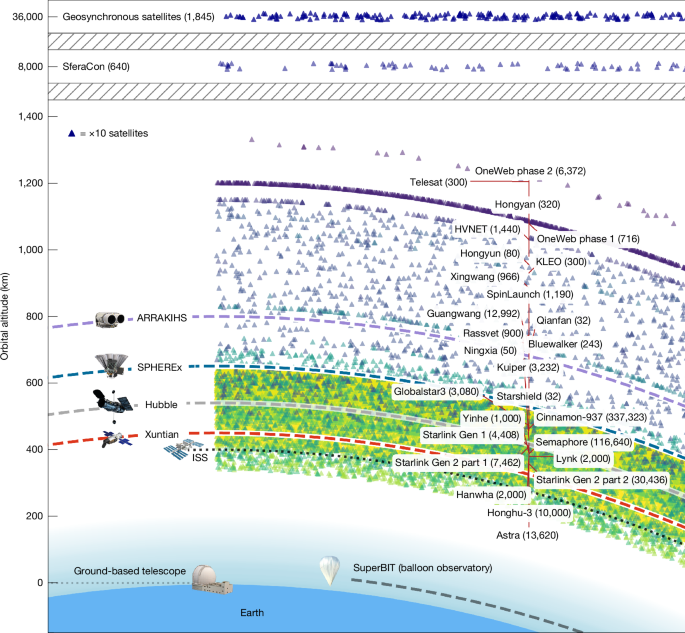
A recent study modeling Reflect Orbital's proposed constellation of giant orbital mirrors has unveiled severe implications for light pollution. This research indicates that a single 54-meter satellite could appear four magnitudes brighter than a full moon to anyone within its beam, casting a scattered glow that outshines moonlight from as far as 30 kilometers away.
Overview
Currently, the pilot satellite has received approval from regulatory bodies such as the FCC, despite vocal objections from astronomers and environmentalists. Reflect Orbital plans to deploy up to 50,000 mirrors by the mid-2030s, which threatens the control humans have over the night sky. The results from this research underscore this contentious issue, delineating numbers that back the fight over who manages the celestial environment.
Key Findings
- Severe Light Pollution: Each satellite's light significantly alters the brightness of the sky, affecting not only astronomical observations but also disrupting ecological systems.
- Visibility Impact: A satellite in the constellation could be visible from over 30 kilometers away, dramatically changing astrophysical observations and the appearance of the night sky.
- Future of Astronomy: The estimated deployment of 50,000 satellites raises concerns about the accessibility of night sky observations for future generations.
Methodology
The study involved modeling light pollution caused by satellite constellations and assessing their impact through theoretical predictions and empirical measurements. The researchers simulated various orbital configurations and analyzed data reflecting current satellite deployments.
Implications for Wildlife and Human Health
The added light pollution endangers wildlife by disrupting nocturnal behaviors, leading to ecological imbalances. For humans, increased exposure to artificial light can impair circadian rhythms, leading to health issues ranging from sleep disorders to mood changes.
Research and Sources
This study aligns with previous findings from research groups, demonstrating the growing concern surrounding satellite deployments and their potential hazards. Notable sources for context include:
| Title | Source | Description |
|---|---|---|
| Light Pollution - Night Skies (U.S. National Park Service) | National Park Service | An overview of light pollution's causes, effects, and growth. |
| New Study Finds Satellites Contribute Significant Light Pollution To Night Skies | Dark Sky | Discusses the impact of satellites on night sky brightness. |
| Light pollution from satellite mega-constellations threaten space-based observations | Physics World | Analysis of light pollution challenges posed by satellite mega-constellations. |
| Satellite megaconstellations will threaten space-based astronomy | Nature | Original research on the impact of satellite megaconstellations on astronomy. |
Conclusion
As discussions continue around the proliferation of satellite technologies, the findings from this study call for an urgent dialogue among stakeholders, including satellite operators and astronomers, to strategize mitigations that balance technological innovation and environmental stewardship.