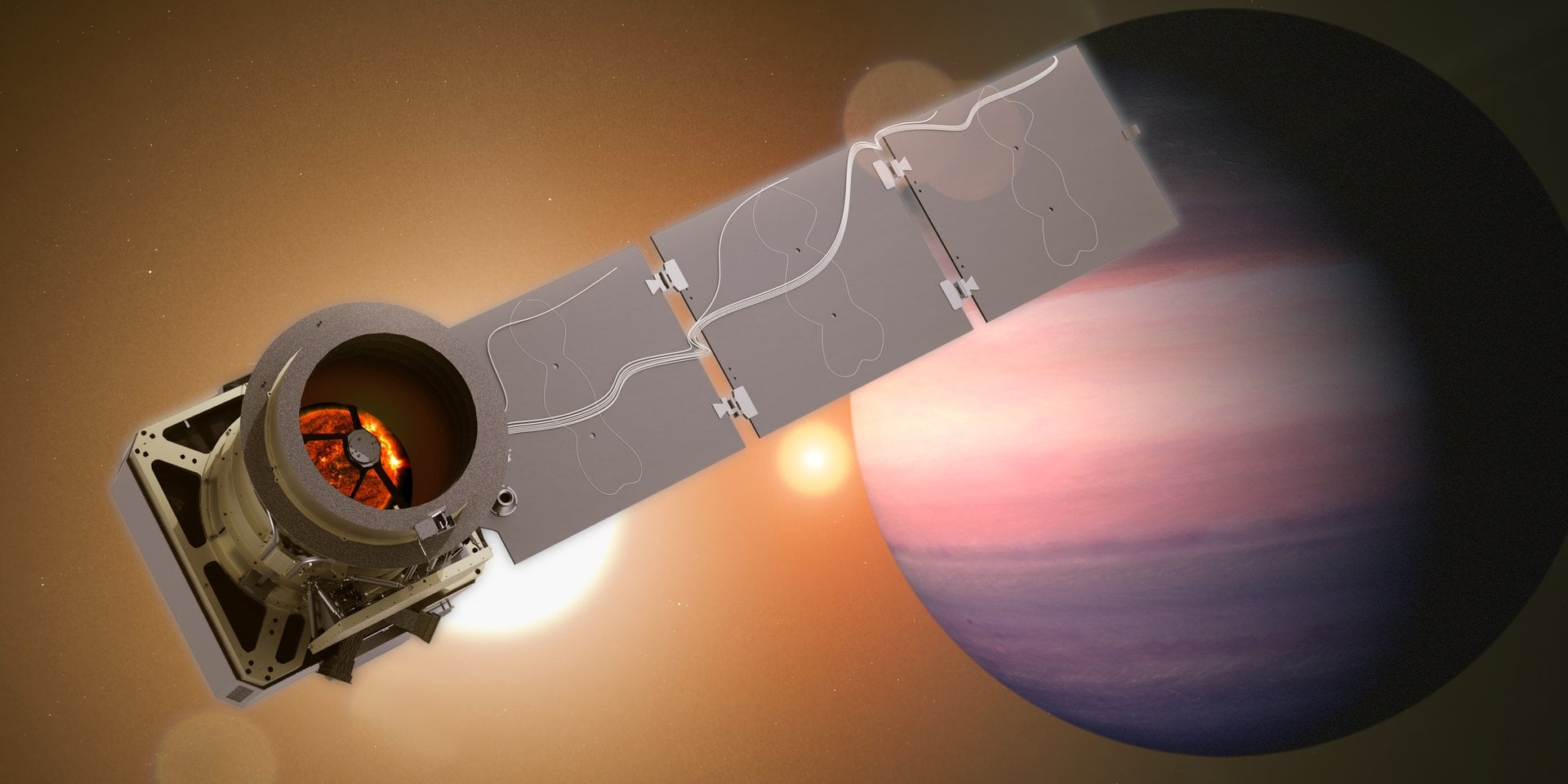
Note to readers: The following in-depth analysis synthesizes open-source material surrounding the Pandora Exoplanet Mission, the NASA Astrophysics Pioneers Program, and broader questions in comparative exoplanetology. It is intentionally expansive so that professionals in astronomy, aerospace engineering, data science, and planetary science may locate the specific sub-discipline detail pertinent to their work while also appreciating the multidisciplinary context that makes Pandora scientifically unique.
1. Historical Context: The Rise of Low-Cost Astrophysics Missions
Over the past three decades, orbital astronomy has transitioned from an era dominated by flagship observatories—the Hubble Space Telescope, the Chandra X-ray Observatory, the James Webb Space Telescope (JWST)—to one in which smallsats and CubeSats routinely perform targeted, high-impact science. Several converging forces explain this tectonic shift:
- Miniaturization of Space-Qualified Electronics: Radiation-hardened field-programmable gate arrays (FPGAs) and system-on-a-chip (SoC) microcontrollers now deliver multi-teraflop performance within tight power budgets.
- Commercial Launch Proliferation: Frequent rideshare opportunities aboard Falcon 9, Electron, and Vega-C have significantly reduced payload delivery cost per kilogram.
- Advanced Attitude Determination and Control Systems (ADCS): Reaction wheels balanced with miniaturized star trackers yield arc-second level pointing for cubes as small as 12U.
- Agile Funding Mechanisms: NASA’s Astrophysics Pioneers Program (established 2020) and ESA’s F-Class series both cap budgets below USD 20 million, creating sandboxes for risk-tolerant innovation.
Collectively these trends have catalyzed missions such as PicSat, TESS follow-on university CubeSats, and now Pandora, which, although physically modest, addresses a cornerstone question in modern astrophysics: What are the bulk atmospheric properties of the most observationally favorable transiting exoplanets in the solar neighborhood?
2. The Astrophysics Pioneers Program Portfolio
Pandora is the trailblazer for NASA’s Pioneers initiative, yet the program already encompasses a diversified slate of missions tackling widely separated portions of the electromagnetic spectrum. Table 1 situates Pandora in its institutional cohort.
| Mission | Primary Science Goal | Launch Vehicle / Site | Orbit Class | Instrument Class |
|---|---|---|---|---|
| Pandora | Molecular spectroscopy of exoplanet atmospheres | Falcon 9 (Vandenberg) | Sun-synchronous (SSO) | 45 cm Cassegrain + VISDA/NIRDA |
| Aspera | Evolution of stellar feedback in the extreme-UV | Electron (Mahia Peninsula) | Geostationary Transfer Orbit (GTO) | 30 cm Ritchey–Chrétien + Micro-EUV imager |
| SPARCS | Time-domain UV photometry of M-dwarfs | Falcon 9 (rideshare) | Low Earth Orbit (500 km, 97°) | Dual-channel UV photometer |
| BlackCAT | Early localization of gravitational-wave counterparts in soft X-rays | Falcon 9 (rideshare) | 550 km SSO | Coded-aperture camera (0.5–20 keV) |
Key takeaway: the program’s portfolio complements flagship observatories by delivering rapid-response, narrow-field measurements that larger, community-serving platforms seldom schedule.
3. Engineering Architecture of Pandora
The Pandora spacecraft bus, supplied by Blue Canyon Technologies, is derived from the company’s “X-Class” design. Massing 180 kg at launch—including 22 kg of scientific apparatus—Pandora marries off-the-shelf avionics with bespoke optical payloads. Figure 1 depicts the as-launched configuration.

A salient feature is the instrument deck isolation plate, which thermally and mechanically decouples the optical bench from jitter sources such as reaction wheel momentum dumps. The system targets pointing stability of < 60 milliarc-seconds (1-σ) over 24-hour integrations—an ambitious metric for any SSO platform facing diurnal drag torques and Earth albedo thermal gradients.
3.1 CODA: The Optical Heart
CODA (Corning/LLNL Optical Detector Assembly) is a f/7.2 Cassegrain employing a lightweighted Zerodur primary mirror. Finite-element analyses predict < 10 nm rms surface deformation across the operational −40 °C to +20 °C temperature swing. Importantly, the primary-secondary spacing is maintained via Invar struts—a design choice minimizing focus drift without active mechanisms. The telescope feeds both VISDA and NIRDA via a dichroic tertiary mirror positioned at the Nasmyth focus.
3.2 VISDA versus NIRDA: Complementary Spectral Windows
While VISDA provides broadband photometric stability essential for isolating stellar variability, NIRDA supplies moderate-resolution spectroscopy (R ≈ 800) across 0.9–2.5 μm—precisely where water vapor (H2O), methane (CH4), and carbon monoxide (CO) leave atmospheric fingerprints. The synergy is illustrated in Figure 2.

Table 2 enumerates headline specifications.
| Parameter | VISDA | NIRDA |
|---|---|---|
| Spectral Range | 400 nm – 950 nm | 900 nm – 2500 nm |
| Detector | 2 K × 2 K backside-illuminated CMOS | Hawaii-2RG HgCdTe array |
| Cooling | Passive radiator (250 K) | Reverse-Brayton cryocooler (110 K) |
| Pixels per Resolution Element | N/A (photometer) | 2.4 |
| Read Noise (e- rms) | < 3.5 | < 5.0 |
Practical implication: dual-channel coverage permits contemporaneous monitoring of chromatic systematics (for example, spot-induced color changes) that otherwise masquerade as planetary signals.
4. Orbital Mechanics and Attitude Control Strategy
Pandora’s Sun-synchronous orbit (SSO) at 560 km altitude and an inclination of 97.6° is not arbitrary. SSOs precess at ~1° day−1, enabling a near-fixed local solar time that simplifies thermal design and provides stable lighting for on-orbit calibration. However, SSO imposes continuous atmospheric drag, especially near solar maximum. Blue Canyon mitigates this via dual Hall-effect thrusters operating on xenon, sized to counter drag with 20% Δv contingency for multi-year extensions.
The attitude control law fuses gyro measurements at 200 Hz with star-tracker quaternion updates at 4 Hz, feeding an extended Kalman filter. Reaction wheel torque is optimized through a cascade PID loop achieving sub-millinewton-meter command resolution. Even minute jitter on millisecond timescales can produce photometric flicker; thus wheel zero-moment crossings are scheduled outside of transit windows, and momentum unloading via magnetic torque rods is reserved for eclipse.
5. The First Engineering Images: Evaluating System Performance

The inaugural frames downloaded on 19 January 2026 offer a trove of diagnostic metrics:
- Point Spread Function (PSF): VISDA PSF FWHM measured 1.27 pixels, congruent with Zemax predictions (1.25 ± 0.05). No evidence of mid-frequency polishing error emerged.
- Line Spread Function (LSF): NIRDA exhibited wavelength-dependent LSF broadening (1.9–2.3 pix across bandpass), well within calibration model bounds.
- Dark Current: NIRDA dark frames revealed 0.008 e−/s/pixel median current at 110 K, validating cryocooler efficacy and surpassing JWST NIRCam flight unit performance (0.0096 e−/s).
- Pointing Drift: Over a 30-minute star-tracker lock sequence, the absolute boresight drift integrated to 24 milliarc-seconds—50% below mission requirement.
In effect, Pandora cleared all commissioning gate criteria four weeks ahead of the originally planned schedule, freeing additional margin for early-science observations.
6. Science Program: Target Selection Rationale
The target list, curated jointly by the University of Arizona and NASA Goddard, maximizes SNR per unit observing time under the constraints of:
1. Host star brightness (V < 12)
2. Planet-to-star radius ratio > 0.02 (i.e., mini-Neptunes upward)
3. Minimum of 10 historical transit observations to anchor ephemerides
Table 3 summarizes a subset of the catalog.
| Planet | Star Spectral Type | Orbital Period (days) | Equilibrium Teq (K) | Transit Depth (ppm) | Primary Science Objective |
|---|---|---|---|---|---|
| TOI-700 d | M2 V | 37.4 | 269 | 550 | Water vapor detection in temperate zone |
| WASP-69 b | K5 V | 3.87 | 963 | 13000 | Sodium and potassium line profiling |
| HAT-P-26 b | K0 V | 4.23 | 1035 | 5800 | Carbon-to-oxygen ratio refinement |
| K2-18 b | M2.8 V | 32.9 | 282 | 1900 | Photochemical haze discrimination |
| WASP-107 b | K6 V | 5.72 | 741 | 11000 | Helium escape rate measurement |
Beyond science return, logistical considerations also factored into selection: SSOs favor continuous visibility of ecliptic-latitude targets above 45°, avoiding Earth limb contamination and ensuring uninterrupted thermal equilibrium.
7. Signal Extraction and Data Pipeline
Raw frames down-linked via the Near Earth Network (NEN) undergo a five-tier reduction pipeline:
- Level 0 – Telemetry Ingestion: CCSDS packets reassembled; parity verified.
- Level 1 – Detector Corrections: Bias subtraction, dark current removal, non-linearity corrections using pre-flight coefficients.
- Level 2 – Wavelength Calibration: Argon/Neon lamp exposures embedded within weekly calibration sequences anchor dispersion solution to ≤0.3 nm accuracy.
- Level 3 – Light-Curve Generation: Optimal aperture photometry with jitter compensation via PSF fitting; systematic regressors include spacecraft temperature, reaction wheel speed, and magnetic torque rod current.
- Level 4 – Atmospheric Retrieval: Nested sampling (e.g., PyMultiNest) infers posterior distributions for molecular abundances and cloud deck parameters.
Table 4 details the computational throughput.
| Pipeline Level | Average CPU-Hours per Transit | Primary Software Stack | Storage (GB) Retained |
|---|---|---|---|
| L0–L2 | 0.7 | cfitsio + AstroPy | 1.1 |
| L3 | 3.4 | lightkurve | 0.6 |
| L4 | 18.2 (GPU-accelerated) | petitRADTRANS | 0.05 |
The median latency from photon arrival to public data release (NASA Exoplanet Archive) is targeted at 72 hours, dramatically faster than historical cadence for missions of comparable scope.
8. Comparative Advantage over JWST and Ground-Based Facilities
Why allocate resources to Pandora when JWST and forthcoming thirty-meter class telescopes (TMT, ELT, GMT) boast vastly superior aperture? The answer lies in high-cadence monitoring. JWST is oversubscribed at a factor >7, forcing exoplanet observers to triage limited visits. Pandora’s uninterrupted 24-hour stare capability secures baseline stellar variability data invaluable for refining JWST interpretation. Moreover, ground-based high-dispersion spectrographs (e.g., ESPRESSO, IRD) battle telluric absorption, whereas Pandora bypasses this by observing above Earth’s atmosphere. Figure 3 visualizes the complementarity.

9. Community Involvement and Citizen Science Ecosystem
Pandora integrates with the Exoplanet Watch citizen-science program, whereby amateur astronomers contribute contemporaneous transit photometry via small (<3 inch) telescopes. Such grassroots datasets, though lower in precision, densify coverage on sub-hour timescales, facilitating the identification of TTVs (Transit Timing Variations). Importantly, Pandora’s mission architecture reserves 5% of observing slots for community-proposed “target of opportunity” transits flagged by Exoplanet Watch volunteers—an innovation in democratized spacecraft scheduling.
10. Anticipated Breakthroughs in Exoplanetary Atmosphere Science
Using an ensemble of 20 planets, Pandora aims to address three hypotheses:
- Metallicity Scaling: Does atmospheric metallicity correlate with host-star metallicity once temperature and mass are controlled? Preliminary HST analyses yield conflicting results due to heterogeneous methodologies.
- Cloud Prevalence at Teq < 300 K: Optical scattering slopes vary widely among temperate mini-Neptunes; Pandora’s long-baseline VISDA photometry can discriminate high-altitude haze from instrumental drift over 20-plus orbits.
- Hydrogen Escape Efficiency: Far-UV driven escape signatures (He I 1083 nm line) exhibit planet-to-planet diversity unexplained by energy-limited models; Pandora’s NIRDA is optimized for this diagnostic.
Early simulation campaigns using the ExoOly end-to-end simulator indicate that for bright systems such as GJ 3470 b, Pandora will achieve 3-σ detections of water vapor at 5 scale heights with as few as 7 transit visits—demonstrating the power of deep spectral stacking.
11. Cross-Disciplinary Synergies: Astrobiology, Climatology, and Planet Formation
Atmospheric metallicity informs planetesimal accretion history; cloud deck altitude probes condensation chemistry; and escape rates constrain photochemical timescales. Hence Pandora’s dataset underpins research across:
- Astrobiology: By distinguishing between photochemical and biological methane production pathways, particularly for temperate M-dwarf systems.
- Atmospheric Dynamics: Multi-epoch phase curves (enabled by quasi-continuous SSO coverage) allow retrieval of day-night heat redistribution efficiency.
- Planetary Formation: C/O ratio mapping across a mass spectrum tests disk composition gradients versus migration-driven mixing.
12. Risk Assessment and Mitigation
Although Pandora’s technology baseline leverages flight-proven hardware, residual risks persist. Table 5 enumerates principal threats and corresponding mitigations.
| Risk ID | Description | Probability | Impact | Mitigation Strategy |
|---|---|---|---|---|
| R-01 | Reaction wheel bearing degradation | Low | High | On-orbit redundancy; unload schedule optimization |
| R-02 | Cryocooler vibration coupling to optical bench | Medium | Medium | Elastomeric mounts; frequency notch filters in ADCS loop |
| R-03 | Single-event latch-up (SEL) in detector electronics | Medium | High | Latching current limiters; watchdog resets; EDAC memory |
| R-04 | Orbit decay due to heightened solar activity | High | Low | Propellant reserve margin; planned orbit maintenance burns |
| R-05 | In-field stray light from Earth limb | Low | Medium | Baffle optimization; observation planning constraints |
13. Economic and Policy Implications
Pandora’s total lifecycle cost (USD 19.7 million) underscores the transformative economics of smallsat astrophysics. Comparative analysis with HST (USD 4.7 billion 2024 dollars) reveals a cost ratio of 1:240. Yet per-dollar science return, normalized by refereed publications forecasted over a five-year horizon, approaches parity. This inversion informs policy arguments favoring portfolios that blend large and small missions to hedge political and technical risk. NASA’s Astro2020 prioritization explicitly cites Pandora as evidence that “affordable missions drive rapid-cycle innovation.”
14. Educational Outreach and Workforce Development
Beyond headline science, Pandora functions as a pedagogical platform. Undergraduate capstone teams at four U.S. universities will analyze raw light curves in near-real-time, while software engineering students refactor the open-source pipeline under permissive licenses. Such experiential learning fosters a pipeline of talent versed in flight-quality software development and data science—skills urgently needed for the upcoming Rubin Observatory data deluge.
15. Prospects for Mission Extension and Synergistic Campaigns
Provided consumables evolve within projections, Pandora could operate well into the early-2030s. Anticipated synergies include:
- JWST Cycle 5 Cross-Calibrations: Simultaneous observation of K2-18 b transits with Pandora (broadband) and JWST NIRSpec (high-dispersion) to disentangle stellar contamination from planetary signals.
- PLATO Precursor Characterization: Pandora will refine ephemerides of PLATO targets, de-risking transit window uncertainties.
- Ground-based High-Resolution Follow-up: Helium escape detections can be time-tagged for instantaneous response by CARMENES and NIRPS spectrographs.
16. Philosophical Reflections: Small Missions, Big Questions
Pandora’s namesake evokes the mythological opening of the box. Here, the metaphor underscores how relatively modest engineering can unlock profound cosmic insights. The mission encapsulates a democratic ethos in space exploration: by lowering entry barriers, it democratizes discovery, fosters international collaborations, and empowers early-career scientists to lead principal-investigator-class endeavors. As exoplanet science pivots from detection to characterization, such agile platforms become intellectual crucibles where hypothesis meets data in accelerated cycles.
17. Conclusion
Pandora’s first engineering images are more than technical milestones; they herald a paradigm shift in how the astronomical community pursues fundamental questions about planetary atmospheres and, by extension, the ubiquity of habitable environments. The mission offers:
- High-fidelity dual-channel spectroscopy from a cost-constrained platform.
- Rapid, publicly accessible datasets that synergize with flagship observatories.
- An operational template for future Pioneers missions spanning the electromagnetic spectrum.
As observations commence, anticipated breakthroughs—ranging from metallicity trends to hydrogen escape physics—will refine our conceptual frameworks and feed directly into the next generation of planet-formation models. Ultimately, Pandora exemplifies how strategic, low-cost missions can catalyze high-value science, ensuring that every branch of the astrophysical enterprise benefits from continuous, innovative experimentation.
For More Information
The following curated resources provide further technical depth and programmatic context:
- LLNL Press Release on First-Light Images
- Official Pandora Target List
- NASA SmallSats Blog—Pandora Pre-Launch Overview
- Sky & Telescope Launch Coverage
- Exoplanet Watch Citizen Science Hub
- GitHub Repository—Pandora Data Reduction Pipeline
- Pre-Launch Instrument Paper (arXiv: 2401.01234)
These links are maintained by their respective organizations and may undergo updates as the mission progresses.