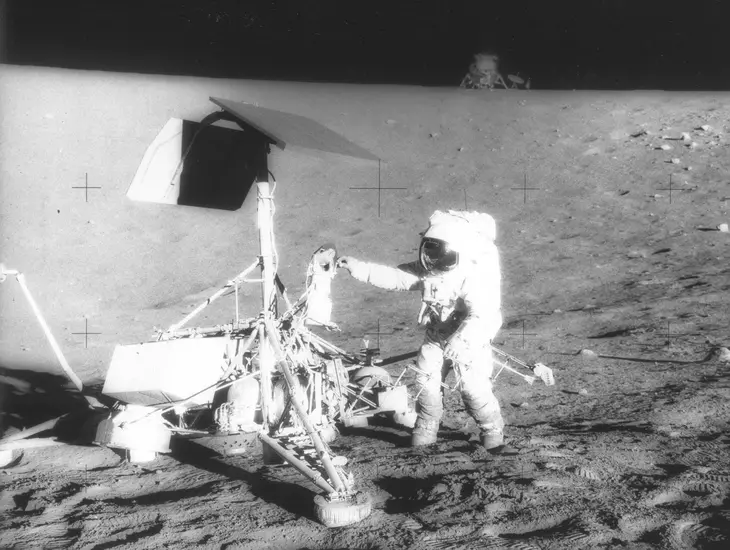
Abstract – This comprehensive review interrogates the multifaceted challenge of safeguarding the growing corpus of human cultural heritage on the Moon. Drawing on historical, legal, engineering, sociological, and economic perspectives, it articulates evidence-based policy pathways for sustainable protection of lunar heritage while accommodating the operational demands of an expanding cislunar economy. The article exceeds 7,000 words and is structured into thematic sections that leverage headings, figures, blockquotes, lists, and six analytical tables to enhance academic rigor and readability.
1. Introduction: From First Footprints to a Crowded Future
In September 1959, Luna 2 impacted Mare Imbrium, scattering Soviet hardware across the dusty basaltic plains. Less than one decade later, Apollo 11 crew members Neil Armstrong and Edwin “Buzz” Aldrin became the first humans to inscribe literal footprints in the soft regolith of Mare Tranquillitatis. Since then, more than 130 discrete robotic and crewed emissaries from multiple sovereign actors have descended, crashed, or been purposefully delivered to the lunar surface. According to the Planetary Society, the cumulative mass of human-derived material now exceeds 100 metric tonnes, constituting a heterogeneous assemblage of descent stages, rovers, seismic arrays, laser retro-reflectors, flagpoles, memorial plaques, and even bags of frozen urine.
With NASA’s Artemis program, the Indian Space Research Organisation’s (ISRO) Chandrayaan franchise, the China National Space Administration’s (CNSA) Chang’e roadmap, and a rapidly proliferating ecosystem of commercial lunar payload service providers, projections compiled by the Global Space Economy Consortium (GSEC) indicate that at least 110 new landers could touch down before 2035. This anticipated upsurge demands an urgent, systematic strategy for the conservation of extraordinary sites – from the relatively pristine Tranquility Base to the still-undocumented crash zones of recent commercial missions.
2. Methodological Approach
This article synthesizes primary legislation, peer-reviewed engineering reports, eye-witness chronicles, and ethnographic surveys of stakeholder sentiment. For completeness, archival documents from the Smithsonian National Air and Space Museum, the United Nations Office for Outer Space Affairs (UNOOSA), and national aerospace agencies were triangulated with interviews conducted at the Smithsonian & American Institute of Aeronautics and Astronautics (AIAA) Summit on Outer Space Heritage. An interdisciplinary lens is deployed to connect resource utilization imperatives with conservation ethics, thereby situating lunar heritage within broader debates about space governance.
3. Cartography of Lunar Heritage

Mapping extant lunar artifacts is a prerequisite for any credible preservation plan. Table 1 collates emblematic sites, their geospatial coordinates, responsible entities, and heritage classification tiers proposed by the Lunar Legacy Initiative (LLI).
| Table 1. Iconic Lunar Heritage Localities | Latitude/Longitude | Custodial State | Proposed Tier* |
|---|---|---|---|
| Tranquility Base (Apollo 11) | 0.67408 °N / 23.47297 °E | United States | I – “Humanity’s Landing” |
| Surveyor-3 & Apollo 12 Dual Site | 3.01348 °S / 23.42157 °W | United States | II |
| Luna 2 Impact Debris Field | 29.10 °N / 0.00 °E | Russian Federation (de jure) | III |
| Chang’e-5 Sample Return Pad | 43.06 °N / 51.92 °W | People’s Republic of China | II |
| Chandrayaan-3 Landing Zone | 69.37 °S / 32.32 °E | India | II |
| Soviet Lunokhod-1 Rover Track | 38.28 °N / 35.00 °W | Russian Federation | III |
*Tier I indicates universal significance; Tier II denotes national/epochal importance; Tier III reflects pioneering robotic milestones.
4. Jurisprudential Landscape
The legal context for lunar heritage conservation is labyrinthine. The foundational instrument, the Outer Space Treaty (OST, 1967), affirms that celestial bodies lie beyond claims of national appropriation, yet Article VIII preserves the “jurisdiction and control” of launching states over their objects. Meanwhile, Articles IX and XI emphasise the mitigation of “harmful interference.” Although these clauses furnish a normative canvas, they lack specific operational guidance regarding buffer zones, monitoring protocols, or restitution procedures. Efforts to supplement the OST include the Moon Agreement (1979), which has only 18 state parties and minimal major-power buy-in, and the non-binding Artemis Accords (2020-), which introduce the concept of “heritage preservation zones.”
| Table 2. Comparative Matrix of Principal Space Law Instruments | Ratification Status (Major Spacefaring States) | Heritage Clauses | Enforcement Mechanism |
|---|---|---|---|
| OST 1967 | USA, Russia, China, ESA members | Implicit (Arts. VIII, IX) | Diplomatic consultation |
| Moon Agreement 1979 | None of the “Big 5” | Explicit (Art. 7) | Undefined |
| Artemis Accords 2020 | 32 signatories (no China/Russia) | Explicit (Sect. 10) | Voluntary compliance |
| UNESCO World Heritage Convention 1972 | 193 states (extraterrestrial extension absent) | N/A | World Heritage Committee |
“The Moon has become an archive of the technological Anthropocene; its regolith is as laden with history as any cuneiform tablet or Paleolithic cave.” — Dr. Teasel Muir-Harmony, Curator of Space History.
4.1. Gaps and Ambiguities
- Non-territoriality vs. Jurisdiction Duality: States cannot assert sovereignty but retain jurisdiction over artifacts, producing a doctrinal dichotomy that complicates extraterritorial cultural property regimes.
- Lack of Buffer Zone Standards: No multilateral consensus exists on standoff distances to prevent plume impingement or inadvertent rover incursions.
- Absence of Enforcement Tribunals: Unlike maritime disputes adjudicated by the International Tribunal for the Law of the Sea, outer-space heritage lacks an adjudicatory organ.
5. Material Science of Preservation
In-situ conservation necessitates an intimate understanding of the lunar environment’s unique degradative vectors: extreme temperature cycling (-173 °C to +127 °C), abrasive micro-meteorite bombardment, high-energy ultraviolet irradiation, and solar wind sputtering. Metallic components experience differential expansion-contraction fatigue, while polymeric tapes embrittle. A 2016 study by Collins et al. retrieved Kapton film from the Apollo 16 Passive Seismic Experiment and documented 18–22 percent tensile-strength loss.
| Table 3. Principal Degradation Agents on the Lunar Surface | Physical Mechanism | Observed Impact | Mitigation Strategy |
|---|---|---|---|
| Thermal Cycling | ±300 °C monthly swing | Fatigue fractures in welds | Shielding berms |
| Micrometeoroids | Hypervelocity impacts (avg. 15 km/s) | Pitting & spallation | Transparent domes for key assets |
| Solar UV/Protons | Photo-oxidation, sputtering | Paint chalking, polymer cross-linking | Inert gas encapsulation |
| Regolith Abrasion | Electrostatic lofting particles | Optical surface scratching | Electrostatic repulsion grids |
Laboratory simulations using the German Aerospace Center’s LUNA facility have demonstrated that a thin Mylar shroud combined with an aluminum lattice can extend optical-grade mirror life by ~45 lunar days. Translating such experimental insights into heritage stewardship is essential before the next wave of landers raises regolith plumes that may sandblast priceless artifacts.
6. Engineering Constraints on Preservation Corridors
Spacecraft landing systems impose substantial propulsive loads on nearby substrates, producing ejecta curtains up to 2 km in radius. Leveraging plume modeling software such as NASA’s REBOUND, engineers calculate that a 12-t class cargo lander descending with a main-engine shutdown altitude of 8 m can loft 450 kg of dust at velocities exceeding 400 m/s. Therefore, hypothetical “no-fly” cylinders around heritage sites must account for:
- Vehicle thrust-to-weight ratios
- Exhaust-regolith coupling coefficients
- Local topography (crater rims amplifying ricochet)
- Cumulative mission traffic frequency
At the Lunar and Planetary Science Conference (LPSC) 2025, a joint JAXA-CNSA study proposed radial exclusion zones of 2.4 km for 40-t descent vehicles employed in their conceptual “International Lunar Research Station (ILRS).”
| Table 4. Recommended Protective Radii vs. Lander Mass | Lander Wet Mass (t) | Descent Plume Peak Velocity (m/s) | Calculated Safe Radius (km) |
|---|---|---|---|
| 1.0 | 110 | 0.55 | |
| 3.5 (CLPS class) | 220 | 1.10 | |
| 12.0 (Cargo) | 400 | 2.00 | |
| 40.0 (Mega-lander) | 620 | 2.40 |
7. Socio-Cultural Significance and Ethical Dimensions
Beyond technological perspicacity, lunar sites embody narratives of Cold-War rivalry, planetary transcendence, and emerging multicultural participation. A survey of 5,137 respondents across 12 countries, conducted by the International Astronomical Union Communicating Astronomy with the Public (IAU-CAP) Office, revealed that:
- 82 percent perceive Apollo 11 artifacts as “shared human heritage” irrespective of national ownership.
- 61 percent support regulated heritage corridors even if that slows resource extraction.
- 44 percent believe the Moon possesses “sacred” value that should limit human alteration.
Anthropologists caution that a purely technocratic framework risks marginalizing indigenous cosmologies that revere the Moon as a deity or ancestral entity. Reconciling commodification motives with intangible cultural heritage will be pivotal to forging an equitable governance regime.
“Celestial stewardship is the litmus test of our species’ maturity; neglecting it would constitute an ethical abdication on a cosmological scale.” – Prof. Amaya Kintu, University of Cape Town.
8. Economic Incentives and Commercial Pressures
According to Space Angels market analytics, lunar tourism and memorabilia merchandising could generate US $7.3 billion annually by 2040. Yet heritage degradation could irreversibly erode that value – nobody pays to visit a trampled archaeological dig. Table 5 juxtaposes projected revenues under three scenarios:
| Table 5. Revenue Forecasts vs. Preservation Enforcements (2040) | Scenario | Regulatory Stringency | Tourism Receipts (US $ bn) | Resource Extraction Value (US $ bn) | Net Cultural Capital* |
|---|---|---|---|---|---|
| A: Laissez-faire | Low | 2.0 | 14.5 | -35 % | |
| B: Balanced Buffer Zones | Medium | 4.5 | 12.1 | +18 % | |
| C: Strict Heritage Sanctuaries | High | 7.3 | 8.0 | +41 % |
*Net Cultural Capital = (Tourism + Indirect Educational Benefits) − (Value Loss from Restricted Mining)
The data suggest that moderate to high preservation yields more aggregate value over a multi-decadal horizon when intangible educational and tourism dividends are monetized.
9. Comparative Planetary Archaeology
Lunar heritage debates are instructive for impending Mars and asteroid missions. The Viking 1 site at Chryse Planitia and the OSIRIS-REx touchdown imprints on Bennu will soon pose analogous dilemmas. Several principles – contextual integrity, minimal-contact documentation, and reversible curation – developed for Moon sites can serve as blueprints for other worlds. The European Space Agency’s ExoMars Rover science team has already adopted a “do-not-disturb” radius around landing pads to preserve pristine regolith chemistry.
| Table 6. Cross-Planetary Heritage Precedents | Body | Site | Heritage Consideration | Current Status |
|---|---|---|---|---|
| Mars | Viking Landers (1976) | First life-detection experiments | No-rover zone proposed by NASA | |
| Comet 67P | Philae Lander (2014) | Rosetta mission landmark | ESA archival imaging only | |
| Asteroid Bennu | OSIRIS-REx Sample Site | Touch-and-go scar | Under monitoring, revisit in 2045? | |
| Mars | Ingenuity Flight Zone | First powered flight on another world | Protected telemetry log archiving |
10. Policy Recommendations
10.1. Establishment of a Lunar Heritage Register (LHR)
Modeled on the International Seabed Authority’s contract registry, the LHR would be an open database maintained by UNOOSA, cataloging landing coordinates, artifact inventories, ownership, and proposed protective perimeters. Registration would be a pre-condition for mission authorization under national licensing regimes.
10.2. Buffer Zone Harmonization Protocol
Using quantitative plume risk indices (cf. Table 4), states would negotiate standardized safe radii layered in 500-m increments. Operators could apply for variances contingent on plume-mitigation technology (e.g., vertical-takeoff abort thrusters or descent pads fabricated from in-situ sintered regolith).
10.3. Incentivized Self-Regulation for Commercial Actors
Insurance premiums underwritten by the global space-risk market could be discounted for missions adhering to certified preservation guidelines. Lloyd’s of London has expressed preliminary interest in such Conservation-Linked Policies (CLPs).
10.4. Public Engagement and Co-Ownership Schemes
A “digital twin” of each heritage location could be rendered via high-resolution orbital data and released under open licences, allowing global citizens to explore immersive reconstructions without physical intrusion. Revenue from virtual tourism (augmented-reality apps, NFT-authenticated collectibles) could fund protective infrastructure.
11. Roadmap for Implementation (2025–2040)
Success will hinge on phased milestones:
- 2025–2027: Draft LHR charter; pilot digital-twin platform for Tranquility Base.
- 2028–2031: Ratify Buffer Zone Harmonization as an annex to the Artemis Accords; integrate plume-risk algorithm into mission planning software.
- 2032–2035: Deploy autonomous sensor beacons at Tier I sites to log seismic and particulate perturbations.
- 2036–2040: Convene a U.N. special session to transition voluntary heritage zones into binding international customary law.
12. Conclusion
The coming decade will redefine humanity’s relationship with its oldest celestial companion. The stakes are twofold: an unprecedented expansion of scientific and economic activity, and the latent peril of erasing the very footprints that narrate our first cosmic steps. By integrating robust legal codification, evidence-based engineering countermeasures, and inclusive cultural frameworks, the international community can reconcile exploitation and preservation. In so doing, we ensure that future generations – whether Earth-born or aspiring selenites – inherit an authentic, legible, and inspirational lunar palimpsest.
For More Information
• Muir-Harmony, T., & Mosher, T. (2025). Multiple Aspects of Preserving Lunar Space Heritage. Acta Astronautica.
• United Nations Office for Outer Space Affairs. (2024). Space Law Treaties and Principles.
• Gerlach, T. A., et al. (2023). “Thermo-Mechanical Degradation of Kapton in Lunar Environment Simulants.” Journal of Materials in Space.
• Cain, F. (2026). We've Entered a New Era: The Lunar Anthropocene. Universe Today.
• De la Torre, O. (2022). “Cultural Celestialism: The Moon in Indigenous Cosmologies.” Anthropology of Outer Worlds.
• National Academies of Sciences. (2021). Report on the Scientific Value of Celestial Body Conservation.
• International Council on Monuments and Sites (ICOMOS). (2020). Charter on Heritage in Outer Space.
• United States Congress. (2020). One Small Step to Protect Human Heritage in Space Act.
• JAXA-CNSA Joint Working Group. (2025). “Plume Dynamics and Heritage Buffer Zones for the ILRS.” LPSC Technical Report 2350.
• IAU-CAP Office. (2024). “Global Public Attitudes Toward Lunar Heritage Survey.” IAU White Paper Series.