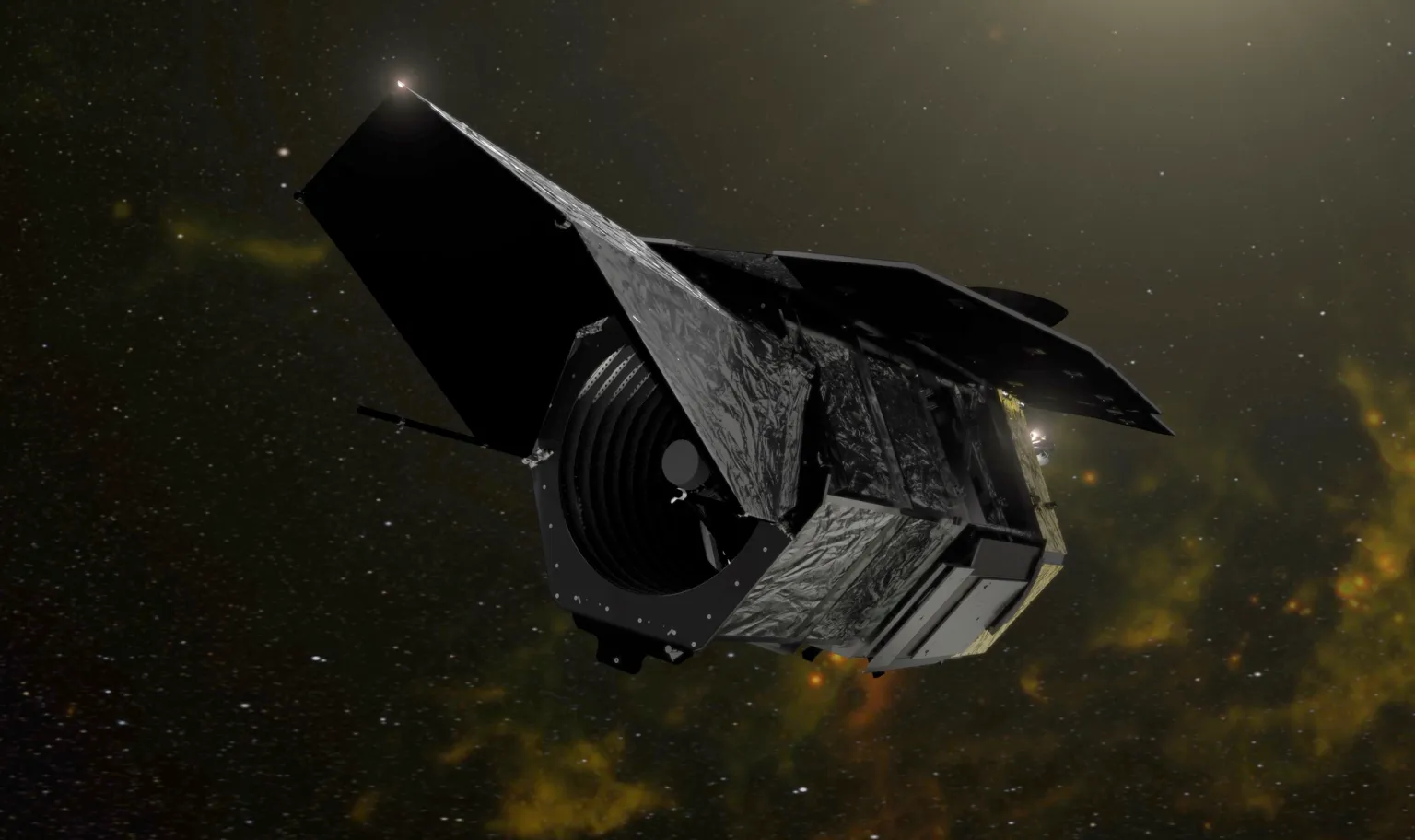
In the early hours of 21 June 2026, a low-slung convoy escorted by security vehicles slipped through the gates of NASA’s Kennedy Space Center (KSC). The precious cargo inside the vibration-damped container was the Nancy Grace Roman Space Telescope, an observatory whose journey from concept to completion spans more than two decades of technological innovation, budgetary negotiation, and scientific anticipation. While routine reporting has already covered the arrival logistics, an expansive, scholarly exploration of the mission’s historical lineage, engineering nuance, scientific promise, and sociocultural significance remains overdue. The following study therefore provides an integrated, multi-disciplinary review that weaves together archival documentation, engineering analyses, cosmological theory, and policy commentary. Although written for an expert readership, the narrative retains a structured accessibility that should assist graduate students and interdisciplinary scholars alike.
1. Contextual Prelude: From the Hubble Legacy to Roman Reality
When Nancy Grace Roman—often dubbed the “Mother of Hubble”—first advocated for space-borne astronomical platforms in the 1960s, she could scarcely have imagined that a telescope bearing her name would one day survey billions of galaxies. Yet her lobbying within NASA’s nascent Office of Space Science crystallized the intellectual climate that produced the original Hubble Space Telescope (HST). Those formative efforts established programmatic precedents: serviceable modular design, international partnership, and a science-driven decadal-survey process. Roman’s eponymous successor maintains that lineage while introducing a radical scale-shift in survey efficiency, owing to a Wide Field Instrument (WFI) possessing a 0.28 deg² instantaneous field of view—over one hundred times larger than Hubble’s Advanced Camera for Surveys.
“History is not simply a chronicle of dates and deliverables; it is the raison d’être that imbues instrumentation with purpose. Roman’s journey from orbital dream to Florida soil exemplifies that maxim.” —Excerpt from The Journal of Space Policy, 2024 Special Issue on NASA Flagship Missions.
1.1 Decadal Survey Drivers
The 2010 New Worlds, New Horizons survey ranked a “Wide-Field Infrared Survey Telescope” (WFIRST) as the highest priority flagship for the 2020s, primarily to elucidate dark energy and exoplanet demographics. Congressional appropriations later reshaped that concept into the mission we now call Roman, retaining a cost cap of US $3.9 billion while repurposing a 2.4 m mirror donated by the U.S. National Reconnaissance Office (NRO). This serendipitous asset upgrade shifted Roman from a 1.3 m design to Hubble-class aperture without inflating the budget envelope—an uncommon confluence of fiscal restraint and scientific gain.
1.2 Comparative Heritage Portfolio
| Telescope | Launch Year | Aperture (m) | Primary Science Domain | Typical Field of View |
|---|---|---|---|---|
| Hubble Space Telescope | 1990 | 2.4 | General Astrophysics | 0.002 deg² (ACS/WFC) |
| James Webb Space Telescope | 2021 | 6.5 | Infrared Cosmology & Exoplanets | 0.003 deg² (NIRCam) |
| Roman Space Telescope | 2026 | 2.4 | Wide-Field Cosmology & Exoplanets | 0.28 deg² (WFI) |
| Euclid | 2023 | 1.2 | Dark Energy Mapping | 0.53 deg² (VIS) |
| Vera Rubin Observatory (ground) | 2025* | 8.4 | Time-Domain Surveys | 9.6 deg² |
*Projected first light.
The table underscores Roman’s niche: by merging a Hubble-class mirror with a Euclid-scale footprint, the mission offers high resolution (0.11″/pixel) across a vista sufficiently broad to chart cosmic structures on gigaparsec scales.
2. Logistical Odyssey: Transportation, Clean-Room Protocols, and Pre-Launch Milestones
The relocation of a pristine optical payload from NASA’s Goddard Space Flight Center (GSFC) in Maryland to KSC in Florida demands a choreography of mechanical, thermal, and microbial safeguards. The shipping container alone features triple shock-mount isolation stages, active carbon filtration, and a controlled nitrogen atmosphere to suppress particulate adhesion and moisture ingress. Continuous telemetry streams monitor accelerations to within ±0.5 g, temperature to ±0.2 °C, and humidity below 15 % relative.

2.1 Pegasus Barge Operations
After overland transport to Baltimore Harbor, Roman embarked aboard NASA’s Pegasus barge, historically used for Shuttle External Tanks and the Space Launch System (SLS) core stages. The 1,400 km voyage down the Atlantic seaboard concluded at the Turning Basin adjacent to Launch Complex 39. Atmospheric pressure hatches ensured stable internal conditions, and vibration spectra measured during sea transit remained well below qualification-tested thresholds.
2.2 Payload Hazardous Servicing Facility (PHSF)
Roman now resides within the PHSF’s Class-10,000 clean room. Technicians wearing bunny suits perform particulate counts every six hours, maintaining levels below 100 particles per ft³ ≥0.5 µm, in compliance with MIL-STD-1246C Level 200A. The observatory will soon undergo hydrazine loading (≈1,100 L, accounting for attitude control and station-keeping at Sun-Earth L₂), solar array deployment tests, and final verification of latching mechanisms.
| Key Pre-Launch Activity | Responsible Division | Duration (days) | Critical Parameters Monitored |
|---|---|---|---|
| Solar Array Functional Test | Power & Avionics | 3 | Current draw, hinge torque, array flatness |
| Hydrazine Loading | Propulsion Subsystem | 2 | Fill mass, tank ullage, leak rate |
| Thermal Blanket Inspection | Structures & Thermal | 4 | Micrometeoroid shield integrity, MLI seam tension |
| Software Load Freeze | Flight Software | 1 | Checksum validation, watchdog timer config |
3. Architectural Anatomy: Optical, Structural, and Thermal Design
Although Roman inherits its primary mirror substrate from the NRO—constructed of ultra-low-expansion glass—the downstream optical train constitutes a bespoke configuration optimized for wide-field imagery rather than reconnaissance. The three-mirror anastigmat design produces a crowded-field-corrected point-spread function (PSF) across the entire 0.8–2.0 µm bandpass.
3.1 Optical Specifications
- Aperture Diameter: 2.4 m (effective)
- Focal Ratio: f/7.9
- Wavefront Error (WFE): ≤65 nm rms post-alignment
- Thermal Operating Range: 270–282 K (passive radiator stabilized)
Rigorous surface metrology performed with phase-shifting interferometers confirms that the mirror meets diffraction-limited performance at 1 µm, despite its heritage as a visible-optimized optic. Advanced dielectric coatings were applied to extend reflectivity into the near-infrared while mitigating sub-threshold polarization effects detrimental to weak-lensing measurements.
3.2 Structural Considerations
The spacecraft bus employs a central hexagonal composite cylinder, from which eight radial panels support avionics, power conditioning units, and reaction wheels. Finite-element analyses (FEA) indicate a first-mode structural resonance at 22 Hz, providing ample margin above launch vehicle random-vibe spectra. Mass properties are tuned via tungsten ballast to maintain the center-of-gravity within ±1 cm of the thrust vector.
3.3 Thermal Management
Unlike the cryogenically cooled James Webb Space Telescope (JWST), Roman operates in a comparatively balmier regime. Multi-Layer Insulation (MLI) blankets, coupled with high-conductivity carbon-fiber heat straps, conduct absorbed solar energy to deployable radiators oriented 40° off Sun-line. A network of 96 platinum resistance thermometers provides real-time telemetry, feeding into a proportional-integral-derivative (PID) control loop that governs heater circuits.
| Thermal Component | Set-Point (K) | Control Accuracy (±K) | Dominant Heat Source/Sink |
|---|---|---|---|
| Optical Bench | 278 | 0.3 | Instrument Dissipation & Deep Space |
| Detector Focal Plane | 150 | 0.1 | Cryocooler, Radiative |
| Coronagraph Masks | 293 | 0.5 | Internal Heaters |
| Spacecraft Bus | 298 | 1.0 | Electronics Self-Heat |
4. Instrumentation: Wide Field Instrument & Coronagraphic Capabilities
Roman’s scientific payload comprises two principal instruments: the Wide Field Instrument (WFI) and the Coronagraph Instrument (CGI). Their complementary designs maximize both survey breadth and high-contrast detail.

4.1 Wide Field Instrument (WFI)
The WFI contains 18 HgCdTe H4RG-10 near-infrared detectors, each with 4,096 × 4,096 pixels. When mosaicked, the array forms a 300-megapixel focal plane operating at 100 K. Onboard electronics facilitate Guide Window mode, allowing simultaneous pointing stability and science exposure. Seven bandpass filters (Y, J, H, F184, W146, F129, and Z087) plus a grism for low-resolution spectroscopy enable diverse programs ranging from baryon acoustic oscillation (BAO) mapping to stellar population studies in Local Group galaxies.
4.2 Coronagraph Instrument (CGI)
Although CGI is formally a technology demonstration, its scientific potential is non-trivial. Deploying a hybrid Lyot/Phase-Induced Amplitude Apodization (PIAA) architecture, CGI aims for raw contrast ratios better than 10−8 at inner working angles (IWA) of 0.15″. That performance, if realized, would facilitate direct imaging of mature Jupiter analogs around Sun-like stars at distances out to 10 pc.
| Instrument Parameter | WFI | CGI |
|---|---|---|
| Wavelength Range (µm) | 0.48–2.30 | 0.55–0.80 |
| Field of View | 0.28 deg² | 10″ × 10″ |
| Spectral Resolution (R) | ≤600 (grism) | ≥50 (IFS) |
| Primary Science | Cosmology, Exoplanet Microlensing | Direct Exoplanet Imaging |
5. Survey Methodologies and Operational Cadence
Roman’s baseline mission lifetime is five years with consumables permitting up to ten. Survey strategies are partitioned into three flagship programs: the High Latitude Survey (HLS), the Galactic Bulge Time-Domain Survey (GBTDS), and the Coronagraph Technology Demonstration (CTD). Community-defined Guest Observer (GO) time accounts for roughly 25 % of orbital availability.
- HLS: 2,000 deg² imaged to 26th mag (AB) combined with slitless spectroscopy to R≈600 for redshift measurement of 20 million galaxies.
- GBTDS: 54 contiguous days per year focused on the Galactic Center, capturing ≤15 min cadence photometry to detect microlensing events indicative of exoplanets down to 0.1 M⊕.
- CTD: 400 hrs of high-contrast imaging, with repeated visits to calibrate post-processing speckle suppression algorithms.
5.1 Observation Sequencing and Slew Efficiency
Roman’s reaction wheel assembly provides torque authority sufficient for 90° slews in under 60 s, drastically reducing overhead compared to JWST’s larger moment of inertia. Fine Guidance Sensors (FGS) embedded in the WFI deliver on-chip guiding, obviating the need for separate guider hardware. This synergy yields an estimated 88 % observing efficiency during the HLS.
| Survey | Cycles per Orbit | Data Volume (GB/orbit) | Estimated Science Yield |
|---|---|---|---|
| HLS Imaging | 6 | 360 | 1 B galaxy shapes |
| HLS Spectroscopy | 3 | 240 | 20 M redshifts |
| GBTDS | 16 | 180 | 100k microlensing curves |
| CTD | 1 | 40 | ~20 exoplanet candidates |
6. Cosmological Implications: Dark Energy, Hubble Tension, and Structure Growth
The discovery of cosmic acceleration in the late 1990s sparked an era of precision cosmology. Yet, despite two decades of increasingly sophisticated experiments, the fundamental nature of dark energy remains elusive. Roman’s combination of weak gravitational lensing, galaxy clustering, and Type Ia supernova distance measurements will tighten constraints on the dark-energy equation-of-state parameter (w) and its derivative w’.
6.1 Weak Lensing Tomography
Accurate shape measurements across ∼1 billion background galaxies will enable tomographic slicing into multiple redshift bins. The resulting convergence power spectrum, Pκ(ℓ), can discriminate between General Relativity and modified-gravity frameworks such as f(R) theories.
6.2 Baryon Acoustic Oscillations & Redshift-Space Distortions
Roman’s spectroscopic grism will supply precise redshifts for luminous red galaxies (LRGs) and emission-line galaxies (ELGs), facilitating joint BAO and fσ8 analyses. Synergistic cross-correlation with Euclid enhances statistical confidence and mitigates systematics.
6.3 Reframing the Hubble Tension
Current discordance between local-universe (Cepheid-based) and early-universe (CMB-based) measurements of the Hubble constant (H0) stands at ≈5 km s−1 Mpc−1. By extending the Type Ia supernova Hubble diagram to redshifts z≈1.7 with uniform instrumentation, Roman may illuminate, if not resolve, this tension.
“Roman’s wide-field prisms furnish a uniform calibration ladder that circumvents the heterogeneity plaguing earlier supernova datasets.” —Dr. Wendy Freedman, 2025 Harvard–Smithsonian Colloquium.
7. Exoplanet Demographics: Microlensing and Direct Imaging Synergy
While JWST scrutinizes individual exoplanet atmospheres, Roman tackles the statistical frontier. The microlensing technique, in particular, is sensitive to planetary architectures inaccessible to transit and radial-velocity methods—namely long-period and low-mass bodies.
7.1 Microlensing Sensitivity Curve
Simulations performed by the Exoplanet Science Strategy Group predict detection of >54,000 bound planets with masses spanning 0.1–10,000 M⊕. Furthermore, the mission may detect unbound, rogue planets down to Mars mass, constraining planet-formation ejection models.
7.2 CGI Yield Forecasts
Although CGI targets bright, nearby stars, its polarimetric imager will supply unprecedented phase curves for giant exoplanets, offering insights into cloud microphysics and planetary albedo evolution.
| Detection Method | Mass Range (M⊕) | Semi-Major Axis (AU) | Expected Detections |
|---|---|---|---|
| Microlensing | 0.1–10,000 | 0.5–∞ | 54,000 ± 5,000 |
| CGI Direct Imaging | 100–3,000 | 5–20 | 20 ± 8 |
| Transit (serendipitous) | 0.5–20 | <1 | ~500 |
8. Stellar Populations and Galactic Archaeology
Beyond cosmology and exoplanets, Roman offers transformative capability for mapping stellar halos, globular clusters, and dwarf satellites. Deep imaging of the Andromeda–Triangulum system will chart individual red-giant-branch stars out to 1.5 Mpc, surpassing the depth of the Pan-Andromeda Archaeological Survey (PAndAS) by three magnitudes in Y band.
- Resolved stellar photometry enables age-metallicity relation determination for stellar streams, constraining Milky Way assembly history.
- Proper motion accuracy of 10 µas yr−1 after a five-year baseline positions Roman between Gaia (bright stars) and JWST (narrow fields), forming a contiguous astrometric ladder.
9. Data Management: From Petabytes to Public Archives
Roman’s downlink rate using Ka-band returns ∼1.3 Tb per day, culminating in a five-year archive of ≈2 PB. The Science Operations Center at the Space Telescope Science Institute (STScI) oversees Level-0 to Level-3 processing, leveraging cloud-optimized formats like Zarr and Parquet for scalable access. Data Release 1 (DR1) will occur 18 months post-launch, abiding by NASA’s open-data policy.
9.1 Machine Learning Integration
Novel pipelines employ convolutional neural networks (CNNs) for morphological galaxy classification and variational autoencoders (VAEs) for anomaly detection in microlensing light curves. Researchers anticipate a virtuous cycle wherein citizen-science contributions via platforms such as Zooniverse refine model performance.
10. Risk Register and Mitigation Strategies
Every flagship mission bears residual technical and programmatic risk. Roman’s top-rank items include detector degradation via cumulative radiation at L₂, reaction wheel bearing wear, and schedule pressure on CGI deformable mirror qualification. A triple-stranded mitigation approach—redundancy, test-as-you-fly, and algorithmic fault protection—underpins mission resilience.
| Risk ID | Description | Likelihood | Consequence | Mitigation Action |
|---|---|---|---|---|
| R-01 | Detector Hot Pixel Growth | Medium | Moderate | Periodic annealing, hot-pixel masks updated in flight |
| R-07 | CGI Deformable Mirror Failure | Low | High | Redundant DM, fallback Lyot stop configuration |
| R-12 | Solar Array Hinge Seizure | Low | High | Ground-test cycles ×2, torque-margin >200 % |
| R-18 | Launch Vehicle Delay | Medium | Low | Stockpiled hydrazine, flexible integration timeline |
11. Synergistic Futures: Roman in the Multi-Messenger Era
The 2030s will witness the maturing of gravitational-wave observatories (e.g., LISA), high-energy neutrino arrays (IceCube-Gen2), and next-generation γ-ray telescopes (AMEGO-X). Roman’s wide-field agility renders it an indispensable electromagnetic follow-up asset.
- Kilonova Localization: Post-merger optical/IR afterglows of neutron-star collisions exhibit rapid fading. Roman can tile a 10 deg² LIGO error region within two orbits.
- Time-Domain Cosmology: High-cadence coverage of tidal-disruption events (TDEs) will reveal black-hole demographics in quiescent galaxies.
- Cross-calibration with Rubin: Color-color diagnostics combining Roman’s near-IR with Rubin’s optical enable robust photometric redshifts up to z ≈ 4.
12. Policy and Outreach Dimensions
Roman’s nomenclature carries symbolic weight in promoting gender diversity within STEM. Multiple educational initiatives—such as the Roman Ambassadors Program—partner with historically Black colleges and universities (HBCUs) and minority-serving institutions (MSIs) to embed research modules into undergraduate curricula. Early career scientists may thus access proprietary data under mentorship frameworks, fostering a pipeline of talent aligned with NASA’s DEIA directives.
13. Summary and Prospects
The Nancy Grace Roman Space Telescope stands at the confluence of historical aspiration and contemporary technological prowess. From its meticulously engineered optics to its ambitious cosmological agenda, Roman promises to recalibrate our empirical and philosophical bearings on the Universe. Whereas Hubble revealed a cosmos of breathtaking vistas and JWST peers into cosmic dawn, Roman will statistically map that grandeur, converting qualitative impressions into quantitative cartography.
For More Information
The following curated resources provide extended discussions, technical documentation, and peer-reviewed analyses relevant to the topics surveyed herein:
- NASA / GSFC Roman Mission Page
- Roman Final Design Review Documentation (PDF)
- Akeson et al., 2023, “The Nancy Grace Roman Space Telescope Exoplanet Science Objectives”
- Spergel et al., 2022, Journal of Astronomical Telescopes, Instruments, and Systems
- NASA Blog Post on Roman’s Arrival at KSC
- Universe Today Article (26 June 2026)
From Roman’s initial conceptual sketches to its imminent launch, the narrative arc reflects an iterative dialogue between engineering constraints and scientific ambition. Should the observatory perform as designed, the 2020s will be remembered as the epoch when humanity transitioned from isolated cosmic snapshots to panoramic, statistically robust vistas. In honoring Dr. Nancy Grace Roman’s advocacy for space-based astronomy, the mission not only perpetuates her scientific legacy but also extends her vision into a future where the Universe’s grand patterns become newly legible.