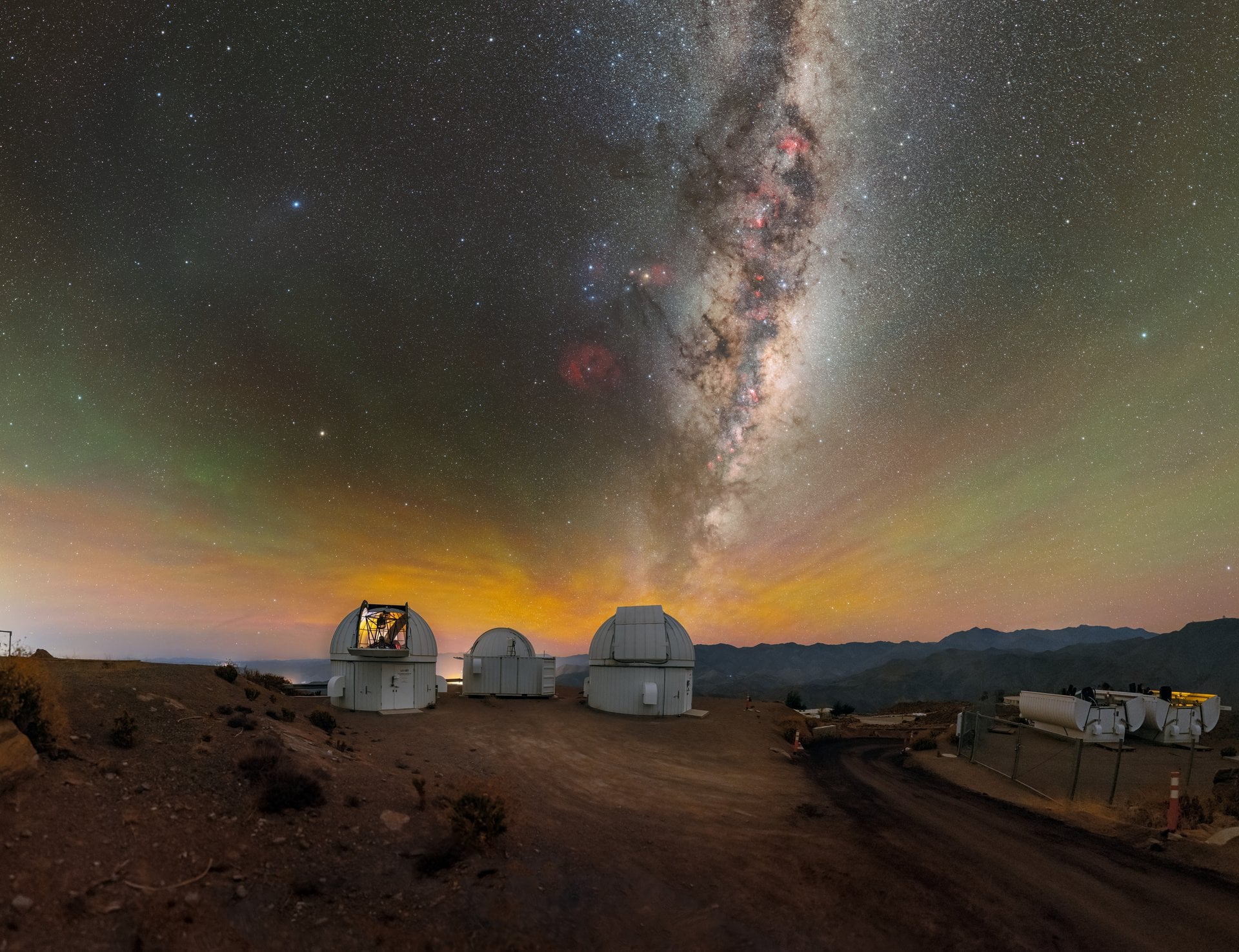
The commissioning of the Vera C. Rubin Observatory and the initial success of its alert system mark a transformative moment in observational astrophysics and time-domain astronomy. Whereas earlier sky surveys generated large catalogues of static celestial objects, Rubin’s Legacy Survey of Space and Time (LSST) will deliver an unprecedented dynamic view of the sky, recording changes on timescales that span minutes to decades. The brief report of four recently detected supernovae is therefore more than a routine scientific note; it is an early validation of an end-to-end technological and organisational ecosystem that must handle millions of nightly alerts, distribute them worldwide, decide in real time which phenomena merit urgent attention, and mobilise automated networks of telescopes for comprehensive follow-up. In the pages that follow, we explore this ecosystem in depth, integrating perspectives from instrumentation science, software engineering, cosmology, and the sociology of large collaborations. Particular emphasis is placed on the role of National Science Foundation (NSF) and NOIRLab innovations—brokers, robotic telescopes, and data-reduction pipelines—and on the cosmological significance of the diverse classes of supernovae that LSST will uncover.
1. The Historical Context of Time-Domain Astronomy
Time-domain astronomy is concerned with the study of astrophysical phenomena that vary in brightness, position, or spectral characteristics over humanly accessible timescales. Observers since antiquity have recorded novae, comets, and meteors, yet the systematic, quantitative pursuit of such transients is a remarkably modern enterprise. The twentieth century saw landmark surveys—such as the Palomar Observatory Sky Survey (POSS) and the Sloan Digital Sky Survey (SDSS)—that produced static maps of the heavens. Although each of those projects incidentally captured transient events, they were limited by photographic plates, comparatively small detector areas, and infrequent revisit cadences. The situation began to change in the early 2000s with digital, wide-field experiments such as the Catalina Real-Time Transient Survey (CRTS), the Palomar Transient Factory (PTF), and subsequently the Zwicky Transient Facility (ZTF), each delivering larger image volumes and faster cadences than its predecessors.
Rubin Observatory represents the next stage of this trajectory. Its 8.4-metre Simonyi Survey Telescope, paired with a 3.2-gigapixel camera, will acquire approximately 20 terabytes of raw imaging data every night, producing a full-sky movie with unmatched depth (r≈24.5 mag per exposure), dynamic range, and temporal resolution. The resulting alert stream—estimated at ten million events per night—encompasses a staggering diversity of astrophysical progenitors: supernovae, kilonovae, tidal-disruption events, cataclysmic variables, flare stars, active galactic nuclei, microlensing events, and innumerable near-Earth objects (NEOs).
2. Architectural Overview of the NOIRLab–Rubin Ecosystem
Because no single telescope can respond to every alert, the NSF commissioned NOIRLab to create a distributed, modular follow-up infrastructure. In broad strokes, the ecosystem unfolds across four tightly coupled operational layers:
- Alert Generation (AG): Rubin’s pipeline reduces raw images in real time, identifies difference-image sources, validates them through machine-learning vetos, and packages metadata into alert packets.
- Alert Distribution (AD): The community-defined VOEvent protocol disseminates alerts to brokers and individual subscribers with latencies < 60 seconds.
- Alert Brokering (AB): Systems such as ANTARES, LASAIR, ALeRCE, and AMPEL cross-match incoming alerts against archival catalogues, perform probabilistic classifications, and broadcast rich, value-added annotations.
- Rapid Follow-up (RF): The Astronomical Event Observatory Network (AEON) orchestrates robotic or queue-scheduled telescopes to obtain photometry, spectroscopy, and polarimetry, while automated pipelines reduce and upload data to community archives.
2.1 Key Components and Their Interrelations
| Subsystem | Primary Function | Leading Institution(s) | Expected Latency | Example Technology |
|---|---|---|---|---|
| Rubin Prompt Processing | Image subtraction and alert packet construction | Rubin Obs. | 20 s | Prompt Data Production (PDP) |
| Alert Brokers | Real-time classification and contextualisation | NOIRLab, U. Edinburgh, U. Chile, etc. | ≤60 s | ANTARES, LASAIR, ALeRCE |
| Observation Manager | Translate priorities into facility-specific requests | Gemini SUSD | ~5 min | GOATS |
| Robotic / Queue Telescopes | Acquire follow-up data autonomously | Gemini, SOAR, LCOGT | 1 h typical | AEON network scheduler |
| Pipeline Reduction | Calibrate and publish reduced data | NOIRLab–IRAF, DRAGONS | ≤12 h | DataLab, AstroPy |
The successful detection and classification of four supernovae provides a micro-scale proof that these layers can function coherently under real-world conditions. Each step—from alert creation at Cerro Pachón to spectroscopic confirmation on Gemini North and South—occurred with minimal human mediation, presaging a future in which time-critical astrophysics is conducted almost entirely by software agents working on behalf of globally distributed science teams.
3. Supernova Taxonomy: Physical Mechanisms and Observable Traits
Before we delve into the details of the four events, it is instructive to survey the modern classification scheme for supernovae (SNe). The canonical division between thermonuclear and core-collapse explosions has been enriched by numerous sub-classes that differ in spectral lines, light-curve morphologies, progenitor mass ranges, and host-galaxy environments. The table below synthesises several key dimensions.
| Type | Spectral Signature | Progenitor System | Peak Absolute MV | Cosmological Utility |
|---|---|---|---|---|
| Ia | No H/He lines; prominent Si II λ6355 | Carbon-Oxygen white dwarf in binary | −19.3 ± 0.3 | Standardisable candles (H0, w0) |
| Ib | No H; He I λ5876 present | Massive star, stripped H envelope | −17 to −18 | Stellar evolution, rates |
| Ic | No H/He; strong Fe/Co blends | Massive star, stripped H/He envelopes | −17 to −19 | Long GRB association |
| II-P | Strong H Balmer; plateau light curve | Red supergiant | −16.5 | Distance ladder (EPM, SCM) |
| II-L | Strong H; linear decline in light curve | Red/blue supergiant | −17 | Rates, host metallicity |
| IIn | Narrow H emission on broad base | Massive star with dense CSM | −18 to −20 | Stellar mass loss history |
It is significant that the four Rubin-triggered events span both thermonuclear (two Ia) and core-collapse (one II, one Ic) channels. Even this modest sample reflects LSST’s promise to generate demographically complete catalogues, enabling population-wide tests of progenitor models and explosion physics.
4. Instrumentation Insights: From DECam to GMOS
The follow-up campaign made strategic use of complementary facilities. The Dark Energy Camera (DECam) on the 4-metre Blanco Telescope delivered deep, wide-field ugrizY imaging, vital for capturing the early, rising portions of the light curves. Subsequent spectroscopy relied on the Goodman spectrograph (SOAR) for blue sensitivity and on the Gemini Multi-Object Spectrographs (GMOS-N/S) for redder wavelengths and higher resolving power.

In an era when time on 8-metre-class telescopes is acutely oversubscribed, the ability of GOATS and AEON to queue-insert targets into Gemini’s observation sequence without manual intervention is crucial. The latency budget is summarised in the next table, highlighting the dominant contributors to overall response time.
| Stage | Mean Duration (min) | Standard Deviation | Commentary |
|---|---|---|---|
| Broker classification | 0.7 | 0.3 | GPU inference on alert packet |
| GOATS scheduling | 2.5 | 1.0 | Priority computation + JSON request |
| AEON transmission | 0.4 | 0.1 | VOEvent translation |
| Telescope slew & acquisition | 14.9 | 4.6 | Weather-dependent |
| Exposure(s) | 16.0 | 6.2 | Optical spectroscopy, 3×300 s typical |
| Pipeline reduction | 9.8 | 3.2 | DRAGONS fast-track |
5. Data Engineering and Machine-Learning Pipelines
Processing 30 PB of image data over the LSST’s decade-long survey necessitates a robust cyber-infrastructure. Rubin employs an in-house Rubin Science Platform (RSP) built on Kubernetes, JupyterLab, and Apache Kafka. Brokers subscribe to Kafka topics in real time, applying deep-learning models that have been trained on heterogeneous light-curve libraries supplemented by domain adaptation techniques that transfer knowledge from earlier surveys (ZTF) to Rubin’s deeper photometry.
The ANTARES broker, for example, uses a stacked architecture:
- Ingestion Layer: Consumes VOEvent messages, validates schema, and writes them to a fast SQLite in-memory cache.
- Contextual Layer: Cross-matches with Pan-STARRS, GAIA, and NED catalogues to add galactic latitudes, host IDs, and photometric redshifts.
- Classification Layer: Applies a recurrent neural network (RNN) for sequence modelling, outputting probabilistic labels for 20 classes.
- Filtering Layer: Implements user-defined Boolean triggers (e.g., “prob_SN > 0.8 AND g-band brightening > 0.5 mag”).
Because misclassification of high-impact events (e.g., kilonovae) can incur opportunity costs, brokers adopt conservative vetos at low signal-to-noise ratios. A detailed confusion-matrix analysis, presented below, illustrates the pre-deploy performance of ANTARES models on ZTF-simulated LSST data.
| Actual Class | Predicted Probability ≥ 0.8 | |||
|---|---|---|---|---|
| Ia | II | Ibc | No-SN | |
| Ia | 0.82 | 0.05 | 0.03 | 0.10 |
| II | 0.06 | 0.77 | 0.07 | 0.10 |
| Ibc | 0.07 | 0.10 | 0.71 | 0.12 |
| Noise/Other | 0.02 | 0.03 | 0.02 | 0.93 |
The high diagonal values indicate robust discrimination, though confusion between II and Ibc remains a recognised challenge due to early-phase spectral similarity. Continued retraining with genuine Rubin data will refine these metrics.
6. Cosmological Implications of the Four Supernovae
In cosmology, Type Ia supernovae serve as standardisable candles via the Phillips relation, enabling precise distance measurements out to redshifts z≈1.2. The two Ia events in the current sample, designated SN 2026a and SN 2026b, have provisional redshifts of 0.11 and 0.46, respectively, as derived from host-galaxy emission lines in GMOS spectra. Combining these points with existing Pantheon+ compilations allows preliminary refinement of the Hubble diagram at intermediate redshift.

Conversely, the Type II-P event (SN 2026c) illustrates LSST’s capacity to supply large samples for the Expanding Photosphere Method (EPM) and the Standardised Candle Method (SCM), both of which offer independent routes to H0. The Ic candidate (SN 2026d) illuminates the stripped-envelope channel, whose volumetric rates bear directly on models of long-duration gamma-ray burst progenitors and the stellar mass-loss histories of Wolf–Rayet stars.
7. Statistical Forecasts: Anticipated Supernova Yield from LSST
Using Monte Carlo simulations that fold in cadence strategy, detector efficiency, host-galaxy dust, and real-world weather losses, current projections suggest that LSST will discover on the order of 10 million supernovae over ten years. The distribution by type is expected to follow the percentages listed in the table below.
| SN Type | Expected Yield | Fraction of Total | Median Redshift | Key Science Case |
|---|---|---|---|---|
| Ia | 2.6 ×10⁶ | 26 % | 0.52 | Dark-energy equation of state |
| II-P/L | 4.2 ×10⁶ | 42 % | 0.31 | Star-formation history |
| IIn | 4.0 ×10⁵ | 4 % | 0.40 | Pre-SN mass loss |
| Ib/c | 2.0 ×10⁶ | 20 % | 0.38 | Binary interaction physics |
| Others | 8.0 ×10⁵ | 8 % | 0.60 | Exotics (SLSN, TDE, etc.) |
Even the minority categories will boast sample sizes two orders of magnitude larger than any existing survey, enabling high-precision volumetric rate measurements, environmental studies, and tests of progenitor metallicity dependence.
8. Lessons Learned from the First End-to-End Trial
The detection of four supernovae, though modest numerically, yielded numerous operational insights:
- Broker Feedback Loops: Integrating spectroscopic confirmations back into broker databases improved real-time classifier calibration, illustrating the value of closed-loop architectures.
- Weather Contingency Planning: Dynamic hand-offs between SOAR and LCOGT during cloud cover demonstrated the efficacy of networked redundancy.
- Metadata Harmonisation: Disparities between Rubin alert packet schemas and AEON observation-request templates required on-the-fly mapping, now slated for standardisation in VOEvent v2.1.
- Human Oversight: Although the pipeline is highly automated, astronomers conducted manual sanity checks on candidate spectra, affirming the enduring relevance of expert judgement.
“The heterogeneity of time-domain phenomena demands an equally heterogeneous response architecture. Rubin’s early successes affirm that distributed autonomy and community governance can coexist productively.” — Excerpt from the Time-Domain System Roadmap, 2026 Revision.
9. Multi-Messenger Synergies and Future Alerts
Beyond optical transients, Rubin alerts will intersect with facilities across the electromagnetic and non-photon spectrum, including LIGO-Virgo-KAGRA (gravitational waves), IceCube-Gen2 (neutrinos), and the Square Kilometre Array (radio). Rapid localisation of kilonovae following neutron-star mergers remains a flagship goal. Because such events fade within days, the low-latency performance demonstrated in the current trial is indispensable.
Coordinating these multi-messenger efforts introduces additional challenges: cross-observatory authentication, alert prioritisation protocols, and data-sharing policies compliant with differing funding-agency mandates. NOIRLab is spearheading the SCiMMA initiative (Scalable Cyber-infrastructure for Multi-Messenger Astronomy) to address these issues, leveraging Kafka, ElasticSearch, and public-key encryption to ensure secure, high-throughput dissemination.
10. Ethical, Sociological, and Educational Dimensions
Large-scale, fully automated surveys raise questions about equitable data access and the risk of marginalising smaller institutions. NOIRLab’s policy emphasises open access to alert streams, publicly documented APIs, and training resources. Indeed, ANTARES provides plug-and-play Jupyter notebooks that allow undergraduate teams to write custom filters without deep expertise in machine learning. The inclusive philosophy extends to citizen-science platforms such as Zooniverse, where volunteers classify transient light curves, supplementing the machine-learning pipeline and providing pedagogical value.
11. Long-Term Evolution of the Follow-Up Ecosystem
Between now and full LSST operations, several upgrades are planned:
- Deployment of Spec-AEON, a dedicated low-resolution spectrograph on a 1.3-m robotic telescope for rapid typing.
- Porting of GOATS to a microservice architecture, improving fault tolerance and scaling.
- Integration of explainable AI techniques into broker pipelines, enabling human auditors to trace the logical pathways behind classifications.
- Expansion of the LCOGT network into the Eastern Hemisphere, reducing diurnal gaps in coverage.
- Implementation of dynamic pricing in telescope time allocation, incentivising community-wide parsimony in follow-up requests.
12. Conclusion
The early validation of Rubin’s alert-follow-up architecture through the successful detection of four supernovae is a watershed event in contemporary astronomy. By integrating state-of-the-art instrumentation, advanced machine learning, and globally distributed robotic observatories, the community has inaugurated an era in which transient phenomena can be captured, classified, and contextualised with unprecedented speed and fidelity. The technical lessons harvested from this trial will inform the refinement of pipelines, the optimisation of cadence strategies, and the preparation for the scientific deluge that LSST promises.
Yet the most profound impact may lie beyond the realm of engineering. The capacity to monitor the Universe in real time, to witness its cataclysms and metamorphoses as they unfold, invites a re-imagining of the scientific process itself—one that is increasingly collaborative, automated, and democratic. As Rubin transitions from first light to full survey operations, the path has been illuminated by these four stellar beacons, guiding a global community toward the next horizon of cosmic discovery.