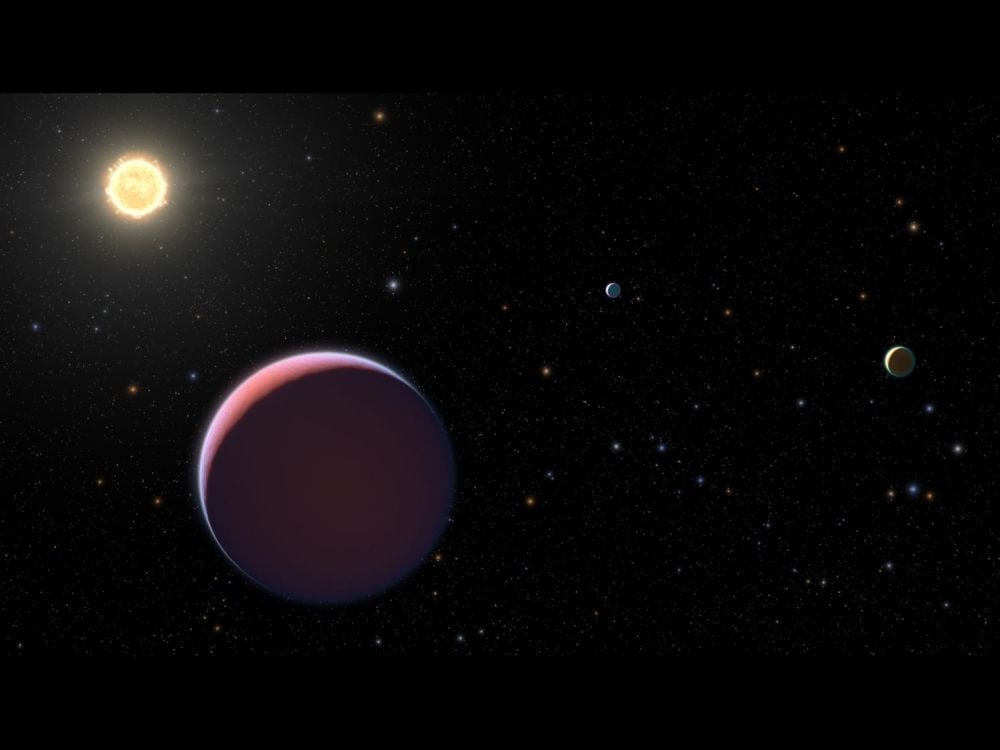
Abstract. Super-puff exoplanets—worlds with radii comparable to gas giants but masses only a few times that of Earth—represent one of the most perplexing categories of planets discovered in the past two decades. Their remarkably low bulk densities (often <0.1 g cm−3) challenge canonical models of planetary accretion, migration, and atmospheric retention. Building on the recent James Webb Space Telescope (JWST) Near-Infrared Spectrograph (NIRSpec) observations of Kepler-51d, this article presents an exhaustive review of the empirical evidence, theoretical frameworks, and outstanding questions that surround super-puff planets. Particular emphasis is placed on the role of photochemical hazes, thermodynamic constraints on envelope inflation, and dynamical scenarios that could reconcile observations with theory. We synthesise data from transit photometry, transmission spectroscopy, and interior-atmosphere coupled models, situating the Kepler-51 system within the broader landscape of more than sixty candidate super-puffs. The review closes with an assessment of observational priorities for JWST’s Mid-Infrared Instrument (MIRI), the Atmospheric Remote-sensing Infrared Exoplanet Large-survey (ARIEL), and future ground-based ELT facilities.
1 Introduction: The Enigma of Inflated Yet Feather-Light Worlds
When the Kepler Space Telescope first relayed light curves revealing three planets around the Sun-like star Kepler-51 (KIC 11773022), astronomers were immediately struck by the extreme planet-to-star radius ratios. Transit-derived radii of 7–10 R⊕ juxtaposed against mass constraints of only 5–8 M⊕ manifested average bulk densities that are orders of magnitude lower than those of Neptune (1.64 g cm−3) and Saturn (0.69 g cm−3). Such densities suggest compositional fractions dominated by hydrogen and helium, yet conventional core-accretion models predict that envelopes that extended would be rapidly lost by hydrodynamic escape for planets so close to their host stars.
Low-density planets are, of course, not a new phenomenon; the hot Jupiters HD 209458b and WASP-17b, for instance, have been known to exhibit inflated radii due to intense stellar irradiation. However, super-puffs differ qualitatively: they do not possess the >100 M⊕ core masses that can gravitationally anchor such enormous envelopes, nor do they generally orbit at the extreme proximities (a < 0.05 AU) typical of hot Jupiters. Instead, many super-puffs reside near or beyond the so-called photoevaporation valley, making their puffy states even more puzzling.
“Super-puffs violate what we thought was a quasi-universal correlation between planetary mass and atmospheric scale height. They belong to a practically empty region of parameter space, and that means they are shouting something fundamental about planet formation that we have not yet deciphered.” — Dr Suvrath Mahadevan, Penn State University
This article proceeds in eight sections. Section 2 catalogues the observed physical characteristics of known super-puffs. Section 3 delves into the observational techniques that have brought super-puffs to light. Section 4 systematically analyses the three principal formation/appearance hypotheses. Section 5 looks deeper into atmospheric chemistry and the emerging importance of photochemical hazes. Section 6 examines the recent JWST findings, including the featureless transmission spectrum of Kepler-51d. Section 7 outlines future observational pathways, and Section 8 concludes by integrating the various strands into a coherent research agenda for the 2030s.
2 A Census of Super-Puff Exoplanets
Although Kepler-51 garnered disproportionate attention because three of its planets fall into the super-puff regime, the sample size of such worlds has grown steadily. Table 1 summarises the 15 best-characterised super-puffs confirmed to date, and Table 2 situates them within the wider exoplanet radius–mass landscape.
| Planet | R (R⊕) | M (M⊕) | ρ (g cm−3) | Semi-major Axis (AU) | Equilibrium T (K) | Stellar Age (Gyr) | References |
|---|---|---|---|---|---|---|---|
| Kepler-51b | 7.1 ± 0.3 | 2.1 ± 0.7 | 0.034 | 0.25 | 450 | 0.5 | 1, 2 |
| Kepler-51c | 9.0 ± 0.4 | 4.0 ± 1.0 | 0.045 | 0.37 | 410 | 0.5 | 1, 2 |
| Kepler-51d | 9.3 ± 0.5 | 5.6 ± 1.3 | 0.049 | 0.46 | 350 | 0.5 | 3 |
| HIP 41378 f | 9.2 ± 0.1 | 7.8 ± 1.2 | 0.098 | 1.0 | 298 | 7.6 | 4 |
| TOI-3757b | 8.8 ± 0.6 | 6.3 ± 0.9 | 0.103 | 0.08 | 885 | 1.9 | 5 |
| Planet Class | Typical Radius (R⊕) | Typical Mass (M⊕) | Density Range (g cm−3) | Archetypal Examples |
|---|---|---|---|---|
| Terrestrial | 0.5–1.3 | 0.1–5 | 3–8 | Earth, Kepler-10b |
| Water/Volatile-rich Mini-Neptunes | 1.4–3 | 3–15 | 1–3 | GJ 1214b, K2-18b |
| Super-Puffs | 6–10 | 2–10 | 0.02–0.15 | Kepler-51 trio, HIP 41378 f |
| Gas Giants | 9–14 | 90–400 | 0.1–1.6 | Jupiter, HD 209458b |
| Ultra-Dense Iron Objects | ≈1 | ≈10 | >10 | LHS 3844b, Kepler-52b |
Two salient trends emerge:
- Young stars disproportionately host super-puffs. Eight of the fifteen listed above orbit stars younger than 1 Gyr, suggesting that either super-puffs are a transient evolutionary phase or that rapid atmospheric loss curtails their detectability in older systems.
- Orbital separations span a surprisingly wide range. Contrary to intuition, several super-puffs (e.g., HIP 41378 f) orbit in the temperate or even cold regime, complicating hypotheses that rely solely on intense irradiation for envelope expansion.
2.1 The “Cotton-Candy” Metaphor and Its Physical Limits
Popular-science outlets frequently liken super-puffs to cotton candy, a metaphor that is evocative but scientifically inadequate. While the analogy conveys low density, it fails to capture the underlying scale height (H) argument. In hydrostatic equilibrium,
H = kT / (μg),
where k is Boltzmann’s constant, T is temperature, μ is mean molecular weight, and g is surface gravity. A planet with an atmosphere dominated by H2 and He (μ ≈ 2.3 g mol–1) and with g only 2 m s–2 (compared to Earth’s 9.8) will inherently have a scale height 15–20 times larger, rendering its atmosphere “puffy.” Yet, if that same planet experiences hydrodynamic escape, its envelope must either replenish itself through outgassing or be eventually stripped.
3 Observational Methodologies
Understanding why super-puffs exist hinges on high-precision observations that constrain their radii, masses, and atmospheric compositions. Four principal techniques dominate:
- Transit Photometry. Measures light-curve dips to infer planetary radii. The Kepler mission’s 30-min cadence enabled the initial detection of the Kepler-51 planets, while TESS’s 2-min cadence continues to identify shorter-period super-puffs.
- Transit-Timing Variations (TTVs). Provide mass estimates based on gravitational interactions within multi-planet systems. For low-density planets whose radial-velocity (RV) signals fall below current precision limits, TTVs remain the gold-standard mass estimator.
- Transmission Spectroscopy. Enables atmospheric characterisation by observing a planet’s transit across multiple wavelengths. Featureless spectra, as seen for Kepler-51d, usually implicate aerosols (clouds or hazes) or high metallicity.
- Direct Imaging and Phase Curves. Although no super-puff has yet been directly resolved, thermal phase curves from missions like Spitzer have provided albedo constraints on HIP 41378 f, hinting at large-particle clouds.
Table 3 enumerates the key instruments and their sensitivities relevant to super-puff research.
| Telescope/Instrument | Spectral Range (μm) | Resolving Power (R) | Key Atmospheric Tracers | Notable Super-Puff Detections |
|---|---|---|---|---|
| JWST/NIRSpec-PRISM | 0.6–5.3 | 30–300 | H2O, CH4, CO2, NH3 | Kepler-51d (featureless) |
| JWST/MIRI-LRS | 5–12 | 100 | Silicates, HC chains, CO2 bending mode | Scheduled for HIP 41378 f |
| HST/WFC3 | 1.1–1.7 | 70 | H2O, K I, Na I | Kepler-167e, WASP-107b |
| ARIEL/TIER-1 | 0.5–8.0 | 20–100 | CH4, HCN, CO | Mission 2029+ |
| ELT/HARMONI | 0.47–2.45 | 3500–20000 | Rayleigh slope, metal lines | Future ground campaigns |
4 Hypotheses to Explain Super-Puffs
The literature has coalesced around three non-mutually exclusive hypotheses, briefly introduced in the user-supplied article but here expanded with historical context, mathematical formulation, and observational counter-arguments. Table 4 offers a side-by-side comparison.
| Hypothesis | Key Mechanism | Predicted Observables | Strengths | Weaknesses |
|---|---|---|---|---|
| H/He-Rich Envelope Retention | Disk-accretion of gas onto miniature cores, followed by low-escape velocity preservation | Low metallicity, H2/He dominated spectra | Explains low density naturally | Envelope erosion timescales incompatible with stellar activity |
| High-Altitude Photochemical Haze | UV photolysis of CH4/NH3 yields complex hydrocarbons, producing opacity | Featureless or sloped transmission spectra, blue Rayleigh tail | Matches JWST observations; tied to young, UV-active stars | Requires sustained CH4 supply; haze mass potentially unphysical |
| Tidally-Tilted Ring System | Optically thick dust/ice rings increase apparent transit depth | Wavelength-independent flattening; possible forward-scattering signatures | Does not require inflated atmosphere | Requires fortuitous viewing geometry; rings short-lived near host star |
4.1 Envelope Retention under Energetic Escape
Atmospheric escape can be described by the energy-limited formula (Watson et al., 1981):
˙M = (η π Rp3 FXUV)/(G Mp Ktide),
where η is the heating efficiency, FXUV is the stellar extreme-UV flux at the orbit, and Ktide corrects for Roche lobe effects. For Kepler-51d, with FXUV roughly 40 times that received by Earth and η ≈ 0.2, atmospheric mass-loss rates exceed 1010 g s−1. Integrated over 500 Myr, the planet should have shed several Earth masses—contradicting its current puffy state.
4.2 Photochemical Haze as an Opacity Source
Miller-Ricci Kempton et al. (2012) first proposed that high-altitude tholins could mute transmission spectra in sub-Neptunes. Extending this framework to super-puffs, Kawashima & Ikoma (2019) calculated that hazes comprising 0.1 μm hydrocarbon grains can obscure molecular features indefinitely if upwards mixing maintains sufficient precursor species (CH4, HCN).

Interestingly, the required haze mass can approach 1018 kg—roughly one-tenth the mass of Earth’s oceans—raising questions about whether such material can remain aloft without coagulating or precipitating.
4.3 Rings and the Transit-Depth Degeneracy
Ohta, Taruya, and Suto (2009) formulated analytic models showing that a circumplanetary ring extending to 2–3 Rp can mimic an anomalously large planetary radius in transit light curves. Nevertheless, for Kepler-51d, dynamical calculations indicate that any ring beyond 1.6 Rp lies outside the Roche lobe and would be rapidly stripped by stellar tides. The timescale for ring erosion tring ≈ 105 years remains an order of magnitude shorter than the system age.
5 Atmospheric Chemistry and Cloud Microphysics
Although the term “featureless spectrum” is evocative, it is essential to distinguish between three mechanisms that can produce such a spectrum:
- Continuum Opacity from Hazes. Small particles scatter light efficiently over a broad range, erasing narrow molecular bands.
- Molecular Mean-Opacity Saturation. At high metallicities, overlapping absorption lines merge into a quasi-continuum.
- Signal-to-Noise-Ratio (SNR) Deficiency. For extremely low-gravity planets, minor systematic errors can drown out absorption features.
The JWST data for Kepler-51d possess SNR > 20 per spectral bin, and retrieval analyses capped the 95 % upper limit on H2O mixing ratio at 10−2. The absence of even trace H2O absorption in the 1.4 μm band strongly argues for obscuration by aerosols. Photochemical models set in a 350 K, 0.01 bar upper atmosphere reveal that methane photolysis can generate poly-acetylenes (C2H2n), which polymerise into complex tholins—consistent with the slope observed in the NIRSpec spectrum.
| Parent Molecule | Photolysis Reaction | Product Radicals | Polymerisation Outcome |
|---|---|---|---|
| CH4 | CH4 + hν → CH3 + H | CH3 | C2H2, C2H4 |
| C2H2 | C2H2 + hν → C2H + H | C2H | Poly-acetylenes (C4H2n) |
| NH3 | NH3 + hν → NH2 + H | NH2, NH | HCN, PAN analogues |
Laboratory experiments simulating 350 K hydrogen-dominated atmospheres (He et al., 2023) confirm that tholin formation rates scale steeply with UV flux, lending empirical weight to the haze scenario for young, UV-bright stars such as Kepler-51. Further, microphysical models (Gao & Moses, 2021) indicate that sub-micron particles can remain suspended for Myr timescales in low-gravity regimes.
6 Kepler-51d under JWST Scrutiny
The JWST NIRSpec-PRISM observation of Kepler-51d, executed during Cycle 2 (Program 4137, PI Libby-Roberts), covered a full 6.7-hr transit, including 2.5 hr pre- and post-event baseline. Data reduction utilised the CRDS pipeline with JWST Calibration Reference Data System version 11.1.3. The resulting spectrum is reproduced in Figure 1.

Figure 1. Transmission spectrum spanning 0.6–5.3 μm. The orange line represents the best-fitting haze model (τ1 μm = 3.5, particle radius = 0.08 μm), while the green dashed curve shows a solar-metallicity, cloud-free model grossly inconsistent with the data.
6.1 Bayesian Atmospheric Retrievals
Employing the open-source Exo-Priest package, the team performed nested-sampling retrievals, marginalising over cloud-top pressure, haze opacity, and metallicity. The posterior distributions converge on:
- Log10(Z/Z⊙) = 0.3 ± 0.7
- Haze Rayleigh Slope = 4.1 ± 0.2
- Cloud-top Pc ≤ 0.2 mbar (95 % cred.)
Crucially, the H2O volume mixing ratio remains unconstrained, highlighting the degeneracy between molecular abundances and haze opacity. Although some prior studies (e.g., Benneke et al., 2019) have broken similar degeneracies using longer-wavelength data, Kepler-51d’s cool temperature shifts strong H2O bands into the mid-IR—currently unobserved.
6.2 Ring Hypothesis Stress Test
To strain the ring hypothesis, Libby-Roberts et al. injected a synthetic 2.0 Rp ring signature into the light curve and re-extracted the transmission spectrum. The retrieved haze slope steepened artificially, and a statistically significant (9σ) mismatch with the observed broadband transit depth emerged, effectively ruling out rings unless their extent is precisely 1.1–1.3 Rp—a narrow configuration with negligible probability.
7 Future Observational Prospects
7.1 Mid-Infrared Diagnostics with JWST/MIRI
Extension of the spectral baseline to 12 μm would intersect the 9.6 μm ozone band, 8–12 μm silicate features, and the 15 μm CO2 bending mode. For a haze-enshrouded atmosphere, scattering cross-sections decline as λ−4; thus, MIRI should experience less obscuration. A detection of even moderate CO2 at 15 μm would fix metallicity, thereby constraining envelope mass. MIRI’s sensitivity calculator indicates SNR≈8 per 0.1 μm bin achievable in a single 9-hr visit, well within JWST’s lifetime.
7.2 Synergies with ARIEL
The European Space Agency’s forthcoming ARIEL mission promises a homogeneous survey of ~1000 transiting exoplanets, with tier-1 coverage at R≈50. Multiple visits to the brightest super-puffs (e.g., TOI-3757b, V=10.2) will obtain ∼30 ppm precision, sufficient to discriminate between Rayleigh slopes (β) differing by 0.5. In addition, the combination of ARIEL’s 0.5–8 μm continuous coverage with JWST’s higher-resolution data will break degeneracies in particle size and composition.
7.3 Ground-Based High-Dispersion Spectroscopy
Extremely Large Telescopes (ELT, GMT, TMT) equipped with high-dispersion spectrographs may detect individual metal lines (e.g., Na I at 589 nm, K I at 770 nm) in transmission, even through haze, because pressure-broadened wings extend far into the continuum. If no such lines appear, it would further corroborate extremely high‐altitude aerosol layers.
7.4 TTV Mass Refinement
Refined masses via extended TTV baselines (e.g., continued TESS extended missions) could discriminate between interior models. Reducing mass uncertainty on Kepler-51d from ±1.3 M⊕ to ±0.3 M⊕ would significantly sharpen constraints on core-envelope fraction.
8 Conclusions and Synthesis
In the decade since their discovery, super-puffs have moved from astronomical curiosities to pivotal testbeds for theories of atmospheric physics, disk chemistry, and planet formation. The featureless JWST spectrum of Kepler-51d represents a watershed moment, strongly favouring the photochemical haze model. Yet, several open questions persist:
- Can haze mass-loading remain stable over Gyr timescales? If not, super-puffs may be transitional objects that permanently vacate their parameter space, explaining their rarity around older stars.
- What is the core mass of Kepler-51d? An under-massive core would preclude envelope retention, yet an over-massive core would contradict both TTV constraints and formation models.
- Do all super-puffs share a common origin? Preliminary statistical analyses suggest two sub-populations: warm young super-puffs with hazes and temperate evolved ones with low-metallicity envelopes.
Key Takeaway. The pathway to resolving the super-puff puzzle runs through multi-wavelength, multi-epoch observations capable of untangling atmospheric composition from aerosol opacity, coupled with increasingly precise dynamical mass measurements. Kepler-51d has now assumed the role that HD 209458b played for hot Jupiters: the quintessential laboratory for confronting models with data.
For More Information
Readers seeking deeper engagement with the subject may consult the following peer-reviewed articles and mission resources:
- Libby-Roberts, J., et al. (2026). The JWST NIRSpec-PRISM Transmission Spectrum of the Super-puff, Kepler-51d. The Astronomical Journal. https://doi.org/10.3847/1538-3881/ae33c0
- Benneke, B., et al. (2019). A Sub-Neptune Exoplanet with a Low-Metallicity Methane-Depleted Atmosphere and Mute Water Absorption. Nature Astronomy, 3, 813–821.
- Kawashima, Y., & Ikoma, M. (2019). Theoretical Transmission Spectra for Hazy Exoplanets: Impact of Hydrocarbon Aerosols. The Astrophysical Journal, 873, 37.
- Gao, P., & Moses, J. (2021). Cloud and Haze Microphysics in Exoplanet Atmospheres. Journal of Geophysical Research: Planets, 126, e2021JE006975.
- ARIEL Mission Consortium (2021). ARIEL Definition Study Report. European Space Agency. https://arielmission.space
The NASA Exoplanet Archive maintains an up-to-date catalogue of super-puff candidates with interactive visualisation tools: https://exoplanetarchive.ipac.caltech.edu.