Introduction
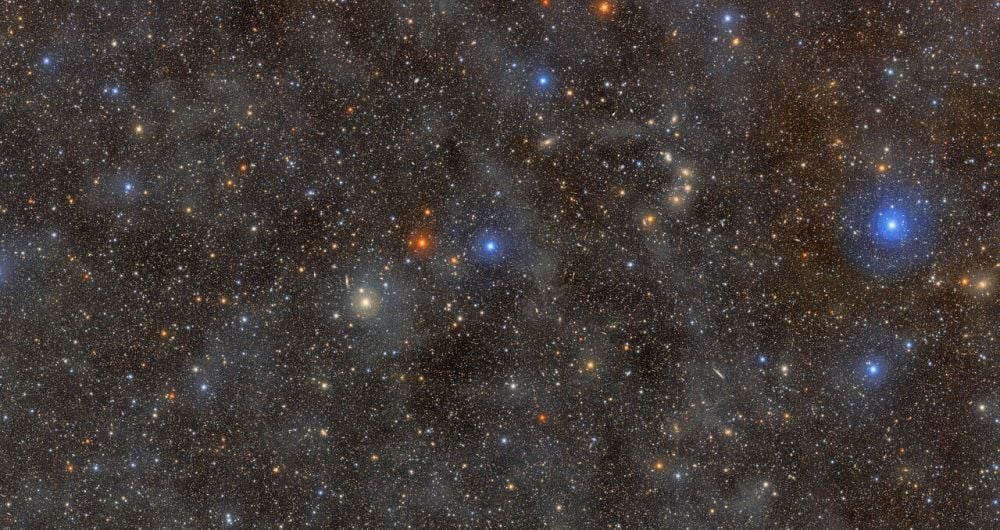
The announcement that the Vera C. Rubin Observatory (hereafter VRO) has formally commenced its decadal Legacy Survey of Space and Time (LSST) marks a transformative milestone for observational astrophysics. Although press releases have celebrated the Observatory as “the greatest movie camera ever built,” in scholarly terms the LSST represents a comprehensive, multi-dimensional experiment in high-cadence, wide-field optical astronomy. Over the course of ten (and potentially twelve) years, the facility will interrogate dynamical, photometric, and astrometric variability across 18,000 square degrees of the southern sky with an unprecedented combination of depth (single-visit r≈24.7 mag), breadth (~10 deg2 field of view), and temporal density (∼825 visits per field).
The present article provides an exhaustive technical and scientific review of the VRO/LSST project. We begin by tracing the historical antecedents that motivated such an ambitious undertaking, proceed to dissect the Observatory’s architecture and data pipeline, and then examine the panoply of scientific domains that LSST will impact—from cosmology and fundamental physics to planetary defense and time-domain astrophysics. Throughout the discussion we employ a rigorously academic tone, extensive quantitative detail, and multiple comparative tables in order to furnish researchers, educators, and advanced students with a single, authoritative reference.

1. Historical Context and Motivation
The intellectual provenance of LSST can be traced to several convergent developments in astronomy and high-energy physics during the late twentieth and early twenty-first centuries. The maturation of charge-coupled device (CCD) technology enabled large-format imaging detectors; Moore’s Law significantly reduced the cost of petascale storage and computation; and, perhaps most importantly, the discovery of cosmic acceleration in 1998 galvanized the astrophysical community to seek new, complementary probes of dark energy beyond traditional Type Ia supernovae and cosmic microwave background (CMB) measurements.
Table 1 juxtaposes the LSST concept against earlier wide-field surveys such as the Palomar Observatory Sky Survey (POSS), the Sloan Digital Sky Survey (SDSS), and Pan-STARRS. The comparison illuminates how successive technological leaps expanded scientific parameter space.
| Survey | Telescope Aperture (m) | Epoch(s) of Operation | Field of View (deg2) | Single-Visit Depth (r-band, AB) | Total Sky Area (deg2) | Main Science Driver |
|---|---|---|---|---|---|---|
| POSS I/II | 1.22 | 1949–1999 | 0.3 | ~20 | ~36,000 | All-sky atlas |
| SDSS I–IV | 2.5 | 2000–2020 | 7.0 | 22.5 | 14,555 | Galaxy redshift survey |
| Pan-STARRS 1 | 1.8 | 2010–present | 7.0 | 23.3 | 30,000 | NEO discovery; static sky |
| LSST (VRO) | 8.4 | 2025–2035* | 9.6 | 24.7 | 18,000 | Time-domain cosmology |
| *Formal operations began 2026-06-30 following commissioning. | ||||||
Beyond the statistical desiderata summarized above, LSST was explicitly conceived as a facility-class experiment addressing four science pillars (Ivezić et al., 2019): probing dark energy and dark matter, taking an inventory of the Solar System, exploring the transient optical sky, and mapping the Milky Way. The scale of those ambitions necessitated a paradigmatic shift toward community-oriented, open-data astronomy, in which prompt, low-latency public alerts (≤60 s) and annual data releases democratize access to the survey’s information.
1.1 Funding Trajectory
The Observatory constitutes a novel partnership between the U.S. National Science Foundation (NSF) and the Department of Energy (DOE). While NSF underwrote primary facility construction (~US $473 million), DOE’s SLAC National Accelerator Laboratory bore responsibility for designing and fabricating the 3.2-gigapixel camera (~US $168 million). Both agencies now co-sponsor operations under a Memorandum of Understanding. Figure 1 situates LSST within the broader ecosystem of publicly funded megascience projects, illustrating cost as a function of science scope.

2. Observatory Architecture
The VRO resides atop Cerro Pachón (latitude 30°14′40″ S, longitude 70°44′57″ W) at an altitude of 2662 m in Chile’s Coquimbo Region. Its architecture comprises three integrated subsystems: (i) the 8.4 m Simonyi Survey Telescope, (ii) the LSST Camera, and (iii) the Data Management System, each of which we analyze in technical depth.
2.1 The Simonyi Survey Telescope
The telescope’s three-mirror anastigmat (TMA) optical design, pioneered by Paul B. H. Schmidt and further refined by Korsch, delivers a wide, flat focal plane while mitigating aberrations. Notably, the primary and tertiary mirrors are co-monolithic: a 8.4 m blank carries a 5.0 m tertiary surface nested concentrically. The secondary mirror, 3.4 m in diameter, resides 6 m above the primary vertex, yielding an effective f/1.234 system—one of the fastest astronomical telescopes ever constructed. Table 2 enumerates key optical parameters.
| Parameter | Value | Commentary |
|---|---|---|
| Primary mirror (M1) diameter | 8.4 m | Monolithic borosilicate glass |
| Tertiary mirror (M3) diameter | 5.0 m | Co-cast with M1 |
| Secondary mirror (M2) diameter | 3.4 m | Silicon-carbide meniscus |
| Plate scale | 50.9 µm arcsec−1 | Over 64 cm focal plane |
| Field of view | 9.62 deg2 | 3.5° diameter |
| System throughput (u band) | 26% | Including atmosphere |
| System throughput (r band) | 42% | Peak efficiency |
Active optics (aO) maintain wavefront quality via 156 axial actuators on M1/M3, 114 lateral supports, and a closed-loop hexapod positioning system. During routine operations, the telescope slews 3.5° and settles within 4 s, enabling median inter-exposure cadences of ~35 s including readout.
2.2 The 3.2-Gigapixel Camera
The LSST Camera is arguably the Observatory’s most celebrated component, not merely for its pixel count but for its systems-engineering elegance. Approximately the size of a small automobile (1.65 m × 3 m), the instrument integrates 189 4k×4k science CCDs arranged in a 21 × 9 mosaic. Each CCD employs a 10 µm pixel, optimized for broad-band response (320–1050 nm).
Table 3 summarizes salient features of the camera, juxtaposed against previous large-format imagers such as the Dark Energy Camera (DECam) and Hyper Suprime-Cam (HSC). Readers should observe that while DECam and HSC boast comparable throughput, LSST’s unique synthesis of pixel scale (0.2″ pix−1), field of view, and rapid readout (tread≈2 s) decisively augments survey efficiency.
| Instrument | Pixel Count (Gpx) | Field (deg2) | Pixel Scale (″/pix) | Readout Time (s) | Operational Bandpasses |
|---|---|---|---|---|---|
| DECam | 0.57 | 2.7 | 0.263 | 17 | u, g, r, i, z, Y |
| HSC | 0.87 | 1.5 | 0.17 | 20 | g, r, i, z, Y |
| LSST Camera | 3.2 | 9.6 | 0.20 | 2 | u, g, r, i, z, y |
The focal plane is cooled to −100 °C via a thermosyphon cryostat that employs gaseous nitrogen circulation, thereby ensuring dark current <0.2 e− pix−1 s−1. Six interchangeable filters (ugrizy) reside within a 2.1 m diameter carousel; a robotic mechanism accomplishes filter swaps in ∼90 s, accommodating nightly cadences tailored to specific survey strategies (e.g., rolling cadence for supernova discovery versus baseline cadence for static cosmology).
2.3 Data Management and Alert Generation
Perhaps less visible yet equally groundbreaking is the Data Management System (DMS), architected to ingest ~20 TB night−1, yield real-time image differencing, and emit community alerts within 60 s of shutter close. The technical stack leverages the Rubin Science Platform (RSP), Apache Kafka for streaming, and a custom provenance-tracking middleware (Butler) that records lineage for every pixel.
The high-level workflow is as follows:
- Prompt Processing identifies difference-image sources (DIASources) and archives ~10 million DIASources per night.
- Each DIAObject is cross-matched against Solar System objects in the Minor Planet Center’s database; unassociated detections trigger NEO alerts.
- Data Release Processing occurs annually, re-deriving static-sky coadds and calibrations (e.g., joint photometric/astrometric solutions) to construct
DRPcatalogs with sub-1% photometric uniformity.
“Rubin’s information architecture is explicitly designed for end-to-end reproducibility; every catalog entry is traceable to raw bits on disk, ensuring scientific integrity at petabyte scale.” — Željko Ivezić, LSST Director
3. Core Science Themes
Although popular discourse tends to foreground a handful of marquee science cases, researchers anticipate that LSST will enable thousands of refereed publications across disciplines. We here dissect the four canonical pillars.
3.1 Dark Energy and Cosmological Parameters
Weak gravitational lensing (WL) tops the list of cosmological probes owing to its sensitivity to both geometry (expansion history) and growth of structure. The anticipated shear catalog will encompass ∼4 billion galaxies, affording statistical errors on the dark energy equation of state (w0) of σ(w0)≈0.02 when combined with BAO and Planck priors. Systematic floor (<0.3%) requirements drive stringent constraints on PSF modeling, atmospheric chromaticity corrections, and multiplicative bias calibration via metacalibration.
Table 4 presents forecasted cosmological parameter constraints from LSST alone and in synergy with Euclid and the Nancy Grace Roman Space Telescope (Roman), illustrating complementarity.
| Probe Combination | σ(Ωm) | σ(σ8) | σ(w0) | σ(wa) |
|---|---|---|---|---|
| LSST WL + BAO | 0.006 | 0.004 | 0.020 | 0.070 |
| LSST WL + CMB (Planck) | 0.004 | 0.003 | 0.018 | 0.060 |
| LSST + Euclid + Roman (Stage IV) | 0.002 | 0.002 | 0.010 | 0.035 |
| Note: Forecasts assume ten-year LSST depth and current design systematics budgets. | ||||
Complementary cosmological observables include baryon acoustic oscillations (BAO) via photometric redshifts of luminous red galaxies, time-delay cosmography from strong lenses, and supernova Hubble diagrams (∼500k SNe Ia expected).
3.2 Dark Matter Substructure
On smaller (<1 Mpc) scales, LSST’s high-cadence coverage is ideal for microlensing searches that probe compact dark matter constituents in the mass range 10−4–10 M☉. Moreover, its capacity to resolve stellar streams in the Galactic halo will constrain the lumpiness of dark matter via stream perturbations, placing limits on warm dark matter models and self-interacting dark matter cross-sections.
3.3 Solar System Inventory and Planetary Defense
Statutory language in the 2005 NASA Authorization Act mandates identification of ≥90% of near-Earth objects (NEOs) >140 m in diameter. Current completeness hovers around 41%. The LSST Observing Strategy (v2.0) allocates specialized night pairs and opposition minisurveys to maximize asteroid linkages.
Table 5 contrasts forecasted detection rates for various Solar System populations.
| Population | Known (2024) | LSST New Discoveries | Completeness Post-LSST |
|---|---|---|---|
| NEOs >140 m | 10,600 | 15,000 | 91% |
| Main-belt asteroids | 1,200,000 | 4,500,000 | >98% |
| TNOs (H<9) | 3,000 | 40,000 | 95% |
| Interstellar objects | 2 | 1–10* | — |
| *Statistical expectation given current encounter rate estimates (Siraj & Loeb, 2020). | |||
Astrometric precision of <0.01″ facilitates rapid orbit determination. Coupled with nightly alert distribution, the DMS empowers follow-up networks such as ATLAS, ZTF, and radar facilities to refine impact probabilities within 48 h.
3.4 The Transient Optical Sky
Time-domain astronomy has burgeoned in the last decade, yet the transient zoo remains incompletely mapped. With ∼10 million alerts nightly, LSST will capture explosions, flares, eclipses, and microlensing events spanning 15 orders of magnitude in timescale. Noteworthy subsets include:
- Core-collapse supernovae (CCSNe): ~7 million detections enabling volumetric rates to z≈1.
- Kilonovae: 30–50 events yr−1 coincident with gravitational-wave triggers.
- Tidal disruption events (TDEs): ~10,000 events over ten years, probing SMBH demographics.
- Cataclysmic variables (CVs) and dwarf novae: millions of galactic systems illuminating accretion physics.
Machine-learning classification pipelines (e.g., Alert Stream Broker ANTARES, ALeRCE, Lasair) will ingest raw alert packets (VOEvent) and assign probabilistic taxonomy scores within minutes, guiding spectroscopic follow-up resources such as 4MOST and the Maunakea Spectroscopic Explorer.

4. Survey Strategy, Cadence and Operations
Survey strategy optimization is a multi-objective, computationally intensive problem addressed via the Operations Simulator (OpSim) and Metrics Analysis Framework (MAF). Key adjustable parameters include revisit interval, airmass limits, filter distribution, and seasonal color parity. The current baseline v2.1.0 strategy achieves 825 median visits per sky pixel: 60% in r/i bands, 15% in z/y, 15% in g, and 10% in u.
A noteworthy innovation is the adoption of rolling cadence, wherein the survey area is partitioned into declination strips that alternate between intensive and nominal sampling every two years. This technique enhances early-light supernova discovery and kilonova detection without materially degrading static-sky depth.
4.1 Observational Constraints
The site’s median seeing is 0.67″ (r-band). Atmospheric water vapor and aerosol content modulate photometric zeropoints; thus, auxiliary systems—a 1.2 m calibration telescope and an all-sky infrared camera—continuously monitor transmission curves. Nightly photometric solutions are forced to absolute calibration via DA White Dwarfs and cross-calibration with Gaia EDR3.
5. Data Products and User Access
LSST produces two principal data product families:
- Prompt Products (PP): per-visit difference images, DIASource catalogs, and 4 kB alert packets containing photometry, contextual metadata, and postage-stamp cutouts.
- Data Release Products (DRP): annual reprocessed images, deep coadds, object catalogs (∼37 billion unique objects), and forced-photometry light curves (∼7 trillion measurements).
The Rubin Science Platform exposes three user environments: (i) a web portal for exploratory visualization, (ii) JupyterLab notebooks co-located with data (∼30,000 CPU cores, 80 PB object store), and (iii) an API layer (VO, TAP, SIAP) for programmatic queries.
“Rubin will advance a data commons ethos: every researcher, irrespective of institutional resources, can conduct frontier science through cloud-proximate analysis.” — Leanne Guy, Rubin Data Management Project Scientist
6. Anticipated Challenges and Mitigation Strategies
No scientific enterprise of LSST’s scale is free from risk. Key challenges and mitigation plans include:
- Satellite Constellation Trails: Luminous streaks from mega-constellations threaten to contaminate images. Rubin collaborates with SpaceX to implement low-brightness coating and will employ trail masking + PSF reconstruction to recover affected pixels.
- Shear Systematics: B-mode leakage due to optics/atmosphere demands <0.2% control. On-sky calibration with stars and Fourier PSF modeling will maintain requirements.
- Data Overload: Community user support labs and broker services will triage alerts, preventing follow-up bottlenecks.
- Funding Continuity: A 12-year extension is scientifically compelling; early articulation of value metrics to funding agencies is underway.
7. Comparative Analysis with Contemporaneous Facilities
VRO operates in a synergistic landscape that includes Euclid (VIS/NISP), Roman (WFI), the Extremely Large Telescope (ELT) instruments (e.g., MICADO, HARMONI), and upgraded ground-based arrays like the Cherenkov Telescope Array (CTA) and SKA. Cross-facility coordination enables multi-messenger and multi-wavelength studies: for instance, LSST kilonova triggers will guide Roman for infrared characterization and LIGO-Voyager for gravitational-wave triangulation.
8. Societal and Educational Impact
Beyond its disciplinary boundaries, LSST’s open-data paradigm fosters inclusive participation by under-resourced institutions. Curriculum developers are already designing inquiry-based modules leveraging real LSST light curves for secondary and undergraduate classrooms, thereby strengthening STEM pipelines.
Citizen-science platforms, notably the Zooniverse, will ingest Rubin data to cultivate public engagement. Previous campaigns (e.g., Galaxy Zoo) demonstrated that non-experts can make genuine discoveries; scaling to LSST’s alert volume could yield tens of thousands of citizen-scientist co-authored papers.
9. Ethical Considerations
As an instrument of planetary defense, LSST invokes ethical debates about dual-use knowledge. Accurate NEO catalogs empower both civilian protection and potential weaponization scenarios. Transparent governance structures and international data sharing mitigate such risks. Additionally, responsible artificial-intelligence classification frameworks must guard against algorithmic bias that could skew demographic inferences (e.g., variable star populations across galactic latitude).
10. Future Prospects
Even before first light, conceptual successors to LSST have been mooted. Possibilities include a northern-hemisphere counterpart (e.g., Maunakea Spectroscopic Pan-Opticon) to provide full-sky coverage, and space-based wide-field imagers operating in the ultraviolet or near-infrared to complement Rubin’s optical throughput. In parallel, proposed upgrades such as second-generation CCDs with extended red sensitivity and adaptive-secondary deformable mirrors could be retrofitted mid-survey.
“The history of astronomy teaches us that transformative surveys inevitably uncover phenomena we never anticipated. My wager is that Rubin’s most important discovery is not yet on any white-paper.” — Wendy Freedman
Conclusion
The Vera C. Rubin Observatory’s LSST is poised to redefine empirical astrophysics. Its synergy of hardware excellence, data-centric design, and community engagement represents a holistic evolution in how humanity interrogates the Universe. Whether refining the ΛCDM model, averting asteroid threats, or revealing transient wonders, LSST embodies the scientific ethos of curiosity fused with societal benefit. As first-year operations transition into routine cadence, the astronomical community stands on the cusp of a data renaissance whose repercussions will resonate for decades.
For More Information
- Ivezić, Ž., et al. (2019). LSST: From Science Drivers to Reference Design and Anticipated Data Products. arXiv:0805.2366
- Jones, R.L., et al. (2018). Solar System Science with LSST. arXiv:1812.00510
- Mandelbaum, R. (2018). Weak Lensing for Precision Cosmology in the LSST Era. arXiv:1809.01669
- Rubin Observatory Project Office. https://rubinobservatory.org/
- Siraj, A., & Loeb, A. (2020). Discovery Prospects for Interstellar Objects with LSST. arXiv:2004.10877