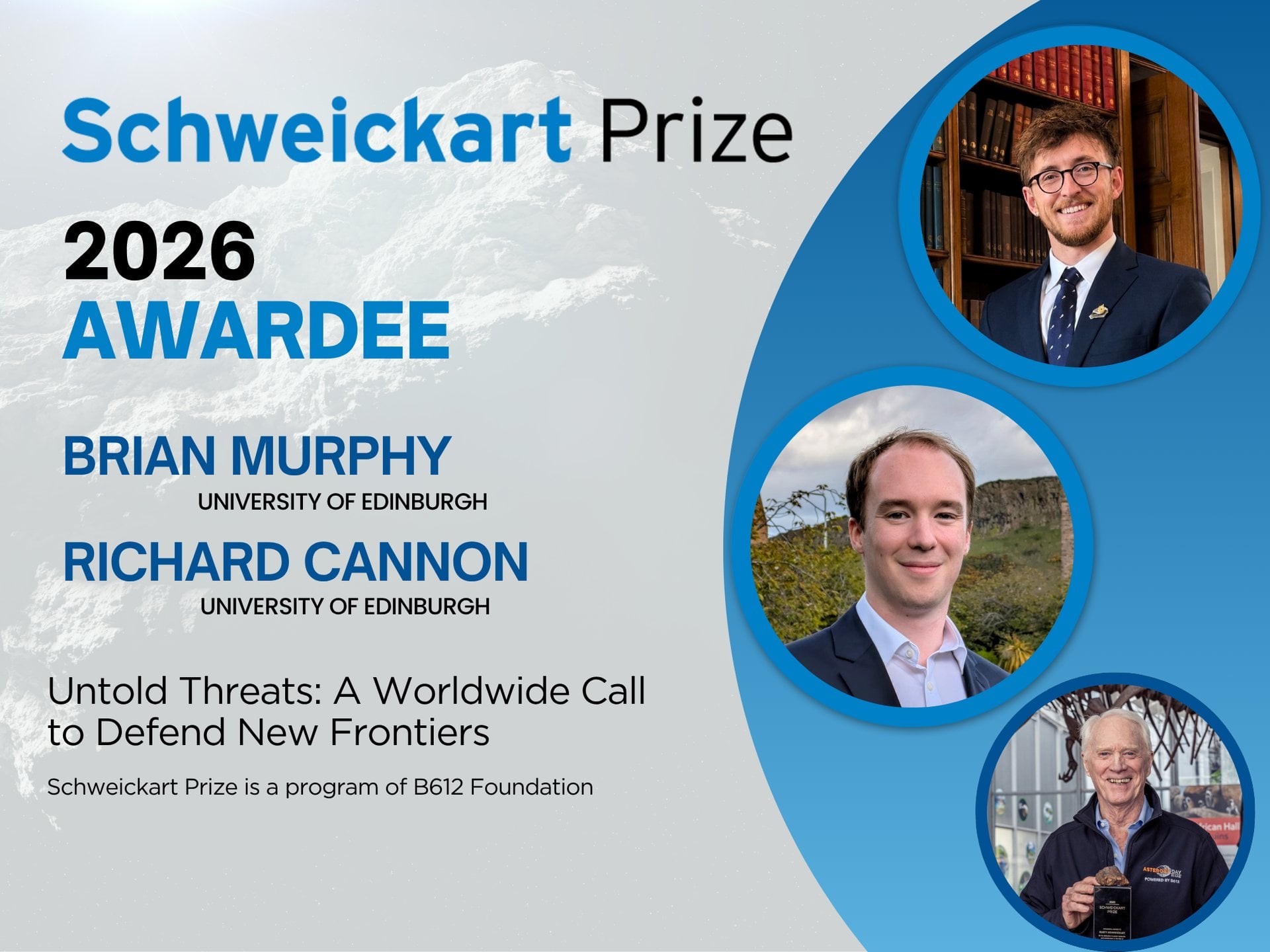
Humanity’s twenty-first-century renaissance in spaceflight has created an unprecedented density of valuable hardware outside Earth’s atmosphere. Less than fifteen years ago, low-Earth orbit (LEO) accommodated a modest population of research and communication satellites; today it is evolving into an economic zone populated by thousands of commercial spacecraft, orbital transfer vehicles, in-situ refueling testbeds, and nascent manufacturing platforms. Historic forecasts that once treated the cis-lunar environment and the lunar surface as remote science frontiers now describe them as near-term industrial targets, with serious governmental and private-sector investments in power stations, propellant depots, and even data-center constellations. Against this backdrop of rapid industrialization, the meteoroid and small-asteroid threat—long studied primarily in the context of terrestrial impacts—has received a crucial conceptual update. The Schweickart Prize-winning “WARDEN” proposal, authored by Brian Murphy and Richard Cannon of the University of Edinburgh, argues persuasively that **planetary defense** must expand its remit from planetary protection to infrastructure protection. The following article offers an in-depth, academically-oriented analysis of that proposal, its scientific foundations, its technical recommendations, and its policy ramifications, while situating it in a century-long historical narrative of celestial-impact research and the evolving political economy of spaceflight.
1. Historical Context: From Planetary Defense to Infrastructure Resilience
Although humans have marveled at meteors since antiquity, systematic hazard assessment began only in the late nineteenth century, when scholars such as Ernst Öpik and Carl Charlier quantified impact energies and frequencies. The Tunguska event of 1908, which flattened roughly 2,150 square kilometers of Siberian forest, was a visceral reminder that Earth remains embedded in a dynamic swarm of Near-Earth Objects (NEOs). Nevertheless, for most of the twentieth century, planetary defense was—itself—an academic pursuit with little institutional support. This changed in 1980 when Luis and Walter Alvarez connected the Cretaceous–Paleogene mass extinction to a Chicxulub-scale impact, prompting national academies and space agencies to consider countermeasures.
By the 1990s, NASA’s Near-Earth Object Program and the International Astronomical Union’s Minor Planet Center began cataloging hazardous asteroids systematically. Parliamentary hearings, White House directives, and United Nations working groups followed, culminating in 2008 with UN General Assembly endorsement of two specialized entities: the International Asteroid Warning Network (IAWN) and the Space Mission Planning Advisory Group (SMPAG). Both organizations, however, are Earth-centric; they were conceived to avert catastrophic threats to human civilisation on the ground. None of their founding documents outlines obligations with respect to satellites, orbital habitats, or lunar installations.
The past decade therefore presents a mismatch: investment in off-world assets is soaring, while international governance mechanisms to shield those assets from celestial debris lag dangerously behind. The WARDEN proposal emerges precisely at this juncture, advocating a robust expansion of observational, analytical, and response capabilities dedicated to orbital and cis-lunar hardware.
2. The WARDEN Conceptual Framework
The acronym WARDEN—Warning Network for Asset Resilience from Dusts, Ejecta, and NEOs—captures an operational philosophy with three interlocking pillars:
- Detection: Continuous monitoring of particulate and macroscopic threats in zones where critical infrastructure operates;
- Assessment: Real-time probabilistic modelling of collision likelihoods and damage profiles, incorporating uncertainties in object trajectories and spacecraft cross-sections;
- Mitigation: Dissemination of actionable advisories enabling protective manoeuvres, shield reconfigurations, or active deflection missions where feasible.
In its full articulation, WARDEN seeks not only to advise commercial operators but also to catalyze regulatory standards, insurance products, and treaty language that recognise meteoroid risk as a shared international concern.
2.1 Motivating Metrics
Murphy and Cannon quantify the urgency with a set of derived exposure metrics. Assuming a modern Starlink-class satellite with a 60-m2 effective area, they compute integrated collision probabilities for various meteor streams. Their calculations reveal that mega-constellations have multiplied the aggregate vulnerable area in LEO by up to three orders of magnitude relative to the 1990s baseline. Concurrently, small but high-velocity dust grains impose severe momentum transfer despite their sub-millimetre sizes. Using the classical McKinley distribution for meteoroid mass flux, they estimate that the integrated kinetic energy delivered to a constellation during a strong Perseid outburst can rival 109 J—greater than the energy content of many satellites’ entire propellant reserves.
2.2 An Expanded “Planetary Defense Triad”
One of the proposal’s most compelling political arguments is the idea of a triadic architecture: IAWN for global warnings to terrestrial populations, SMPAG for orchestrating spacecraft-based deflection campaigns, and WARDEN for safeguarding orbital/lunar assets. In this vision, data products and taskings flow laterally: WARDEN employs IAWN’s telescopic discoveries; SMPAG leverages WARDEN’s fine-scale orbit determinations when planning kinetic-impactor missions. Rather than erecting a new bureaucratic silo, WARDEN would bind existing nodes into an integrated planetary shield.
3. Physical Science of the Threat Spectrum
To appreciate WARDEN’s technical requirements, one must dissect the spectrum of hazards it confronts. These range from microscopic high-speed dust to multi-tonne moon-crossing boulders. The following sub-sections integrate classical celestial-mechanics theory with contemporary observational datasets.
3.1 Meteoroid Showers and Storms
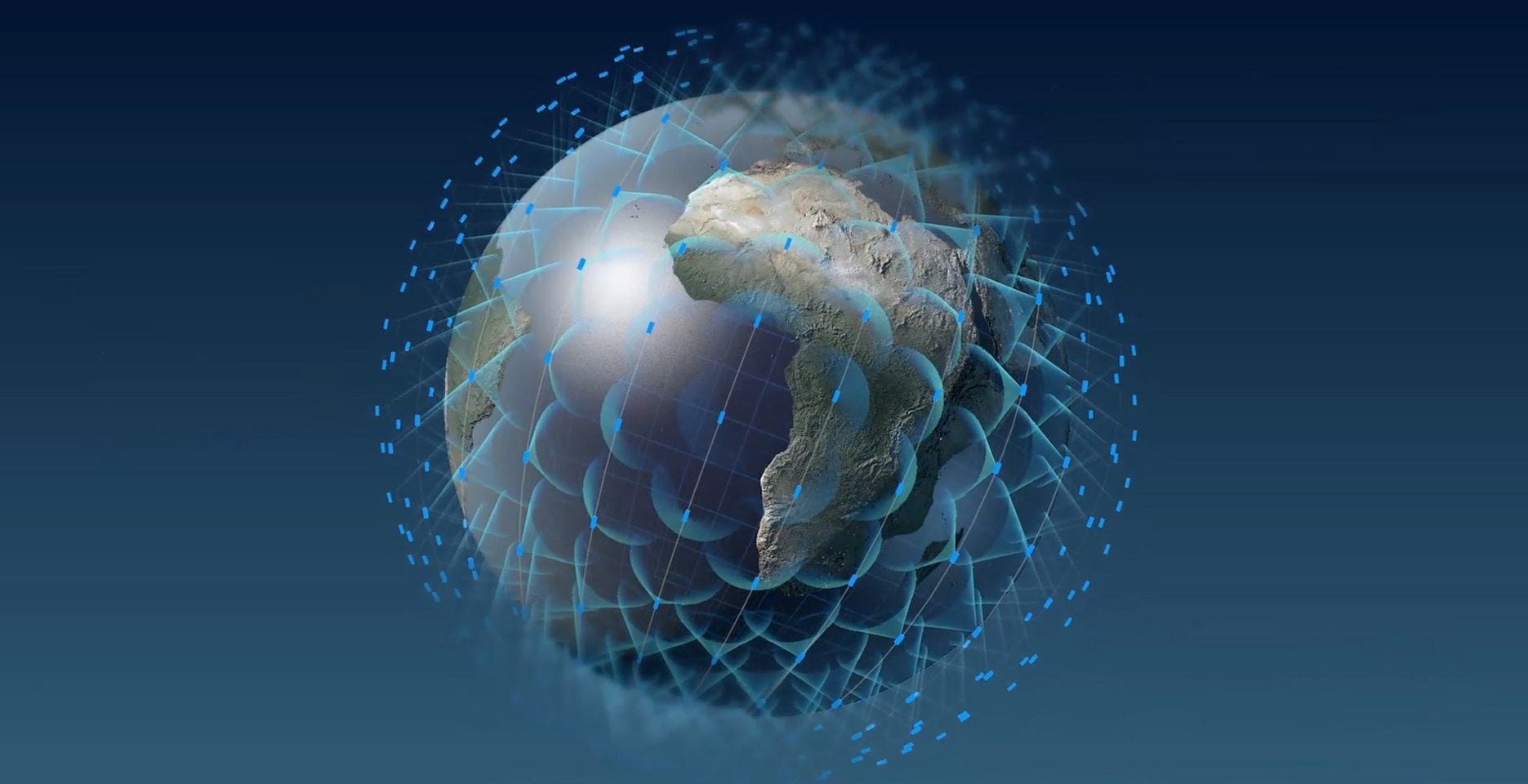
Meteoroid showers originate from cometary debris tubes that intersect Earth’s orbital path. Although the annual showers (Perseids, Leonids, Geminids) are well characterised, their densest “storms” recur semi-periodically when resonance effects concentrate particles into narrow filamentary clouds. Numerical integrations by Beard et al. 2017 predict Leonid Zenithal Hourly Rates (ZHR) exceeding 10,000 for the 2033–2034 return. At geocentric encounter velocities of 71 km s−1, even sub-millimetre grains deliver megapascal impulses on impact.
| Stream | Peak Year | Geocentric Velocity (km s−1) | Anticipated ZHR (Storm) | Historical Satellite Anomalies |
|---|---|---|---|---|
| Perseids | 2028 | 59 | >4,500 | Olympus-1 (1993), Landsat-5 partial (2009) |
| Leonids | 2033, 2034 | 71 | >10,000 | Intelsat-603 sensor glitch (1999) |
| Draconids | 2038 | 20 | >2,000 | Cluster-2 attitude perturbation (2011) |
| Geminids | 2026 | 35 | ~200 | None recorded |
3.2 Sporadic Background and the Smoothed Risk Landscape
Outside discrete storms, a continuous “sporadic” meteoroid background persists. The flux follows a size-frequency distribution approximated by a cumulative power-law exponent of −2.1 for masses from 10−9 kg to 10−3 kg. Spacecraft shields such as NASA’s Whipple design truncate this threat at the expense of added mass. Yet the heterogeneity of commercial spacecraft, many featuring exposed phased-array antennas, complicates universal hardening.
3.3 Centimetre-to-Metre Objects on GEO and Lunar-Crossing Orbits
Objects above ~10 cm rarely produce visible meteors but can inflict catastrophic damage on uncrewed and crewed stations alike. Radar and optical surveys—e.g., the U.S. Space Force’s Space Surveillance Network and ESA’s GEOtracker—currently detect only a small subset of such bodies. Beyond geosynchronous orbit, lunar-crossers like quasi-satellite 2023 FO32 traverse the Earth-Moon system at relative velocities of 1–2 km s−1, enabling potential interception trajectories that differ significantly from classical Earth-impact scenarios.
4. Case Studies: Documented Infrastructure Losses Attributable to Meteoroids
Several historical anomalies illustrate the tangible cost of ignoring small-particle hazards. While data are sometimes ambiguous due to limited sensor coverage, correlational analyses point strongly to meteoroid origins.
| Spacecraft | Operational Orbit | Date of Anomaly | Suspected Stream | Failure Mode | Estimated Economic Loss (2026 USD) |
|---|---|---|---|---|---|
| Olympus-1 | GEO, 19.2°W | 11 Aug 1993 | Perseids | Attitude thruster propellant leak | $380 million |
| GOES-13 | GEO, 75°W | 22 May 2013 | Sporadic | MMOD puncture to radiator | $180 million |
| Copernicus Sentinel-1B | Sun-sync LEO | 23 Dec 2021 | Geminids (hyp.) | Power bus short | $320 million |
| Starlink Group 5-5 (aggregate) | LEO constellation | 04 Feb 2022 | Solar-storm + debris | Thermal stress + dust ingress | $50 million |
These documented losses accumulate to well over a billion dollars, yet they represent only a fraction of the true cost spectrum because many geostationary operators classify impact-driven degradation as proprietary risk data. WARDEN’s proponents highlight the absence of a standardized incident-reporting framework as a critical policy gap that hinders epidemiological modelling of space hazards.
5. Technical Architecture of the WARDEN Network
Translating theory into deployable infrastructure entails orchestrating sensors, data pipelines, decision-support tools, and governance protocols. The WARDEN white paper identifies seven functional layers, each with distinct engineering challenges and timelines.
| Layer | Primary Objective | Representative Hardware | Readiness Level (TRL) | Key Stakeholders |
|---|---|---|---|---|
| 1 – Wide-Field Optical Survey | Detect inbound debris clouds <10−1 m | LSST / Vera Rubin, Flyeye, BlackGEM | 7–9 | NSF, ESA, SKAO |
| 2 – Space-Based Infrared Tracking | Track small, dark objects against cold sky | NEO Surveyor, Sentinel-IR nanosats | 5–6 | NASA PDCO, Planet Labs |
| 3 – Radar Characterization | Obtain high-precision ranging & size | Goldstone DSS-14, EISCAT 3D | 8–9 | USSF, NOAA, ESA |
| 4 – In-Situ Dust Sensors | Measure real-time flux in LEO & cislunar | DRAGONS-Cubsats, METEOR instrument | 6–7 | JAXA, OHB, CU Boulder |
| 5 – Data Fusion & Forecasting | Integrate multi-modal data into threat indices | Cloud-native AI/ML clusters | 4–6 | NOIRLab, Amazon AWS, ESA ESOC |
| 6 – Advisory Dissemination | Deliver maneuver advisories via secure links | Space Traffic Management (STM) APIs | 3–5 | IADC, ISO 26900 WG |
| 7 – Active Mitigation Ops | Task deflection probes; coordinate shields | Kinetic impactor buses, Laser Broom tests | 2–4 | SMPAG, CSA, Blue Origin |
Notably, several layers exploit dual-use assets already planned for terrestrial hazard detection. The incremental cost of repurposing scheduled survey time on Rubin Observatory or EISCAT 3D is modest relative to constructing bespoke facilities. The authors therefore estimate WARDEN’s initial operating capability could be achieved for below $400 million globally—comparable to the cost of a single modern geostationary weather satellite.
6. Risk Assessment Methodologies
A credible warning network must underpin its advisories with scientifically defensible risk models. WARDEN synthesizes three quantitative paradigms: (i) classical probabilistic risk assessment (PRA) adapted from nuclear-safety practice; (ii) Monte-Carlo ensemble propagation of orbital uncertainties; and (iii) Bayesian belief networks that incorporate expert judgment and partial observations. Below we outline each briefly.
6.1 Probabilistic Risk Assessment (PRA)
PRA decomposes failure scenarios into event trees and fault trees, assigning branch probabilities based on historical frequency data or model outputs. For meteoroid impacts, event nodes may include “Flank impact on solar array,” “Puncture of pressure vessel,” and “Secondary debris release.” Aggregated across constellations, PRA allows insurers and regulators to price collision liability.
6.2 Monte-Carlo Orbital Ensemble
Uncertainties in velocity vector, mass distribution, and non-gravitational forces (e.g., solar radiation pressure) propagate non-linearly over days or weeks. High-performance computing pipelines generate thousands of pseudo-particles within the error covariance matrix, tracking intersection probabilities with satellite ephemerides. Forecast updates assimilate optical and radar measurements to collapse uncertainty volumes.
6.3 Bayesian Belief Networks (BBN)
BBNs offer a principled way to combine incomplete data—e.g., a single telescope detection—with contextual background such as known comet parentage. Conditioned on a given observation, the network outputs posterior probabilities for classes like “dust filament,” “sporadic background,” or “anthropogenic debris,” each mapping to different recommended responses.
7. Socio-Economic Dimensions
The material science and celestial mechanics of meteoroid hazards often eclipse broader socio-economic analysis, yet WARDEN’s proponents emphasize that the risk is multi-sectoral.
- Insurance Markets: Under contemporary actuarial tables, many LEO operators self-insure past year three of a satellite’s life, assuming steady risk depreciation. Meteoroid storms violate that assumption by introducing correlated, short-duration risk spikes.
- Supply Chain Impacts: Cloud computing services that depend on orbital backbones (e.g., Amazon Kuiper, Microsoft Azure Space) face latent supply-chain exposure if constellation nodes suffer concurrent downtime.
- Regulatory Compliance: Article VI of the Outer Space Treaty obliges states to bear “international responsibility” for national activities in space. National licensing agencies may therefore require operators to integrate WARDEN advisories into flight operations.
“Infrastructure resilience in space is no longer a mere technical desideratum; it is a predicate for global digital sovereignty.” — Excerpt from the European Parliament Draft Resolution on Critical Space Infrastructure, 2026
8. Comparative Analysis with Existing Programs
How does WARDEN diverge from, or converge with, present institutions? A structured comparison clarifies both synergies and gaps.
| Attribute | IAWN | SMPAG | Proposed WARDEN |
|---|---|---|---|
| Primary Mandate | NEO detection & public alert | Mission planning for deflection | Protection of space assets |
| Spatial Focus | Earth surface | Interplanetary space | LEO, MEO, GEO, cis-lunar |
| Data Latency Tolerance | Hours–days | Months–years | Seconds–hours |
| Beneficiary Stakeholder | Civil protection agencies | Space agencies | Commercial operators & regulators |
| Legal Framework | UN COPUOS voluntary guidelines | Delegated by UN COPUOS | Proposed multi-stakeholder MoU + ISO spec |
9. Governance Model: The International Commission on Space Infrastructure Resilience (ICSIR)
Murphy and Cannon envisage ICSIR as WARDEN’s steering entity, empowered to negotiate data-sharing accords, allocate sensor time, and certify warning thresholds. Structured loosely on the model of the Intergovernmental Panel on Climate Change (IPCC), ICSIR would convene working groups on observation systems, economic valuation, engineering standards, and legal harmonization.
9.1 Proposed Charter Highlights
- Transparency Principle. All infrastructure operators above a threshold asset value (~$50 million) must submit anonymized anomaly reports to the ICSIR knowledge base.
- Spectrum Sovereignty Clause. Electromagnetic survey assets contributing to WARDEN may not be diverted unilaterally for national security surveillance without multilateral approval.
- Coastal State Analogy. Just as UNCLOS endows coastal states with Exclusive Economic Zones (EEZs), ICSIR would articulate “Orbital Economic Zones” where states have custodial but not absolute jurisdiction.
10. Implementation Roadmap and Milestones
Given the temporal clustering of upcoming storms (Perseids 2028, Leonids 2033–2034), the roadmap is intentionally aggressive.
| Year | Milestone | Deliverable | Performance Metric | Lead Entity |
|---|---|---|---|---|
| 2026 Q4 | ICSIR Founding Assembly | Charter ratification by ≥8 nations | Signed MoU | University of Edinburgh |
| 2027 Q2 | Pilot Data Fusion Node | Cloud-based threat index API v0.9 | <60 s ingest latency for LSST alerts | NOIRLab + ESA ESOC |
| 2028 Q3 | Perseid Storm Demonstration | First operational manoeuvre advisories | >90% compliance among partnered LEO fleets | ICSIR WG-2 |
| 2030 Q1 | Lunar Dust Sensor Network | 4 surface stations + orbital relay | <5% data loss per sol | NASA + CNSA |
| 2033 Q4 | Leonid Storm Full-Scale Ops | Integrated LEO/GEO/Surface warnings | No catastrophic losses reported | ICSIR Secretariat |
11. Engineering Countermeasures for Operators
While WARDEN focuses on collective monitoring and warning, individual operators must still adopt material and procedural solutions. The literature identifies three leading approaches:
11.1 Enhanced Whipple Shields
Traditional Whipple bumpers employ a thin sacrificial layer that fragments incoming particles before they strike the main wall. Research by Sridharan et al. 2024 demonstrates graphene-enhanced foams can reduce areal density by 40% while preserving protection ratings against 5 mm aluminium spheres at 7 km s−1.
11.2 Folded Solar-Array Shielding Maneuvers
SpaceX’s “li’l duck” tactic involves rotating the satellite such that solar arrays present edge-on to the stream, reducing strike cross-section by roughly 70%. However, attitude changes impose momentum dumps that themselves elevate collision risk with anthropogenic debris unless coordinated via Space Traffic Management (STM) interfaces.
11.3 Active Laser Ablation
Prototype “laser broom” systems envisage ground-based megawatt lasers ablating small debris, imparting ∆v sufficient to lower perigee until re-entry. Scaling this for natural meteoroids, whose approach vectors differ markedly, demands adaptive optics and rapid pointing not yet fielded. WARDEN’s tiered architecture nonetheless reserves a mission-planning channel for such technologies once matured.
12. Ethical and Legal Considerations
The expansion of impact defense beyond Earth invokes complex ethical questions:
- Prioritization of Assets vs. Lives. Should robotic hardware enjoy warning lead times that may redirect survey resources away from life-saving terrestrial alerts during a competing scenario?
- Weaponization Risk. High-energy deflection systems deployed near the Moon could, in theory, be repurposed as kinetic weapons against Earth or rival stations, contravening Article IV of the Outer Space Treaty.
- Data Sovereignty. Global sharing of high-resolution orbital ephemerides can conflict with states’ national-security sensitivities. WARDEN’s proponents recommend encryption and zero-knowledge proofs to balance transparency and confidentiality.
13. Future Research Directions
Academia and industry are already advancing several frontiers complementary to WARDEN:
- Regolith Ejecta Modelling. As lunar infrastructure proliferates, lander exhaust plumes will entrain regolith that can reach orbital altitudes. Coupled CFD-N-body simulations are necessary to predict secondary impacts on lunar gateways.
- High-Altitude Aerothermal Effects. Meteoroid vapor plumes may temporarily modify thermospheric chemistry, altering drag on constellations. Understanding these mesoscale interactions could refine storm-response postures.
- AI-Driven Sensor Tasking. Adaptive scheduling algorithms that allocate pointing time across sensor arrays in response to live-risk maps promise efficiency gains exceeding 30%.
14. Conclusion
The WARDEN proposal marks a seminal inflection point in the philosophy of planetary defense. Whereas twentieth-century discourse framed meteoroid and asteroid mitigation as a service to Earth’s population alone, the twenty-first century compels us to safeguard the burgeoning trans-orbital economy upon which that populace increasingly relies. The value of a satellite may pale, sentimentally, beside the value of human life; yet the cascading socio-economic disruption that could follow a poorly timed Leonid storm—crippling GPS timing nets, severing broadband links to remote hospitals, or halting cross-ocean financial clearing—demonstrates that protecting infrastructure is ultimately an indirect measure for protecting lives.
The analytic evidence surveyed here, from historical satellite casualties to upcoming meteoroid-stream simulations, validates the strategic thrust of WARDEN. Its hybrid architecture, leveraging existing sky-survey assets and emerging AI fusion nodes, appears both technically feasible and fiscally modest relative to potential loss scenarios. Politically, the ICSIR governance blueprint embodies a pragmatic multilateralism that can coexist with current treaty regimes.
Whether policymakers act swiftly will determine if the Perseid outburst of 2028 is remembered as the successful debut of a new planetary defense triad—or as an expensive lesson in delayed risk recognition. The clock, quite literally, is already ticking in the heavens.
For More Information
The reader is encouraged to consult the following curated resources for deeper engagement with the technical, legal, and socio-economic dimensions of space-infrastructure defense:
- Murphy & Cannon (2026), “WARDEN: A Proposal for Space Infrastructure Resilience.”
- International Asteroid Warning Network (IAWN).
- Space Mission Planning Advisory Group (SMPAG).
- United Nations Asteroid Day.
- Universe Today coverage of the Schweickart Prize announcement.
- B612 Foundation Asteroid Institute.
- Orbital Radar Satellite Census Data.
- EISCAT 3D Next-Generation Radar Facility.
Collectively, these materials provide the evidentiary backbone and strategic guidance for stakeholders seeking to transition WARDEN from visionary blueprint to operational shield.