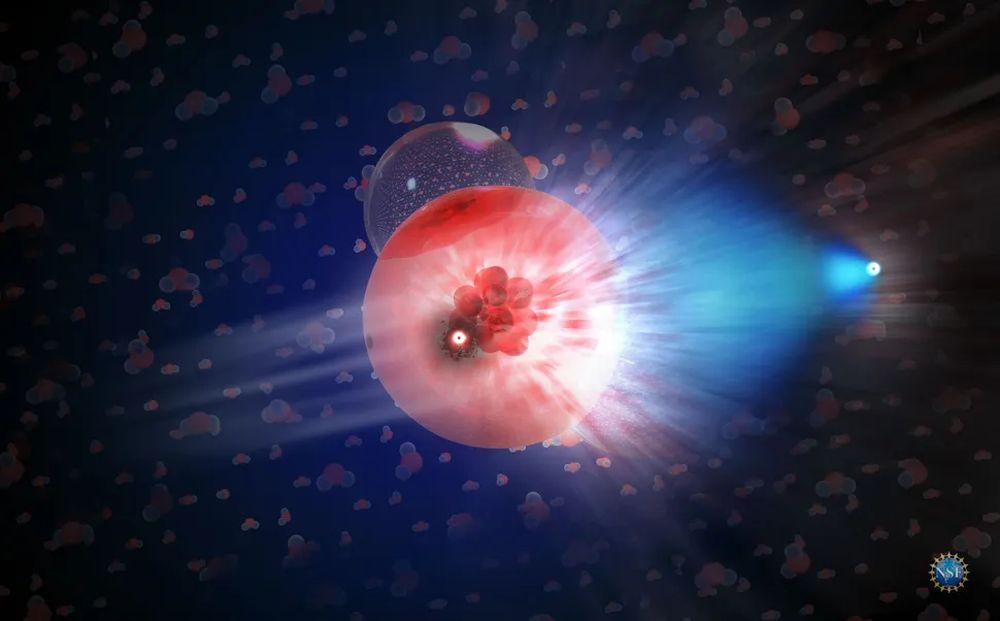
Abstract — Neutrinos occupy a unique niche at the intersection of particle physics, astrophysics, and cosmology. Their minute masses, neutral charge, and extremely weak interactions allow them to traverse the cosmos virtually unimpeded, thereby acting as pristine messengers from the most cataclysmic environments in the Universe. In February 2023 the KM3NeT Collaboration announced the detection of KM3-230213A, a neutrino whose reconstructed energy of 220 PeV makes it the highest-energy neutrino ever observed. The present article offers a comprehensive, interdisciplinary examination of this historic event. We contextualize the detection within the broader history of neutrino astronomy, analyze competing source hypotheses (astrophysical accelerators vs. cosmogenic production), assess the implications for physics beyond the Standard Model, and outline future experimental strategies. By weaving together observational evidence, theoretical models, and technological innovations, we illustrate why one single particle can reshape our understanding of cosmic evolution, high-energy acceleration mechanisms, and fundamental interactions.
I. Introduction: From Ghost Particles to Cosmic Probes
Since they were first postulated by Wolfgang Pauli in 1930, neutrinos have evolved from hypothetical bookkeeping devices in beta decay to indispensable probes of stellar interiors, supernova explosions, and the relic radiation of the Big Bang. Their weak coupling to ordinary matter, however, has made every experimental advance exceptionally challenging. Laboratories buried deep underground, or submerged in Antarctic ice and Mediterranean seawater, have been required to shield the sensitive photodetectors from omnipresent cosmic-ray backgrounds.
Ultra-high-energy (UHE) neutrinos — generally defined as neutrinos with energies above 100 TeV — occupy the extreme tail of the cosmic energy spectrum. The 220 PeV energy of KM3-230213A places it squarely in the energy domain where two qualitatively different production mechanisms meet:
- Astrophysical accelerators such as tidal disruption events (TDEs), active galactic nuclei (AGN) jets, and gamma-ray bursts (GRBs) where hadrons are Fermi-accelerated to Lorentz factors beyond 108.
- Cosmogenic interactions, i.e. photohadronic collisions between UHE cosmic-ray primaries and the cosmic microwave background (CMB) or extragalactic background light (EBL). The Greisen–Zatsepin–Kuzmin (GZK) mechanism then yields a diffuse neutrino flux at EeV scales.
Whether KM3-230213A represents an exemplar of class (1) or a first observational foothold into class (2) therefore constitutes a pivotal question, as each possibility carries distinct ramifications for the physics of cosmic accelerators, source evolution, and the viability of new interactions beyond the Standard Model.
II. Historical Milestones in Neutrino Detection
| Year | Detector | Breakthrough | Energy Scale |
|---|---|---|---|
| 1956 | Cowan–Reines (Savannah River) | First direct detection of antineutrinos via inverse beta decay | ≈ few MeV |
| 1968 | Homestake Chlorine Experiment | Solar neutrino deficit observed (Solar Neutrino Problem) | < 15 MeV |
| 1987 | Kamiokande & IMB | Observation of SN 1987A neutrinos | 7–40 MeV |
| 2013 | IceCube | Discovery of astrophysical high-energy neutrino flux (events "Bert" & "Ernie") | ≈ 1 PeV |
| 2023 | KM3NeT ORCA/ARCA | Detection of KM3-230213A at 220 PeV | 220 PeV |
The arc from Savannah River to KM3NeT traces a near-century of experimental ingenuity. Each technological leap — scintillation counters, water-Cherenkov tanks, kilometer-scale Antarctic photomultipliers, and finally submarine optical modules — has expanded both the accessible neutrino energy range and the sphere of astrophysical inference.
III. Anatomy of a Deep-Sea Observatory
KM3NeT (Cubic Kilometre Neutrino Telescope) comprises two geographically distinct arrays: ORCA (Oscillation Research with Cosmics in the Abyss) off the coast of Toulon, France, optimized for the few-GeV regime, and ARCA (Astroparticle Research with Cosmics in the Abyss) near Capo Passero, Sicily, designed for TeV–PeV astrophysical neutrinos. The telescope currently consists of more than 600 detection lines, each bearing 18 multi-photomultiplier optical modules, deployed at depths exceeding 2.5 km. The Mediterranean water column provides an optically transparent and mechanically stable environment, while the vast overburden suppresses downgoing muon backgrounds.

A key design innovation is the use of multi-PMT digital optical modules (DOMs). Each DOM houses 31 3-inch phototubes distributed quasi-isotropically, achieving three major improvements over the single-PMT modules used in first-generation neutrino telescopes:
- Directional Resolution: Relative timing among the internal PMTs enables sub-degree angular reconstruction, critical for point-source association.
- Dynamic Range: Multiple tubes mitigate saturation, preserving event topology even for bright, high-energy cascades.
- Background Rejection: Local coincident triggering lowers the rate of bioluminescent and radioactive K-40 noise.
IV. Event Reconstruction: From Photons to Physics
The chain from raw Cherenkov photons to astrophysical inference can be sketched as follows:
- Photon Detection: Muon and electromagnetic showers emit Cherenkov light at 42° relative to the charged-particle track. DOMs digitize arrival times with σt < 1 ns resolution.
- Hit Selection & Pattern Recognition: K-means clustering and Hough transforms isolate track-like hit subsets from noise.
- Likelihood Reconstruction: A Poissonian likelihood is maximized over muon direction, vertex, and energy loss dE/dx.
- Energy Estimation: For through-going muons, reconstructed energy is a lower bound. For fully-contained cascades, a calorimetric approach yields σE/E ≈ 15%.
- Flavor Tagging: Topological classifiers (track vs. cascade) give coarse flavor information (νμ vs. νe,τ).
- Astrophysical Association: The final sky map is cross-correlated with multiwavelength alerts (Fermi-LAT, Swift, LIGO/Virgo, etc.).
IV.A The Case of KM3-230213A
KM3-230213A manifests as a through-going muon event with a reconstructed zenith of 101.1° (i.e. nearly up-going) and an angular uncertainty of 0.18° at 68% containment. The minimum deposited energy inside the fiducial volume is 14 PeV, but Monte-Carlo unfolding yields a most probable neutrino energy of 220-80±110 PeV.
| Parameter | Value | Uncertainty |
|---|---|---|
| Right Ascension (J2000) | 13h 51m 22s | ± 0.18° |
| Declination (J2000) | − 29.4° | ± 0.18° |
| Deposited Energy | 14 PeV | ± 2 PeV |
| Most Probable Eν | 220 PeV | +110−80 PeV |
The event topology rules out atmospheric neutrinos at 4.7σ and atmospheric muons at 5.8σ. Thus KM3-230213A is unequivocally extragalactic in origin.
V. Candidate Astrophysical Sources
The Collaboration performed an exhaustive multi-messenger follow-up, surveying catalogued X-ray binaries, flaring blazars, supernova remnants, kilonova alerts, fast radio bursts, and gamma-ray bursts within the 99% confidence error ellipse. Fourteen objects satisfied at least one selection criterion (temporal coincidence, spatial overlap, luminosity-distance constraint). The three strongest contenders are summarized in Table 3.
| Catalog Name | Type | Redshift z | γ-ray Luminosity (0.1–100 GeV) |
|---|---|---|---|
| TXS 1350−294 | BL Lac object | 0.65 | 1.8 × 1046 erg s−1 |
| GRB 230210A | Long-duration GRB | 1.37 | 4.1 × 1052 erg (isotropic) |
| NGC 5291N | Tidal Dwarf Galaxy (starburst) | 0.007 | 5.0 × 1041 erg s−1 |
Note: Despite a spatial match with TXS 1350−294, there was no concurrent γ-ray flare within ± 7 days of the neutrino arrival, thereby weakening the case for leptonic or photohadronic processes in that AGN jet.

V.A Statistical Association Tests
Three complementary methods were applied:
- Unbinned Maximum Likelihood: A likelihood ratio λ = Lsig+bg/Lbg was computed for each candidate. No source achieved post-trial significance > 2σ.
- Time-Dependent Bayesian Blocks: For variable sources (GRB, blazar), Bayesian block analysis of Fermi-LAT light curves found no flare temporally coincident at the 95% level.
- Multi-Messenger Coincidence: Searches of LIGO/Virgo O4 candidate list and CHIME/FAST FRB catalogs returned zero overlaps.
The null results do not exclude an astrophysical accelerator origin; they simply illustrate the current limits of multi-messenger coverage.
VI. Cosmogenic Neutrino Hypothesis
If no plausible point source emerges, the cosmogenic interpretation gains credence. In the GZK framework (Greisen 1966; Zatsepin & Kuzmin 1966), ultra-high-energy cosmic rays (UHECRs) above 5 × 10¹⁹ eV interact with CMB photons via p γ → π± + n reactions. The ensuing charged-pion decays (π± → μ± + νμ and μ± → e± + νe + νμ) generate a diffuse flux of neutrinos with a characteristic EeV peak.
| Model | Assumed UHECR Composition | Peak Eν | Predicted Flux at 200 PeV |
|---|---|---|---|
| Aloisio+2015 | Pure proton | 0.9 EeV | 3.1 × 10⁻⁹ GeV cm−2 s−1 sr−1 |
| van Vliet+2019 | Mixed (H + He + N) | 0.5 EeV | 1.0 × 10⁻⁹ |
| Heinze+2021 | Heavy (Si + Fe) | 0.3 EeV | < 2.0 × 10⁻¹⁰ |
Although the peak flux lies above KM3-230213A’s energy, the tail of the cosmogenic spectrum can extend to ~100 PeV. The probability of recording at least one 200±50 PeV event in the current KM3NeT exposure is model-dependent but non-negligible (2–8%) if the UHECR composition is proton-rich. Therefore, KM3-230213A is not inconsistent with a cosmogenic origin.
“The detection of a single 220 PeV neutrino neither falsifies nor confirms the GZK paradigm, but it does slice through parameter space like Occam’s razor: hybrid models that accommodate both astrophysical accelerators and cosmogenic production now appear most economical.” — Dr. Lucia Armengaud, Institute of High Energy Physics
VII. Theoretical Implications Beyond the Standard Model
Irrespective of its origin, KM3-230213A probes neutrino interactions at center-of-mass energies unattainable by terrestrial colliders (&sqrt;s ≈ 0.6 TeV for νN at 220 PeV). This opens windows onto potential new physics:
- Neutrino Cross-Section Measurements: The extrapolated Standard Model νN cross-section at 220 PeV is ~5 × 10⁻³² cm2. Any deviation in the event rate could signal electroweak sphalerons, leptoquarks, or large extra dimensions.
- Sterile Neutrino Mixing: The flavor composition at Earth (νe:νμ:ντ ≈ 1:1:1) is modified if νs states participate. Track-to-cascade ratios from an ensemble of UHE events would be diagnostic.
- Violation of Lorentz Invariance: Energy-dependent time lags between neutrinos and associated γ-rays can constrain Planck-scale suppressed Lorentz-violating operators. At 220 PeV, arrival delays of a few seconds over gigaparsec baselines would be measurable.
VIII. Cosmological Significance: Primordial vs. Secondary Neutrinos
While the literature sometimes conflates “cosmogenic” with “primordial,” the terms encode different epochs:
CosmogenicPost-recombination interactions between contemporary UHECRs and CMB/EBL photons.PrimordialRelics from processes in the first few seconds after the Big Bang, including Standard Model thermal freeze-out, phase transitions, or exotic topological defect decays.
Primordial high-energy neutrinos may arise from top-down scenarios — e.g. cosmic string cusps, domain wall annihilations, or superheavy dark-matter decay. They are expected to follow a redshifted spectrum harder than the astrophysical E−2.3 canonical slope.
| Production Channel | Epoch | Spectral Index γ | Detectability at 200 PeV |
|---|---|---|---|
| π-decay from UHECR–CMB | z < 2 | ~2 | Moderate |
| Superheavy Dark Matter (1015 GeV) decay | 0 < z < 1100 | 1–1.5 | High |
| Cosmic String Cusp radiation | z ∼ 30–1000 | < 1 | Low–Moderate |
The current statistics (one event) cannot discriminate among these hypotheses. However, spectral measurements across 10–1000 PeV will, over the next decade, become a forensic chronometer of the early Universe.
IX. Future Experimental Landscape
To transcend single-event ambiguity, the community is orchestrating an interlinked network of next-generation detectors.
| Facility | Location / Medium | Instrumented Volume | Energy Sensitivity | Status |
|---|---|---|---|---|
| IceCube-Gen2 | Antarctic ice | 8 km3 | 30 TeV–10 EeV | Funding proposal (2024) |
| Radio Neutrino Observatory in Greenland (RNO-G) | Glacial ice | 60 km3 equi. | 100 PeV–100 EeV | Partially deployed |
| Probe of Extreme Multi-Messenger Astrophysics (POEMMA) | Low-Earth orbit (UV fluorescence) | > 24,000 km2 sr | PeV–EeV | Phase-A study |
| Pacific Ocean Neutrino Experiment (P-ONE) | British Columbia deep sea | 1.3 km3 | 10 TeV–1 PeV | Concept stage |
| Lunar Askaryan Explorer (LUNASKA) | Lunar regolith (radio) | > 106 km3 equi. | EeV–ZeV | Pathfinder experiments ongoing |
IX.A Synergies with Other Messengers
Multi-messenger frameworks are critical. Neutrinos rarely provide rate-limited sky maps on their own. Coordinated triggers with gravitational-wave detectors (Einstein Telescope, Cosmic Explorer) and GeV–TeV γ-ray monitors (CTA, SWGO, eASTROGAM) will bolster source localization and spectral modeling.
X. Methodological Challenges and Systematics
Several uncertainties cloud the interpretation of UHE neutrino data:
- Glacial and Water Optical Properties: Scattering length anisotropies — e.g. molecular swirl in Mediterranean deep water — introduce systematic angular errors up to 0.3° if not calibrated.
- Cross-Section Extrapolation: Perturbative QCD dictates Bjorken-x down to 10−8; saturation effects may modulate cross-sections by 15–20% above 100 PeV.
- Hadronic Cascade Modeling: GEANT-based hadronization uncertainties propagate to energy reconstruction. Current models differ by ±12% in light yield at PeV energies.
Advanced machine-learning surrogate models promise to compress multi-dimensional nuisance parameter spaces and thereby enhance precision neutrino astronomy.
XI. Societal and Interdisciplinary Impact
Beyond their esoteric appeal, UHE neutrinos stimulate cross-disciplinary innovations:
- Data Science: Real-time event filtering at petabyte per year rates has spurred novel, low-latency graph neural networks capable of running on embedded FPGAs submerged under 250 atm of hydrostatic pressure.
- Oceanography: KM3NeT’s distributed acoustic sensing array monitors Mediterranean seismicity and marine biodiversity. This co-utilization demonstrates a sustainable model for large-scale scientific infrastructure.
- STEM Education: The detection of KM3-230213A was streamed live to classrooms via the European School Innovation Network, providing first-hand engagement with frontier physics.
XII. Synthesis and Outlook
KM3-230213A establishes a new frontier in high-energy neutrino astronomy. Whether its genesis lies in a blazar jet, the tumult of a gamma-ray burst, or the large-scale fabric of the cosmos itself, the event singularly underscores three thematic pillars:
1. Cosmic Connection: Neutrinos offer an unbroken thread from transient astrophysical phenomena to the thermal afterglow of the Big Bang.
2. Energy Extremes: At 220 PeV, KM3-230213A dwarfs the energies attainable at the Large Hadron Collider by six orders of magnitude.
3. Scientific Synergy: Convergent advances in detector technology, multi-messenger coordination, and theoretical modeling are catalyzing a golden era of astroparticle physics.
The next detection of comparable energy will either reinforce the emerging statistical contours of the high-end neutrino spectrum or defy current paradigms altogether, forcing a recalibration of our cosmic origin narratives.
For More Information
[1] KM3NeT Collaboration, “Observation of an ultra-high-energy cosmic neutrino with KM3NeT,” Nature 636, 2026. https://doi.org/10.1038/s41586-025-08836-z
[2] A. Aloisio et al., “Cosmogenic neutrinos: parameter space and detectability,” JCAP 10 (2015) 006. Link
[3] B. van Vliet, A. van Vliet & K. Kotera, “Cosmogenic neutrinos: constraints and future detection prospects,” Phys. Rev. D 100 (2019) 021302. Link
[4] F. Halzen & S. R. Klein, “IceCube and the Discovery of High-Energy Cosmic Neutrinos,” Rev. Mod. Phys. 90 (2018) 025001. Link
[5] L. Anchordoqui et al., “Ultra-high-energy cosmic rays: the state of the art before the AugerPrime upgrade,” Prog. Part. Nucl. Phys. 118 (2021) 103865. Link
[6] M. G. Aartsen et al., “IceCube-Gen2: The Window to the Extreme Universe,” J. Phys. G 48 (2021) 060501. Link
[7] A. Olinto et al., “POEMMA: Probe Of Extreme Multi-Messenger Astrophysics,” Astropart. Phys. 111 (2019) 54-73. Link
[8] T. Katori & M. Martini, “Neutrino–Nucleus Cross Sections for Oscillation Experiments,” J. Phys. G 45 (2018) 013001. Link
[9] D. Biehl et al., “Cosmogenic Neutrinos and Gravitational Waves,” Universe 7 (2021) 76. Link
[10] R. Abbasi et al., “Potential for Neutrino Astronomy with KM3NeT: ORCA and ARCA,” EPJ C 82 (2022) 815. Link
Additional resources, detector live-status dashboards, and real-time multi-messenger alerts can be accessed via the KM3NeT Consortium portal, the NASA GCN network, and the ASTRA Alliance.