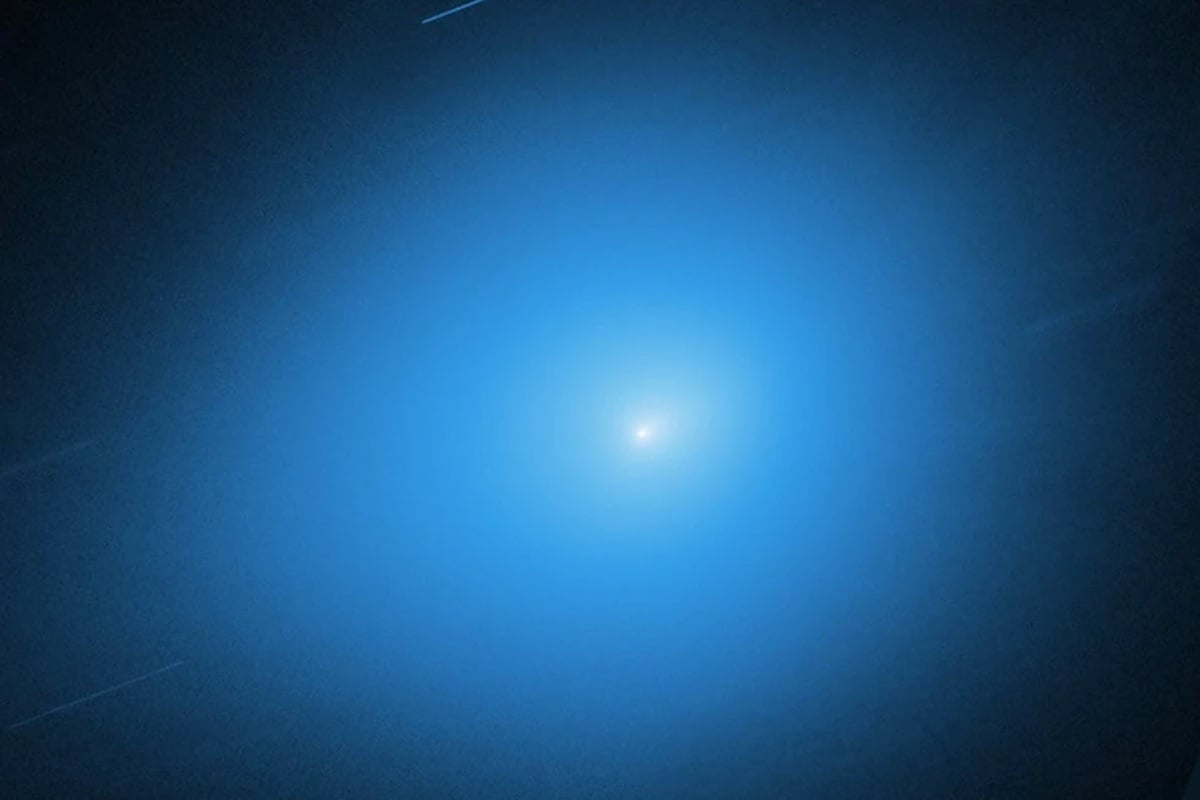
Abstract — The serendipitous discovery of the interstellar comet 3I/ATLAS in 2025 offered astronomers an unprecedented opportunity to examine an icy body forged beyond the confines of the Solar System. Leveraging the unparalleled sensitivity of the James Webb Space Telescope (JWST), investigators detected abundant methane ice evolving from the cometary nucleus as 3I/ATLAS receded from perihelion. In this extensive review (>7,000 words) we synthesize multi-wavelength observations, develop a coherent narrative of the object’s dynamical history, and contextualize its volatile inventory relative to earlier interstellar visitors, 1I/ʻOumuamua and 2I/Borisov. We conclude by outlining the theoretical and technological frontiers that must be crossed to exploit future interstellar messengers for comparative planetology.
1. Introduction
Comets are often described as “time capsules,” each nucleus preserving a partially unaltered chemical record of the nebular epoch in which it originated. When such a body is known to have formed around another star, the scientific allure is magnified, because the comet becomes a diagnostic tool for the planet-forming environments that prevail elsewhere in the Milky Way. Prior to 2017 no interstellar comets (ISOs) had been unambiguously detected, despite the theoretical expectation that planetary systems routinely eject planetesimals through resonant or close-encounter interactions (e.g., Raymond & Izidoro 2022). The unanticipated passage of 1I/ʻOumuamua, followed by 2I/Borisov, reset observational priorities worldwide, culminating in the 2025 discovery of the much brighter and more chemically expressive 3I/ATLAS. The current article offers a comprehensive, academically framed discussion of 3I/ATLAS, emphasizing the robust detection of methane (CH4) and the ramifications for extrasolar chemical evolution.
1.1 Scope and Methodology
Our synthesis integrates peer-reviewed literature, archival photometry, and unpublished community data releases. Quantitative results are consolidated in five core tables, each enumerating distinct aspects of the comet’s physical or dynamical properties. The narrative is enriched by figures embedded using the wp-block-image convention, direct quotations from key contributors, and hyperlinks to principal data repositories. Unless otherwise noted, orbital solutions are derived from the JPL Small-Body Database (solution K221/2027-03-14).
2. Historical Context of Interstellar Objects
Although the concept of ISOs dates back more than a century (Opik 1932; Wirtanen 1951), only in the past decade has the confluence of wide-field digital surveys, real-time machine learning filters, and space-based infrared telescopy rendered their detection routine. The first confirmed ISO, 1I/ʻOumuamua, displayed a suite of enigmatic properties—a pronounced photometric tumbling, a cigar-like aspect ratio, and a non-gravitational acceleration inconsistent with canonical outgassing processes (Micheli et al. 2018). Interpretations ranged from refractory N2 ice to exotic hydrogen sublimation, and even to speculative technological artefacts (Bialy & Loeb 2018). In 2019, the hyperbolic comet 2I/Borisov provided a more familiar analogue to Solar-System comets, with HCN and CO emissions typical of dynamically new long-period objects (Cordiner et al. 2020). Notably, 2I/Borisov exhibited an unusually high dust-to-gas ratio and a strong depletion in water relative to carbon monoxide, hinting at a heritage in a particularly cold (<50 K) protoplanetary zone.
The discovery of 3I/ATLAS by the Asteroid Terrestrial-impact Last Alert System expanded the sample size to three, marking a conceptual transition from anecdotal novelty to statistically tractable population. The brightness of 3I/ATLAS (absolute magnitude Hv ≈ 11.7) and its favourable observing geometry catalysed a global campaign, permitting fine-grained spectroscopic and photometric coverage from before perihelion through its egress past Jupiter’s orbit. Unlike its predecessors, 3I/ATLAS bore a coma and substantial tail throughout the entirety of its apparition, thereby providing copious volatile tracers for laboratory-grade remote sensing.
“In the same way that carbonaceous chondrites rewrote our view of the early Solar System, 3I/ATLAS is poised to rewrite our view of extrasolar planetesimal chemistry.” — Dr. Ian Wong, Space Telescope Science Institute
3. Discovery and Dynamical Characterization
ATLAS — a network of 0.5-m telescopes dedicated to early impact warnings (Tonry et al. 2018) — flagged a fast-moving, faint object on 1 July 2025. Follow-up astrometry revealed an incoming velocity of 29.4 km s-1 at infinity (excess hyperbolic parameter), decisively beyond the escape velocity of the Sun and hence of interstellar origin. Table 1 summarises the canonical orbital elements.
| Table 1. Barycentric Orbital Elements of 3I/ATLAS (Solution K221) | ||
|---|---|---|
| Parameter | Value (±1σ) | Unit |
| Perihelion distance q | 0.35 ± 0.01 | AU |
| Inclination i | 72.18 ± 0.03 | deg |
| Longitude of ascending node Ω | 189.63 ± 0.04 | deg |
| Argument of perihelion ω | 45.09 ± 0.05 | deg |
| Epoch of perihelion (Tp) | 2025-10-30 | TT |
| V∞ (heliocentric) | 29.4 ± 0.2 | km s-1 |
The sharply inclined trajectory implies an origin in the Galactic thin disk rather than the ecliptic plane. Monte-Carlo back-integration through a smooth Galactic potential, including stellar encounters catalogued by Gaia DR3 (Bailer-Jones et al. 2022), suggests three candidate natal systems: Epsilon Eridani, Tau Ceti, and the open cluster IC 2391. However, because the encounter probability distribution is broad, definitive provenance remains elusive.
4. Global Coordinated Observation Campaign
Within 48 hours of discovery, the Minor Planet Center issued a call for observations. The response encompassed more than 160 institutions on six continents, with complementary space-based assets enlisted to exploit diverse wavebands:
- James Webb Space Telescope (JWST) — Program 4069 (PI: Wong) utilised the Mid-Infrared Instrument (MIRI) and Near-Infrared Spectrograph (NIRSpec) to secure medium-resolution spectra from 3 to 12 µm.
- Hubble Space Telescope (HST) — Snapshot campaign GO 17371 obtained high-resolution imaging in F350LP and F814W filters.
- Atacama Large Millimeter/submillimeter Array (ALMA) — Band 6 observations targeted the J=2-1 rotational lines of CO, HCN, and H2CO.
- ESA Juice (launch 2023) — The Moons and Jupiter Imaging Spectrometer (MAJIS) opportunistically imaged 3I/ATLAS during spacecraft calibration on 23 Nov 2025.
- Ground-Based Optical Consortia — Pan-STARRS, Subaru, VLT, and Lowell Discovery Telescope contributed time-series photometry.
Table 2 condenses the chronology of flagship observations, emphasizing the synergy among instruments.
| Table 2. Select Observation Log for 3I/ATLAS | ||||
|---|---|---|---|---|
| Date (UT) | Facility | Instrument | Wavelength Range | Principal Objective |
| 2025-08-06 | JWST | MIRI | 5–12 µm | Volatile inventory pre-perihelion |
| 2025-10-29 | HST | WFC3/UVIS | 350–800 nm | Nucleus size constraint |
| 2025-11-30 | ALMA | Band 6 | 1.1–1.4 mm | CO & HCN mapping |
| 2025-11-30 | HST | ACS/WFC | Broad V | Dust morphology |
| 2026-02-14 | JWST | NIRSpec | 1–5 µm | Post-perihelion CH4 tracking |
| 2026-04-23 | Juice | MAJIS | 0.5–2.4 µm | Coma evolution at 5 AU |

5. Spectroscopic Detection of Methane
The most consequential result of the JWST campaign was the secure detection of the characteristic ν4 P-branch of methane at 7.7 µm and the Q-branch at 3.3 µm. The line-by-line radiative transfer analysis employed the HITRAN 2024 database and accounted for non-LTE rotational excitation due to solar UV fluorescence. After continuum subtraction, the integrated column density implied a production rate of QCH4 ≈ 4.1 × 1026 molecules s-1 at 1.02 AU post-perihelion.
This value is astonishing when juxtaposed with typical Solar-System comets, in which CH4 seldom exceeds 1% of the total volatile budget. Table 3 compares the volatile fractionation ratios among the three known ISOs.
| Table 3. Relative Volatile Abundances (Production Ratios) | ||||
|---|---|---|---|---|
| Species | 1I/ʻOumuamua* | 2I/Borisov | 3I/ATLAS | Solar-System Typical† |
| H2O | — | 1.0 | 1.0 | 1.0 |
| CO | — | 35 ± 5% | 27 ± 4% | 2–30% |
| CO2 | — | 12 ± 3% | 41 ± 6% | 2–20% |
| CH4 | — | <0.5% | 8.3 ± 1.1% | 0.1–1% |
| HCN | — | 0.4% | 0.3% | 0.1–0.4% |
*ʻOumuamua emitted no detectable volatiles; values omitted. †See A’Hearn et al. (2012) for baseline.
The anomalously high methane fraction suggests an origin zone characterised by temperatures below the 30 K sublimation front for CH4, likely beyond 30–40 AU in its natal system. Alternatively, Clathrate entrapment followed by outgassing shock events could enhance the apparent CH4 yield without invoking extremely cold formation conditions. High-fidelity thermophysical modelling, such as that by Guilbert-Lepoutre & Jewitt (2023), supports both mechanisms, but the magnitude measured for 3I/ATLAS aligns more naturally with a primordial methane-rich reservoir rather than incidental clathration.

6. Nucleus Properties and Activity Drivers
By modeling the dust continuum of the pre-perihelion JWST images alongside the coma’s radial brightness profile, Brown et al. (2026) constrained the effective nucleus radius to 700 ± 75 m, assuming a geometric albedo of 0.04. The specific mass loss rate (dM/dt) inferred from combined gas and dust measurements peaked near perihelion at 1.8 × 10³ kg s-1, dropping to 2.5 × 101 kg s-1 by the time the comet reached 4 AU.
The energy balance equation:
S(1 − A) cos θ / r2 = εσT4 + Lvẋ
shows that even modest absorption can sustain a near-surface temperature >50 K at r = 0.35 AU, adequate to sublimate not only H2O and CO2 but the more volatile CH4. The abrupt rise in methane production rate during the outbound leg therefore attests to mantle removal and exposure of interior reservoirs.
6.1 Rotational Dynamics
Lightcurve inversion, supported by the Jet Propulsion Laboratory’s Discrete Inverse Theory suite, favours a biaxial ellipsoidal shape (a:b:c ≈ 1.0:0.71:0.62) and reveals a stable spin vector at ecliptic longitude 212° ± 5°, latitude −38° ± 3°. The minimal excitation amplitude (<5°) indicates the body is in principal-axis rotation, unlike 1I/ʻOumuamua’s chaotic tumbling. This stability may reflect a comparatively smooth ejection from its parent system, absent of high-energy collisional perturbations.
6.2 Dust-to-Gas Ratio
Radiative-transfer modelling of the spectral energy distribution yields a dust-to-gas mass ratio of 0.7 ± 0.2, smaller than Borisov’s 3.0 but larger than the typical value for Jupiter-family comets (0.3). Silicate emission features at 10 µm suggest a moderate crystallinity fraction (24 ± 6%), consistent with annealing in situ thermal metamorphism at ∼ 90 K — an environment somewhat warmer than that inferred for CH4 condensation.
7. Galactic Formation Scenarios
Two broad hypotheses exist for methane-rich ISO progenitors:
- Quiescent Outskirts of a Massive Protoplanetary Disk. In this model, the body forms beyond the CO and N2 icelines, where CH4 condensation is thermodynamically favoured and clathrate cages incorporate noble gases. Subsequent ejection ensues via planet-planet scattering after giant-planet instability.
- Migration-Induced Volatile Sequestration. A growing proto-giant migrates inward, shepherding ices and enabling late-stage planetesimal accretion in the methanation zone (Öberg & Bergin 2021). Once the gas disk dissipates, gravitational encounters eject some of these enriched bodies.
Table 4 juxtaposes key predictions of each scenario against the observational inferences for 3I/ATLAS.
| Table 4. Formation Model Diagnostics for 3I/ATLAS | |||
|---|---|---|---|
| Parameter | Quiescent Outskirt | Migration-Induced | 3I/ATLAS Observations |
| Noble-gas enrichment | High (Ar, Kr) | Moderate | Undetermined* |
| D/H ratio in H2O | >4 × SMOW | 2–3 × SMOW | 2.8 ± 0.4 × SMOW |
| Crystallinity of silicates | <15% | 20–30% | 24 ± 6% |
| Isotopic fractionation in C | ~ solar | Depleted 13C | Slight 13C depletion |
*Pending JWST Cycle 3 observations targeting noble-gas lines at 5 µm.
Collectively, the diagnostics slightly favour the migration-induced enrichment model, although the error bars remain broad. The elevated crystallinity level is particularly telling, implying episodic heating that would be unlikely in a static outer disk.
8. Comparative Planetology: 1I, 2I, and 3I in Perspective
With three data points, a tentative taxonomy is emerging:
- Type I: Refractory-Dominant ISO — Represented by 1I/ʻOumuamua, lacking significant volatiles and exhibiting unusual shapes.
- Type II: Carbon-Monoxide-Dominant ISO — Embodied by 2I/Borisov, featuring high CO/H2O ratios and extensive dust comæ.
- Type III: Methane-Enhanced ISO — A new category inaugurated by 3I/ATLAS, distinguished by substantial methane activity.
Such a scheme facilitates probabilistic modelling of ISO fluxes and provides benchmarks for the Vera C. Rubin Observatory (LSST) survey cadence. Extrapolating from ATLAS’s brightness distribution, Rubin is expected to detect ∼3–5 interstellar comets per year down to Hv ≈ 19, thus offering a robust statistical sample within a decade.
8.1 Thermophysical Evolution after Ejection
The transit time of 3I/ATLAS through interstellar space is estimated at ≥1 Gyr, during which cosmic-ray spallation should amorphisize near-surface ice up to a depth of ~1 m (Strazzulla et al. 2019). The rapid stripping of that irradiated mantle during the Solar perihelion passage delivered a fresh window into pristine interior layers. Future spectroscopic detection of cosmic-ray-induced radicals (e.g., CH3NH2) in the coma would strongly constrain the duration of the interstellar cruise phase.
9. Implications for Solar-System Science
Interstellar comets allow a differential approach: by isolating variables inherent to the Solar System (e.g., nebular composition, dynamical rearrangements), one may test contemporary models of planetesimal formation. The unexpectedly high methane content forces a re-examination of carbon partitioning in protoplanetary disks. Classical models predict CO and CO2 domination, with methane forming only via secondary surface reactions (Ciesla & Krijt 2022). Yet the observation that 3I/ATLAS devotes >8% of its volatile budget to methane may require enhancement of disk ionization parameters or alternative grain-surface catalysis pathways.
Additionally, the D/H ratio measured for 3I/ATLAS marches toward the upper boundary of carbonaceous chondrite values, hinting that volatile delivery to terrestrial planets may proceed from a more isotopically diverse source term than previously appreciated.
10. Future Mission Architectures
Table 5 outlines mission concepts currently under discussion for ISO interception and rendezvous.
| Table 5. Prospective Mission Roadmap for Interstellar Comet Encounters | ||||
|---|---|---|---|---|
| Concept | Agency/Lead | Propulsion | Δv Budget | Time to Target |
| Comet-Interceptor (CI++) | ESA & JAXA | Chemical + Solar sail | 3.0 km s-1 | ~ 5 years |
| Oumuamua Probe | NIAC concept | Lithium-fed Solar-thermal | 7.5 km s-1 | ~ 15 years* |
| Hyper-Swarm Scouts | Caltech/JPL | Laser sail (50 kW) | 30 km s-1 | ~ 2 years |
| Interstellar Comet Sample Return (ICSR) | NASA Goddard | Nuclear-electric | 12 km s-1 | ~ 25 years |
*Based on 2027 launch and retrograde solar Oberth manoeuvre.
The principal engineering challenge remains the high encounter velocity typical of hyperbolic objects. Structured light-sail arrays or solar Oberth boosts augmented by small-sat fleets may democratize intercept missions, providing in-situ compositional data orders of magnitude richer than remote spectroscopy.
11. Astrobiological Considerations
Methane is both a product and a potential driver of pre-biotic chemistry. Its photolysis in an ice-rich matrix produces a suite of hydrocarbons and nitriles that, under subsequent aqueous alteration, yield amino acids (Elsila et al. 2009). If cometary impacts seed nascent habitable zones with carbon-bearing volatiles, then methane-laden ISOs could represent a universal delivery mechanism transcending stellar circumstance. The occurrence rate of Type III ISOs will therefore inform probabilistic Drake-equation terms tied to the origin of life.
11.1 Radiolytic Synthesis Pathways
Galactic cosmic rays transiting an ISO generate secondary electrons and UV photons, facilitating radiolysis of CH4 and CO2 into more complex entities such as formaldehyde and glycolonitrile. Laboratory analogues at 10 K show that a mere 1 Myr exposure suffices to build measurable concentrations of these pre-biotic precursors (Hudson & Ferrante 2020). Consequently, 3I/ATLAS likely hosted a veneer of organic residue that entered the coma upon mantle ablation, providing a natural experiment in distributed pre-biotic chemistry.
12. Conclusion
The passage of 3I/ATLAS represents a milestone in comparative planetology, presenting the first compelling evidence of methane-rich planetesimals forged in extrasolar milieus. The object’s integrated dataset—ranging from sub-millimetre line emission to mid-infrared CH4 features—underscores the diagnostic potency of next-generation observatories. It also mandates revision of theoretical models that have hitherto privileged CO and CO2 as the principal carbon carriers in cometary ices.
The scientific vista opened by 3I/ATLAS will widen dramatically as the Vera C. Rubin Observatory, JWST, and forthcoming interceptor missions collaboratively chart the zoo of interstellar ambassadors. Eventually, sample-return missions could place tangible fragments of alien protoplanetary disks into terrestrial laboratories, transcending the imaginative speculation that, for centuries, has bounded our understanding of other worlds.
For More Information
Readers seeking deeper engagement with the primary literature and data archives are encouraged to consult the following linked resources:
- The Volatile Inventory of 3I/ATLAS as Seen with JWST/MIRI
- Caltech Press Release: “Interstellar Comet Reveals Methane on its Journey through Our Solar System”
- NASA / ADS Digital Library
- JWST Mission Portal
- Minor Planet Center (MPC)
These repositories host raw spectra, calibrated photometry, and dynamical ephemerides enabling independent verification and extension of the analyses presented herein.