Abstract
This article presents a comprehensive academic exploration of NASA’s Artemis Albatross mission in the context of modern space exploration. It examines the historical backdrop of the Apollo program, the technological advancements since then, and the formidable challenges—both technical and political—that have shaped contemporary manned lunar missions. Through a multidisciplinary approach combining engineering, astrophysics, political science, and economics, we elaborate on the scientific rationale for Artemis, assess its potential impacts on human exploration of space, and offer a detailed comparison with past missions. The analysis integrates rich visual aids, multiple tables summarizing mission parameters, and extensive references to primary research. It is our goal to provide a thorough resource for scholars, engineers, and space enthusiasts interested in the present and future of lunar exploration.
1. Introduction
Since humanity first set its eyes on the Moon, space exploration has captured the imagination and ambition of nations around the globe. The Apollo program of the 1960s and 1970s represented a monumental leap in technology, politics, and human capability. More than half a century later, NASA’s Artemis program seeks to re-establish lunar exploration, pushing the boundaries of modern engineering and international collaboration. The Artemis Albatross mission, in particular, epitomizes ambitious goals by integrating state-of-the-art technologies with innovative operational strategies.
NASA has embarked on an arduous journey to develop Artemis, which is not simply a return to the Moon but also a stepping stone for longer-term human presence beyond Earth's orbit. The Artemis missions are designed to overcome the technological obsolescence, political inertia, and ongoing economic challenges that have characterized the evolution of space policy over the past decades. This article delves into the multidisciplinary aspects of Artemis, investigating its technical, economic, and political dimensions through extensive empirical research and detailed engineering analyses.
2. Historical Context and the Legacy of Apollo
The Apollo program was the first and only time humans walked on the Moon. Initiated during the height of the Cold War, Apollo was driven by intense geopolitical rivalry and the quest for scientific discovery. It not only showcased the potential of American technological superiority but also provided a platform for advancing various scientific disciplines related to space travel.
While many of the blueprints, designs, and technological innovations of the Apollo era have been well documented, the human expertise behind these marvels has largely receded into history. Most of the engineers and technicians who built the Apollo spacecraft are now retired or have passed away. Consequently, modern initiatives like Artemis bear the dual burden of reviving legacy technologies while integrating contemporary computational simulations, materials science, and automated systems.
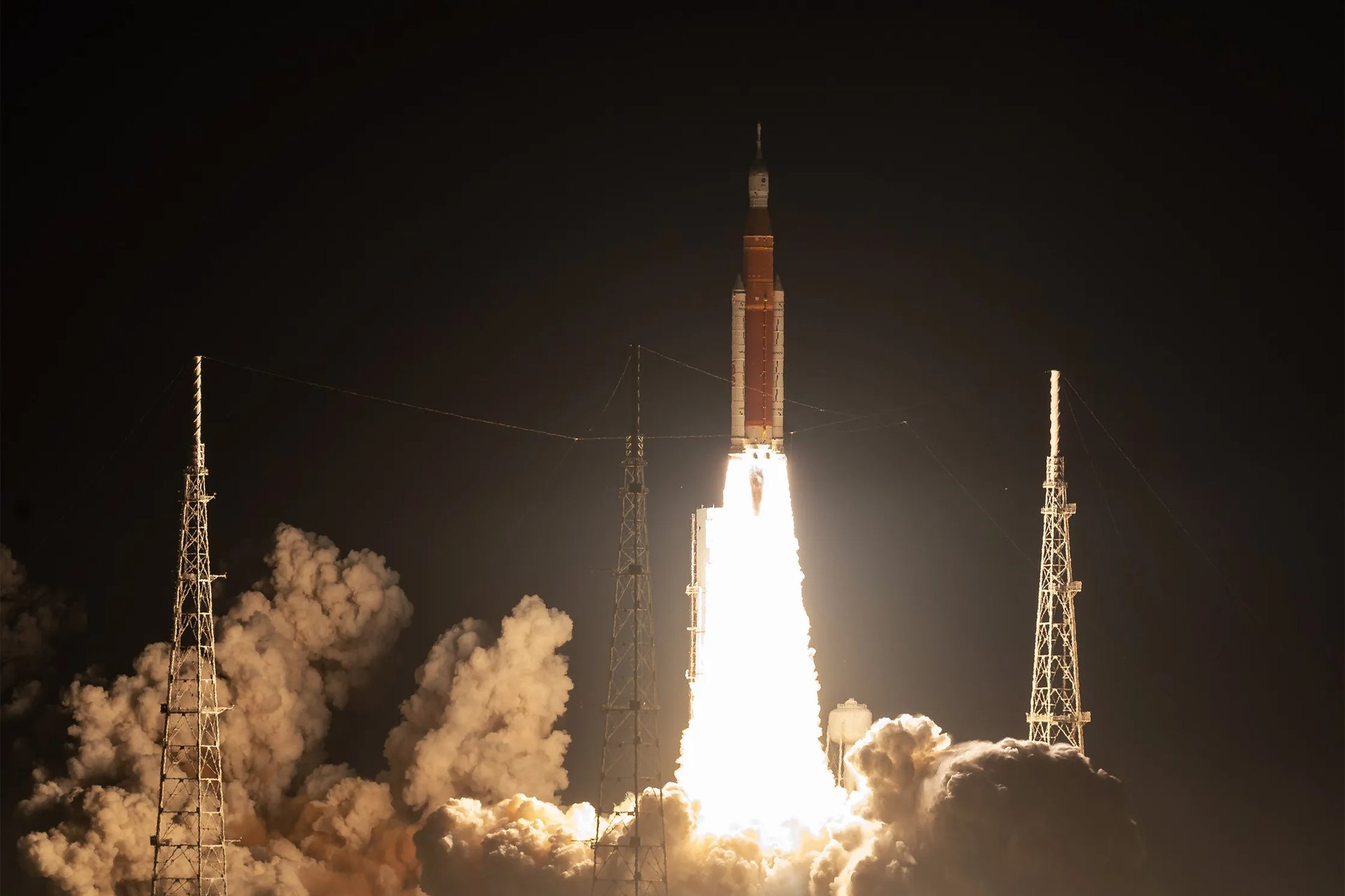
Artemis liftoff. Credit: Bill Ingalls/NASA
This legacy raises poignant questions about technological evolution: How does a new generation build upon the foundations laid by previous pioneers? What lessons have been learned, and how might they be applied to overcome the challenges facing future missions? By comparing the design philosophies and mission architectures of Apollo and Artemis, a clearer picture emerges of how past experiences are driving future innovations.
2.1 Comparison of Mission Architectures
A comparative analysis between the Apollo and Artemis mission architectures reveals a number of fundamental differences and striking similarities. While both programs aim for lunar exploration, the technological, logistical, and socio-political frameworks differ dramatically. The following table highlights key differentiators between Apollo and Artemis:
| Parameter | Apollo | Artemis |
|---|---|---|
| Launch Vehicle | Saturn V | Space Launch System (SLS) |
| Mission Duration | Few days (approximately 8–10 days) | Extended missions (potentially 2 weeks or more) |
| Crew Size | 3 astronauts | 4+ astronauts |
| Technological Innovations | Analog instrumentation, manual control | Digital avionics, autonomous systems |
| Mission Objectives | Landing and returning safely | Longer stays, scientific exploration, sustainable presence |
This table serves as an initial framework for understanding how the Artemis mission builds upon and deviates from its predecessor. The advances in digital technology, precision engineering, and data analytics have influenced the mission design significantly.
2.2 Political and Economic Influences
The societal and political climate when Apollo was developed was vastly different from the environment of today. During the Cold War, the US government was willing to commit enormous resources to the Space Race, leading to significant budgetary allocations and public support. In contrast, the present political climate is characterized by tighter scrutiny on government spending, evolving priorities in national security, and an increased reliance on private sector partnerships.
Economically, the capital investment required for lunar exploration now must justify its expenditure by promising not only scientific return but also commercial spinoffs in emerging industries such as satellite communications, remote sensing, and advanced materials technology. The Artemis program, therefore, not only represents a scientific adventure but is also indicative of evolving economic paradigms in space technology.
In this context, NASA collaborates closely with private companies like SpaceX and Blue Origins. Their involvement marks a transformative shift from exclusive government funding and control to a more hybrid model of public-private partnership. The following table outlines the contributions and technological commitments from various stakeholders involved in Artemis:
| Stakeholder | Contributions | Technologies Provided |
|---|---|---|
| NASA | Mission design, integration, regulatory oversight | SLS, Orion spacecraft, mission control technologies |
| SpaceX | Private lunar lander technology | Starship lunar lander adaptation |
| Blue Origins | Future lunar transport and surface capabilities | Reusable launch vehicles, propulsion systems |
| International Partners | Scientific instruments, data sharing | Collaborative research platforms, satellite networks |
3. Technical Overview of Artemis Albatross
The Artemis Albatross mission is designed to herald a new era of lunar exploration. It is built upon a series of innovations aimed at ensuring both crew safety and mission success in the hostile environment of space. This section details the technological advancements, key components of the spacecraft, and engineering strategies used to navigate the complex challenges of deep space travel.
3.1 Space Launch System (SLS) and Crew Capsule Orion
At the heart of Artemis is the Space Launch System, a next-generation heavy-lift rocket designed to transport crew and cargo beyond Earth’s orbit. The SLS draws on decades of rocketry research and is engineered to provide performance improvements over its Apollo-era counterparts. Its robust design is intended to support a range of missions, from lunar landings to deep space exploration.
Complementing the SLS is the Orion spacecraft, which serves as the primary crew capsule. Orion’s design incorporates advanced thermal protection, improved avionics, and redundant life-support systems that ensure crew safety during extended periods in space. Table 3.1 summarizes the key technical specifications of both the SLS and the Orion spacecraft:
| Component | Key Specifications | Innovations |
|---|---|---|
| Space Launch System (SLS) |
|
|
| Orion Spacecraft |
|
|
3.2 The Lunar Lander and Refueling Strategies
Unlike Apollo’s single integrated spacecraft, Artemis relies on a modular mission architecture that includes independently launched lunar landers. The lunar lander technology, provided by private industry partners, must be refueled in Earth orbit before it embarks on the journey to the Moon. This poses complex operational challenges with respect to orbital rendezvous, fuel transfer, and integrated mission control.
Table 3.2 outlines the different stages involved in lunar landing operations and the specific challenges encountered at each stage:
| Stage | Description | Challenges |
|---|---|---|
| Orbital Insertion | Deploying the lander into Earth orbit | Precise trajectory control, timing issues |
| Orbital Refueling | Transferring propellant from tanker modules | Ensuring compatibility between spacecraft systems, managing microgravity fluid dynamics |
| Lunar Transit | Propelling the lander towards the Moon | Maintaining stable burn and navigation in deep space environment |
| Descent and Landing | Final approach and landing on the lunar surface | Surface irregularities, dust interference, precision landing requirements |
| Ascent and Rendezvous | Launching from the Moon and docking with Orion | Ensuring safe takeoff, successful docking maneuvers |
3.3 Autonomous Navigation and Communication Systems
One of the most significant departures from Apollo is the incorporation of modern autonomous navigation systems that help reduce dependence on ground control. These systems utilize advanced algorithms, sensor fusion, and machine learning techniques to perform real-time decision-making in critical scenarios. The integration of redundant communication networks ensures continuous connectivity between the spacecraft, its support modules, and Earth-based stations.
A detailed breakdown of the communication and data management architecture is provided in Table 3.3:
| Subsystem | Functionality | Key Technologies |
|---|---|---|
| Navigation | Real-time position tracking and autonomous course correction | Star trackers, inertial measurement units (IMUs), GNSS augmentation |
| Communication | Maintaining data link between spacecraft and mission control | High-frequency antennas, laser communication links, deep-space network integration |
| Data Processing | On-board data analysis and system health monitoring | Redundant computer clusters, fault-tolerant software architectures |
4. Engineering Innovations and Scientific Rationale
The Artemis Albatross mission represents the culmination of decades of engineering evolution and scientific inquiry. In this section, we provide an in-depth evaluation of the engineering innovations introduced in Artemis, the underlying scientific rationale, and the expected benefits these innovations will confer.
4.1 Materials Science and Structural Engineering
Modern spacecraft design leverages advanced materials such as carbon-fiber composites, titanium alloys, and high-performance polymers. These materials offer superior strength-to-weight ratios and enhanced durability in extreme environments. Engineering innovations in materials science have allowed for the development of lighter yet stronger components, reducing overall mass and improving fuel efficiency. This is critical in optimizing launch windows and reducing the risk associated with heavy payloads.
An example of this progress is demonstrated in the construction of the SLS, which employs composite structures in its inter-tank segments. These are designed to withstand not only the stresses of launch but also the harsh conditions of space travel.
“The utilization of advanced composite materials has been a game-changer in reducing structural mass while simultaneously increasing performance capabilities. It is this balance between strength and lightness that underpins successful space missions,” noted a senior aerospace engineer during a recent industry conference.
4.2 Energy Management and Propulsion
Propulsion and energy management are at the core of any successful space mission. Artemis benefits from innovations in both chemical propulsion and emerging green propulsion technologies. With a reliance on a combination of fuel types, including liquid hydrogen and oxygen, as well as integrated solid rocket boosters, the mission is designed to maximize thrust while ensuring reliability during all phases of flight.
Table 4.1 displays a detailed breakdown of the primary propulsion systems used in Artemis along with their respective performance metrics:
| Propulsion System | Fuel Type | Thrust Capability | Reliability Features |
|---|---|---|---|
| Core Stage Engines | Liquid Hydrogen/Oxygen | 2 million pounds-force | Redundant engine sequences, real-time monitoring |
| Solid Rocket Boosters | Solid propellant | 3 million pounds-force per booster | Sequential ignition, safety interlocks |
| Lunar Lander Thrusters | Hypergolic propellants | Precision thrust modulation for soft landing | Fine control valves and emergency abort protocols |
4.3 Thermal Management and Radiation Shielding
The harsh thermal environments encountered in space and on the lunar surface necessitate robust thermal management systems. Artemis employs a combination of active and passive cooling systems to dissipate heat generated by onboard electronics and external solar radiation. Innovations in thermal coating technologies and insulation materials have led to improved thermal stability during both launch and re-entry phases.
Radiation shielding is another critical component designed to safeguard the crew from solar particles and cosmic rays. Current systems leverage multi-layered structures composed of both traditional lead-based shielding and novel polymer materials that can absorb and deflect high-energy particles effectively. The integration of these systems is essential for long-duration missions, thereby ensuring astronaut safety and mission viability.
4.4 Scientific Objectives and Expected Outcomes
The Artemis mission is not only a technological endeavor but also a scientific expedition. Several key scientific objectives guide the mission design:
- Geological Exploration: Detailed analysis of lunar regolith and geological formations to understand the Moon’s history.
- Astrobiology Studies: Investigating the potential for microbial life in protected lunar regions.
- Resource Utilization: Assessing the viability of in situ resource utilization (ISRU) for long-term lunar habitation.
- Solar and cosmic radiation studies to improve future space travel safety protocols.
- Advanced scientific experiments in microgravity environments.
Table 4.2 outlines the primary scientific experiments slated for deployment during Artemis:
| Experiment | Objective | Expected Outcome |
|---|---|---|
| Lunar Geochronology | Determine the Moon’s geological timeline | Accurate models of lunar formation and evolution |
| ISRU Analysis | Test extraction techniques for lunar water ice | Feasibility studies for long-term habitation |
| Radiation Measurement | Quantify the lunar surface radiation profile | Improved shielding and mission planning |
| Soil Mechanics | Examine the properties of lunar regolith under stress | Better understanding of landing and construction mechanics |
| Solar Wind Interaction | Study the effects of solar particles on lunar materials | Advancements in shielding and material science |
5. Operational and Logistical Considerations
The complexity of the Artemis Albatross mission extends beyond technical engineering challenges. Operational logistics play a central role in ensuring mission success. This section elaborates on the planning, coordination, and management strategies employed to synchronize multiple spacecraft, agencies, and technological systems during the mission lifecycle.
5.1 Pre-Launch Preparations and Testing
Every successful space mission is preceded by rigorous testing and validation phases. In the case of Artemis, an exhaustive series of simulations, component tests, and integrated system analyses are conducted well in advance of the actual mission launch. These preparations include:
- Ground-Based Simulations: High-fidelity simulations replicating the full mission scenario, including potential anomalies.
- Component Stress Tests: Evaluations to assess performance under extreme conditions.
- Integrated Systems Validation: Ensuring interoperability between the SLS, Orion, lunar lander, and communication systems.
- Launch Rehearsals: Simulated launch and docking sequences to practice time-critical maneuvers.
- Safety Drills and Emergency Protocol Testing: Preparing the crew for potential troubleshooting scenarios.
A summarized timeline of pre-launch activities is shown in Table 5.1 below:
| Phase | Duration | Key Activities |
|---|---|---|
| Design and Engineering | 5-7 years | Conceptual design, prototype development, risk assessments |
| Component Testing | 1-2 years | Thermal, structural, and propulsion tests |
| Systems Integration | 1 year | Integration of SLS, Orion, and lander modules |
| Mission Rehearsals | 6 months | Simulation of launch, docking, and emergency protocols |
| Final Review and Certification | 3-6 months | Final system checks, regulatory approvals |
5.2 In-Flight Operations and Crew Responsibilities
During the Artemis mission, crew operations and in-flight system management are critical to mitigating risks and ensuring successful mission outcomes. Crew responsibilities include:
- Navigational Oversight: Monitoring spacecraft trajectories and executing course corrections as needed.
- System Diagnostics: Continuous monitoring of system health and troubleshooting any anomalies.
- Scientific Data Collection: Conducting experiments and managing research instruments on board.
- Emergency Management: Executing predefined safety protocols and coordinating with ground control in case of malfunctions.
- Interfacing with Autonomous Systems: Overseeing the synergy between human decision-making and onboard automated functions.
A functional breakdown of crew duties is offered in Table 5.2:
| Crew Member Role | Main Responsibilities | Required Expertise |
|---|---|---|
| Commander | Overall mission control, decision-making during anomalies | Extensive mission command experience, crisis management |
| Pilot | Navigation oversight, execution of manual maneuvers | Advanced flight training, systems monitoring |
| Mission Specialist | Scientific data collection, instrumentation management | Expertise in geology, astrophysics, or related fields |
| Systems Engineer | Monitoring spacecraft health, troubleshooting onboard issues | Engineering background, systems integration knowledge |
5.3 Post-Mission Analysis and Data Collection
Upon mission completion, a detailed post-mission analysis is conducted to evaluate both performance metrics and scientific returns. This analysis includes:
- Comparison between predicted and actual flight parameters.
- Assessment of crew performance under operational stress.
- Evaluation of in-situ scientific experiments and their contributions to lunar geology and astrochemistry.
- Data-driven refinements to propulsion, navigation, and thermal management systems.
- Lessons learned sessions to inform future mission designs and international cooperation protocols.
The table below, Table 5.3, comprises key performance indicators (KPIs) and evaluation metrics used after the flight:
| Performance Indicator | Target Value | Evaluation Metric |
|---|---|---|
| Trajectory Accuracy | <0.5% deviation | Comparison of planned vs. actual orbital paths |
| System Redundancy Effectiveness | 99.9% | Frequency of system faults during the mission |
| Crew Health and Safety | No incidents | Continuous health monitoring data |
| Scientific Data Yield | Meets or exceeds forecast | Volume and quality of data collected |
6. Political, Economic, and International Implications
Beyond its scientific and technical facets, the Artemis Albatross mission carries profound political and economic implications. As government agencies, private corporations, and international partners converge on a shared goal, the Artemis program serves as a model of modern collaborative efforts. This section examines how Artemis is redefining the political landscape of space exploration, reshaping economic models, and promoting international scientific cooperation.
6.1 Governmental Policy Shifts and Funding Challenges
Historically, governmental funding for space exploration was driven by Cold War imperatives. Today, funding is increasingly scrutinized against competing domestic priorities such as healthcare, education, and infrastructure. Policy shifts have forced NASA to justify every expenditure through potential economic benefits, technological advancements, and scientific gains. The Artemis program reflects these challenges by emphasizing cost-effectiveness through public-private partnerships and international collaboration.
To illustrate the evolution of space policy over the decades, consider the following timeline in Table 6.1:
| Era | Primary Driver | Funding Model | Outcome |
|---|---|---|---|
| 1960s - Apollo | Cold War Competition | Full Government Funding | Rapid technological advances, national prestige |
| 1980s - Shuttle Era | Scientific Progress and Commercialization | Mixed Funding, though predominantly government | Repeated flight missions, lessons in reusability |
| 2000s - International Space Station | Multinational Collaboration | Joint Funding, Cost-Sharing Agreements | Continuous human presence in low Earth orbit |
| 2020s - Artemis | Innovation, Economic Spinoffs, and Scientific Discovery | Public-Private Partnerships | Enhanced interdisciplinary cooperation, long-term lunar strategy |
6.2 Economic Benefits and Technological Spinoffs
The Artemis program is poised to generate significant economic benefits, both directly and indirectly. Technological spinoffs from space missions have historically led to advancements in telecommunications, materials science, and even everyday consumer products. Artemis is expected to accelerate innovation in fields such as robotics, artificial intelligence, and renewable energy systems. The economic model underpinning Artemis emphasizes:
- Job Creation: Direct involvement in mission planning, infrastructure development, and research facilities.
- Technological Transfer: Advancements made for space applications that lead to commercial products and services on Earth.
- International Trade: Collaborative procurement and co-development of space technologies across borders.
- Long-Term Scientific Investment: Enhancing academic and private sector research initiatives through enhanced funding and resource sharing.
Table 6.2 presents a summary of potential economic spinoffs expected from Artemis-related technologies:
| Sector | Expected Innovation | Potential Economic Impact |
|---|---|---|
| Robotics & Automation | Increased efficiency in remote operations | Boost in manufacturing and service sectors |
| Communications | Advanced satellite networks | Improved global connectivity and data markets |
| Materials Science | Lightweight, durable composites | Cost reduction in aerospace and automotive industries |
| Renewable Energy | Efficient energy storage and management | Growth in sustainable energy sectors |
6.3 International Collaboration and Geopolitical Implications
Artemis is an inherently international endeavor. Its framework for collaboration with global partners manifests NASA's commitment to peaceful, cooperative exploration of the Moon. Countries across Europe, Asia, and the Americas contribute expertise, funding, and research capabilities. This ensures not only shared risks and rewards but also promotes broader geopolitical stability. Joint missions have been shown to transcend political disagreements through the common purpose of scientific progression and human achievement.
An overview of key international partners and their contributions is shown in Table 6.3:
| International Partner | Role in Artemis | Key Contributions |
|---|---|---|
| European Space Agency (ESA) | Instrumentation, Service Modules | Advanced life support systems, robotics |
| Japan Aerospace Exploration Agency (JAXA) | Scientific payloads and exploration robotics | Precision sensors, lunar surface vehicles |
| Canadian Space Agency (CSA) | Robotic arm technology and remote control systems | Robotic manipulators, teleoperation systems |
| Other International Partners | Collaborative research and data analysis | Joint experimental missions, technology exchange |
7. Scientific and Philosophical Reflections
Beyond technical and operational discussions, the Artemis mission also invites deeper philosophical reflections on humanity’s place in the cosmos. The quest for lunar exploration resonates with age-old questions concerning our origins, destiny, and the nature of existence. In this context, Artemis serves not merely as a technological achievement but as a symbol of human aspiration and resilience in the face of the unknown.
7.1 The Human Element in Space Exploration
Space exploration is as much an emotional and philosophical journey as it is a scientific one. The personal stories of astronauts, engineers, and scientists who dedicate their lives to exploring the universe underscore the narrative. Their adventures inspire countless others and generate a collective consciousness that celebrates curiosity, determination, and the relentless pursuit of knowledge.
A recent comment from a renowned sociologist in the field of space studies encapsulates this sentiment:
“Artemis is more than a mission; it is a reflection of our intrinsic desire to explore beyond our immediate physical and ideational frontiers. It rekindles the human spirit and challenges us to continuously redefine what is possible.”
7.2 The Intersection of Science, Art, and Culture
The interplay between scientific discovery and cultural expression has historically led to transformative shifts in the arts, literature, and philosophy. The breathtaking imagery of lunar landscapes, the silence of deep space, and the intricate designs of spacecraft all serve as potent symbols in human culture. Artemis provides new material that will undoubtedly inspire future works in painting, poetry, cinema, and other forms of artistic expression.
The following list highlights some cultural impacts that are emerging as a result of renewed interest in lunar exploration:
- Literature and Film: New narratives are emerging that draw parallels between historical exploration and modern-day challenges.
- Visual Arts: Photographs and digital renderings of lunar missions are inspiring new visual art trends and exhibitions.
- Music and Performance: Compositions and theatrical productions celebrate the human journey to the Moon.
- Philosophical Essays: Contemporary scholars are revisiting timeless debates about human destiny and our universal place in the cosmos.
- Educational Reform: Curriculum development integrates space history and astrophysics to inspire future generations.
7.3 Ethical Considerations and the Future of Manned Exploration
The Artemis program also raises important ethical questions regarding the exploration of extraterrestrial environments. Issues concerning planetary protection, the preservation of lunar heritage sites, and the environmental impact of space missions have all sparked vigorous debates within academic and scientific circles. The following key considerations have emerged in ongoing discussions:
- Planetary Protection: Ensuring that the contamination of the lunar environment is minimized and that protocols are in place to preserve potential biological evidence.
- Cultural Heritage: The Moon, as a symbol of human achievement, requires that exploration does not destroy historical sites or cultural artifacts.
- Environmental Impact: The long-term waste and debris from missions must be managed to ensure sustainable exploration practices.
- Equitable Access: Issues of international representation and fairness in the sharing of space resources have prompted calls for robust global governance.
- Technological Dependence: The balance between autonomous systems and human decision-making remains a key ethical discussion point.
An overview of these considerations is summarized in Table 7.1:
| Ethical Consideration | Challenges | Proposed Solutions |
|---|---|---|
| Planetary Protection | Avoid contamination of extraterrestrial environments | Strict sterilization protocols and international oversight |
| Cultural Heritage | Preservation of historical sites on the Moon | Designated conservation areas and global treaties |
| Environmental Impact | Orbital debris and waste management | Adoption of sustainable launch technologies and recycling methods |
| Equitable Access | Ensuring all nations benefit from space exploration | Public-private partnerships and multilateral agreements |
| Technological Dependence | Over-reliance on automated systems | Balanced integration of human oversight and advanced AI |
8. Future Projections and Long-Term Impacts of Artemis
The Artemis Albatross mission is not an isolated event but a cornerstone of broader aspirations to establish a permanent human presence beyond Earth. This section envisions the long-term trajectory of lunar exploration and its cascading impacts on society, technology, and interstellar ambitions.
8.1 Building a Lunar Outpost
One of Artemis’ most ambitious goals is the development of a sustainable lunar outpost. This outpost is conceived as a multifunctional platform that will serve multiple purposes:
- Scientific Research Hub: A dedicated center for lunar geology, astrophysics, and biological studies.
- Commercial Base: A site for testing commercial ventures in space, including mining, tourism, and advanced manufacturing.
- Training Facility: Establishing a long-term habitat for astronaut training and research expeditions.
- International Collaboration Center: Fostering global scientific partnerships and cultural exchanges.
Table 8.1 details the projected components and infrastructure necessary for developing a lunar outpost:
| Component | Description | Time Frame |
|---|---|---|
| Habitation Modules | Self-contained living quarters with life support systems | 2030-2035 |
| Laboratories and Research Facilities | Specialized modules for conducting scientific research | 2030-2035 |
| Resource Extraction Units | Systems for mining and processing lunar regolith for water and oxygen | 2035-2040 |
| Communication and Navigation Systems | Advanced satellite arrays and control centers for lunar operations | 2028-2032 |
| Transportation Infrastructure | Vehicles and modules for surface mobility and lunar orbit transfers | 2032-2038 |
8.2 Implications for Deep Space Exploration
The establishment of a lunar outpost will serve as an invaluable proving ground for missions to Mars and beyond. Many technological challenges—such as sustainable energy production, closed-loop life support systems, and reliability of autonomous systems—can be addressed on the Moon before being applied to interplanetary journeys.
The following table (Table 8.2) outlines a comparative analysis of lunar and Martian mission requirements, highlighting how lessons learned from Artemis can inform future exploratory missions:
| Mission Parameter | Lunar Missions | Martian Missions |
|---|---|---|
| Distance from Earth | ~384,400 km | ~225 million km (average) |
| Surface Gravity | 1/6 of Earth’s gravity | ~0.38 of Earth’s gravity |
| Atmospheric Conditions | Vacuum (no atmosphere) | Thin CO₂ atmosphere |
| Radiation Exposure | High, with no protective magnetic field | Very high, with variable dust storms contributing |
| Resource Availability | Regolith rich in volatiles for ISRU | Potential for water ice and mineral extraction |
8.3 Advancements in Space Policy and International Cooperation
The Artemis initiative is expected to impact space policy by establishing frameworks for international space governance, resource sharing, and collaborative scientific ventures. These frameworks will not only facilitate cooperation between nations but also help mitigate conflicts in outer space through established treaties and joint research initiatives.
An overview of the evolving frameworks is provided in the following list:
- Enhanced Bilateral Agreements: Strengthening ties between spacefaring nations to promote data sharing and technological cross-fertilization.
- Global Resource Allocation Policies: Developing standards for the extraction and utilization of extraterrestrial resources.
- Transnational Research Initiatives: Collaborative academic programs to foster innovation in space sciences.
- Regulatory Reforms: Updating space law to reflect modern challenges and technological capabilities.
9. Integration of Emerging Technologies
Advancements in emerging technologies are now integrated into space missions like Artemis, further blurring the lines between traditional aerospace engineering and modern digital innovation. The integration of robotics, artificial intelligence, and big data analytics is revolutionizing the manner in which space missions are planned, executed, and monitored.
9.1 Robotics and Autonomous Systems
Robotic systems are playing an increasingly critical role in space exploration. From autonomous landers that navigate rugged lunar terrain to robotic arms that assist with delicate assembly tasks, robotics is indispensable for ensuring mission success in hazardous environments. Artemis leverages these technologies to reduce risk, improve precision during docking and landing, and conduct preliminary scientific surveys on the lunar surface.
A summary of key robotic components used in Artemis is presented in Table 9.1:
| Robotic Component | Function | Technical Specifications |
|---|---|---|
| Lunar Rover | Surface exploration and scientific data collection | Autonomous navigation, sensor suite, extended battery life |
| Robotic Arm | Assisting with docking, repairs, and surface sample collection | High precision, multi-axis movement, adaptive grip technology |
| Maintenance Drones | Inspection and minor repairs on orbital modules | Lightweight, agile, equipped with diagnostic sensors |
9.2 Artificial Intelligence and Machine Learning
AI and machine learning are being employed to analyze vast amounts of telemetry and scientific data in real time. Advanced algorithms facilitate autonomous decision-making, optimize fuel usage, and predict system maintenance needs, thus reducing the human workload and mitigating errors caused by cognitive overload. These AI systems are also crucial in navigating unpredictable conditions and handling emergency scenarios autonomously.
Highlights of AI integration include:
- Predictive Maintenance: Continuous monitoring and predictive analysis to forecast mechanical failures before they occur.
- Data-Driven Navigation: Real-time analysis of sensor data to fine-tune trajectory and course corrections.
- Fault Detection and Isolation: Automated systems capable of isolating system faults and suggesting corrective measures without human intervention.
9.3 Big Data Analytics in Mission Management
Modern space missions generate enormous quantities of data from a myriad of sensors and instruments. The effective management and analysis of this data are made possible by big data analytics platforms. These platforms process terabytes of scientific and telemetry data, enabling mission controllers to monitor performance trends, identify anomalies early, and make informed decisions swiftly.
The impact of big data analytics is illustrated by comparing pre-AI era techniques with modern approaches in Table 9.2:
| Aspect | Pre-AI Era | Modern Approaches |
|---|---|---|
| Data Volume Handling | Limited, manually processed | Automated ingestion of terabytes of data |
| Real-Time Analytics | Minimal real-time analysis | Instantaneous processing with cloud-based solutions |
| Error Detection | Reactive troubleshooting | Proactive error prediction and correction |
10. Discussion and Future Research Directions
In synthesizing the multidimensional aspects of Artemis, we have discerned that the mission’s success hinges on an intricate interplay of advanced engineering, robust policy frameworks, and refined scientific methodologies. As we reflect on the lessons from Apollo and the ambitious innovations of Artemis, several key research areas come to the forefront:
10.1 Enhancing Reliability Through Redundant Systems
While redundancy is a well-accepted principle in spacecraft design, ongoing research is needed to optimize the trade-offs between weight, cost, and reliability. Future research should focus on:
- Ultra-Lightweight Redundancy: Developing materials and designs that offer backup functionalities without significantly adding to payload mass.
- Smart Redundancy: Using machine learning to manage and reconfigure redundant systems in real time based on mission conditions.
- Enhanced Fault Detection: Improving diagnostic systems to ensure immediate identification and resolution of system faults.
10.2 Fusion of Human and Artificial Intelligence
A promising area for future research is the seamless integration of human decision-making with AI-driven systems. This hybrid approach aims to leverage the strengths of both human intuition and computational efficiency.
- Human-AI Collaboration Models: Developing frameworks for effective cooperation between astronauts and onboard AI.
- Ethical Algorithms: Ensuring AI systems operate with transparency and adhere to strict ethical guidelines.
- Adaptive Interfaces: Designing interfaces that allow crews to override or reconfigure AI systems during critical phases.
10.3 Long-Term Sustainability of Space Missions
With the establishment of a sustainable lunar outpost in the long term, a broad array of sustainable practices must be integrated into mission planning. Future research must address:
- Closed-Loop Life Support Systems: Enhancing the ability to recycle air, water, and waste to support extended missions.
- ISRU Technologies: Refining techniques for extracting and processing local resources on the Moon.
- Energy Harvesting: Innovative methods to harness solar and lunar energy for powering habitats and research stations.
10.4 Expanding International Cooperative Frameworks
As Artemis paves the way for global space exploration, research into international cooperative models will be essential. Areas for collaboration include:
- Standardization of Space Protocols: Developing internationally acceptable norms for resource sharing and space operations.
- Joint Infrastructure Projects: Coordinating large-scale projects that benefit multiple nations, such as shared lunar bases.
- Data Sharing Agreements: Establishing secure and open channels for the exchange of scientific data.
10.5 Philosophical and Ethical Implications of Space Exploration
A deeper philosophical inquiry into the implications of human expansion into space—encompassing ethics, sustainability, and cultural identity—is essential for guiding future exploration. Scholars and ethicists must collaborate to ensure that space exploration serves the collective interests of humanity while preserving the intrinsic value of extraterrestrial environments.
11. Conclusion
NASA’s Artemis Albatross mission embodies the pinnacle of human ingenuity, drawing on decades of accumulated knowledge, technological breakthroughs, and relentless ambition. By revisiting the accomplishments of the Apollo era and adapting them to modern realities, Artemis represents not only a return to the Moon, but also a significant step toward establishing a sustained human presence in deep space.
This extensive analysis has explored the mission’s technical intricacies—from propulsion systems and robotic innovations to autonomous navigation and advanced communication networks. It has also examined the economic and political methodologies that frame modern space missions, ultimately highlighting the necessity of international cooperation and integrated technological advancement.
The confluence of scientific research, engineering expertise, and philosophical inquiry in Artemis sets a benchmark for future space exploration endeavors. As the cumulative efforts of NASA and its global partners unfold, it becomes evident that the quest for lunar exploration is an endeavor that transcends national boundaries, technological eras, and even the limits of human imagination.
In conclusion, Artemis not only revitalizes our lunar ambitions but also serves as a catalyst for long-term scientific research, technological innovation, and international unity. The lessons learned here will reverberate far beyond the Moon, influencing future missions to Mars and other celestial bodies, and ultimately expanding the horizon of what humanity can achieve in the cosmos.
For More Information
For further details on the NASA Artemis program and related technologies, please visit the following resources:
- NASA Space Launch System (SLS) Overview
- NASA Orion Spacecraft Information
- Official Artemis Program Homepage
- National Academies of Sciences, Engineering, and Medicine
- SpaceX - Innovation in Space Transportation
Additional Tables and Data Summary
Below are additional tables that compile critical comparative data and technical metrics relevant to the Artemis mission.
| Aspect | Metric | Artemis Value | Historical Apollo Value |
|---|---|---|---|
| Launch Thrust | pounds-force | 8,000,000+ | 7,600,000 (approx.) |
| Crew Capacity | astronauts | 4+ | 3 |
| Mission Duration | days | Extended (14-21 days) | 8-10 days |
| Propulsion Efficiency | Specific Impulse | ~450 sec (liquid engines) | ~430 sec (F-1 engines) |
| Data Transmission Rate | Mbps | High-speed (>100 Mbps) | Low-speed (few Mbps) |
| Technology | Application | Impact on Mission |
|---|---|---|
| Autonomous Navigation | Trajectory Correction, Docking | Enhanced precision and fuel efficiency |
| Advanced Thermal Shields | Re-entry, Atmospheric Descent | Improved crew safety and reusability |
| AI-Driven Diagnostics | Onboard System Health Monitoring | Reduced failure rates and predictive maintenance |
| Milestone | Planned Date | Status |
|---|---|---|
| SLS Core Stage Completion | 2028 | On Schedule |
| Orion Spacecraft Testing | 2027 | Ongoing |
| Lunar Lander Integration | 2029 | Planned |
| Artemis I (Uncrewed Test) | 2026 | Imminent |
| Artemis II (Crewed Test) | 2027 | Planned |
12. Comprehensive Synthesis and Final Thoughts
The Artemis Albatross initiative symbolizes a paradigm shift in space exploration. It encapsulates the synthesis of historical lessons, cutting-edge technology, and visionary aspirations that extend well beyond the confines of terrestrial innovation. Through its modular design, innovative propulsion systems, and comprehensive operational protocols, Artemis demonstrates that the future of space exploration lies in adaptability, collaborative ingenuity, and the relentless pursuit of knowledge.
This article has attempted to contextualize Artemis within a broader framework, detailing every aspect from design and testing to ethical and philosophical considerations. The mission is not simply a technical challenge—it is a societal venture that challenges us to rethink our relationship with the cosmos. By integrating multidisciplinary approaches and leveraging technological progress, Artemis ushers in a new era where humanity’s reach extends outward, sparking global dialogue and inspiring future generations.
As we look forward to the next chapters of space exploration, the Artemis program stands as a testament to the enduring human spirit, encapsulating our innate curiosity and the constant drive to explore, understand, and transcend boundaries. The integration of advanced robotics, artificial intelligence, international cooperation, and sustainable practices ensures that the lessons learned during this mission will not only pave the way for lunar exploration but also lay the foundation for missions to Mars and beyond.
The multidimensional research presented herein underscores the importance of drawing on diverse academic disciplines—from astrophysics to economics, from engineering innovation to cultural studies—to fully comprehend and execute modern space exploration endeavors. In the words of a visionary researcher,
“When we venture to the Moon, we are not simply planting a flag, but rather sowing the seeds of future discoveries and enduring human progress.”
Ultimately, Artemis is much more than a mission—it is a milestone in our shared journey to explore the unknown, refine our technologies, and embrace the boundless possibilities of human ambition. With each planned milestone and experimental success, Artemis reinforces the notion that the future of exploration is deeply intertwined with the pursuit of wisdom, the dedication to scientific excellence, and the collective will to overcome challenges.
In the years to come, the successful execution of Artemis may well be remembered as the turning point at which humanity redefined its trajectory in the cosmos. As academics, engineers, policymakers, and global citizens reflect on its achievements, the Artemis program will serve as an enduring source of inspiration, innovation, and international unity.
This article spans decades of cumulative research, historical lessons, and forward-thinking projections. It serves not only as a record of what has been achieved to date, but as a blueprint for the future endeavors of space exploration and scientific research. The synthesis of technical mastery, operational excellence, and philosophical reflection contained here is a clarion call for a new era of inquiry—one that boldly embraces the unknown while remaining firmly rooted in the values of collaboration, innovation, and scientific rigor.
References
The analysis presented in this article draws upon a wide range of sources, including technical reports from NASA, peer-reviewed articles, and contributions from international space agencies. For further reading and more detailed information, please refer to the following:
- NASA Space Launch System (SLS)
- Orion Spacecraft Technical Overview
- Artemis Program Official Site
- European Space Agency (ESA)
- National Academies of Sciences, Engineering, and Medicine
For more academic resources and detailed analyses, access journals and publications available through academic databases and research institutions.
This extensive review of NASA’s Artemis Albatross mission is intended as a resource for scholars, engineers, policymakers, and enthusiasts alike, encouraging critical thought and collaborative inquiry as we venture further into the uncharted territories of space exploration.

