NASA's Juno spacecraft has been a pivotal contributor to our understanding of Jupiter, the largest planet in our solar system. Since its arrival at Jupiter in July 2016, Juno has provided researchers with stunning imagery and critical data regarding the gas giant’s atmosphere, magnetic field, and potential for understanding the origins of the solar system. One of the most intriguing aspects of Juno's mission is its visible-light camera, JunoCam, which has chronicled the always-changing face of Jupiter, alongside its mysterious moons. This article examines the challenges faced by JunoCam due to environmental factors, particularly radiation, and discusses the innovative approaches taken by NASA to mitigate damage to this vital instrument.
The Environment of Jupiter
Jupiter presents a harsh environment due to its unique magnetic fields and energetic radiation belts. The planet's magnetosphere is one of the most powerful in the solar system, trapping energized particles from the solar wind and cosmic rays. These high-energy particles present significant challenges for spacecraft operating in close proximity to the planet.
Radiation and its Effects
The radiation levels near Jupiter are intense enough to disrupt electronic instruments, which poses substantial risks for the various components of Juno. Even the spacecraft's critical systems had to be fortified against radiation to ensure operational longevity. Juno is equipped with a titanium radiation vault, but due to spatial constraints, JunoCam is situated outside this protective barrier. While the camera was operational during its early mission phases, its prolonged exposure to radiation began to take a toll.
“Juno is an incredible engineering feat, but it also has to contend with a relentless environment that tests the limits of our technologies.” – Dr. Scott Bolton, Juno Principal Investigator
The Role of JunoCam
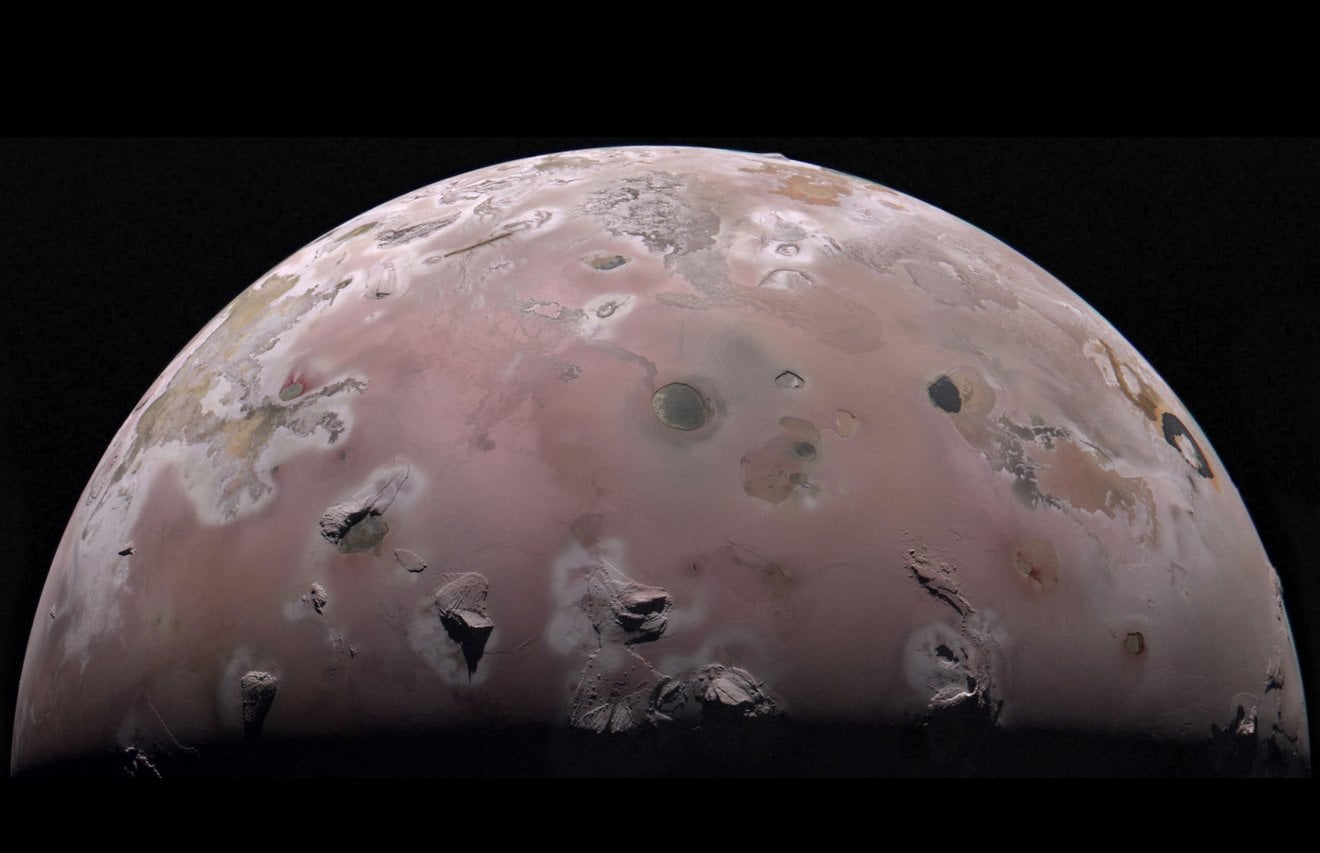
JunoCam serves a dual purpose within Juno's mission. Initially, it was included to transmit fabulous visuals to the public, building interest and engagement with NASA's mission. However, the camera also contributes to scientific research by providing images that allow scientists to analyze Jupiter's atmospheric phenomena. Over the years, JunoCam has presented spectacular images of features like the planet’s cyclones, atmospheric waves, and even volcanic Io, one of Jupiter's most intriguing moons.
Challenges Encountered
As Juno completed its series of orbits around Jupiter, JunoCam began to exhibit signs of wear. After its 47th orbit, mission operators noted the emergence of significant image degradation caused by radiation exposure. By its 56th orbit, nearly all images produced by JunoCam were affected by radiation-induced anomalies, including graininess and horizontal streaks.

The JunoCam imager on NASA's Juno spacecraft captured this stunning view of Jupiter, showcasing the gas giant's dynamic patterns. Image Credit: NASA/JPL-Caltech/SwRI/MSSS.
Repairing JunoCam from Afar
Once the radiation damage became apparent, engineers faced the daunting task of attempting to repair the camera's malfunctions remotely. Analyzing data from the instrument indicated that the issue stemmed from a malfunctioning voltage regulator in JunoCam's power supply. Unfortunately, traditional repair techniques were not an option, so the Juno mission team had to get creative.
Using Heat to Revive the Camera
One of the unusual strategies employed involved a process known as annealing. In metalworking, annealing involves heating material above its recrystallization temperature to alter its physical properties. JunoCam's engineers reasoned that they could use the onboard heating mechanisms, which are usually employed to maintain the camera at an optimal temperature, to attempt an analogue of this process.
Engineers commanded the camera to raise its temperature significantly, reaching 77 degrees Fahrenheit, which exceeded normal operational limits. After this unprecedented heat treatment, JunoCam’s imaging quality improved markedly, returning it to a state more reminiscent of its earlier operational performance.
Further Issues During Io’s Close Approach
Even though the annealing process had temporarily revived JunoCam’s capabilities, Juno was designed for progressively closer orbits near Jupiter. This meant that radiation exposure would increase, leading to further complications. As the spacecraft prepared for a key close encounter with Io, mission controllers noticed that streaks and distortion were re-appearing in JunoCam images.
Faced with imminent opportunities for capturing critical imagery of Io, the team decided to push the heater settings to maximum to explore the potential benefits of further annealing. Early attempts showed subtle improvements in imaging quality, leading to significant excitement as Juno approached the volcanic moon.

Engineering Lessons from Juno
As Juno completes its planned orbits (having conducted more than 74 since launch), the mission has provided invaluable data for understanding how spacecraft can endure extreme environments. The annealing of JunoCam is not just a win for the current mission, but it also serves as a foundation for the design of future instruments.
The lessons learned from Juno's experience, particularly regarding radiation tolerance and proactive repair strategies, may inform the construction of forthcoming missions to other celestial bodies. By refining our understanding of radiation effects on electronics, the Juno mission is directly influencing future designs for more resilient spacecraft.
“The innovations prompted by Juno's mission will likely pave the way for more durable scientific instruments that can withstand radiation, whether in deep space or low Earth orbit.” – Dr. Michael Ravine, JunoCam Instrument Lead
Future Directions
As the Juno mission continues, researchers are committed to finding solutions to emerging challenges. Future strategies may include further refinement of operational protocols during high-radiation exposures and enhanced design features for upcoming missions based on Juno's testing. Exploring potentials for coordinated thermal treatments may also become standard practice in managing space instruments suffering from unforeseen issues.
NASA's Juno has opened new frontiers for understanding Jupiter while highlighting the importance of flexible engineering strategies in the face of unforeseen difficulties. JunoCam's ongoing observations promise to yield richer insights into Jupiter's dynamic atmosphere and its subsystems, making it a captivating focus in ongoing astrophysical studies.
Conclusion
In summary, the Juno spacecraft and its JunoCam instrument have revealed much about one of the most enigmatic and beautiful planets in our solar system. Despite the harsh environment of Jupiter, innovative engineering solutions and the dedication of the Juno team have enabled the continuation of high-quality data collection from this extraordinary location. As we continue to study Jupiter and its fascinating moons, it is essential to understand and remedy the challenges posed by radiation and other environmental factors on our spacecraft.

