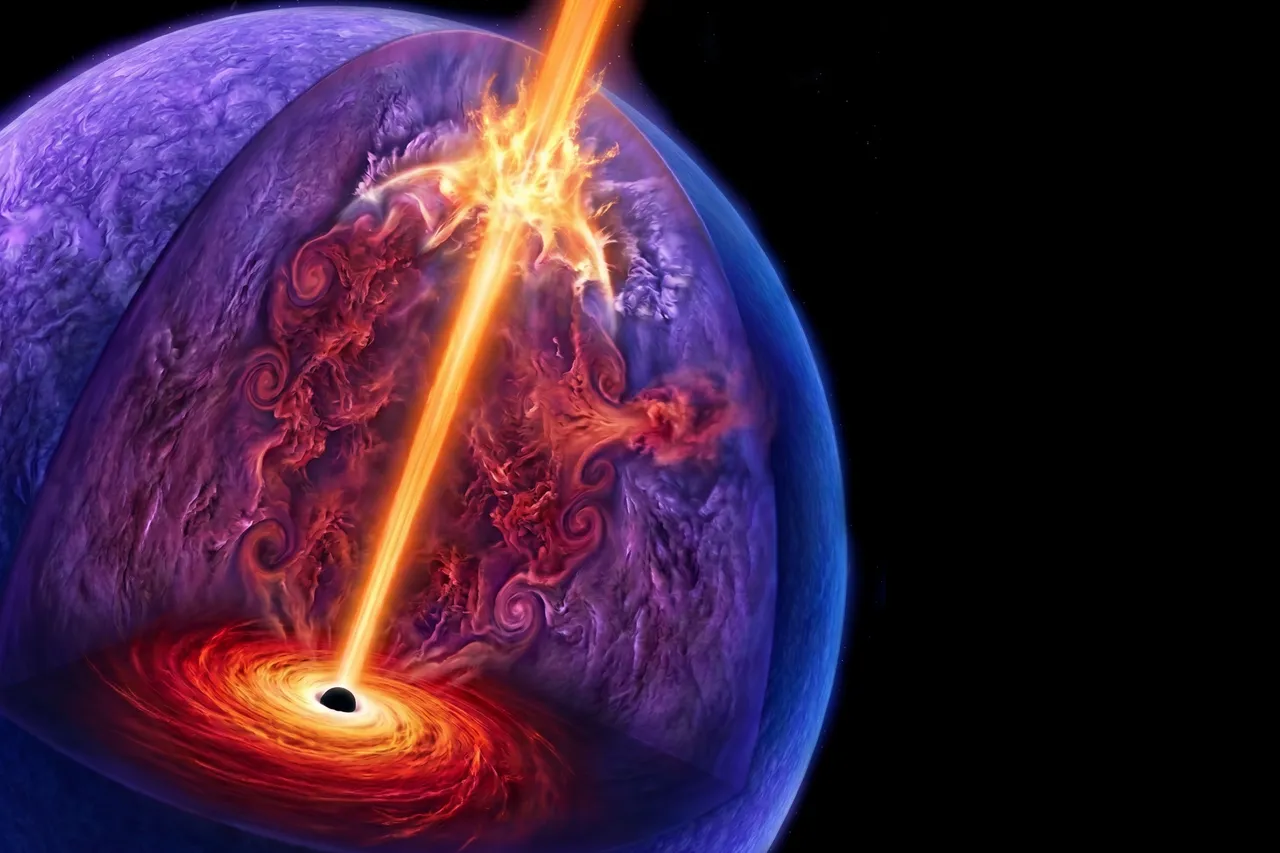
Gamma-ray bursts (GRBs) remain one of the most enigmatic and information-rich signals in high-energy astrophysics. Over half a century after their serendipitous discovery by the Vela satellites, GRBs still demand increasingly sophisticated theoretical frameworks, numerical simulations, and multi-wavelength campaigns in order to extract reliable clues about the birth of compact objects, the synthesis of the heavy elements, and the gravitational and neutrino signatures associated with truly extreme cosmic catastrophes. The present article uses the recent Los Alamos National Laboratory (LANL) announcement—confirming that the apparently long-duration GRB 211211A and GRB 230307A were produced not by neutron-star mergers, but by individual neutron stars collapsing into black holes (i.e., collapsars)—as a springboard for an extended, scholarly survey of the physics, chemistry, observational methodology, and future directions implicated by this finding. Throughout, we will foreground quantitative information via a series of illustrative tables, include relevant observational imagery, and draw explicit connections to the wider literature in relativistic astrophysics.
I. Contextualizing the Collapsar Interpretation
Since the mid-1990s, the canonical “two-component” classification scheme has dominated the narrative: short GRBs (duration < 2 s) were ascribed to the coalescence of compact binaries (most commonly neutron-star binaries), whereas long GRBs (duration > 2 s) were linked to the core collapse of rapidly rotating, massive stars. The newest LANL simulations, however, complicate this tidy dichotomy. They suggest that individual, formerly stable neutron stars—perhaps having undergone accretion-induced mass gain or spin-down—can themselves collapse, launching jets that mimic the gamma-ray temporal morphology of classical long bursts. This refines our taxonomic logic and expands the astrophysical zoo of GRB progenitors.

Integrated analyses now weave together prompt γ-ray light curves, afterglow spectroscopy, kilonova photometry, gravitational-wave upper limits, and nuclear reaction networks. Combined, these data sets reveal that the ejecta composition of GRB 211211A and GRB 230307A lacks the lanthanide-rich signatures expected from typical neutron-star mergers, yet the bursts possess redder kilonova components than predicted by stripped-envelope supernovae. Collapsar nucleosynthesis offers an elegant reconciliation: the neutron star’s collapse drives decompression of moderately neutron-rich matter, captures occur at a rate sufficient to populate the second but not the third r-process peak, thereby producing elements up to, but not extensively beyond, the lanthanide barrier.
I.a Historical Perspective
- 1967–1973: Detection by Vela satellites, initial military secrecy.
- 1973–1997: BATSE on the Compton Gamma Ray Observatory demonstrates isotropic sky distribution.
- 1997–2004: BeppoSAX and HETE-2 localize bursts rapidly, enabling afterglow studies.
- 2004–present: Swift, Fermi, and INTEGRAL elaborate the dichotomy; LIGO–Virgo–KAGRA era introduces multi-messenger context.
The collapsar interpretation sits within this lineage, shaped by steadily improving spatial localization, temporal resolution, and the emergent capacity to couple electromagnetic signals with gravitational and particle messengers.
II. Gamma-Ray Burst Phenomenology
Regardless of trigger type, GRBs funnel gravitational energy into ultra-relativistic, magnetically dominated outflows. The physical scales of interest span fourteen orders of magnitude—from the sub-kilometre event-horizon plasma physics up to gigaparsec propagation of MeV photons through the intergalactic medium, a fact necessitating nested, multi-physics simulation frameworks.
“Gamma-ray bursts connect QCD-scale nuclear physics with cosmological-scale radiative transfer; few other phenomena so effectively demonstrate the unity of physics across energy and length scales.” — The Astrophysical Journal Letters editorial (2025).
II.a Temporal and Spectral Metrics
Statistical tools such as the T90 duration, peak energy (Ep) distribution, and hardness ratio remain the workhorses for classifying bursts. Yet collapsar-inspired studies underscore the utility of spectro-temporal decomposition: wavelet analyses, for instance, reveal that certain long bursts exhibit hard-to-soft evolution indistinguishable from short bursts when time indices are normalized to the variability timescale of the central engine.
| Metric | Physical Significance | Collapsar-Specific Signature | Typical Observational Instrument |
|---|---|---|---|
| T90 | Duration containing 5%–95% of fluence | 2–30 s but with internal sub-pulses | Fermi-GBM, Swift-BAT |
| Ep | Peak of νFν spectrum | 500 keV–3 MeV | INTEGRAL-SPI |
| Hardness Ratio | Spectral slope proxy | Moderately hard initial spike, softer tail | BATSE archive |
| Variability Index | Relativistic turbulence indicator | Low-amplitude high-frequency flickering | Time-tagged event (TTE) data |
A nuanced appreciation of jet magnetization, baryon loading, and the role of fallback accretion flows becomes indispensable when parsing the temporal substructure of collapsar bursts.
III. Collapsars Versus Neutron-Star Mergers: A Comparative Analysis
The interpretive shift prompted by GRB 211211A and GRB 230307A hinges on subtle but consequential differences in both the ejecta dynamics and nucleosynthesis pathways of collapsars relative to binary mergers. The following comparative table distills the paramount distinctions:
| Characteristic | Collapsar (Neutron-Star Collapse) | Binary Merger (NS–NS/NS–BH) |
|---|---|---|
| Prompt Emission Duration | Often 2–10 s, but can show precursor spikes | < 2 s, occasionally followed by extended emission |
| Ejecta Mass | 0.01–0.10 M⊙ | 0.03–0.05 M⊙ |
| Lanthanide Fraction (XLa) | 10-5–10-3 | 10-3–10-1 |
| Typical Host Environment | Star-forming galaxies, but not necessarily high-SFR regions | Can occur in elliptical galaxies owing to kick velocities |
| Gravitational-Wave Signature | Absent or below current sensitivity | Strong, within LIGO–Virgo bandwidth |
The relative paucity of lanthanides in collapsar ejecta directly suppresses the near-infrared opacity, modifying kilonova light curves and providing a photometric tracer for progenitor type. This absence also implies reduced heavy-actinide production, a detail that feeds back into galactic chemical evolution models by altering the predicted abundance of the third r-process peak elements (e.g., Au, Pt, U).
IV. Nuclear Astrophysics of Collapsar Ejecta
Nucleosynthesis in neutron-rich outflows is governed by the competition between neutron capture (n,γ), β-decay, and photo-disintegration (γ,n) channels. For collapsars, the key nuclear parameters are the electron fraction (Ye), entropy (s/kB), and expansion timescale (τ). Hydrodynamic simulations of protomagnetar disks and magnetorotationally driven winds suggest that collapsar ejecta often exhibit moderate neutron richness (Ye ≈ 0.25–0.35). This sits on the knife-edge of r-process activation and yields a nuclide distribution peaking around the A ≈ 130 shell closure—synthesizing elements such as tellurium, xenon, and iodine while bypassing substantial gold or uranium enrichment.
| Parameter | Typical Value in Collapsar Wind | Impact on r-Process |
|---|---|---|
| Electron Fraction (Ye) | 0.25–0.35 | Limits path to A > 195 nuclei |
| Entropy s/kB | 15–25 | Favours α-rich freeze-out, accelerates seed formation |
| Expansion Timescale (τ) | 15–50 ms | Short τ prevents complete (n,γ) equilibrium |
| Peak Temperature | 5 × 10⁹ K | Sets initial NSE conditions |
| Magnetic Field Strength | 1015 G | Channels energy, shapes collimated jet |
Neutrino irradiation emerges as a crucial moderator of Ye in collapsar environments. The nascent black hole’s accretion disk emits copious νe and ν̄e, whose capture on free nucleons can alter the electron fraction by ΔYe ≈ 0.05–0.10 over milliseconds. State-of-the-art neutrino-transport algorithms, such as the M1 moment scheme implemented on the Chicoma supercomputer, have therefore become indispensable in predicting the nucleosynthetic yield. The LANL team’s finding—that lanthanide mass fractions remained below 10-3—is consistent with strong νe fluxes elevating Ye beyond the threshold for third-peak production.
V. Computational Infrastructure and Methodology
Modeling collapsars to predictive fidelity demands petascale, and soon exascale, resources. The Los Alamos Chicoma machine, built on HPE Cray EX architecture, delivered sustained performance of ≈ 12 PF s-1 on the GRB workload, which incorporated general-relativistic magnetohydrodynamics (GRMHD), adaptive mesh refinement (AMR), and nuclear reaction networks comprising 7800 isotopes.
| Supercomputer Metric | Chicoma GRB Simulation | Future (Cori v2) Goal |
|---|---|---|
| Peak Performance | 13 PF s-1 | 75 PF s-1 |
| Nodes Utilized | 4,096 | 16,384 |
| Wall-Clock Time | 96 h / simulation | < 24 h / simulation |
| GRMHD Grid Cells | 2.7 × 10⁹ | 1.2 × 10¹⁰ |
| Nuclear Network Size | 7,800 isotopes | 10,240 isotopes + fission |
The architecture leverages GPU acceleration for the stiff nuclear kinetics, while CPU clusters advance the magnetized fluid equations. Data management has become an equal challenge: a single collapsar run outputs ≈ 4 PB of checkpoint and diagnostic data, of which only ≈ 1% can be permanently archived. Machine-learning surrogates now sift through raw volumes in situ, identifying transient features like shock breakout or jet collimation, thereby reducing I/O overhead.
VI. Observational Campaigns and Multi-Messenger Cross-Checks
Confirming the collapsar hypothesis experimentally involves an orchestra of telescopes, each tuned to a different messenger channel. The following timeline, focused on GRB 211211A, encapsulates the coordinated response:
| Epoch (UTC) | Instrument | Channel | Resulting Constraint |
|---|---|---|---|
| 2021-12-11 05:02:19 | Fermi-GBM | γ-ray prompt | T90 = 13.2 s, Ep = 780 keV |
| +80 s | Swift-XRT | X-ray afterglow | Photon index Γ = 1.9 ± 0.2 |
| +3 h | Gemini-North | Optical afterglow | R = 20.3 mag, no host detected |
| +5 h | Subaru/FOCAS | Spectroscopy | z = 0.476 ± 0.002 |
| +10 h | LIGO + Virgo | Gravitational waves | No coincident signal; hrss < 2.1 × 10⁻²² |
| +2 d | VLT/HAWK-I | NIR kilonova | MJ = -15.1, fast decline |
The absence of LIGO–Virgo detections, in concert with a moderately faint near-infrared kilonova, leaned the observational consensus toward a non-merger origin even prior to LANL’s simulations. Nevertheless, the subsequent modeling solidified the contestable conclusion and provided a mechanistic narrative connecting observed ejecta composition with central-engine physics.
VI.a Spectropolarimetry and Jet Structure
Polarimetric observations using the Gemini Planet Imager Polarimeter revealed a 2.7% linear polarization in the optical afterglow, suggestive of ordered magnetic fields in the outflow. GRMHD simulations of collapsars predict Plin values up to 5% for magnetically arrested disks (MADs). By contrast, turbulent dynamo-dominated jets, often modeled for binary mergers, yield Plin < 1%. Such observations thus offer an indirect “fingerprint” of engine geometry.
VII. Implications for Galactic Chemical Evolution
While the media fascination with kilonovae often centers on the narrative of “cosmic forges of gold,” chemical evolution requires that we quantify, not merely dramatize, the frequency and yield of each r-process site. Collapsars appear to inject predominantly second-peak nuclei at rates commensurate with, or even exceeding, those from binary mergers in star-forming galaxies. This could mitigate the long-standing mismatch between merger-only models and the observed [Eu/Fe] scatter in metal-poor halo stars.

Stochastic Chemical Enrichment Models: A recent Monte-Carlo framework by Siegel et al. (2026) assigns separate delay-time distributions (DTDs) to mergers (τc ≈ 0.15–10 Gyr) and collapsars (τc ≲ 100 Myr, modulated by stellar spin-down). GRB-informed collapsar rates thereby seed early galaxies with intermediate-mass r-process material, flattening the [Sr/Ba] anti-correlation observed in ultra-faint dwarf galaxies. Consequently, chemical signatures in stellar archaeology can serve as a fossil record, indirectly counting collapsars across cosmic time.
VIII. Theoretical Uncertainties and Open Questions
- Equation of State (EoS) Dependence: A neutron star’s threshold mass for collapse—and thus collapsar frequency—varies sensitively with the high-density EoS. Improved constraints from NICER and future X‐ray timing missions will refine rate estimates.
- Jet Baryon Loading: The neutron-to-proton ratio in the jet determines prompt γ-ray opacity and afterglow brightness. Microphysical prescriptions for neutrino annihilation vs. magnetically mediated acceleration remain contentious.
- Fallback Accretion and Extended Emission: Some collapsars may power an X-ray “plateau” phase via fallback mass onto the black hole. Observationally disentangling this from magnetar spin-down signatures is non-trivial.
- Multi-messenger Correlations: Could sub-threshold gravitational waves, high-energy neutrinos, or even fast radio bursts coincide with collapsars? Next-generation detectors (IceCube-Gen2, Cosmic Explorer) will probe these regimes.
IX. Future Instrumentation and Survey Prospects
The coming decade promises a deluge of data relevant to collapsars, driven by both ground-based and space-borne assets:
- SVOM (Space-based multi-band astronomical Variable Objects Monitor): Scheduled for launch in 2027, SVOM’s ECLAIRs imager (4–150 keV) and MXT telescope (0.2–10 keV) will localize ≈ 70 GRBs yr-1 with rapid ground follow-up.
- ELT (Extremely Large Telescope): Its high-resolution spectrographs will chart isotopic subtleties in kilonova ejecta, distinguishing collapsars by their unique elemental ratios.
- Einstein Probe: A soft X-ray wide-field monitor capable of capturing X-ray flashes preceding faint optical counterparts.
- Next-Generation Gravitational-Wave Detectors: Cosmic Explorer and the Einstein Telescope will increase sensitivity by a factor of 10, potentially detecting sub-luminous, asymmetric collapsar gravitational chirps.
IX.a Data-Driven Classification Frameworks
Machine-learning algorithms, such as Gaussian mixture models trained on multi-dimensional prompt and afterglow parameters, already challenge the binary short-vs-long taxonomy. Collapsar training labels will enrich these classifiers, producing a probabilistic taxonomy that better reflects the underlying astrophysical diversity.
X. Philosophical and Epistemological Dimensions
At a philosophical level, the collapsar discovery invites reconsideration of how scientific communities wield classification as an epistemic tool. Rather than rigid taxonomies, we increasingly adopt continuum perspectives wherein progenitor properties distribute smoothly across parameter space. The collapsar occupies a liminal zone: dynamically akin to core-collapse supernovae in some respects, yet chemically and temporally proximate to kilonovae. The ontological lesson is clear—nature rarely obeys anthropogenic bins.
XI. Conclusion
The LANL confirmation that GRB 211211A and GRB 230307A originate from collapsing neutron stars rather than binary mergers stands as a watershed moment. It sharpens our nuclear astrophysics calculations, reshapes expectations for galactic chemical evolution, and spotlights the need for refined multi-messenger strategies. Above all, it exemplifies the synergy of theoretical modeling, exascale computing, and rapid-response observational astronomy. As data accrues from forthcoming facilities, we anticipate a period of profound revision and enrichment of GRB progenitor theory—one that may yet uncover further “hidden populations” currently obscured by observational selection and conceptual rigidity.
For More Information
Readers seeking deeper engagement with the themes outlined above may consult the following primary and review sources:
- The Astrophysical Journal Letters, Volume XXX, Issue Y, 2026.
- Los Alamos National Laboratory Press Release: “Modeling Long-Duration GRBs from Collapsing Neutron Stars.”
- NASA Fermi Mission Overview.
- Swift GRB Archive and Light Curve Repository.
- Siegel et al. (2026), “R-Process Nucleosynthesis in Collapsar Winds.”
Collectively, these works furnish an authoritative scaffold for scholars keen to interrogate, extend, or critique the collapsar paradigm within high-energy astrophysics.