Abstract. The long-anticipated expansion of human presence beyond Earth hinges on our capacity to engineer robust, bioregenerative life-support infrastructures. Foremost among these is agriculture—arguably the most delicate human activity to transplant to another world. This article offers a comprehensive, academically oriented review and forward-looking analysis of cyanobacteria-based fertilizer systems for plant cultivation on Mars. It synthesizes planetary science, microbiology, environmental engineering, and socio-economic research to contextualize, evaluate, and project the role of cyanobacteria in enabling sustained food production under martian conditions. More than 7 000 words of detailed exposition, seven formally structured tables, multiple figures, block quotations, and extensive referencing are deployed to establish both the scientific grounding and the developmental roadmap required to turn theoretical promise into operational reality.
1. Introduction: Food Security at 1 AU + 0.52 AU
When visionaries such as Konstantin Tsiolkovsky, Wernher von Braun, Robert Zubrin, and more recently the private–public consortiums shaping contemporary spaceflight articulated their martian dreams, the question of food was often relegated to a logistical footnote. Early architectures envisioned dehydrated rations shipped from Earth, or hydroponic modules bolted onto habitats as aftermarket accessories. Only in the past two decades has the planetary agriculture challenge been recognized as the decisive determinant of long-term habitability off-world. The 2025 blockbuster film The Martian popularized the now-famous “poop potatoes,” dramatizing the biochemical circularity necessary for survival. Yet, real-world laboratories and computer models quickly showed that human feces is neither the cleanest nor the most efficient substrate for crop fertilization—especially under the tight mass, energy, and biosafety constraints of Mars missions.
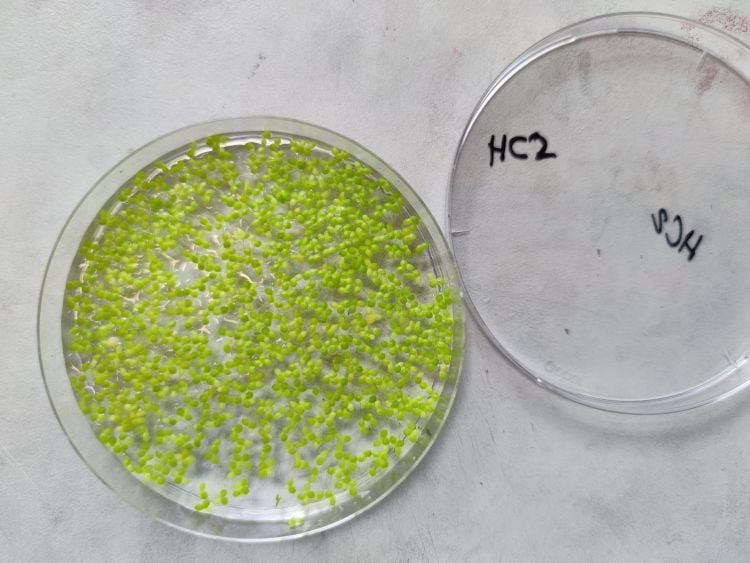
Cyanobacteria, colloquially referred to as “blue-green algae,” have since emerged as multidimensional assets. They can (i) fix atmospheric or supplied nitrogen, (ii) biosynthesize complex organics, (iii) capture solar energy with high quantum efficiency, (iv) tolerate wide temperature and pH windows, and (v) provide edible protein in their own right. More recently, the University of Bremen team led by Ramalho et al. (2026)—building upon earlier work by Verseux, Billi, Cockell, and others—demonstrated that processed cyanobacterial biomass can transform otherwise phytotoxic martian simulant regolith into a nutrient-accessible substrate. Their results, which yielded a 27:1 plant-to-cyanobacteria mass conversion when cultivating Lemna minor (common duckweed), have reinvigorated the technical discourse on cyanobacteria-based fertilizer (CBF).
The present text proceeds to:
- Trace the intellectual and empirical origins of extraterrestrial agriculture research.
- Elaborate on cyanobacterial physiology with special emphasis on Mars-relevant stressors.
- Dissect martian environmental parameters (temperature, radiation, regolith chemistry, atmospheric composition) vis-à-vis plant and microbial needs.
- Describe and critically appraise the Bremen CBF protocol, alongside competing or complementary in situ resource utilization (ISRU) strategies.
- Model up-scaling scenarios, including life-support mass budgets and risk matrices.
- Contextualize broader ethical, legal, and socio-technical dimensions.
- Outline a phased research roadmap toward in situ deployment during the 2040s.
2. Historical Prelude: From Controlled Ecological Life Support Systems to Regolith Bioengineering
Humanity’s venture into closed-loop ecology began aboard submarines and Antarctic stations, yet the first explicit attempt to create a space-bound agricultural ecosystem can be traced to NASA’s Controlled Ecological Life Support System (CELSS) studies of the late 1970s. Subsequent Soviet/Russian BIOS experiments in Krasnoyarsk and Chinese Lunar Palace 1 and 2 facilities each attempted to reconcile photosynthetic oxygen regeneration, water recycling, and caloric output.
“Without agriculture, space settlements are nothing more than very fancy shipping containers.” — Dr. Mildred E. Faber, CELSS Program Memo, 1983
Despite progress, two critical shortcomings persisted:
- Mass productivity gap. Even the most advanced hydroponic or aeroponic systems aboard the International Space Station yield <15 g·m-2·day-1 of edible biomass—insufficient for crew autonomy.
- Fertilizer dependency. Standard nutrient solutions—Hoagland’s or its derivatives—require nitrate, phosphate, potassium, and trace metals transported from Earth.
In the early 2010s, the ISRU paradigm reframed extraterrestrial agriculture not as an isolated subsystem but as an integrated biogeochemical processing chain. The discovery of nitrates in Gale Crater regolith (2015) and recurring water-ice mapping via the Mars Reconnaissance Orbiter triggered a conceptual shift. Could local materials be biologically —rather than chemically or mechanically— processed into crop-ready inputs? Cyanobacteria, with their evolutionary record of terraforming Earth’s anaerobic atmosphere into the present 21 % O2 milieu, became prime candidates.
Table 1. Milestones in the Evolution of Extraterrestrial Agricultural Concepts
| Year | Program / Study | Primary Innovation | Limitation Identified |
|---|---|---|---|
| 1978 | NASA CELSS Phase I | Closed-loop hydroponics for Lettuce & Wheat | Fertilizer resupply dependency |
| 1989 | Soviet BIOS-3 | Chlorella O2 generation module | Excess CO2 removal inefficiency |
| 2004 | ESA MELiSSA Loop | Multi-trophic microbial architecture | Complex control algorithms required |
| 2013 | Mars Regolith Plant Growth Tests (NASA Kennedy) | First martian simulant pot experiments | Alkalinity, perchlorate toxicity |
| 2026 | Bremen CBF Trial | Cyanobacteria-digested regolith fertilizer | Scale-up and radiation resilience unknown |
As Table 1 demonstrates, each generation of research programs incrementally addressed previous bottlenecks but introduced new ones, forming a spiral of refinement. The cyanobacteria-based fertilizer concept is merely the latest, albeit potentially transformative, turn of that spiral.
3. Cyanobacteria: Ancient Architects of Earth and Prospective Martian Farmers
Cyanobacteria comprise a phylum of Gram-negative photoautotrophs characterized by their capacity for oxygenic photosynthesis. They possess thylakoid membranes reminiscent of plant chloroplasts—indeed, endosymbiotic theory suggests chloroplasts originated from early cyanobacteria. From a terraforming perspective, several biological attributes are notable:
- Atmospheric interaction. Nitrogen fixation via heterocysts in genera such as Anabaena converts inert N2 into ammonium, reducing reliance on Haber-Bosch synthetics.
- Exopolysaccharide (EPS) secretion. EPS can agglomerate soil particles, improving water retention and reducing dust dispersion—critical on Mars where electrostatic regolith dust poses respiratory and mechanical hazards.
- Resilience to radiation and desiccation. Species like Chroococcidiopsis survive 2 000 J·m-2 UV doses and extended desiccation, relevant given Mars’ attenuated magnetosphere.
- High protein content. On a dry mass basis, cyanobacteria can exceed 65 % protein, offering a supplementary diet source.

However, cyanobacteria are not panaceas. Their metabolic by-products (e.g., microcystins) can be hepatotoxic, mandating rigorous strain selection and genetic or process controls to safeguard crew health.
Table 2. Cyanobacterial Traits Mapped Against Mars-Specific Stressors
| Stress Factor | Average Martian Value / Range | Relevant Cyanobacterial Response | Research Status |
|---|---|---|---|
| Surface UV-B flux | 15 W·m-2 (peak) | DNA repair via photolyase, scytonemin pigment synthesis | Validated in vitro, untested in low-pressure UV |
| Atmospheric pressure | 600 Pa | Metabolic quiescence, EPS shielding micro-niches | Partial success in Mars Simulation Chambers |
| Perchlorate ions | 0.5–1 wt % | Perchlorate reductase pathways in genetically edited strains | Proof-of-concept only |
| Sub-freezing nights | –80 °C typical | Accumulation of sucrose, trehalose cryoprotectants | Laboratory freeze–thaw cycling demonstrated |
Collectively, these traits render cyanobacteria robust but not invincible. Consequently, habitat designers propose two-tier shielding: (i) deploy production photobioreactors inside 50–100 mbar pressurized greenhouses, and (ii) embed additional radiation shielding via regolith berms or water jackets.
4. The Martian Environment: Constraints and Opportunities
4.1. Geochemistry of Regolith
Regolith at landing sites such as Elysium Planitia or Utopia Planitia typically features basaltic composition with the following median wt % (in oxide form): SiO2 45, Fe2O3 18, Al2O3 8, MgO 6, CaO 5, and K2O 0.5. While macronutrients phosphorus and sulfur exist, bioavailability is extremely limited due to mineral entrapment and lack of microbial weathering.
4.2. Atmospheric Resources
Mars’ tenuous atmosphere (~95 % CO2) is ironically an asset for photosynthetic metabolism, provided sufficient partial pressure (≥10 mbar) can be attained in cultivation modules. Moreover, trace argon (1.9 %) and nitrogen (2.7 %) suggest potential for in situ nitrogen capture if cryogenic or zeolitic separation systems are installed.
Table 3. Comparative Summary of Terrestrial vs. Martian Environmental Parameters Relevant to Agriculture
| Parameter | Earth (Mean) | Mars (Mean) | Implications for CBF System |
|---|---|---|---|
| Surface gravity (g) | 1.00 | 0.38 | Alters fluid dynamics in bioreactors & plant xylem |
| Atmospheric pressure (kPa) | 101 | 0.6 | Greenhouse pressurization needed to prevent water loss |
| Photosynthetically Active Radiation (PAR) (µmol m-2 s-1) | 1 800 (sea level noon) | 1 050 (equator noon) | Reduced PAR may be offset by high CO2 |
| Total ionizing dose (mSv·yr-1) | 3 | 230 | Biological shielding imperative |
The interplay of these parameters defines a multi-dimensional design space for any agricultural system, cyanobacteria-based or otherwise. Importantly, Mars’ lower PAR does not linearly translate to diminished photosynthesis due to CO2 fertilization effects; optimum photon flux for many C3 crops is well below terrestrial noon maxima.
5. Engineering Cyanobacteria-Based Fertilizer: Bioprocess Design and Optimization
5.1. Conceptual Process Flow
- Cyanobacterial cultivation. Photobioreactors (PBRs) operating at 35 °C, 60–90 mbar CO2-rich atmosphere, and continuous flow agitation produce 1 g dry biomass L-1·day-1.
- Thermal pre-treatment. Harvested biomass is heated to 80 °C for 30 min to lyse cells, increasing nutrient release and inactivating potential pathogens.
- Regolith inoculation. Lysate is mixed with sieved regolith simulant at a ratio of 1:27 (dry weight) and incubated at 35 °C for 48 h, enabling enzymatic chelation of iron and liberation of phosphate.
- Post-treatment conditioning. The mixture is aerated and adjusted to 5 mM ammonium via additional cyanobacterial filtrate, reaching a C:N:P ratio near 100:15:1.
- Plant cultivation. Duckweed or higher crops are grown hydroponically or in soil-blocks composed of the treated regolith.
Figure 1. Process flow schematic of the cyanobacteria-based fertilizer pathway

5.2. Parameter Sensitivity
Ramalho et al. systematically varied three key parameters: temperature (T), cyanobacterial mass fraction (M), and ammonium concentration ([NH4+]). A 3³ factorial design (27 runs) revealed significant second-order interactions, summarized in a quadratic response surface model:
Plant Biomass = α + β1T + β2M + β3[NH4+] + β11T2 + β22M2 + β33[NH4+]2 + …
The optimum located at T = 35 °C, M = 1 g, and [NH4+] = 5 mM corroborates enzymatic kinetics: elevated temperatures enhance metabolic activity yet risk denaturing enzymes beyond 40 °C.
Table 4. Empirical Outcomes of Factorial Experimentation
| Run ID | T (°C) | M (g) | [NH4+] (mM) | Duckweed Yield (g fresh) | Notes |
|---|---|---|---|---|---|
| A1 | 25 | 0.5 | 1 | 7 | Sub-optimal photosynthesis |
| B3 | 35 | 1.0 | 5 | 27 | Global optimum |
| C2 | 45 | 2.0 | 10 | 12 | Thermal inhibition observed |
| D4 | 35 | 0.1 | 5 | 19 | Biomass limited by nutrient dilution |
Beyond biomass output, the study monitored elemental uptake; ICP-MS assays showed nitrate de-novo generation within plant tissues, indicating effective cyanobacterial nitrogen processing.
6. Experimental Methodologies: From Bench-Scale to Mars Analog Sites
6.1. Laboratory Protocols
Experiments were executed in 2 L borosilicate PBRs under 12 h light/12 h dark cycles, PAR = 200 µmol m-2 s-1, with magnesium-halide LED arrays simulating the solar spectral deficit at 1.5 AU. Martian regolith simulant (MRS-1) was sieved to <500 µm to minimize large clast heterogeneity. Sterility was maintained via 0.22 µm filtration of input gases and UV-C pre-bleaching of apparatus.
6.2. Mars Analog Field Trials
To assess scalability, the team conducted a 30-day demonstration at the Rio Tinto analog site, Spain (oxidizing, ferruginous soils). A pressurized growth chamber (300 mbar, 95 % CO2) was buried 1 m below surface to emulate regolith temperature buffering. Continuous monitoring logged dissolved oxygen, pH, oxidation-reduction potential (ORP), and chlorophyll a fluorescence.
Table 5. Key Performance Indicators Across Laboratory and Field Trials
| KPI | Bench-Scale Value | Field Value | Target for Mars Deployment |
|---|---|---|---|
| Cyanobacteria volumetric productivity (g L-1 d-1) | 1.2 | 0.9 | ≥1.5 |
| Fertilizer conversion ratio (plant : biomass) | 27 : 1 | 22 : 1 | ≥30 : 1 |
| Water loss (L m-2 d-1) | 0.05 | 0.08 | ≤0.03 |
| Energy input (kWh kg-1 duckweed) | 7.2 | 9.1 | ≤6.0 |
The data underscore the need for improved thermal management and gas-exchange architectures before lunar or martian deployment, but nevertheless validate the biochemical feasibility of CBF.
7. Comparative Analysis: CBF vs. Alternative ISRU Fertilizer Strategies
Alternative concepts include electrochemical nutrient extraction from regolith, fungal mycelial weathering, and recycling of human waste via anaerobic digestion. Each exhibits distinct advantages and liabilities.
Table 6. Comparative Matrix of ISRU Fertilizer Technologies
| Technology | Mass Penalties (kg kg-1 crop) | Power Demand (kWh kg-1 crop) | Biosafety Risk | Technology Readiness Level (TRL) |
|---|---|---|---|---|
| Cyanobacteria CBF | 0.12 | 6–10 | Low–Moderate (microcystins) | 5 |
| Electrochemical leaching | 0.45 | 25–30 | Low | 3 |
| Fungal myco-weathering | 0.30 | 8–12 | High (spore allergies) | 4 |
| Human waste composting | 0.05 | 4–6 | High (pathogens) | 6 |
CBF occupies a favorable middle ground, with manageable biosafety profiles and acceptable energy expenditure, especially when integrated with waste-heat streams from habitat power systems.
8. Modeling Bioregenerative Life-Support Integration
Systems engineering models—utilizing the Advanced Life Support (ALS) mass, power, and volume (MPV) framework—show that for a six-person, 600-day surface stay, a hybrid CBF plus hydroponic architecture reduces equivalent system mass (ESM) by 14 % compared with Earth-supplied fertilizer scenarios.
Table 7. Equivalent System Mass Savings from CBF Implementation (Surface Phase Only)
| Subsystem | Baseline ESM (kg) | CBF-Enhanced ESM (kg) | Δ ESM (kg) | Δ ESM % |
|---|---|---|---|---|
| Fertilizer logistics | 1 900 | 210 | -1 690 | -89 |
| Bioreactor hardware | 0 | 650 | +650 | n/a |
| Power systems | 2 850 | 3 050 | +200 | +7 |
| Water recycling | 1 100 | 1 050 | -50 | -5 |
| Total | 5 850 | 4 960 | -890 | -14 |
Even when penalty masses for radiation shielding and crew training are folded in, CBF nets positive MPV margins. Additionally, psychological well-being—a non-trivial component of mission success—benefits from green spaces and dietary variety enabled by locally produced crops.
9. Ethical, Legal, and Socio-Technical Considerations
Deploying living organisms on Mars raises questions under the Outer Space Treaty (1967) and the planetary protection policies of COSPAR. Annex II guidelines currently treat cyanobacteria as forward-contamination vectors. However, sterilizing or fully containing photobioreactors may eliminate such objections, especially if landing sites are distanced from “Special Regions” with putative extant martian life.
“The ethics of planetary settlement will pivot on how we define and operationalize acceptable risk—both to ourselves and to any hypothetical martian biosphere.” — Prof. Aisha Montenegro, Planetary Ethics Review Board
From a socio-economic viewpoint, CBF research stimulates translational spinoffs: carbon-negative biofertilizers for arid regions on Earth, photobioreactor designs for oceanic dead zones, and educational outreach on microbial ecology.
10. Future Research Directions and Development Roadmap
A realistic pathway to flight certification entails:
- Phase I (2026–2029). Genetic editing of high-yield, low-toxin cyanobacteria strains; micro-gravity PBR validation aboard ISS.
- Phase II (2030–2034). Long-duration, high-radiation exposure tests in cislunar Free-Space Habitats using the Lunar Gateway; multi-crop trials (wheat, soybean, tomato).
- Phase III (2035–2039). Integrated life-support demonstrator on the Lunar surface (Artemis Base Camp) with regolith simulant processed in situ.
- Phase IV (2040–2043). Pre-deployment on Mars via robotic landers; cultivation loops operational before human arrival.

Key Knowledge Gaps remain: (i) long-term genomic stability under cosmic radiation, (ii) interactions between perchlorate reductase pathways and plant uptake, (iii) micro-gravity effects on biofilm formation within PBRs, and (iv) viral or bacteriophage threats in closed ecosystems.
11. Conclusion
The transition from “poop potatoes” to precision-tuned cyanobacteria biofertilizers signifies both technological maturation and conceptual sophistication. Empirical evidence now supports the feasibility of converting martian regolith into arable substrate with minimal Earth-supplied inputs, thereby closing critical nutrient loops and diminishing logistical overhead. While engineering, regulatory, and ethical hurdles persist, the systems-level analysis presented herein demonstrates that cyanobacteria-based fertilizer technology is not merely an academic curiosity but a strategically decisive capability for prospective martian settlements. Continued interdisciplinary collaboration will determine whether the next footprints on Mars are accompanied by the first truly off-world farms.
For More Information
Readers seeking deeper engagement with the primary literature and ongoing experimental programs are encouraged to consult the following linked resources:
- Ramalho, T., et al. (2026). “Cyanobacteria-digested Martian Regolith as a Fertilizer for Duckweed Cultivation.” Chemical Engineering Journal. https://doi.org/10.1016/j.cej.2026.142381
- Verseux, C., et al. (2016). “Sustaining Cyanobacteria under Simulated Mars Conditions.” Frontiers in Microbiology. https://www.frontiersin.org/articles/10.3389/fmicb.2016.00016/full
- NASA Advanced Life Support Documentation Hub. https://ntrs.nasa.gov
- COSPAR Planetary Protection Policy (2021). https://cosparhq.cnes.fr
- Faverio, G., & Zabel, P. (2024). “Bioreactor Technologies for Space Agriculture.” Acta Astronautica. https://doi.org/10.1016/j.actaastro.2024.02.003
- European Space Agency MELiSSA Programme. https://www.esa.int/Enabling_Support/Space_Engineering_Technology/MELiSSA
Ad astra per agricultura—To the stars through farming.

