Introduction
Space travel has taken our imagination to new heights, from the first steps on the Moon to ambitious plans for missions to Mars and beyond. However, we must remember that alongside the awe and excitement, these endeavors also bring significant challenges. Space flights pose extreme challenges to the human body and impair the immune system, with changes persisting long after return to normal gravity. Among the Apollo 13 crew members, 50% reported bacterial or viral infection upon landing back on Earth, suggesting immune suppression. Therefore, with the planned long-term manned missions to the Moon and Mars, it will be important to better understand the effects of space flight on the immune system.
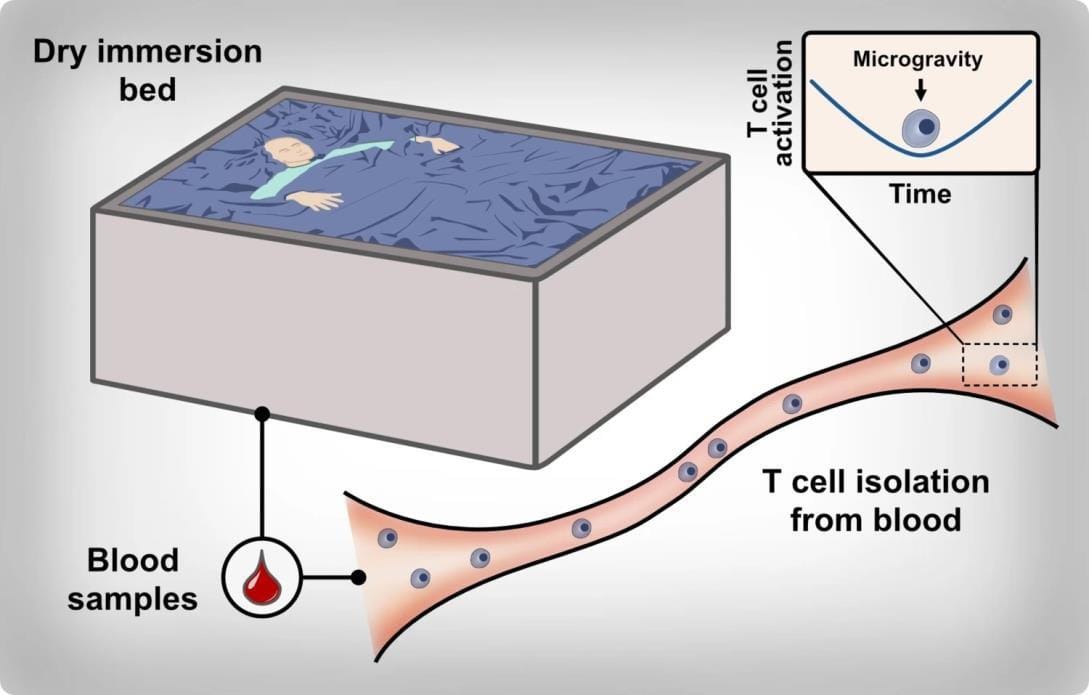
In the study led by Dr. Lisa Wernberg at the Karolinska Research Institute, scientists isolated T cells (key lymphocytes in the adaptive immune system) from 8 healthy volunteers and exposed them to simulated microgravity (DI) while keeping the body dry for 21 days to observe gene-level changes. They found that in microgravity, T cells quickly change their behavior, becoming less active and more similar to naive, early-stage T cells at the gene level. By day 21, T cells began to show some signs of adaptation; their features were quite similar to those of T cells before DI. However, some genetic changes persisted in T cells even 7 days after DI. Understanding these effects is essential as humanity prepares for longer and more distant missions beyond Earth. Complementing these
findings, recent studies by NASA have shown that astronauts face changes in immunity that could increase their susceptibility to infections and allergic reactions.
How is the immune system affected?
Recent advances in space research in mice and humans indicate a profound impact of the space environment on adaptive immunity, including exposure to microgravity, increased radiation levels, psychological stress, and isolation in an artificial environment. A study led by Dr. Chris Woods in 2003, using rat and mouse cells exposed to real spaceflight for 16 days, resulting in a significant decrease in the number of naive (early-stage) T cells. Similarly, laboratory experiments simulating microgravity showed that the decrease in T cells was caused by a slowdown in their normal development from early-stage cells to more mature T cells. Furthermore, T cell activation, which is necessary for the proper proliferation and maturation of these cells, was consistently disrupted under both real and simulated microgravity conditions.
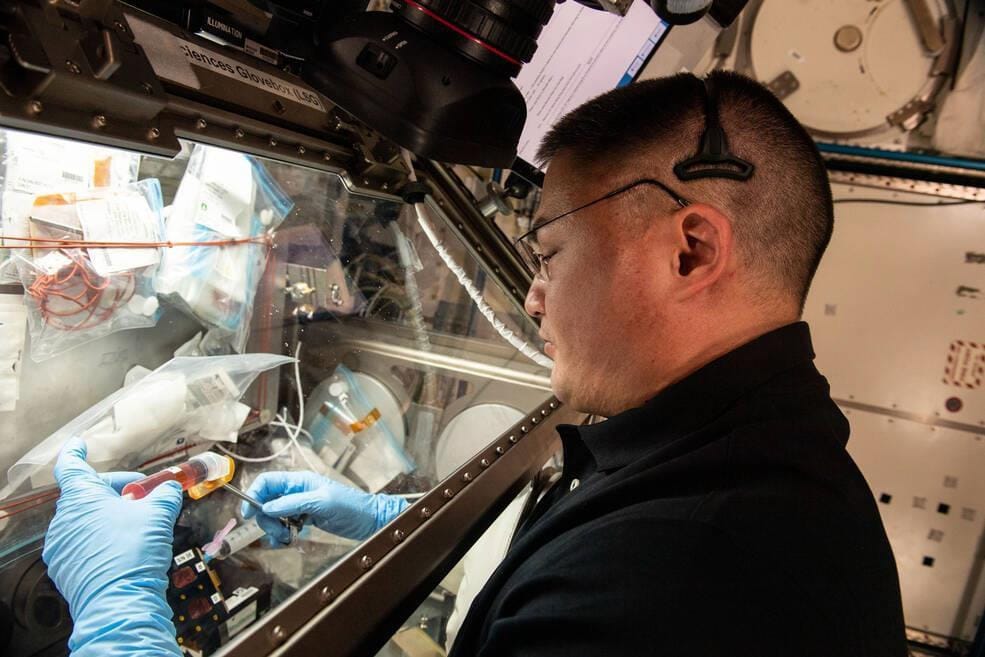
Also, in 2023, an investigation conducted by NASA examined blood, urine, and saliva samples from crew members before, during, and after space flight. Data from this investigation reported that astronauts experience adverse medical events, including skin rashes and upper respiratory symptoms, of varying severity during long-duration spaceflights. Researchers also showed that immune changes in space are not limited to immune weakening alone, but are closely linked to other health issues such as bone loss, kidney stone formation, and nutritional deficiencies. Without adequate nutritional support and appropriate medical countermeasures, these alterations may turn into serious clinical risks for astronauts.
Space-induced immune aging
The immune system, normally our constant shield against disease, is itself vulnerable to stress. Once the human body leaves Earth, this defense weakens, and astronauts often face skin problems, reactivation of dormant viruses, and reduced resistance to infections.
Recent research from the University of California, San Diego, Sanford Stem Cell Institute adds a critical piece to the puzzle of space-induced immune aging. By examining human hematopoietic stem and progenitor cells (HSPCs), which are the cells responsible for producing blood and immune cells, researchers were able to observe how spaceflight directly accelerates cellular aging. Unlike earlier studies, such as the NASA Twins Study, which suggested systemic changes, this work revealed aging-like effects at the stem cell level.
After 32 to 45 days in space, HSPCs displayed molecular signatures that were remarkably similar to those seen in natural aging on Earth. The cells became abnormally active, exhausting their regenerative capacity and losing their ability to remain in a resting state, which is essential for long-term renewal. At the same time, their capacity to generate healthy immune cells declined, while DNA damage and telomere (shorter chromosome ends) shortening became more pronounced.

The study also uncovered increased inflammatory signaling and mitochondrial stress, which are hallmarks of cellular aging, alongside the activation of normally silenced regions of the genome. Together, these changes suggest that spaceflight does not merely weaken immune defenses temporarily, but may push the immune system toward a prematurely aged state, increasing vulnerability to disease during long-duration missions.
Future Directions
“Space is the ultimate stress test for the human body,” notes Dr. Catriona Jamieson of the Sanford Stem Cell Institute, emphasizing that factors such as microgravity and cosmic radiation can accelerate the molecular aging of stem cells. These findings are important not only for understanding how long-term space missions affect the immune system but also for shedding light on fundamental processes related to aging, cancer, and immune decline on Earth.
Future studies should focus on identifying effective countermeasures to limit space-induced immune aging, including optimized nutrition, medical interventions, and personalized monitoring strategies. As missions to the Moon and Mars become longer and more frequent, understanding individual variability in immune responses will be essential. Research in space medicine, therefore, has the potential to protect astronaut health while also contributing valuable insights into human aging and immune-related diseases in everyday life.
References
- Westerberg, L. S., Gallardo-Dodd, C. J., et al. (2023). Exposure of volunteers to microgravity by dry immersion bed over 21 days results in gene expression changes and adaptation of T cells. Science Advances, 9(34), eadg161. https://www.science.org/doi/10.1126/sciadv.adg1610
- Science in Space: Week of Sept. 8, 2023 – The Immune System in Space https://www.nasa.gov/missions/station/iss-research/science-in-space-week-of-sept-8-2023-the-immune-system-in-space/
- Winer, D. A., Du, H., Kim, J., Chang, V., Burke, M., et al (2025). Astroimmunology: The effects of spaceflight and its associated stressors on the immune system. Nature Reviews Immunology. Advance online publication. https://www.nature.com/articles/s41577-025-012266
- Catriona H.M. Jamieson, Pham, J., Isquith, J., et al. (2025). Nanobioreactor detection of space-associated hematopoietic stem and progenitor cell aging. Cell Stem Cell, 32(9), 1403–1420.e8. https://www.cell.com/cell-stem-cell/fulltext/S1934-5909(25)00270-X
- Woods C. C., Banks K. E., Gruener R., DeLuca D., Loss of T cell precursors after spaceflight and exposure to vector-averaged gravity. FASEB J. 17, 1526–1528 (2003). https://faseb.onlinelibrary.wiley.com/doi/10.1096/fj.02-0749fje
- “Spaceflight Accelerates Human Stem Cell Aging, UC San Diego Researchers Find.” Ucsd.edu, 2025, https://today.ucsd.edu/story/spaceflight-accelerates-human-stem-cell-aging-uc-san-diego-researchers-find.