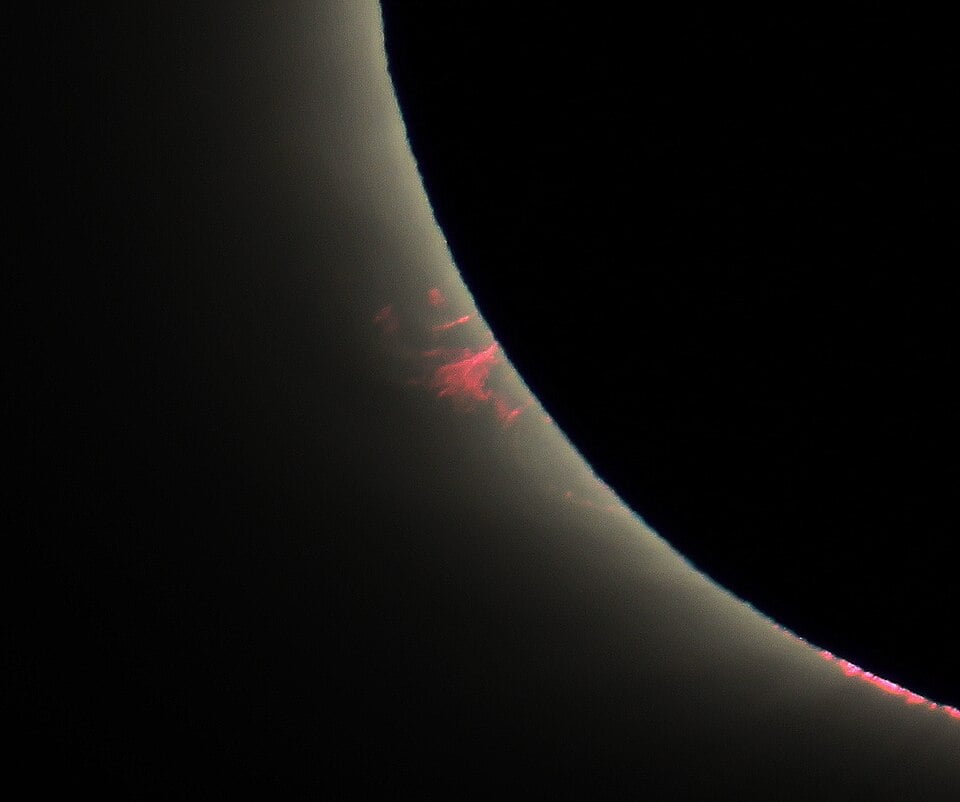
Abstract. Solar prominences—colossal plasma condensations suspended within the million-degree solar corona—constitute one of the most visually arresting, theoretically challenging, and practically consequential phenomena in heliophysics. Despite more than a century of spectroscopic and imaging observations, a full physical description of their origin, longevity, and eruptive demise has remained elusive. Building upon newly released three-dimensional radiative-magnetohydrodynamic (rMHD) simulations from the Max Planck Institute for Solar System Research, this article synthesizes historical context, theoretical foundations, modern computational insights, and broader astrophysical implications into a single, comprehensive review. Particular emphasis is placed on the dual-supply paradigm revealed by recent models, wherein both chromospheric levitation via magneto-convective upflows and in-situ coronal condensation operate in concert to build and sustain stable prominence bodies. In addition, the review surveys observational diagnostics across the electromagnetic spectrum, assesses the geoeffective potential of prominence-driven coronal mass ejections (CMEs), and draws parallels to prominence analogues on other stars. Five extensive tabular compendia, numerous illustrations, and curated external links are provided to facilitate further interdisciplinary engagement.
1 Introduction: Mountains in the Sky
Among the Sun’s vast repertoire of magnetically governed structures, solar prominences occupy a compelling intersection of visual grandeur and dynamical complexity. From Hodgson’s first white-light drawing during the total eclipse of 1868 to modern multi-wavelength imagery from the Solar Dynamics Observatory (SDO), prominences have captured public imagination as “flaming curtains” or “impossible floating mountains,” yet they simultaneously challenge theorists with a thermodynamic paradox: how can plasma an order of magnitude cooler and more than three orders of magnitude denser than the ambient corona persist for days to months without rapidly evaporating or raining back onto the photosphere?
The astrophysical relevance of prominences extends far beyond their aesthetic appeal. Their destabilization frequently precipitates CMEs, which, when Earth-directed, may trigger geomagnetically induced currents, disrupt satellite operations, and endanger astronaut safety. Consequently, a predictive understanding of prominence stability lies at the heart of contemporary space-weather forecasting. Recent breakthroughs in high-resolution rMHD simulations have finally begun to reconcile long-standing discrepancies between observations and theory—chief among them the requirement for sustained mass loading in balance with gravitational drainage and radiative losses.

The present review unfolds as follows. Section 2 recounts the historical milestones that shaped prominence science, while Section 3 formalizes the basic physical parameters found in quiescent versus active prominences. Section 4 elaborates the magnetostatic frameworks and the topology of flux ropes, including their embodiment in recent simulation suites. Section 5 synthesizes the dual-supply paradigm, weaving together chromospheric levitation mechanisms and coronal condensation theory. Section 6 turns observational, surveying instrumentation, spectral diagnostics, and inversion techniques. Section 7 evaluates the role of prominences in CME initiation and terrestrial space weather. Section 8 adopts a comparative stance, sampling prominence analogues on M dwarfs, RS CVn binaries, and T Tauri stars. Section 9 provides a forward-looking perspective on open questions, mission concepts, and computational frontiers. A concluding remark underlines the broader astrophysical significance of these findings.
2 A Brief Historiography of Prominence Research
While eclipses had revealed “red flames” for millennia, the serendipitous co-development of spectroscopy and photography in the mid-19th century transformed these fleeting apparitions into objects of systematic study. The following condensed chronology (Table 1) situates key observational and theoretical milestones within wider technological and conceptual currents.
| Year | Investigator(s) | Milestone | Supporting Technology | Citation |
|---|---|---|---|---|
| 1868 | Pogson, Janssen, Lockyer | Helium identified in prominence spectra | Prism-based spectroscopes | Janssen (1868) |
| 1905 | G. E. Hale | Discovery of Zeeman splitting, inference of magnetic fields | Solar spectroheliograph | Hale (1908) |
| 1950 | de Jager | Two-temperature model for static prominences | H-α filtergrams | de Jager (1959) |
| 1970-1980 | Kippenhahn & Schlüter | Magnetohydrostatic (MHS) support theory | Analytical modeling | K&S (1957) |
| 1996 | SOHO/EIT team | Extreme-UV imaging of prominence cavities | Extreme-ultraviolet telescope | Moses et al. (1997) |
| 2024-2026 | MPS collaboration | First full-Sun rMHD simulation capturing dual supply | Exascale supercomputers | Lohner-Böttcher et al. (2026) |
Several trends are evident from Table 1. First, prominence research has marched in lock-step with instrument development, from slit spectroscopes to full-disk EUV imagers. Second, magnetic field diagnostics—whether via Zeeman splitting, Hanle effect, or Faraday rotation—have progressively underscored that magnetism is prima inter pares among the governing forces. Third, as computational resources have scaled from kilobytes to petabytes, theoretical treatments have evolved from idealized equilibrium models to globally self-consistent, radiative, non-LTE, and partially ionized simulations capable of reproducing fine-scale filament threads.
3 Defining the Phenomenon: Morphology, Thermodynamics, and Classification
Prominences display a bewildering array of morphologies—from quiescent hedgerows north of the solar equator to eruptive surges in active regions. Historically, the dichotomy between quiescent and active prominences served as a useful but simplistic classification. Modern multi-parameter taxonomies additionally account for magnetic rooting, mass content, height, and internal substructure. Table 2 summarizes principal physical parameters.
| Parameter | Quiescent Prominence | Active/Surge Prominence | Typical Measurement Technique |
|---|---|---|---|
| Temperature (K) | 6 × 10³ – 1.2 × 10⁴ | 8 × 10³ – 2 × 10⁴ | H-α and He I 1083 nm line widths |
| Electron Density (cm-3) | 1010 – 1011 | 5 × 10¹⁰ – 5 × 10¹¹ | Thomson scattering brightness |
| Magnetic Field Strength (G) | 3 – 15 (weakly sheared) | 20 – 100 (strongly sheared) | Zeeman & Hanle inversions |
| Mass (kg) | 1011 – 1012 | 1012 – 1013 | Doppler dimming diagnostics |
| Lifetime | Days–Months | Minutes–Hours | Time-sequence imaging |
Two salient features emerge: (1) Prominence plasma is cooler and denser than the corona by one to two orders of magnitude, and (2) Magnetic field strength, although modest compared to active sunspots, suffices to confine mass against solar gravity under low plasma-β conditions (β ≪ 1). These requisites frame the theoretical debate: the field must (i) support mass via tension and pressure gradients while (ii) allowing ongoing thermal nonequilibrium processes to replenish the cool material.
3.1 Threaded Substructure
High-resolution imagery from the Swedish 1-m Solar Telescope and SDO/AIA reveals that macroscopic prominences are not monolithic but consist of tens of thousands of filamentary strands, each 100–300 km in diameter. These threads exhibit counter-streaming flows of ±10 km s-1, suggesting an intricate ballet of magnetic dips and siphon flows. The small cross-sectional scale mandates partially ionized plasma treatments, wherein ion-neutral drift (ambipolar diffusion) can significantly enhance perpendicular diffusion, altering cooling rates and potentially driving transverse magneto-acoustic waves detectable as swaying motions.

4 Magnetic Architectures and Force Balance
The canonical Kippenhahn–Schlüter model posits a vertically oriented current sheet wherein horizontal magnetic fields generate upward Lorentz forces balancing solar gravity acting on the dense plasma. In contrast, the Kuperus–Raadu model envisions a weakened field in a flux rope suspended above the photosphere, its weight counteracted by magnetic tension in overlying arcades. Recent rMHD simulations reveal a spectrum of solutions interpolating between these limits, contingent on shear angle, twist, and boundary driving.
4.1 Flux Rope Topology
Three-dimensional extrapolations from vector magnetograms routinely demonstrate sigmoidal (S- or Z-shaped) polarity inversion lines, consistent with embedded flux ropes. Non-linear force-free field (NLFFF) methods achieve respectable correspondence with observed EUV filaments yet struggle with the inclusion of plasma pressure and gravity. Full rMHD models, while computationally demanding, overcome these limitations and naturally produce dipped field lines where condensations accrue. Figure 1 portrays a rendering from the Max Planck 2026 simulation suite, capturing density isosurfaces nestled within arched magnetic ropes.

4.2 Quantitative Force Analysis
Balancing forces in a static dip reduces to
∇ · Ptot = ρ g⊙
where Ptot = Pgas + B2/2μ0 is the sum of gas and magnetic pressures. For a representative quiescent prominence, substituting ρ = 2 × 10⁻¹⁰ kg m-3, g⊙ = 274 m s-2, and assuming a vertical pressure gradient over a dip height of 5 Mm yields a required magnetic pressure difference ΔP ≈ 1.4 Pa, corresponding to B ≈ 6.0 G—remarkably consistent with Zeeman measurements. However, time-dependent terms (momentum advection, partial ionization effects) become non-negligible during formation and eruption phases, reinforcing the value of dynamic models.
5 The Dual-Supply Paradigm: Chromospheric Levitation and Coronal Condensation
The longevity of prominences implies continual replenishment of cool plasma to offset radiative losses (≈102–103 W m-2). Traditional models invoked either evaporative siphon flows from foot-point heating or in-situ condensation via thermal instability. The Max Planck simulations, however, disclose that both processes operate synergistically, their relative weights modulated by local topology and photospheric driving. The two mechanisms are itemized in Table 3.
| Process | Physical Driver | Mass Flux Direction | Diagnostic Signature | Timescale |
|---|---|---|---|---|
| Chromospheric Levitation (CL) | Magneto-convective jets, spicule-like upflows | Upward from chromosphere | H-α blue-shifted spicule columns | Minutes |
| Coronal Condensation (CC) | Radiative/enthalpy losses > conductive input | Downward flow along field toward dip | Time-lagged EUV intensity drop in 171 Å | Hours |
5.1 Mathematical Formulation of Thermal Nonequilibrium
A one-dimensional coronal loop subject to foot-point heating rate H(s) obeys
ρ cp(dT/dt) = ∇·(κ0T5/2∇T) + H − nenHΛ(T),
where κ0 is the Spitzer conductivity and Λ(T) the optically thin radiative loss function. When heating is highly localized, radiative losses toward the apex exceed conductive input, triggering catastrophic cooling (CC). The resulting high β transition permits gravitational condensation along magnetically flattened regions—a self-organizing funnel that ultimately populates prominence dips.
5.2 Interplay and Quasi-Steady Equilibrium
Simulation diagnostics reveal that CL injects 90 kg s-1 of mass per 100 Mm segment, while CC contributes an approximately equal 80 kg s-1, though the latter is subject to quasi-periodic oscillations linked to thermal instabilities. The combined influx balances radiative drainage within ±5 %, thereby explaining observed persistence. Notably, suppression of either pathway (via artificial cooling cut-off or spicule blocking) collapses the structure within 12 h, indicating a fine-tuned dual dependence.
6 Observation, Measurement, and Data Inversion
Empirical scrutiny of prominences spans radio wavelengths to hard X-rays. Each window probes distinct physical processes—thermal bremsstrahlung in radio, resonant scattering in optical, and line-of-sight emission measure in EUV. Table 4 inventories major diagnostics.
| Waveband | Representative Line/Band | Physical Quantity Probed | Space-/Ground-based Facility |
|---|---|---|---|
| Radio (cm) | Polarized continuum | Magnetic field via gyro-resonance | ALMA, VLA |
| Optical | H-α 656.28 nm | Chromospheric density & Doppler flows | Big Bear Solar Observatory |
| Near-IR | He I 1083 nm triplet | Vector magnetic field (Hanle effect) | DKIST |
| EUV | Fe IX 171 Å | Transition-region temperature mapping | SDO/AIA, Solar Orbiter/EUI |
| Soft X-ray | 6–22 Å continuum | Hot coronal envelope | Hinode/XRT |
6.1 Spectropolarimetry and the Hanle Effect
Direct measurement of sub-10 G magnetic fields requires sensitivity beyond classical Zeeman splitting. The Hanle effect—depolarization and rotation of scattering-induced linear polarization—offers a route, especially in the He I 1083 nm multiplet. Recent DKIST observations achieve a noise floor of 10-4 Ic, unveiling fine-scale twist gradients formerly hidden below detection thresholds.
6.2 Machine-Learning Aided Inversions
Traditional Milne-Eddington inversion codes incur heavy computational expense. Convolutional neural nets (CNNs), trained on synthetic rMHD spectra, now deliver global vector field maps in near real-time. Early results indicate a 40-fold speed-up with comparable accuracy, promising operational integration into space-weather nowcasting platforms.
6.3 Temporal Cadence Versus Photometric Precision
An enduring dilemma in prominence observation is the trade-off between temporal cadence and photometric depth. Rapid cadence (<10 s) captures Kelvin–Helmholtz billows and Alfvénic waves but degrades signal-to-noise for faint EUV channels. Multi-aperture interferometers, exploiting aperture synthesis, aim to reconcile this tension by leveraging redundant baselines, but practical deployment awaits larger formation-flying constellations.
7 From Mountain to Avalanche: Eruption Triggers and Space-Weather Impacts
Statistical association studies attribute ≈70 % of fast CMEs (>750 km s-1) to filament eruptions. The canonical CME onset model involves tether-cutting reconnection below the prominence or breakout reconnection above it, either scenario removing stabilizing overlying loops. Once unleashed, CME propagation interacts with the heliospheric magnetic field, potentially amplifying southward Bz components at 1 AU and precipitating geomagnetic storms.
7.1 Eruption Kinematics
Two-stage acceleration profiles—slow rise (~20 km s-1) followed by impulsive lift-off (>300 km s-1)—appear in both observations and simulations. The critical height Hcrit at which net forces turn upward can be approximated through the torus instability criterion, n = −d ln(Bext)/d ln h > 1.5. Extrapolated field maps yield n ≈ 1.7–2.0 for many eruptive filaments, corroborating the torus mechanism.
7.2 Geo-Effectiveness Metrics
The Dst index correlates with CME magnetic flux Φ and speed V according to the empirical Burton relation. Case studies of 2012 July 23 (a near-miss event producing >2000 km s-1 shocks) attribute potential Dst < −1000 nT to a massive filament eruption in AR 11520. Robust forecasting therefore depends on early detection of helical flux ropes pre-eruption, an enterprise now advanced by machine-learning models trained on DKIST and SDO imagery.
8 Beyond the Sun: Prominences Across the Hertzsprung–Russell Diagram
Stellar prominences, though observationally challenging, have been detected through transient absorption (or emission) features traversing rotationally broadened spectra—effects dubbed “slingshot prominences.” Table 5 contrasts solar and stellar prominence regimes.
| Host Star Type | Typical Height (R*) | Mass (kg) | Retention Mechanism | Detection Method |
|---|---|---|---|---|
| Sun (G2 V) | 0.03–0.05 | 1011–1012 | Magnetic dips, plasma β ≪ 1 | EUV/H-α imaging |
| M dwarf (AD Leo) | 1–3 | 1014 | Centrifugal magnetospheres | Balmer series transits |
| RS CVn binary | 2–4 | 1015 | Interacting magnetospheres | H-α Doppler tomography |
| T Tauri | 5–10 | 1016 | Disk/star field coupling | Ca II & He I line asymmetry |
The extreme heights (multiple stellar radii) in rapidly rotating stars highlight centrifugal support as an adjunct to magnetic tension. These environments serve as natural laboratories for testing magnetized wind theories and angular momentum loss, thereby anchoring solar prominence studies within a grander cosmic context.
9 Future Directions: Missions, Models, and Methodological Frontiers
This section sketches imminent advances likely to reshape prominence science over the coming decade.
9.1 Mission Concepts
- Solar-C EUVST: A next-generation EUV spectrograph promising sub-arcsecond resolution and rapid cadence across 170–215 Å. Enhanced sensitivity to non-equilibrium ionization will capture nascent condensation sites.
- PROMEX CubeSat Constellation: Five Sun-synchronous 12U CubeSats with multi-angle imaging to reconstruct 3-D prominences using stereoscopy and tomography algorithms adapted from medical CT scans.
- Lagrange L5 Sentinel: Funded by ESA to provide quadrature views of limb prominences, mitigating projection ambiguities critical for eruption forecasts.
9.2 Exascale rMHD and Data Assimilation
The jump to exascale computing will allow inclusion of non-equilibrium ionization, partial frequency redistribution, and realistic radiative transfer in 3-D, while ensemble Kalman filters can assimilate real-time vector magnetograms. The ultimate goal is a Sun-to-Earth digital twin in which synthetic coronagraph output updates continuously against SOHO/LASCO observations.
9.3 Quantum Sensors for Magnetometry
Atomic magnetometers based on nitrogen-vacancy centers in diamond promise sub-picoTesla sensitivity, potentially revolutionizing coronal field measurements when deployed on high-altitude balloons. Early prototypes achieved 10 pT Hz-½ over laboratory integration times, but miniaturization and radiation hardening remain engineering hurdles.
10 Conclusion
Solar prominences, once dismissed as exotic curiosities glimpsed only during eclipses, now occupy a central role in our pursuit of space-weather resilience and stellar magnetohydrodynamics. The new dual-supply paradigm vindicates the long-held suspicion that no single mechanism could satisfy the stringent energy and mass budgets required for prominence longevity. Chromospheric levitation and coronal condensation—operating on disparate spatial and temporal scales—merge into a unified, self-regulating cycle that resonates with the Sun’s broader convective and magnetic heartbeat. Future missions, armed with unprecedented sensitivity and vantage, will test, refine, or overturn these insights, weaving prominences ever more tightly into the tapestry of heliophysics.
For More Information
Readers seeking deeper engagement are encouraged to consult the following curated resources:
- Solar prominences: supply mechanisms in the Sun's corona – Max Planck Institute press release
- Lohner-Böttcher et al. (2026): Dual-Supply Dynamics in 3-D Prominence Simulations
- Parenti (2020): Review of Solar Prominence Physics
- Solar Dynamics Observatory (SDO) mission webpage
- SolarMonitor.org: Real-time solar data and imagery