As the space industry actively develops various large launch vehicles, a new study has emerged, questioning the long-held notion that larger rockets equate to more efficiency and cost-effectiveness. According to a report published by The Aerospace Corporation, there are critical considerations suggesting that there may indeed be such a thing as a rocket that is too large.
The report, titled "Super Heavy Lift Launch: Unlocking Future Space Opportunities," assesses the economic viability and potential limitations of "super heavy lift" (SHL) rockets, which are defined as any vehicle capable of delivering at least 50 metric tons into low Earth orbit.
The Case for Moderate-Sized Rockets
The Aerospace Corporation underscores that while the initial idea behind SHL rockets is centered around achieving greater payload capacities and economies of scale, there exists a critical threshold beyond which the cost per kilogram for launching may actually increase instead of decrease. The report states:
“SHLs can achieve lower costs per payload by maximizing total mass to orbit. However, there are limits beyond which a launch provider may encounter diminishing returns. At this point, increased rocket capacity can lead to higher operational costs and complexities.”
The study analogizes the development of large rockets to that of commercial airliners, specifically referencing the Airbus A380. Despite its engineering success in providing capacity, the A380 faced a commercial downfall due to high operational costs, which hampered its competitiveness against smaller, more fuel-efficient aircraft.
Cost vs. Capability: Operational Complexity
The report mentions essential factors contributing to escalating operational costs associated with SHL rockets. For instance, as rockets gain size:
- Increased preparation time: Larger rockets may require extended periods for assembly and preparation, escalating costs.
- Greater maintenance needs: Enhancements to vehicle complexity can result in heightened maintenance requirements.
- Operational complexity: Managing logistics and operations for larger payloads could lead to cumbersome processes, ultimately driving up costs.
Operational Lessons from Market Players
The Aerospace report evaluates several operational vehicles in the SHL category. Operational vehicles such as SpaceX’s Falcon Heavy and NASA’s Space Launch System represent critical case studies in understanding market demands and response attributes. Currently, the Falcon Heavy has seen limited operational flights since its introduction in 2018, with only twelve occurrences so far. This limited flight history raises concerns about the demand levels for SHL rockets.
As further demonstrated by the report:
“The Falcon Heavy has the same payload volume as the smaller Falcon 9, which could impede its ability to carry larger payloads. This raises questions regarding whether its operational history indicates a lack of market demand for future SHL rockets with even higher capacities.”
Future Opportunities in Emerging Markets
Despite the obstacles, the study identifies several potential markets poised to benefit from SHL rockets. These markets range from:
- Broadband satellite constellations: driving demand as they necessitate high-frequency launches.
- Orbital data centers: promising robust return on investment.
- Space-based solar power: may take precedence as a major energy solution.
However, the report notes that except for broadband constellations, the remaining markets are not yet established, adding layers of uncertainty to the all-important question:
“At what point will these emerging markets generate sufficient demand for the launch capacity that SHL vehicles could provide?”
Market Maturity and Launch Cadences
The report emphasizes the role of broadband constellations as the initial market for which SHL vehicles may serve, suggesting that establishing a robust customer base can stimulate standardization in payload designs.
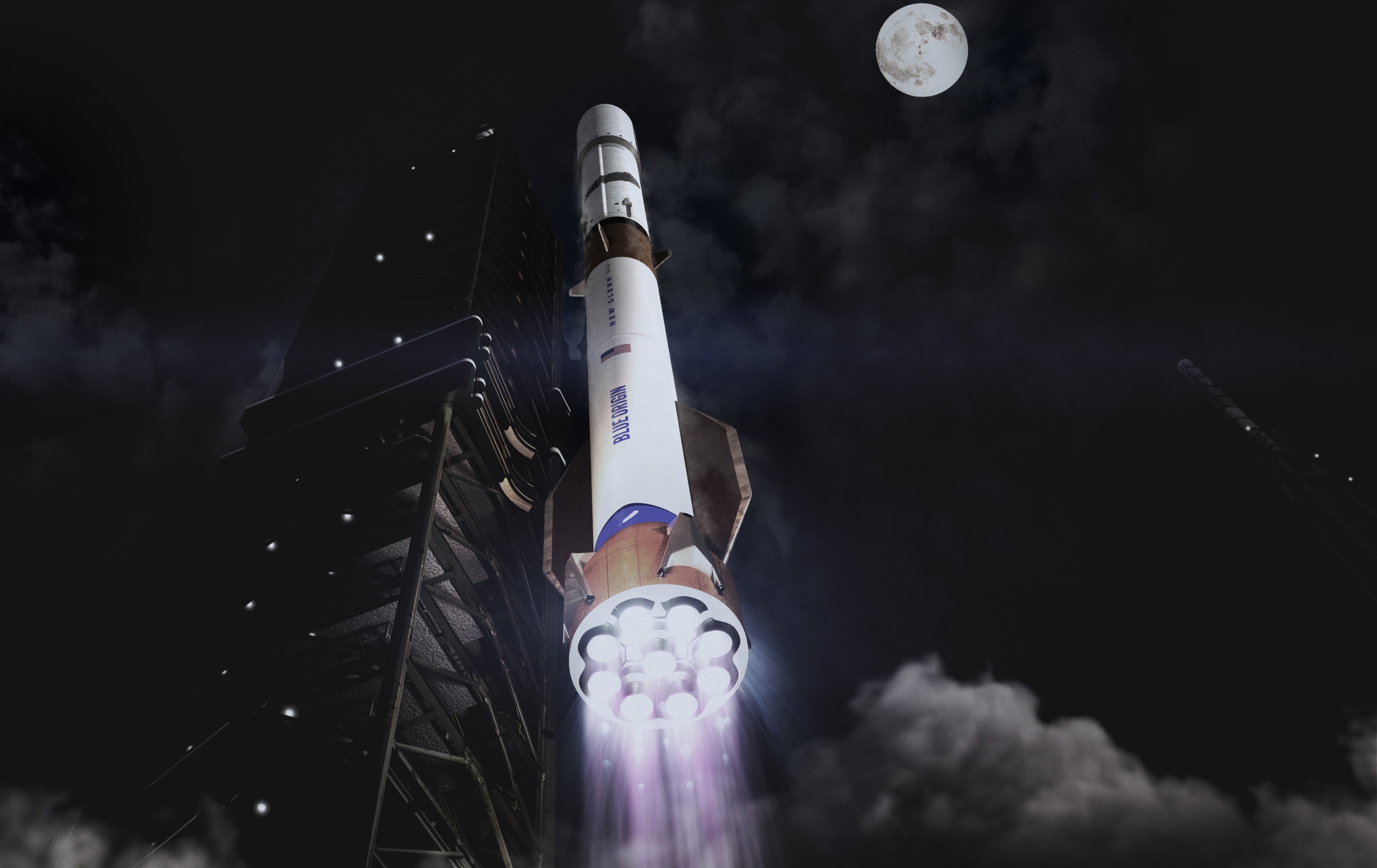
Image depicting Blue Origin's New Glenn 9x4 rocket.
“This foundational approach, which includes serving megaconstellations with a regular launch cadence,” the report articulates, “will undoubtedly help redefine SHL vehicles from being mere engineering marvels into profitable commercial assets.”
Conclusion: Balanced Perspectives on Scale
Ultimately, while the benefits of increased payload capacities through the development of SHL vehicles have much to offer the industry, the Aviation sector demonstrates that larger does not always equate to better. THere must be a critical analysis of operational efficiencies that take place as rocket dimensions expand. The insights from this report serve as a crucial guide as the industry navigates the complexities of future launch possibilities.
For More Information
Please refer to the following sources for additional insights related to launch vehicles and the evolving aerospace industry: