Abstract – Since the first controversial whiff of Martian methane was announced in 2004, the gas has grown from a curiosity into one of planetary science’s most hotly debated enigmas. Methane on Earth is produced predominantly by biology, yet it can also arise from several abiotic processes that operate inside terrestrial planets and icy bodies. For more than eight years, the European Space Agency’s ExoMars Trace Gas Orbiter (TGO) has executed an unprecedented campaign to resolve this debate through high–spectral-resolution limb sounding, solar occultations, and nadir observations. Intriguingly, TGO has returned a string of null results that stand in stark contrast with the rover-borne Tunable Laser Spectrometer (TLS) on NASA’s Curiosity and with a handful of telescopic detections obtained from Earth. This article synthesizes more than two decades of literature, places the non-detections in an interdisciplinary context, and explores future pathways toward settling the methane question once and for all.
1. Introduction and Historical Context
Methane (CH4) is a reduced hydrocarbon that is both a potential biosignature and a tracer of interior geologic activity. On Earth it has a mean residence time of roughly a decade, but in the low-pressure, photochemically active Martian atmosphere its lifetime is predicted to be no more than a few hundred years—and very likely far shorter if strong heterogeneous oxidation on dust grains operates as several models suggest. Consequently, any methane that can be detected today must have been released in the geologically recent past. That simple argument catapulted methane to the forefront of Martian astrobiology after three partially independent groups reported tantalizing evidence between 2003 and 2004.
“Methane on Mars would not merely be another atmospheric constituent; it would be a beacon of ongoing planetary evolution—whether biological or geochemical.” — Dr. Michael J. Mumma, NASA GSFC (2004 press briefing)
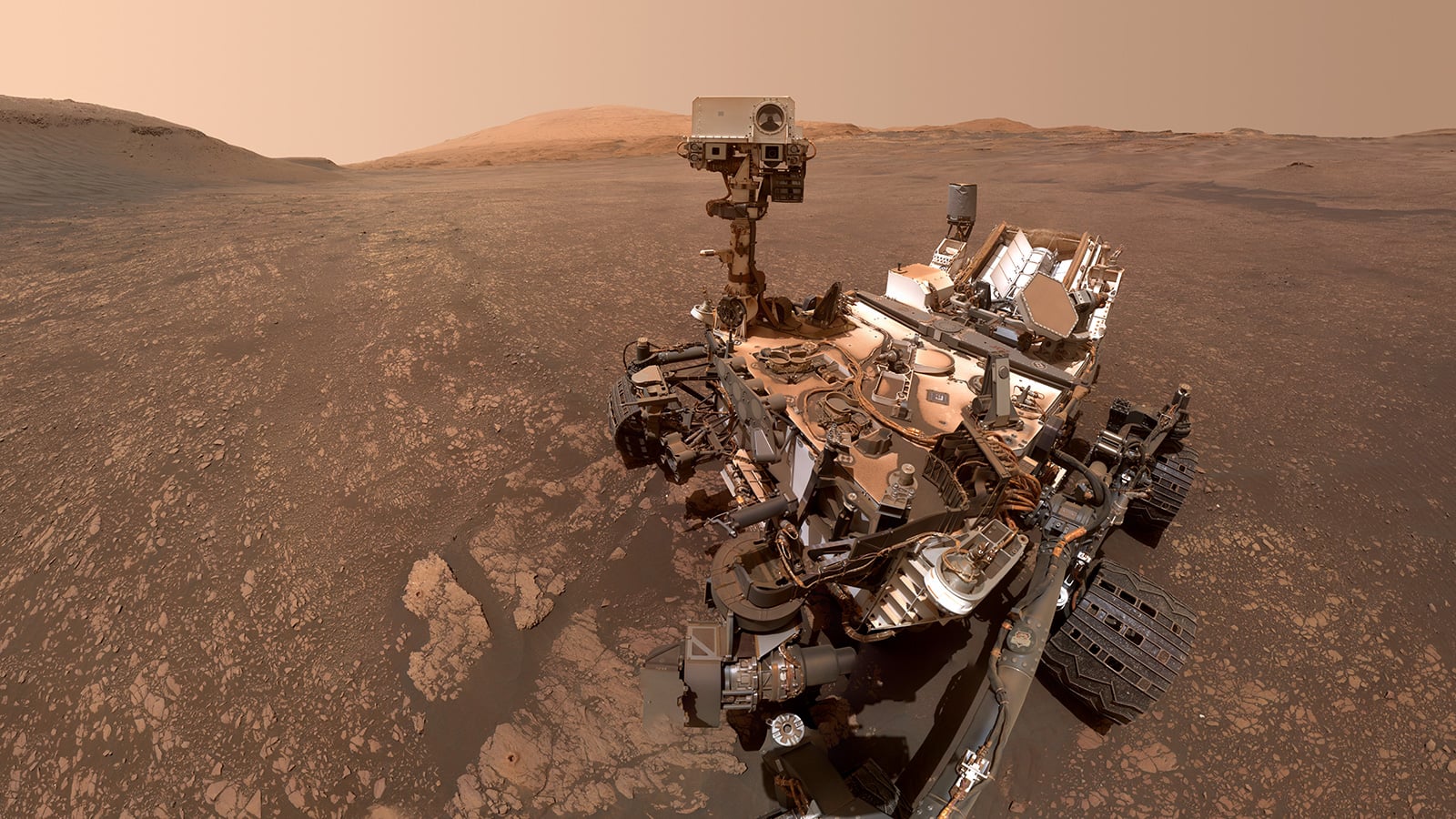
Yet the field quickly polarized. While a subset of researchers accepted the early detections as legitimate, others argued that instrumental systematics, terrestrial contamination, and spectral line mis-assignment offered more parsimonious explanations. The arrival of the Curiosity rover in Gale Crater (2012) and of ExoMars TGO in Martian orbit (2016) appeared poised to bring clarity, but instead the dual mission set has deepened the mystery: the rover repeatedly registers episodic “puffs” of methane at the parts-per-billion volume (ppbv) level, whereas the orbiter returns upper limits near 0.02 ppbv globally—three orders of magnitude lower. In the sections that follow we analyze the methodological foundations of each data set, compare photochemical models, and examine whether spatial/temporal heterogeneity might reconcile the competing claims.
2. Observational Platforms and Instrument Suites
2.1 Ground-based Telescopic Campaigns
Observations of Martian methane from Earth employ high-dispersion infrared spectroscopy, typically in the 3.3 µm (ν3) Q-branch of CH4. Facilities such as NASA’s Infrared Telescope Facility (IRTF), the ESO Very Large Telescope (VLT), and the W. M. Keck Observatory have contributed composite spectra during favorable oppositions. Although the resolving power (R ≈ 70 000–100 000) is sufficient to separate Martian and telluric lines, the reliability of line-shape deconvolution in the presence of variable terrestrial methane columns remains contentious.
2.2 ESA’s Mars Express Planetary Fourier Spectrometer (PFS)
PFS was designed for broad characterization of major gases (CO2, H2O, CO, O3), not trace species. Nonetheless, a slight bump consistent with the 3018 cm-1 CH4 band was reported in 2004. Subsequent re-examinations reduced the significance level to ≈2σ, illustrating the danger of pushing an instrument beyond its design envelope.
2.3 NASA’s Mars Science Laboratory SAM-TLS
The Sample Analysis at Mars (SAM) suite contains a miniaturized tunable laser spectrometer with two diode lasers scanning the 2.7 µm and 3.3 µm regions. Because the inlet draws directly from the local environment, SAM sidesteps terrestrial contamination. Through more than 35 atmospheric intake experiments, SAM has documented a “background” of ~0.41 ± 0.17 ppbv and sporadic spikes up to 21 ppbv. The statistical credibility of those spikes has withstood multiple internal reviews, but the inability of TGO to corroborate remains perplexing.
2.4 ESA/Roscosmos ExoMars Trace Gas Orbiter
TGO carries two primary atmospheric instruments—NOMAD (Nadir and Occultation for Mars Discovery) and ACS (Atmospheric Chemistry Suite)—each subdivided into spectral channels optimized for distinct modes.
| Channel | Mode | Spectral Range (µm) | Resolving Power (R) | Nominal CH4 Detection Limit |
|---|---|---|---|---|
| NOMAD — SO | Solar Occultation | 2.2 – 4.3 | 20 000 | 0.02 ppbv (stratosphere) |
| NOMAD — LNO | Limb/Nadir | 2.3 – 3.8 | 10 000 | 0.1 ppbv (lower atm.) |
| ACS — MIR | Solar Occultation | 2.2 – 4.0 | 30 000 | 0.02 ppbv |
| ACS — NIR | Nadir | 0.9 – 1.7 | 20 000 | 0.2 ppbv |
Both instrument packages employ AOTF (Acousto-Optical Tunable Filter) orders to isolate regions of the spectrum that host methane’s fundamental and overtone lines. Thousands of occultations have been analyzed, yet none reveal absorption depths incompatible with noise.
3. Methodological Disparities: Why Might Two Platforms Disagree?
3.1 Sampling Volume and Locality
Curiosity’s TLS measures air immediately above Gale Crater’s floor at z ≈ -4.5 km relative to the areoid. TGO, in contrast, integrates along a slant path of up to several hundred kilometers. If methane originates from localized sources with rapid near-surface destruction, an observer in low-orbit might literally “miss” the plume.
“Limb geometry, slant columns, and retrieval kernels must be considered before invoking exotic chemistry to explain a non-detection.” — Dr. S. Robertson, University of Oslo (2021)
3.2 Temporal Cadence
TLS typically conducts atmospheric analyses at night, when diurnal upslope winds settle and contamination from the rover’s exhaust is minimal. TGO’s occultations cover dawn/dusk terminators but only sample a given latitude once every several sols. Hence, a burst could, in principle, elude orbital detection if it dissipates within ~6 hours.
3.3 Photochemical Sinks Beyond the Standard Model
Recent laboratory experiments show that perchlorate-coated dust, when exposed to ultraviolet (UV) light, can oxidize methane with rate constants orders of magnitude larger than gas-phase OH reactions. Gale Crater, excavated into a sulfate-rich layered sequence, may therefore experience unusually aggressive methane removal, confining the gas to a shallow boundary layer.
4. Abiotic Versus Biotic Production Pathways
| Mechanism | Geochemical Requirements | Key Reaction(s) | Estimated Yield (kg yr-1) | Astrobiological Implication |
|---|---|---|---|---|
| Serpentinization | Ultramafic olivine + H2O | Fe2+ → Fe3+ + H2; CO2 + 4 H2 → CH4 + 2 H2O | 4 × 10⁵ | Abiotic but indicates hydrothermal habitability |
| Magmatic Degassing | Reduced carbon in mantle melts | C0 + 2 H2 → CH4 | 1 × 10⁵ | Requires residual volcanism |
| Clathrate Release | CH4 clathrates in cryosphere | Thermal or impact destabilization | < ? (model-dependent) | Could represent ancient biogenic storage |
| Methanogenesis | Extant anaerobic microbes | CO2 + 4 H2 → CH4 + 2 H2O | 103 – 106 | Direct biosignature |
| UV-Driven CO₂ Photolysis | None (atmospheric) | CO2 + hν → CO + O; Subsequent recomb. | < 1 | Negligible source term |
The entries above reveal that multiple abiotic channels can generate methane fluxes comparable to biological output, weakening the gas’s status as a silver-bullet biosignature. Nonetheless, disentangling these channels is feasible because each pathway leaves distinct isotopic, mineralogical, and spatial fingerprints.
5. Quantitative Comparison of Reported Measurements (2004-2026)
| Year | Instrument | Mode | Peak Mixing Ratio (ppbv) | Detection Significance | Reference |
|---|---|---|---|---|---|
| 2004 | Mars Express PFS | Nadir (IR) | 10 ± 5 | 2σ | Formisano et al. |
| 2009 | Keck NIRSPEC | Earth-based | 33 | 4σ | Mumma et al. |
| 2013-2025 | Curiosity SAM-TLS | In situ | 0.41 (background) / 21 (spike) | >5σ | Webster et al. |
| 2018-2026 | TGO NOMAD/ACS | Orbital SO + Nadir | < 0.02 (upper limit) | 3σ (non-det.) | Knutsen et al. |
| 2021 | Curiosity + TGO (simult.) | Coord. Campaign | SAM: 0.53 / TGO: <0.02 | n/a | Moores et al. |
The table underscores a chronically inconsistent data landscape: values span nearly three orders of magnitude. Although inter-comparison working groups are currently reprocessing shared calibration files, no consensus has emerged. In particular, the 2021 coordinated campaign, in which TGO’s line of sight intersected the atmospheric column above Gale Crater within 90 minutes of a TLS measurement, produced an unequivocal disparity.
6. Atmospheric Transport and Destruction of Methane
6.1 Classical Photochemical Models
In the canonical framework (Atreya et al., 2007), methane reacts with OH and O(1D) generated by CO2 photolysis, yielding CH3 and subsequently formaldehyde (H2CO) and CO. The integrated lifetime under average solar flux is ~330 years. Given TGO’s upper limit of 0.02 ppbv and an estimated global atmospheric mass of 2.5 × 10¹⁶ kg, the steady-state production rate must be ≤ 5 × 10² kg yr-1.
6.2 Dust-Mediated Heterogeneous Chemistry
Chlorate and perchlorate salts synthesized by atmospheric electrochemistry are abundant at multiple landing sites. Laboratory irradiation of perchlorate-coated palagonite in a Mars-analog chamber demonstrated methane consumption timescales shorter than 200 seconds at UV fluxes corresponding to local noon at 0° N. If such rapid loss extends planet-wide, methane plumes would be confined within tens of meters of the ground—consistent with rover detections but invisible to TGO occultations whose tangent points lie ≥ 5 km above the surface.
6.3 Global Circulation and Boundary-Layer Exchange
Mesoscale modeling of topographically trapped flows in Gale Crater suggests that night-time cold sinks can accumulate heavier gases, possibly creating a “methane lake” that evaporates shortly after sunrise. If release and oxidation phases occur within a single diurnal cycle, orbital detection probabilities diminish further.
7. Reconciling Contradictory Observations: Six Testable Hypotheses
- Ultra-Localized Sources – Methane originates from discrete vents whose plume widths are < 500 m, narrower than TGO’s slant-path footprint.
- Rapid In Situ Destruction – Perchlorate-catalyzed heterogeneous oxidation erases methane before vertical mixing.
- Instrumental Artifact in TLS – Analytical blanks mischaracterize evolving background signals, leading to over-subtracted baselines.
- Line-Shape Confusion in TGO Retrievals – CO2 hot bands or isotopologues interfere with CH4 signatures under certain temperatures.
- Seasonal Adsorption/Desorption – Methane adsorbs onto regolith during cold nights and desorbs mid-day, producing concentration micro-cycles.
- Dual-Mode Production – Abiotic baseline (~0.4 ppbv) combined with sporadic biogenic bursts (e.g., disequilibrium in transient brines).
Each hypothesis makes distinct, falsifiable predictions relating methane variability to meteorological drivers, mineralogy, or isotopic fractionation. Targeted investigations can thus adjudicate among them.
8. Future Mission Architecture and Instrument Concepts
| Mission (Launch) | Platform | Primary Methane Instrument | Detection Threshold | Ancillary Biosignature Payloads | Status |
|---|---|---|---|---|---|
| ESA Rosalind Franklin (2029) | Rover | Mars Organic Molecule Analyzer (MOMA) | 1 ppbv (gas) / 1 ppb (rock) | Raman, Micro-imager, Drill 2 m | Pending launch |
| Mars Ice Mapper (2033) | Orbiter | IR Spectrometer (TIR/VNIR) | 0.05 ppbv | Radar sounder | Phase A study |
| Methane Microsat (2030) | CubeSat Constellation | Laser Heterodyne Radiometer | 0.01 ppbv | None | Concept |
| MSR Sample Return Orbiter (2031) | Orbiter | High-Res IR Mapping Spectrometer | 0.02 ppbv | Isotope-ratio mass spec (samples) | Pre-formulation |
| LIFE Lander (2035) | Lander | Laser-Induced Breakdown Spectroscopy | 0.5 ppbv | Genomic sequencer (DNA/RNA search) | Proposed |
Collectively these missions will probe from the kilometer down to the micron scale, bridging the spatial gap between orbital and in-situ analyses that currently complicate data synthesis.
9. Implications for Mars Habitability and Comparative Planetology
- Energy Gradients – If serpentinization is active, molecular hydrogen (H2) and methane constitute redox couples that could sustain chemolithoautotrophic life analogous to Earth’s deep-sea vent ecosystems.
- Climate Archive – Any detection of enhanced δ13C-depleted methane relative to CO2 would imply significant fractionation, pointing toward biological processing.
- Planetary Evolution – Persistent null detections might suggest that Mars’ mantle is more oxidized than Earth’s, aligning with isotopic data from SNC meteorites.
- Exoplanet Context – Clarifying methane sources on Mars will refine models used to interpret CH4 on exo-Earths observed by missions such as JWST and Habitable Worlds Observatory.

Figure 1 – Artist’s impression of ESA’s Trace Gas Orbiter performing a solar occultation experiment. Credit: ESA–D. Ducros.
10. Synthesis and Outlook
The methane saga embodies the iterative nature of the scientific method: claims, counter-claims, and refined instrumentation progressively narrow the parameter space. At present, the data are most consistent with one of two scenarios:
- A genuinely methane-poor Mars where episodic rover detections are artifacts of localized processes or analytical cross-talk; or
- A spatially and temporally heterogeneous methane distribution shaped by rapid surface destruction, producing concentrations below TGO’s detection limit except within tens of meters of point sources.
Resolving the dichotomy demands synergistic observations that span both spatial scales. High-altitude aerial platforms (e.g., the proposed Ingenuity-class long-range helicopters) could map near-surface plumes while maintaining context with orbital measurements. In parallel, in-situ instruments must integrate rigorous contamination controls and isotopologue discrimination ( Δ13CH4, CH3D) to distinguish among production pathways.
| Knowledge Gap | Required Measurement | Feasible Technique | Anticipated Mission |
|---|---|---|---|
| Vertical gradient within first 500 m | Multi-level CH4 profiles | Balloon-borne tunable diode lidar | Mars Aerostat Pilot (2032) |
| Isotopic fingerprinting | δ13C, δD of CH4 | Two-channel TLS with reference cells | Rosalind Franklin Drill |
| Localized flux quantification | Eddy-covariance fast-response sensors | 3-D sonic anemometer + open-path laser | Mars Surface Network |
| Oxidant distribution | Perchlorate/Chlorate in aerosols | Laser-ablation mass spectrometry | LIFE Lander |
11. Conclusions
ExoMars TGO’s stringent upper limits represent the most precise orbital constraints ever placed on Martian methane. Although apparently at odds with rover-based detections, these measurements do not falsify the existence of methane outright; rather, they highlight limitations in our physical understanding of near-surface processes and atmospheric transport. Advancing the field will require integrated networks, cross-validation protocols, and perhaps most importantly, patience. Whether Mars farts methane in micro-bursts or remains effectively sterile of the gas, the journey toward the answer continues to push the boundaries of remote-sensing technology and planetary geochemistry.
For More Information
[3] Knutsen, E. W., et al. (2021) “A stringent upper limit on methane on Mars from TGO.” Science.
[4] Atreya, S. K., et al. (2019) “Low methane on Mars: insights into destruction pathways.” Icarus.
[5] European Space Agency (ESA) – ExoMars Programme Overview.
Additional datasets, high-resolution figures, and retrieval codes are archived at the Planetary Atmospheres Node of NASA’s PDS and may be accessed under open-access licensing.