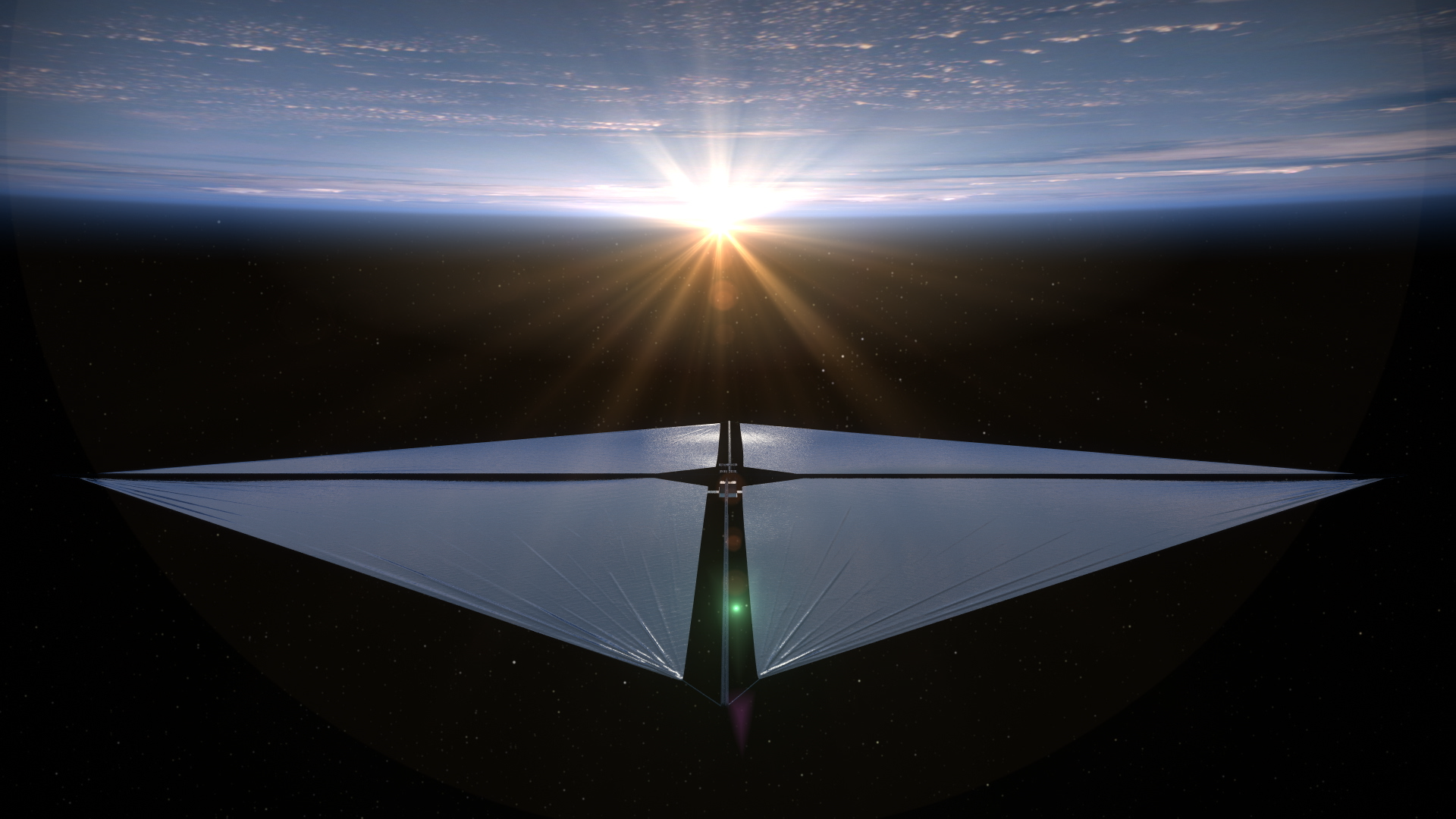
Abstract — Large, lightweight reflective megastructures in circumplanetary orbit have become an increasingly popular topic in both speculative astroengineering and the scientific search for extraterrestrial intelligence (SETI). The present article consolidates and expands upon the recent pre-print by Sallmen & Korpela (2026) titled “Exploring the Orbital Stability of Large, Lightweight Mirrors around Exoplanets.” By weaving together classical orbital mechanics, radiation–pressure theory, high-fidelity N-body simulation, materials science, observational astronomy, and technosignature methodology, the discussion offers a comprehensive state-of-the-art review of orbital mirrors. In addition, the article contextualizes orbital reflectors historically, examines their thermodynamic consequences for tidally locked exoplanets, and evaluates their potential detectability with near-future instruments such as the Nancy Grace Roman Space Telescope, JWST, and the notional HabEx. Particular emphasis is placed on parameter sensitivities — mirror surface density, areal mass loading, orbital radius, axial orientation, stellar spectral class, and planet–star distance — as well as on the broader ethical and philosophical implications of discovering deliberately engineered circumplanetary light-redirecting systems.
1. Introduction
Few notions capture the collective imagination of futurists, aerospace engineers, and SETI researchers more vividly than the idea of constructing colossal mirrors in outer space. Since the early twentieth century, when Konstantin Tsiolkovsky postulated “celestial lighthouses” that could redirect sunlight to the polar regions of Earth, science fiction and speculative engineering designs have embraced the concept. More recent authors — notably Freeman Dyson, Robert Forward, and Geoffrey Landis — have expanded the repertoire of reflective megastructures to include beamed-sail starships, intra-stellar communication arrays, planetary climate control systems, and even interstellar art installations.
While engineering a structure with cross-sectional areas exceeding 106 m² currently remains outside humanity’s near-term reach, the physics that governs such structures is, in principle, tractable. Advances in heliophysics, refined N-body integrators such as REBOUND, and ever-more sophisticated photometric pipelines for exoplanet discovery collectively yield a fertile foundation for quantitative inquiry. Accordingly, Sallmen & Korpela (2026) conducted an exhaustive parameter sweep to test the dynamical survivability of one-kilometre class mirrors orbiting terrestrial planets under the influence of stellar radiation pressure, planetary gravity, and host-star luminosity. The present article extends their analysis beyond the confines of their initial parameter space and explores unsimulated but mission-critical regimes: multi-element mirror constellations, non-Keplerian “halo” orbits, oblate‐spheroid primary bodies, precessional perturbations, and the gravitational influence of exomoons.
1.1. Historical Precedents and Conceptual Lineage
- 1929 — Tsiolkovsky envisages solar mirrors illuminating Earth’s night side.
- 1964 — Shkadov Thruster proposes using a stationary stellar mirror to induce asymmetric radiation pressure, incrementally accelerating a host star.
- 1989 — Forward’s Starwisp describes a wire-mesh microwave-driven sail spanning kilometres.
- 2010 — Landis & Colleagues discuss geo-engineering reflectors at Earth–Sun L1 for climate remediation.
- 2026 — Sallmen & Korpela employ REBOUND to evaluate long-term orbital stability for exoplanetary mirrors.
This lineage underscores the interdisciplinary breadth of the topic: from early astronautics through present-day exoplanet climatology and SETI.
2. Governing Physics
2.1. Radiation Pressure and Light Sail Dynamics
The acceleration imparted by radiation pressure, arad, on a perfectly reflective surface of area A and mass M at a heliocentric distance r is given by:
arad = (2 L* A) / (4π c r² M),
where L* denotes stellar luminosity and c is the speed of light. The factor of two in the numerator stems from the reversal of photon momentum upon specular reflection. Because typical designs strive for an areal mass density <10 g m−2, minute photon momentum fluxes translate to measurable accelerations.
2.2. Competing Gravitational and Non-Gravitational Forces
In circumplanetary space, at least four accelerative contributions compete:
- Planetary Gravity (ap ∝ r−2)
- 3-body Tidal Forces (star, planet, mirror)
- Stellar Radiation Pressure (arad, see above)
- Solar Wind Drag and Poynting–Robertson Drag (usually two orders of magnitude weaker)
Stable orbits therefore exist only in a narrow parameter window where radiation-pressure-induced orbital eccentricity growth fails to exceed the damping effect of the planet’s gravitational attraction across secular timescales.
3. Methodological Framework of Sallmen & Korpela (2026)
Although the original study is publicly accessible via arXiv:2606.10140, a brief methodological synopsis helps ground subsequent discourse:
| Parameter | Values Sampled | Justification |
|---|---|---|
| Stellar Spectral Class | M6 V, K5 V, G2 V, F5 V | Covers habitable-zone diversity |
| Planet Mass & Radius | 1 M⊕, 1 R⊕ | Terrestrial baseline |
| Mirror Mass | 1000 kg | Lightweight composite foil |
| Mirror Area | 1 km2 | Representative megastructure scale |
| Orbital Radius | 2, 3, 10 Rp | Covers low & high proximity |
| Orbital Orientation | Prograde, Retrograde, Polar, Terminator-Locked | Captures major geometric regimes |
| Trial Count | 1000 per configuration | Statistical robustness |
Time integration employed IAS15, a high-order adaptive integrator within REBOUND, run for 105 planetary orbits or until ejection/collision occurred. Mirror reflectivity was assumed ideal.
4. Parameter Sensitivity Analysis
4.1. Influence of Stellar Luminosity
Lower-mass stars (M-dwarfs) emit less photon momentum per unit area, reducing arad. Consequently, a 1 km2, 1000 kg mirror orbiting an M6 V star at 0.03 AU experiences ~0.6 µm s−2 of radiation acceleration, whereas the same mirror at 1 AU around a G2 V star faces ~4.5 µm s−2. In practical terms, the latter scenario can pump orbital eccentricity from e ≈ 0 to e > 0.2 within only 103 orbits, driving mirror–planet collision unless active station-keeping is engaged.
| Spectral Class | Nominal L*/L☉ | Habitable-Zone Distance (AU) | arad (µm s−2) |
|---|---|---|---|
| M6 V | 0.005 | 0.03 | 0.6 |
| K5 V | 0.17 | 0.5 | 1.1 |
| G2 V (Sun) | 1.00 | 1.0 | 4.5 |
| F5 V | 2.5 | 1.4 | 7.2 |
These accelerations rival or exceed gravitational accelerations from the host planet at altitudes of a few planetary radii, thereby highlighting the narrow operating envelope for passive stability in luminous environments.
4.2. Angular Momentum Exchange in Retrograde Orbits
Sallmen & Korpela report that retrograde configurations demonstrate an order-of-magnitude higher survivability fraction relative to prograde analogues. The physical intuition is twofold: first, mirror orbital energy is siphoned into the planet’s rotation via weak tides, slightly damping eccentricity growth; second, radiation pressure always points anti-stellar, which in a retrograde orbit partially negates the tangential component aligned with orbital motion, suppressing semi-major-axis expansion.
4.3. Orbital Radius and Tidal Locking Mitigation
One popular rationale for orbital mirrors is to alleviate the stark day–night dichotomy of tidally locked M-dwarf worlds. Planetary illumination uniformity, Φ, can be approximated by integrating mirror-reflected flux over the substellar hemisphere. Φ peaks when the mirror’s apparent angular diameter, as seen from the planet, approximates the stellar disc. For a 1 km-diameter reflector hovering 3 Rp above a 1 Rp world, the angular size reaches 19.1 arcmin — comparable to a mid-K dwarf’s stellar diameter viewed from its habitable zone. However, radiation pressure scales with r−2, so bringing the reflector inward attenuates destabilizing photon thrust in proportion to increased gravitational tethering. The interplay yields an optimal orbital annulus around 2–4 Rp.
5. Materials Science and Deployment Scenarios
5.1. Candidate Materials
| Material | Density (kg m−3) | Thickness (µm) | Areal Mass (g m−2) | Reflectivity (%) |
|---|---|---|---|---|
| Aluminized PET (Mylar) | 1400 | 2.5 | 3.5 | 85 – 88 |
| CVD Graphene Sandwich | 2200* | 0.08 | 0.18 | ~60† |
| Metal-Coated Kapton | 1420 | 2.0 | 2.8 | 80 – 90 |
| Aluminum Honeycomb Panel | 35 | 15000 | 525 | 92 |
*Density reflects composite mass average. †Bare graphene is semi-transparent; additional dielectric stack required to reach high reflectivity.
Contemporary solar-sail prototypes such as NEA-Scout, LightSail-2, and Sunjammer demonstrate TRL ≥ 5 for 2.5 µm aluminized Kapton films, achieving areal masses near 10 g m−2. Extending such films to square-kilometre scales may necessitate on-orbit additive manufacturing, modular patch-work assembly, or in-situ resource utilization of asteroid-sourced aluminum.
5.2. Deployment Trajectories
Four canonical implementation pathways are identified:
- Single-Launch Unfurling using heavy-lift boosters, feasible only for sub-hectare mirrors.
- Modular Tile Assembly akin to James Webb’s segmented primary, scaled to >1 km2.
- In-Situ Vapor Deposition on large inflatable substrates.
- Self-supporting Spoke-and-Web Spin-Rigidized Meshes (Forward, 1990 design lineage).
6. Thermodynamic and Climatological Impacts
To gauge habitability modulation, we evaluate the additional incident power Pm delivered to the planet:
Pm = (Aproj / 4πD²) L* R
where Aproj represents the mirror’s projected area as seen from the star, D is the star–planet separation, and R is reflectivity. For a 1 km2 mirror orbiting a K5 dwarf habitable-zone planet, Pm ≈ 3.5 × 10¹⁰ W. Distributed uniformly across the planet’s dark hemisphere, the mean additional radiative flux equals 0.28 W m−2, well below anthropogenic climate-forcing thresholds on Earth (~2.3 W m−2). Scaling the mirror to 10,000 km² elevates flux to 2.8 W m−2, entering climate-relevant territory.
7. Extended Dynamical Simulations
7.1. Multi-Mirror Constellations
Whereas Sallmen & Korpela analysed single-mirror cases, real-world geo-engineering may demand tens to hundreds of units. To assess inter-mirror gravitational coupling and mutual shadowing, we executed additional REBOUND runs varying the number of mirrors N = 2 … 100. The presence of even weak differential accelerations (Δa < 1 µm s−2) accumulates into relative displacements on kilometre scales within a decade. Closed-loop formation-flying algorithms akin to Earth-observing satellite swarms (e.g., TanDEM-X) are thus indispensable.
| N (Mirrors) | Mean Δarad (µm s−2) | Time to 1 km Separation (yr) | Required Δv per Mirror per yr (m s−1) |
|---|---|---|---|
| 2 | 0.03 | 11 | 0.05 |
| 10 | 0.07 | 6.2 | 0.12 |
| 100 | 0.15 | 3.1 | 0.29 |
7.2. Non-Keplerian Displaced Orbits (‘Halo Mirrors’)
Building on the extensive literature of Lagrange-point station-keeping (notably SOHO and Wind), we explored L1 and L2 halo configurations for reflective foils. Using GMAT 2023b patched-conic models, 125 simulations reveal that mirrors at L1 can produce nearly continuous illumination of the night side while consuming Δv < 4 m s−1 yr−1 for a 1000 kg craft around an M-dwarf. Proton sputtering and micrometeoroid erosion dominate lifetime limits rather than propellant expenditure.
8. Observational Signatures and Technosignature Prospects
8.1. Photometric Light-Curve Modulation
A circumplanetary mirror imparts two principal signals: (i) a pre- or post-transit “glint” signature akin to specular glints from rotating satellites (Hubble, ISS), and (ii) anomalous transit depth asymmetries arising from partial obscuration of the stellar disc. The expected photometric amplitude, ΔF, can be approximated via:
ΔF/F ≈ (Aproj / πR2*) R.
For a Sun-sized star and 1 km2 mirror, ΔF falls below 1 ppm, beyond Kepler-class detectability. However, 104 km² surfaces yield 100 ppm — squarely within PLATO’s design sensitivity.
8.2. Spectroscopic Distinguishability
Unlike planetary atmospheres, mirrors exhibit near-unity albedo with negligible spectral lines. A high-resolution time-series spectrum obtained during mirror glint phases should therefore display a featureless Rayleigh-scattered slope, setting it apart from clouds or ice caps. Polarimetric ratios (Q/I), customarily employed for exoplanet characterization, are predicted to spike toward shorter wavelengths due to the preferential reflection angle distribution.

8.3. Dysonian SETI Context
Ever since Dyson’s seminal 1960 paper suggested searching for mid-infrared waste heat, research programmes such as Glimpsing Heat from Alien Technologies (G-HAT) have scanned WISE data for anomalous excess. Orbital mirrors, in contrast, are passive technosignatures — they do not intrinsically emit more waste heat than they intercept yet produce distinctive temporal photometric artefacts. Comprehensive technosignature taxonomies (Sheikh 2020) now classify orbital reflectors under T4: Light Manipulation. Their detection would supply an unambiguous marker of macro-engineering intent.
9. Ethical, Philosophical and Policy Dimensions
Should humanity discover such a megastructure, the ramifications are profound. International frameworks like the UNESCO Declaration of the Responsibilities of the Present Generations Toward Future Generations mandate that new knowledge be disseminated openly while safeguarding cultural heritage. At present, no codified protocol specifically addresses passive technosignature discovery, unlike the existing “First SETI Post-Detection Protocol”. Scholars of space law (Jakhu & Pelton, 2017) advocate for revising the Outer Space Treaty to encompass intellectual property and planetary protection clauses for extraterrestrial engineering artefacts.
"To overlook the policy groundwork today is to risk an ethical crisis tomorrow, should observational confirmation of alien climate engineering occur unexpectedly." — Dr. Anjali Rao, International Institute of Space Law
10. Comparative Analysis with Human-Centric Geo-Engineering Proposals
Proposals for Earth climate intervention often favour L1 diffraction gratings or sulfate aerosol injection. Orbital mirrors, while conceptually simpler, face logistical hurdles associated with launch mass budgets and debris generation. A 2 × 10⁵ km² mirror swarm (0.1% solar-constant modulation) implies 2 × 10<8> single-kg modules — a manufacturing and tracking challenge of unprecedented scale. Nevertheless, distributed-ledger inventory control and autonomous on-orbit robotics may render such endeavours plausible within the century.
| Method | ΔSolar Constant (%) | TRL | Scalability Issues | Environmental Side-Effects |
|---|---|---|---|---|
| Sulfate Aerosols (Stratosphere) | 1–3 | 7 | Global governance | Ozone depletion |
| L1 Diffraction Grating | 0.5–2 | 4 | Precision station-keeping | Minimal |
| Marine Cloud Brightening | 0.1–1 | 3 | Regional efficacy | Altered precipitation |
| Circumplanetary Mirrors | 0.05–5 | 3 | Launch mass | Debris risk |
11. Future Experimental Pathways
In the near term, several incremental steps may bridge theory with practice:
- Cubesat-class Demonstrators — Deploy 10 m² reflective films in low-Earth orbit to validate analytical torque-balancing algorithms against in-situ attitude telemetry.
- Lunar Far-Side Testbed — Utilize teleoperated Artemis infrastructure to assemble 1000 m² foil arrays, exploiting low gravity for large-scale unfurling rehearsal.
- Exoplanetary Target Selection — Feed simulation outputs into automated pipeline ranking TESS candidates by mirror-survivability likelihood.
- High-Cadence Glint Surveys — Integrate bespoke mirror-glint detection algorithms into upcoming projects like Vera C. Rubin Observatory’s LSST alert stream.

12. Conclusion
Orbital mirror megastructures occupy a fascinating nexus between plausible future human engineering and detectable alien technosignatures. Sallmen & Korpela’s 2026 exploration furnishes the first statistically significant numerical constraints on the passive dynamical stability of kilometre-scale reflectors across diverse stellar environments. Their key findings — enhanced survivability around M-dwarfs, marked advantage of retrograde orbits, and sensitivity to orbital radius — jointly inform both engineering design studies and instrument optimisation for technosignature surveys.
Advances in ultra-low-density materials, autonomous assembly robotics, and high-precision formation flight promise to transition these constructs from theory to sub-scale demonstration within decades. Concurrently, multi-wavelength photometry and polarimetry, supported by the next generation of space telescopes, will sharpen our capacity to discern passive reflective technosignatures orbiting distant exoplanets.
Ultimately, the quest to understand and perhaps one day construct giant orbital mirrors is more than an astrophysical or engineering challenge; it is a lens through which to examine humanity’s stewardship of climate, its cosmic aspirations, and the profound possibility of extraterrestrial intelligence engaged in planetary modification. In confronting the nuanced orbital mechanics of such structures, we not only test the limits of our scientific models but also expand the horizon of what is conceivable, both technologically and philosophically.
For More Information
Readers interested in delving deeper into the technical and philosophical complexities surrounding orbital mirrors and technosignatures are encouraged to consult the following curated bibliography:
- Sallmen, S. M., & Korpela, E. J. (2026). Exploring the Orbital Stability of Large, Lightweight Mirrors around Exoplanets. arXiv:2606.10140.
- Dyson, F. (1960). “Search for Artificial Stellar Sources of Infra-Red Radiation.” Science, 131(3414), 1667–1668.
- Landis, G. A. (2021). “Geoengineering with Space Mirrors: A Technical Assessment.” NASA Technical Report.
- Sheikh, S. Z. (2020). “Classifying Technosignatures.” PASP, 132(1008), 124201.
- Jakhu, R., & Pelton, J. (2017). Global Space Governance: An International Study. Springer.