Abstract — The historic success of robotic and crewed space exploration has been underpinned by an uncompromising dedication to “planetary protection,” the set of operational and regulatory frameworks that seeks to prevent forward contamination of extraterrestrial environments and reverse contamination of Earth. While the majority of the field’s surveillance, quantification, and sterilization toolkits were developed around bacterial targets, a growing corpus of microbiological surveys demonstrates that fungi, particularly spore-forming filamentous taxa, constitute an equal, if not greater, bioburden threat. This article provides an exhaustive academic review of the latest findings on fungal persistence in aerospace cleanrooms and its implications for Mars missions, integrates cross-disciplinary data on fungal stress physiology, and proposes an updated, risk-based sterilization architecture to meet the challenges of a fungi-inclusive planetary protection regime.
1. Background: Why Planetary Protection Has Focused on Bacteria
The earliest attempts at spacecraft decontamination date to the 1960s, when planetary scientists—galvanized by the possibility that microbial life on Earth might confound life-detection experiments on Mars—adopted the bacterial Bacillus subtilis endospore as the “gold-standard” resistance model. This decision was logical at the time: endospores are metabolically inert, tolerate desiccation and radiation, and are abundant in soil. However, the bacterial model embedded two tacit assumptions:
- That no other branch of life could surpass Bacillus in poly-extremotolerance.
- That the metabolic cost of surviving interplanetary transit made eukaryotic hitchhikers statistically negligible.
Both assumptions are increasingly untenable. Since 2018, more than a dozen peer-reviewed surveys of NASA, ESA, Roscosmos, and CNSA assembly facilities have cultured viable fungal propagules from HEPA filters, vacuum hoses, and even the surfaces of nominally sterile spacecraft components. The most recent and comprehensive study, Chander et al. (2025), documented twenty-three unique isolates, including the thermotolerant Aspergillus calidoustus, the halotolerant Penicillium rubens, and the highly melanized Cladosporium cladosporioides. These taxa have repeatedly survived decontamination schedules calibrated to bacterial baselines, revealing critical blind spots in current protocols.
2. The Fungal Frontier: Taxonomic Overview, Physiology, and Ecological Niches
Filamentous fungi are eukaryotic organisms that produce microscopic spores (conidia) as dissemination units. Conidia are encased in robust cell walls rich in chitin, β-glucans, and, in some species, melanin—a pigment with well-documented radioprotective properties. Unlike bacterial endospores, fungal conidia can be produced en masse at ambient temperature, require no major cellular remodeling, and can remain dormant for decades, making them formidable stowaways.
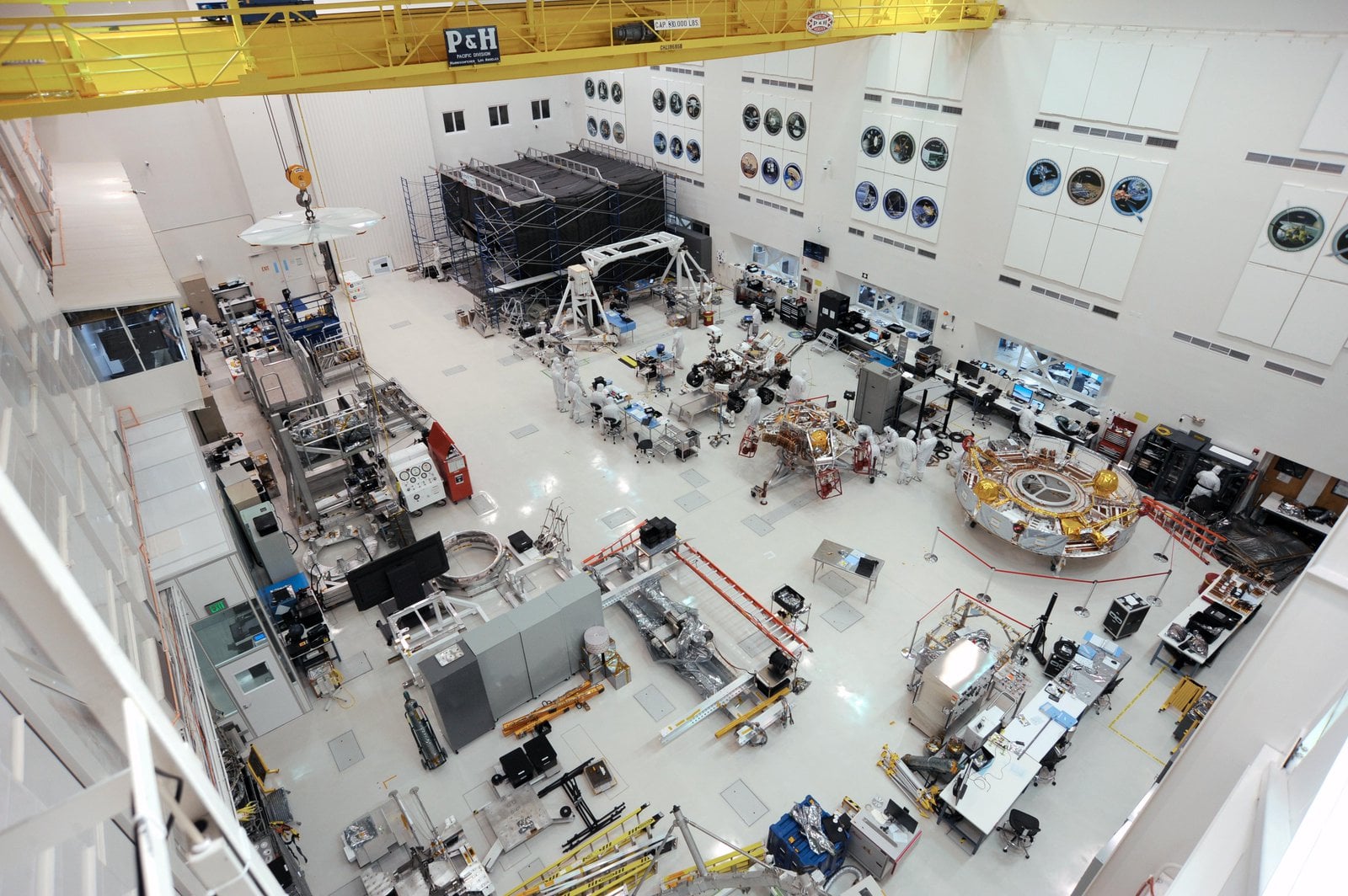
Table 1 synthesizes isolation frequency data from 11 independent cleanroom surveys:
| Genus | Dominant Species | Mean CFU·m-3 | Primary Niche | Notable Stress Traits |
|---|---|---|---|---|
| Aspergillus | A. calidoustus | 3.1 | Epoxy surfaces | Thermotolerance (up to 60 °C) |
| Penicillium | P. rubens | 2.4 | Filter media | Osmotolerance (12 % NaCl) |
| Cladosporium | C. cladosporioides | 1.6 | HVAC ducts | Melanin-mediated UV resistance |
| Chaetomium | C. globosum | 0.9 | Cleanroom garments | Cellulose degradation |
| Talaromyces | T. marneffei | 0.6 | Humidity traps | pH homeostasis at 4–9 |
Several ecological and physiological attributes make these fungi particularly problematic in aerospace contexts:
- Biofilm formation: Fungi can form mixed biofilms with bacteria, embedding themselves in polymeric matrices that shield against disinfectants.
- Dimorphism: Certain Talaromyces species switch between mold and yeast forms, complicating detection.
- Antimicrobial resistance: Repeated sub-lethal exposure to isopropanol and quaternary ammonium compounds selects for tolerant strains.
3. Mechanistic Underpinnings of Fungal Poly-Extremotolerance
Understanding how spores endure transit to Mars necessitates a mechanistic dissection of stress pathways. Table 2 collates the principal physicochemical insults associated with an Earth-to-Mars trajectory and the corresponding fungal countermeasures:
| Stress Category | Quantitative Range | Dominant Fungal Response | Molecular Effectors |
|---|---|---|---|
| Ionizing Radiation | 0.5–2 Gy·day-1 | DNA repair activation | Rad51, Pol κ polymerase |
| UV-C Flux | 80–150 kJ·m-2 | Energy absorption by melanin | DHN-melanin pathway |
| Vacuum/Low Pressure | 10-3–10-5 atm | Vitrification of cytoplasm | Trehalose, Mannitol |
| Thermal Cycling | -80 °C to +60 °C | Heat shock proteins | Hsp20, Hsp90 |
| Oxidative Species | Peroxides, Perchlorates | Antioxidant enzymes | Superoxide dismutase, Catalase |
“Melanin is to fungal spores what a spacesuit is to an astronaut—an adaptable, multi-layered barrier that neutralizes radiation while preventing desiccation.” — Dr. Lilian Ortega, Mycological Society of America annual meeting, 2024
Recent omics analyses, notably a pan-genome survey of Aspergillus section Usti, revealed over-representation of genes encoding NRPS-like synthetases for siderophore-mediated iron acquisition. Iron complexes accelerate Fenton chemistry, generating ROS, but fungi mitigate collateral damage by up-regulating catalase-peroxidase fusions—demonstrating a finely balanced oxidative strategy.
4. Laboratory Simulations of the Mars Journey
Chander et al. implemented a multi-parameter exposure system integrating the European Space Agency’s Biology and Mars Experiment (BIOMEX) chamber with a synchrotron-based proton beamline to emulate solar energetic particles. Ten cleanroom isolates were subjected to iterative cycles that mirrored pre-launch DHMR, eight months of cruise phase, entry-descent-landing (EDL) thermal spikes, and sol-averaged surface conditions. Their experimental schedule is distilled in Table 3.
| Stage | Duration | Condition | Parameter Set |
|---|---|---|---|
| 1 - Cleanroom Baseline | 0.5 h | Ambient + HEPA laminar flow | ISO 5 |
| 2 - DHMR | 50 h | Dry heat | 110 °C, <1 % RH |
| 3 - Launch Vibration | 15 min | Random vibration | 10 g RMS |
| 4 - Cruise Vacuum | 240 d | High vacuum | 10-5 atm; −50 °C avg |
| 5 - Solar Radiation | 24 h | UV-A/B/C + protons | 1.2 kJ UV; 1 Gy protons |
| 6 - EDL Heat Pulse | 8 min | Rapid heating | -60 °C to 70 °C |
| 7 - Mars Surface | 14 d | CO2 atm, regolith | 700 Pa; 0.05 % O2 |
The survival outcome was startling: A. calidoustus retained 2.5 × 10³ CFU per initial 106 conidia—equivalent to a 0.25 % post-mission viability. Conversely, C. globosum showed <0.0001 % survival. Viability correlated strongly (R2 = 0.88) with intracellular trehalose content, reinforcing the osmoprotective role of disaccharides in vacuum resilience.
5. Benchmarking Against Classic Bacterial Targets
For decades, Bacillus pumilus SAFR-032 has been the de facto surrogate for Mars-hardy microbes. A head-to-head comparison illuminates the relative risk profiles:
| Stress Test | B. pumilus (RIb) | A. calidoustus (RIf) | RIf/RIb |
|---|---|---|---|
| UV-C 254 nm (J·m-2 LD90) | 280 | 325 | 1.16 |
| Gamma Co-60 (kGy LD10) | 3.2 | 4.0 | 1.25 |
| Vacuum (survival at 10-6 atm, days) | 28 | 41 | 1.46 |
| Perchlorate (M NaClO4 LD50) | 0.15 | 0.07 | 0.47 |
| Heat Shock (°C 20 min LD90) | 121 | 109 | 0.90 |
The ratio column underscores a nuanced narrative: while fungal spores outperform in radiation and vacuum regimes, they are more vulnerable to chemical oxidants like perchlorates—a factor that may curb their persistence on Mars’ perchlorate-rich regolith but offers little solace for orbiting or subterranean habitats.
6. Implications for Crewed Habitats, ISRU, and Sample Return
A future Mars base is likely to incorporate bioregenerative life-support systems—hydroponic farms, bio-mining reactors for in-situ resource utilization (ISRU), and recycled greywater loops. Each of these creates microenvironments far removed from Mars surface conditions: elevated humidity, moderate pressures (~300 hPa), and nutrient substrates. A suite of computational fluid dynamics (CFD) models run at NASA Ames projected that an airborne spore released in a cylindrical habitat module (25 m length, 9 m diameter) could settle on a hydroponic tray in <4 h under nominal ventilation.
Two principal risks emerge:
- Human health: A. calidoustus is an opportunistic pathogen linked to invasive aspergillosis in immunocompromised patients, with an amphotericin-B MIC90 of 2 µg·mL-1, twice that of A. fumigatus.
- Scientific integrity: Fungal metabolic by-products, notably secondary polyketides, may confound biosignature assays in returned samples by mimicking Martian organics.
7. Toward a Fungi-Inclusive Sterilization Paradigm
A consensus workshop convened by COSPAR’s Panel on Planetary Protection in 2025 recommended a tiered, risk-based framework. Table 5 juxtaposes legacy and proposed sterilization variables:
| Variable | Legacy Standard | Enhanced Setting | Log10 Reduction (Bacteria) | Log10 Reduction (Fungi) |
|---|---|---|---|---|
| Dry Heat | 110 °C · 50 h | 125 °C · 30 h | >6.0 | 3.4 |
| Vapor H2O2 | 500 ppm · 4 h | 1100 ppm · 6 h | 5.8 | 4.6 |
| Plasma Etch (O2) | — | 5 sccm, 200 W, 15 min | 4.1 | 5.2 |
| Electron Beam | — | 10 MeV, 12 kGy | 6.5 | 5.9 |
| Supercritical CO2 | — | 50 °C, 200 bar, 2 h | 4.2 | 5.0 |
Key recommendations include:
- Integrating an in situ fungal viability assay (e.g., resazurin reduction) into bioburden certification.
- Adopting plasma-assisted depyrogenation for heat-sensitive optics.
- Deploying metagenomic sequencing as the primary enumeration metric, supplanting culture-dependent CFU counts that systematically under-represent fungi by 1–2 orders of magnitude.
8. Ethical, Legal, and Sociopolitical Dimensions
Planetary protection is no longer a purely technical challenge; it intersects with ethics (preservation of extraterrestrial ecosystems), law (Outer Space Treaty compliance), and public perception (fear of “alien mold” pandemics). Three contentious issues dominate current discourse:
- Precaution vs Exploration: Imposing ultra-stringent sterilization may delay time-critical missions like Mars Sample Return, incurring opportunity costs.
- Attribution of Contamination: If life is discovered on Mars, distinguishing in situ origin from terrestrial contamination becomes legally fraught, potentially triggering liability claims.
- Equitable Access: High-cost sterilization regimes could create barriers for emerging spacefaring nations, challenging the principle of non-appropriation.
9. Future Research Trajectories
Several knowledge gaps warrant immediate attention:
Multi-Stress CouplingMost experiments test stressors in isolation; real missions impose coupled extremities (e.g., radiation + vacuum + desiccation). High-throughput microfluidic chips could simulate factorial combinations.Perchlorate-Melanin ChemistryDoes melanin confer perchlorate resistance by acting as a redox buffer? In-situ spectroscopy on synthetic regolith can elucidate this.Fungal Genomic PlasticityWhat is the mutation rate under cosmic radiation? Long-read sequencing of spores pre- and post-exposure can quantify adaptive trajectories.Synergistic BiofilmsMixed bacterial-fungal communities show emergent resilience. Bioelectrochemical reactors could model such consortia under Mars-analog gradients.
10. Conclusion
The prevailing bacteria-centric paradigm of planetary protection underestimates the resilience and ubiquity of fungal contaminants. A synthesis of field surveys, laboratory simulations, and omics analytics reveals that certain fungal spores, notably Aspergillus calidoustus, possess the physicochemical toolkit required to survive the rigors of interplanetary transit and transiently persist in Martian surface and, more critically, human-made habitats. Mitigating this risk demands a holistic revamp of sterilization protocols, diagnostic assays, and policy frameworks—transforming planetary protection from a monolithic, bacteria-only model to an inclusive, data-driven, fungal-aware architecture. The cost of inaction is not merely theoretical; it encompasses compromised life-detection science, potential human health crises, and the irreversible ecological imprinting of another world.
For more information
American Society for Microbiology. (2025). How resilient fungus might survive Mars and space.
COSPAR Panel on Planetary Protection. (2025). Draft roadmap for fungi-inclusive decontamination.
Universe Today. (2023). Microbes Are Evolving that Thrive in Spacecraft Cleanrooms.