```html
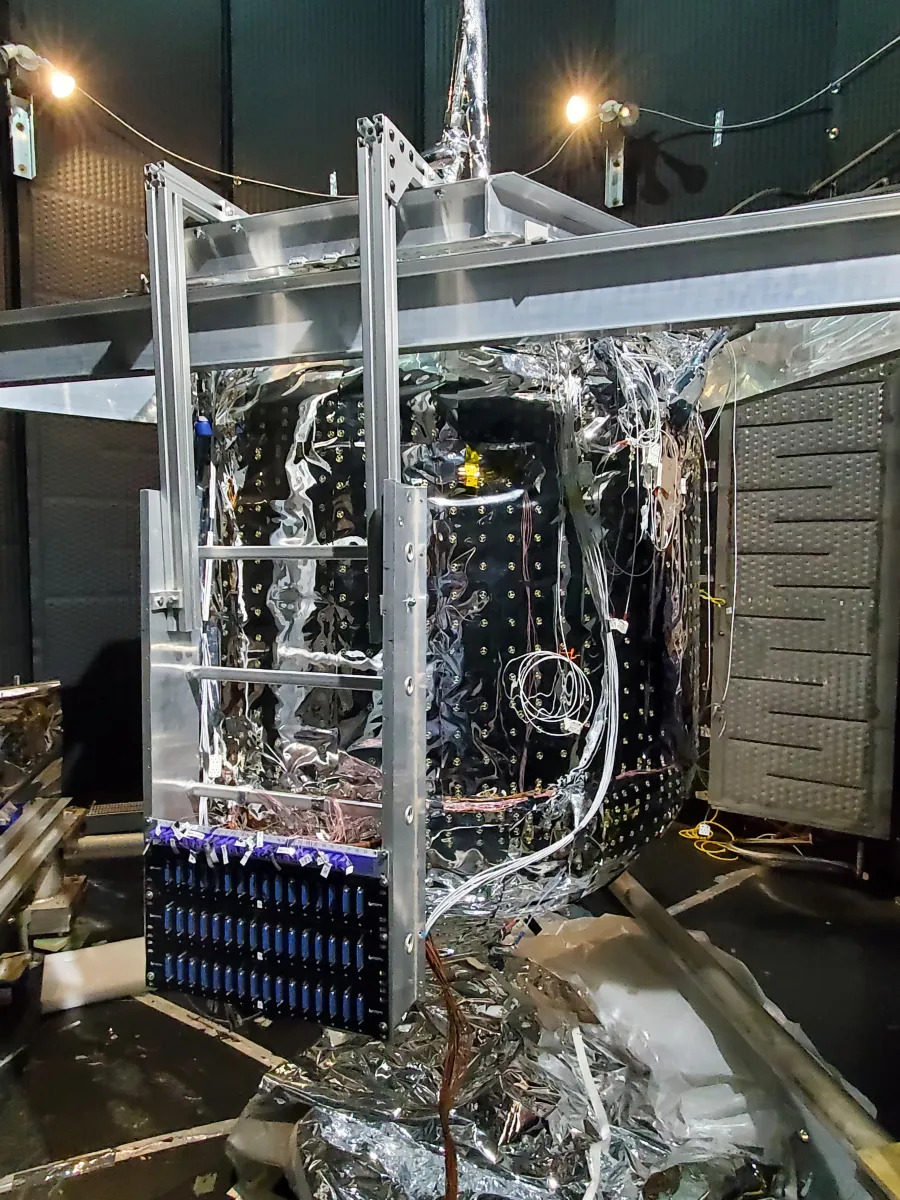
From an engineering perspective, space is surprisingly hot. Or, more specifically, solar energy can make systems that need to be kept at a very cold temperature heat up much more quickly than expected, given the reputation that space has of being cold. In some cases, this heating causes issues with long-term missions, which is why NASA is actively testing a two-stage active cryogenic system to keep one important consumable as cold as possible - fuel.
Cryogenic propellants, such as liquid oxygen and liquid hydrogen, are the most common fuels used in space exploration. Each must be kept at extremely low temperatures to maintain their liquid state: -254°C for hydrogen and -184°C for oxygen. For any long-duration space mission, more liquid propellants will be required than can be launched in a single trip, even with the largest boosters available. This means multiple trips will be necessary to get enough cryogenic fuel into orbit for a crewed mission to Mars.
Once the fuel is launched, it must remain in storage until needed, but during this time, the fuel can be consistently heated by solar radiation, resulting in some vaporizing into its gaseous form. An excess of gas and heat can lead to dangerous pressure build-up in the tank. NASA typically manages this pressure through one of two methods: either allowing for a larger tank to accommodate the potential gas build-up or venting off some gaseous fuel. However, both methods have their downsides, as the latter results in a loss of valuable fuel.
Video discussing NASA's investment in cryogenic fluid management. Credit - NASA Space Tech YouTube Channel
Both traditional solutions face significant drawbacks, which NASA and other organizations wish to avoid, especially for long-duration crewed missions. Consequently, engineers at NASA have devised a two-stage active cooling system, employing over 20 innovative technologies to prevent the boil-off of fuel entirely. The system can be conceptualized as a three-stage process.
The first layer consists of tubes filled with liquid helium, kept at -254°C, the necessary temperature for maintaining hydrogen in its liquid form. These tubes are designed to operate slightly above the boiling temperature of helium, allowing it to remain in a gaseous state without condensing. Wrapped around this first stage cooling system is a layer of aluminum, which is highly reflective and deflects much of the solar radiation that would otherwise warm the system, providing a form of passive cooling.
Surrounding the aluminum layer is an additional set of tubes containing helium gas cooled to -181°C, further lightening the heat load on the inner cooling system. The heat from the propellant tank is primarily removed through convection between the tank and the surrounding cooling tubes. However, the helium itself is maintained at temperature with the aid of a system called a cryo-cooler, which employs a compression and expansion cycle to transfer heat from one region of the system (the fuel tank) to another (a heat sink).
Once the heat is absorbed by the heat sink, it is radiated away—this is the singular method available for dissipating heat in space, where convection or conduction cannot occur due to the absence of surrounding material.

The complete no-boil cryogenic system has been undergoing rigorous testing at NASA’s Marshall Space Flight Center, with planned evaluations expected to conclude by September. After a few design adjustments, it is anticipated to undergo in-flight tests. However, frequent budget interruptions and modifications at NASA leave its future testing in uncertainty. Nevertheless, successful implementation of this system is vital for the achievement of any long-term crewed mission planned in the future.
Challenges in Cryogenic Fuel Storage
The complexities surrounding cryogenic fuel storage are numerous and have been the subject of extensive study. Here are some challenges addressed in recent research:
- Thermal Management: Managing the thermal environment in space is more challenging than in typical terrestrial conditions, leading to unexpected fuel loss.
- Materials Engineering: Developing materials that can withstand extreme cold while maintaining structural integrity and functionality.
- Vaporization Control: Strategies must be implemented to manage vaporization, as excessive gas can be hazardous.
- Pressure Regulation: Keeping pressure within safe limits to prevent tank failure.
Innovative Techniques in Cryogenic Fuel Management
Advancements in technology are paving the way for better management of cryogenic fluids:
| Technique | Description | Applications |
|---|---|---|
| Active Cooling Systems | Utilizes complex systems to actively remove thermal energy. | Manned missions to Mars, lunar bases. |
| Phase Change Materials | Materials that absorb or release heat as they change phase, keeping environments within set temperature ranges. | Spacecraft thermal management. |
| Enhanced Insulation | Improved insulation materials that minimize heat transfer. | All types of cryogenic storage. |
| Sensor Technology | Integration of advanced sensors for real time monitoring of temperature and pressure. | Feedback systems for fuel management. |
Future Directions and Implications
Understanding the behavior of cryogenic fluids in space is paramount, as future exploration goals rely heavily on efficient storage and use of cryogenic fuels. The implementation of innovative technologies within fuel storage systems holds the promise of:
- Increased operational durations: Allowing missions to last longer due to fuel availability.
- Enhanced safety: Reducing risks associated with pressure build-up and fuel loss.
- Cost savings: Minimizing fuel waste saves resources for long-term missions.
Conclusion
With ambitious plans on the horizon for human exploration beyond Earth, the ability to effectively manage cryogenic fuels will play a critical role in the success of these missions. The intricate systems being developed by NASA represent an important step forward in overcoming the inherent challenges faced by cryogenic storage in the unforgiving environment of space.
Learn More:
- NASA - Stay Cool: NASA Tests Innovative Technique for Super Cold Fuel Storage
- UT - NASA is Working on Zero-Boil Off Tanks for Space Exploration
- UT - NASA's First SLS Mars Rocket Fuel Tank Completes Welding
- UT - NASA Announces the 2025 Human Lander Challenge
References
- NASA Cryogenic Fluid Management.
- Advances in Cryogenic Fluid Storage.
- Cryogenic Tank Design for Space Applications.
- Thermal Management in Cryogenic Propellant Storage.
- NASA Technical Reports on Cryogenic Storage Systems.
```

