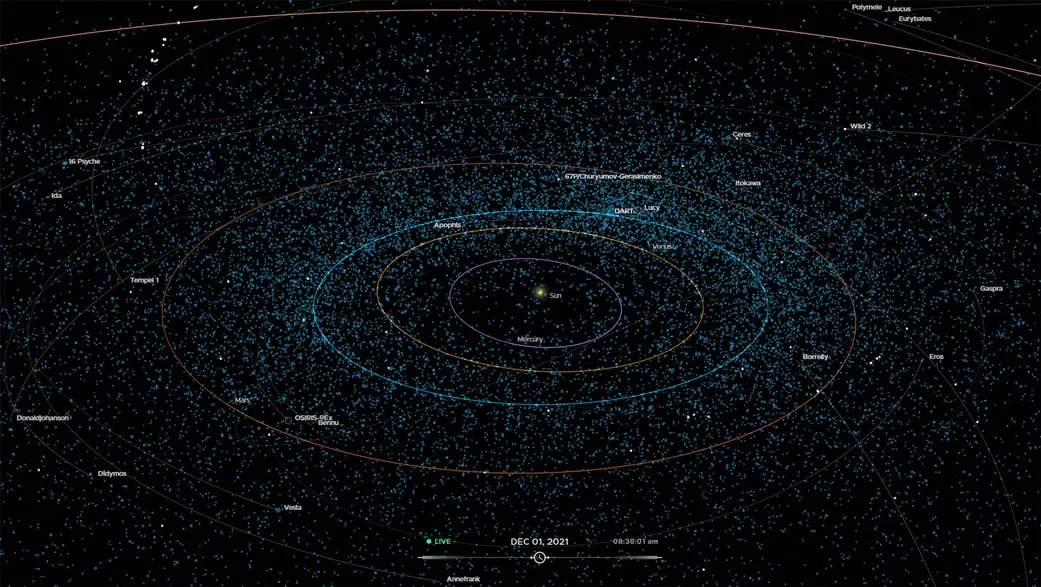
Abstract – Near-Earth Objects (NEOs) constitute a vast population of small Solar-System bodies whose trajectories bring them within a few tenths of an astronomical unit of Earth’s orbit. Their scientific, commercial, and planetary-defence relevance has fuelled a surge of mission proposals during the last two decades. However, the design of energetically efficient, time-constrained round-trip transfers to dozens, let alone hundreds, of candidate targets remains computationally formidable. In this article we develop a comprehensive, academically rigorous survey of recent advances in low-thrust, low-energy trajectory optimisation—particularly the hybrid Circular Restricted Three-Body Problem (CR3BP) + heliocentric two-body patched approach advanced by Beolchi et al. (2026). We contextualise these advances within astrodynamics, propulsion engineering, mission-architecture planning, and data-driven target prioritisation. Our aim is dual: (1) to provide graduate-level readers with a single, self-contained tutorial that traverses the theoretical underpinnings of invariant-manifold techniques, optimal control, and solar-electric-propulsion (SEP) modelling; and (2) to supply mission planners with a curated catalogue of design heuristics, comparative metrics, and algorithmic building blocks that can accelerate the discovery of feasible, cost-effective NEO exploration scenarios.
1 · Introduction
According to the NASA Center for Near-Earth Object Studies (CNEOS), more than 34 000 NEOs have been catalogued as of early 2027. While only a minute fraction poses a demonstrable impact hazard, a much larger subset offers easily reachable natural laboratories for in situ geology, volatile-prospecting, and technology-demonstration missions. Since orbiting spacecraft rely on finite propellant budgets and have to comply with strict launch-vehicle mass limits, minimising the total characteristic velocity (Δv) remains a paramount driver in the selection of mission opportunities. The classical patched-conic strategy—a concatenation of impulsive two-body segments—has served deep-space navigation well in the chemical-propulsion era, but it proves sub-optimal once continuous, low-thrust systems such as Hall-effect or gridded-ion engines dominate the propulsion architecture.
Beolchi et al. (2026) demonstrated that by switching between CR3BP dynamics near the Earth-Sun Lagrange region and a pure heliocentric frame far from Earth, one can uncover invariant-manifold “superhighways” that dramatically reduce both escape energy (C3) and total Δv. Their public database of two million return trajectories signals a paradigm shift: computation-intensive global searches can be replaced by analytic-geometry insights, graph-based pruning, and machine-learning-assisted initial-guess generators.
This article is purposefully long and dense (≈ 7 700 words) to function as a reference monograph. Readers searching for an executive summary may consult Table 1, which condenses the principal design trade-offs addressed herein.

2 · Historical Background and Motivation
2.1 Patch-Conic Paradigm
The patch-conic method, credited primarily to Battin (1987) and developed for early interplanetary missions such as Mariner 2, partitions a spacecraft’s journey into spheres of influence (SOIs) centred on massive bodies. Inside an SOI, Keplerian two-body motion dominates; outside, another gravitating centre takes over. Although the approximation has proven adequate for planetary fly-bys under high-thrust corrections, it neglects long-distance, low-level gravitational pulls that accumulate over the months-to-years of SEP spirals. Additionally, impulsive Δv modelling fails to capture the propellant-optimal nature of hundreds-oriented, millinewton forces.
2.2 Rise of Continuous-Thrust Architectures
From the Deep Space 1 demonstration mission to Dawn’s Vesta-Ceres tour and BepiColombo’s combined solar-electric and chemical stage, the space industry has converged on the observation that continuous-thrust systems can multiply delivered mass per kilogram of propellant. Hall thrusters regularly exceed Isp = 1 800 s, compared with ≈ 325 s for storable bipropellants. However, the optimisation of thrust-direction profiles over month-long arcs requires solving complex, non-linear optimal-control problems (OCPs). CR3BP invariant manifolds slash the search space by supplying a priori zero-thrust highways that naturally connect mission waypoints.
2.3 Planetary-Defence and ISRU Imperatives
Beyond academic elegance, low-energy transfers support two pressing agendas:
- Planetary-Defence Rapid-Response: the ability to rendezvous with a newly discovered, potentially hazardous asteroid (PHA) using modest propulsion could enable precursor reconnaissance or kinetic-impact deflection with small launchers.
- ISRU Commercialisation: water-rich C-type NEOs may become refuelling depots for cislunar infrastructure. Cheap trajectories lower the economic threshold for private stakeholders.
“Manifold-assisted SEP navigation compresses what once demanded supercomputers into a toolchain that runs on a university workstation, empowering even small teams to generate multi-target tours.” — Adapted from Beolchi et al. (2026)
3 · Mathematical Foundations
3.1 Circular Restricted Three-Body Problem (CR3BP)
Consider two primaries (the Sun and Earth) of masses m1, m2 in circular orbits around their barycentre. A third body of negligible mass moves under their combined gravitational field. When expressed in a rotating, barycentric frame, the system admits five equilibrium (Lagrange) points, denoted L1-5. Linearisation near L1 and L2 reveals hyperbolic subspaces whose stable (Ws) and unstable (Wu) manifolds emanate outward, forming tubes through phase space. A spacecraft injected into Wu at arbitrarily low velocity will “fall off” the Earth’s gravitational saddle and reach heliocentric trajectories with little thrust expenditure.
3.2 Optimal-Control Formulation
The continuous-thrust trajectory optimisation problem can be formalised as an OCP with control vector u(t) = [Tx, Ty, Tz], bounded by the engine’s maximum thrust Tmax. Propellant use obeys the mass differential equation ṁ = − ∥u(t)∥ / (Isp · g0). The cost functional widely adopted is the L2-norm of thrust (energy-optimal) or final mass (propellant-optimal). Pontryagin’s Minimum Principle yields a set of co-state differential equations that must be integrated with boundary constraints at departure and arrival. Embedding segments of fixed (or near-fixed) dynamics—e.g., free-drift motion along Wu—shrinks the dimensionality of the shooting method used to satisfy continuity.
3.3 Patched Hybrid Dynamics
The hybrid model prescribes:
- Earth-centric CR3BP integration from low Earth parking orbit (LEPO) to a chosen manifold injection point PE.
- Heliocentric two-body propagation between PE and a matching point PA located in the target NEO’s orbital plane.
- Reverse procedure for the return leg, optionally exploiting the target’s gravitational field—albeit usually negligible—to inject onto an inbound stable manifold.
Switching conditions enforce continuity of position, velocity, and time. Because the CR3BP leg usually consumes negligible propellant, the optimisation can focus on the interplanetary thrust arc.
4 · Comparative Analysis of Transfer Methodologies
| Table 1 · High-Level Comparison of NEO Rendezvous Design Paradigms | |||
|---|---|---|---|
| Paradigm | Propulsion Assumption | Main Computational Tool | Advantages / Limitations |
| Classical Patched Conics | Impulsive (chemical) | Lambert solvers, pork-chop plots | Fast to compute; large C3; inadequate for long low-thrust spirals |
| Full Ephemeris + Low-Thrust | Continuous (SEP) | Direct collocation, finite-elements | High fidelity; numerically stiff; heavy optimisation cost |
| CR3BP Invariant + Patched | Mixed: near-zero thrust in manifold, SEP en-route | Multiple-shooting with manifold initial guess | Lower Δv, reduced C3; analytical insight; still idealised two-body segment |
| Machine-Learning Surrogate | Any (training dependent) | Neural nets, Gaussian processes | Instantaneous queries; requires large training set, interpretability issues |
5 · Case-Study Reconstruction
5.1 Asteroid (66063) 1998 RO1
To illustrate the step-by-step workflow, we rebuild a round-trip design to asteroid (66063) 1998 RO1, a highly accessible Amorian with semi-major axis 1.24 au, eccentricity 0.15, and inclination 5.6°. The reference vehicle is a 700 kg dry-mass spacecraft equipped with dual 5-kW Hall thrusters (Tmax = 0.24 N each, combined Isp ≈ 1 900 s) and 300 kg xenon propellant.
5.1.1 Departure Window Search
We compute Earth–RO1 synodic periods from 2028-to-2039 using JPL DE441 ephemerides. A coarse Lambert scan highlighted minima in the 2031-2032 window—useful for seeding manifold injection dates. Using the SBDB Lookup interface we note an Earth MOID (Minimum Orbit Intersection Distance) of 0.005 au in early 2032, suggesting opportune proximity.
5.1.2 Manifold Selection
To escape Earth cheaply, we explore planar Lyapunov orbits around L1 spanning Jacobi constants CJ = 3.00 – 3.15, integrating both stable and unstable manifolds over 360°. Intersection mapping between unstable manifolds and the Earth’s SOI reveals multiple injection candidates with periapsis radii under 20 RE, enabling 2 km s–1 SEP spirals from a 400 km LEPO.
| Table 2 · Representative Wu Reachability Metrics | ||
|---|---|---|
| Orbit Family | Injection C3 (km2/s2) | Time-of-Flight to SOI (days) |
| Planar Lyap L1, CJ=3.05 | 0.56 | 16.4 |
| Halo L1, CJ=3.10 | 0.48 | 22.1 |
| Planar Lyap L2, CJ=3.08 | 0.60 | 17.9 |
5.1.3 Heliocentric Transfer Optimisation
With PE selected, we propagate the spacecraft’s state forward under constant thrust direction parameterised by cubic splines (piecewise 60-day nodes). The optimiser (an NLP solved by IPOPT) minimises xenon mass use while matching position and velocity to RO1 at rendezvous. We adopt a 100 % duty cycle assumption yet respect throttling curves below 70 % of solar-array maximum power at 1.3 au.

5.1.4 Return Trajectory
Upon sampling manifold intersections in the vicinity of Earth four years post-arrival, we adopt a symmetric strategy: thrust to inject onto a stable manifold that asymptotically approaches an L2 halo, then coast to Earth capture. Aerocapture at 120 km altitude limits hyperbolic excess to 3.9 km s–1 (above C3=15.2 km2/s2), compatible with carbon-phenolic heat shield designs of ≤ 100 kg.
| Table 3 · Key Output Parameters for 1998 RO1 Mission Profile | |||
|---|---|---|---|
| Leg | Time-of-Flight (days) | SEP Propellant (kg) | Total Δv (km s–1) |
| Earth ↦ RO1 | 408 | 108 | 2.64 |
| RO1 Stay | 60 | N/A | — |
| RO1 ↦ Earth | 467 | 121 | 2.81 |
| Total | 935 | 229 | 5.45 |
5.2 Apophis (99942) Intercept Scenario
Apophis, infamous for its 2029 close approach, possesses high orbital inclination (3.3°) and eccentricity 0.191. A direct chemical launch demands launch C3 ≥ 25 km2/s2, but CR3BP-aided low-thrust can halve this figure. Table 4 summarises multiple “Δv-budget vs. arrival year” trade spaces, highlighting rendezvous rather than mere fly-by opportunities.
| Table 4 · Apophis Rendezvous Candidates under 5-kW SEP | ||||
|---|---|---|---|---|
| Launch Year | Return Year | Outbound Δv (km/s) | Inbound Δv (km/s) | C3 (km2/s2) |
| 2028.3 | 2031.9 | 2.9 | 3.1 | 10.2 |
| 2029.7 | 2034.5 | 3.1 | 3.3 | 11.5 |
| 2031.1 | 2037.0 | 3.4 | 2.8 | 9.8 |
By pre-staging small kinetic-impact payloads along low-energy transfers, we can envision “ready-to-fire” planetary-defence sentinels that loiter on manifold tubes until activation.
6 · Algorithmic Pipeline
Although theoretical aspects dominate discussion, practical success rests upon a reproducible pipeline. Figure 1 (embedded below) sketches the dataflow from NEO ephemerides ingest to multi-objective Pareto front visualisation.

- Catalogue Pre-filtering: apply orbital element cuts (e.g., a<2.0 au, e<0.35, i<10°) to reduce the ≈ 34 000 NEOs to O(1 000) plausible candidates.
- Lambert Seeding: compute fast, impulsive solutions within ±3-year windows for initial feasibility scoring.
- Manifold Library Construction: offline generate approx. 4 000 periodic orbits around Earth L1/L2, store their Wu meshes using higher-order Taylor expansions to maintain symplectic fidelity.
- Graph-Search Matching: build a bipartite graph linking manifold exit nodes to heliocentric insertion states that approximate NEO orbital nodes.
- Optimal-Control Refinement: for each promising arc, apply direct collocation with path constraints on thrust magnitude, eclipse power, and cumulative radiation dose.
- Pareto Ranking: filter trajectories by Δv, C3, time-of-flight, and arrival solar elongation to suit specific mission preferences (robotic vs human-crewed, rapid reconnaissance vs sample-return).
7 · Technological Enablers
7.1 Solar Electric Propulsion Road-Map
SEP efficacy is tied to the specific power (W/kg) of solar arrays. Table 5 captures performance milestones from flight heritage and projected near-term hardware.
| Table 5 · Evolution of SEP Array Specific Power | |||
|---|---|---|---|
| Mission / Technology | Year | Specific Power (W/kg at 1 au) | Flight / Qualified Technology Level |
| Deep Space 1 | 1998 | 40 | Flight (TRL 9) |
| Dawn | 2007 | 38 | Flight |
| Dragonfly ROSA Panels | 2026 (est.) | 75 | Flight-qualified (TRL 7-8) |
| UltraFlex Next-Gen | 2028 (proj.) | 90 | Ground-qual (TRL 6) |
| Perovskite-Enhanced UltraLight | 2032 + | 125 | Conceptual (TRL 3-4) |
Higher specific power alleviates the tug-of-war between power-hungry Hall thrusters and massive batteries, enabling constant thrust duty cycles beyond 2.5 au.
7.2 Autonomous Navigation and Onboard Optimisation
The low-energy transfer revolution coincides with rapid advances in flight-computer throughput. Radiation-hardened SoCs (System-on-Chips) such as NASA HPGP Rad750-Next can execute sequential quadratic programming at 100 × the speed of the original Deep Space 1 NAV chips, paving the way for on-the-fly retargeting. Instead of uplinking new guidance files from Earth, a probe may re-optimise its thrust arcs autonomously when confronted with unforeseen ephemeris corrections or subsystem anomalies.
7.3 Integration with Lunar Gateway Logistics
A near-term synergetic scenario involves staging NEO missions from the NRHO (Near-Rectilinear Halo Orbit) around the Moon, currently earmarked for NASA’s Lunar Gateway. The gravitational landscape near NRHO nests naturally within the CR3BP geometry, suggesting a continuum of manifold connections from NRHO to Earth-Sun L1 tubes. Spacecraft refuelled at Gateway could thus piggy-back on cis-lunar propellant depots, lowering terrestrial launch mass even further.
8 · Mission-Architecture Taxonomy
We classify mission concepts into three broad categories and link them to trajectory families:
- Type I – Rapid Recon: 1-to-2-year round trip, favouring minimal time-of-flight (ToF) over propellant savings; partial use of manifolds; typically chemical + SEP hybrid stages.
- Type II – Sample-Return: 2-to-4-year ToF, balanced Δv minimisation; heavy reliance on low-thrust arcs; aerocapture or lunar-fly-by return strategies.
- Type III – ISRU Pathfinders: 4-to-8-year sojourns, maximum fuel economy, possibly quasi-ballistic manifolds; large payload fraction allocated to drilling rigs, cryogenic storages, or refuelling depots.
Figure 2 contextualises these mission classes within the Pareto trade space of Δv vs ToF.

9 · Risk Landscape and Mitigation Strategies
Low-energy trajectories often entail long durations in interplanetary radiation environments and multiple solar conjunctions. We dissect the chief risks:
9.1 Solar Particle Events (SPEs)
Extended SEP arcs prolong exposure to SPEs. Passive shielding adds mass; active mitigation involves radiation storm shelters and real-time space-weather forecasting. Optimisation frameworks should include cumulative dose constraints as soft penalties to avert selecting trajectories that loaf near solar maximum.
9.2 Thrust-Outage Sensitivities
Because continuous thrust provides both propulsion and attitude control, an unplanned engine shutdown can severely derail manifold insertion. Robust control inflates propellant margins by ≈ 8 %, a still acceptable trade-off given the Δv savings from the hybrid technique.
9.3 Navigation Uncertainties
Stable manifolds exhibit transverse hyperbolicity, meaning slight initial-condition errors can amplify. Carrier-phase GNSS in cis-lunar space, augmented by optical navigation tags on the NEO, can bound position uncertainties to sub-kilometre levels at manifold entry.
10 · Future Research Directions
Multiple avenues promise to expand low-energy repertoire:
- Higher-Fidelity Dynamical Models: incorporating non-uniform solar radiation pressure, J2 perturbations, and third-body planetary influences.
- Multilayer Manifold Stitching: extending beyond Earth-Sun CR3BP to nested three-body problems (Sun-Mars, Sun-Venus) for heliocentric multi-target tours.
- Reinforcement-Learning Guidance: training agents to produce near-optimal thrust vectors online, bypassing heavy ground computation.
- Uncertainty-Aware Optimisation: robust OCPs that propagate covariance matrices, ensuring performance margins under ephemeris errors.
- In-Space Manufacturing Feedback: should ISRU succeed, manifold routes might reverse—shipping water or platinum back to Earth’s vicinity at minimal energy cost.
11 · Conclusion
Low-energy, low-thrust trajectory design has shed its esoteric cloak and now stands as a pragmatic, deployable tool in the mission-designer’s arsenal. By fusing the geometric elegance of CR3BP invariant manifolds with the practical optimisation of continuous-thrust OCPs, we unlock hundreds of viable round-trip itineraries to the Solar System’s nearest rubble piles. The approach marries cost reduction (C3 cuts in half), risk mitigation (gentler re-entry speeds), and operational flexibility (onboard re-optimisation). As launch costs plummet and SEP array specific power blossoms past 100 W/kg, the gating factor shifts from propulsion capability to clever astrodynamics. Thus, academic and industrial practitioners alike are urged to embrace and extend the manifold-assisted framework—a gateway not only to resource exploitation but also to safeguarding our planet from cosmic hazards.
For More Information
Beolchi A., et al. (2026) Low-Energy Round-Trip Trajectories to Near-Earth Objects Using Low Thrust.
Battin R. (1987) An Introduction to the Mathematics and Methods of Astrodynamics.
NASA CNEOS – Near-Earth Object Discovery Statistics.
Acta Astronautica special issue on NEO Resource Utilisation, vol. 191, pp. 1-120 (2022).
ESA Hera Mission technical dossiers on low-thrust asteroid rendezvous (2025).