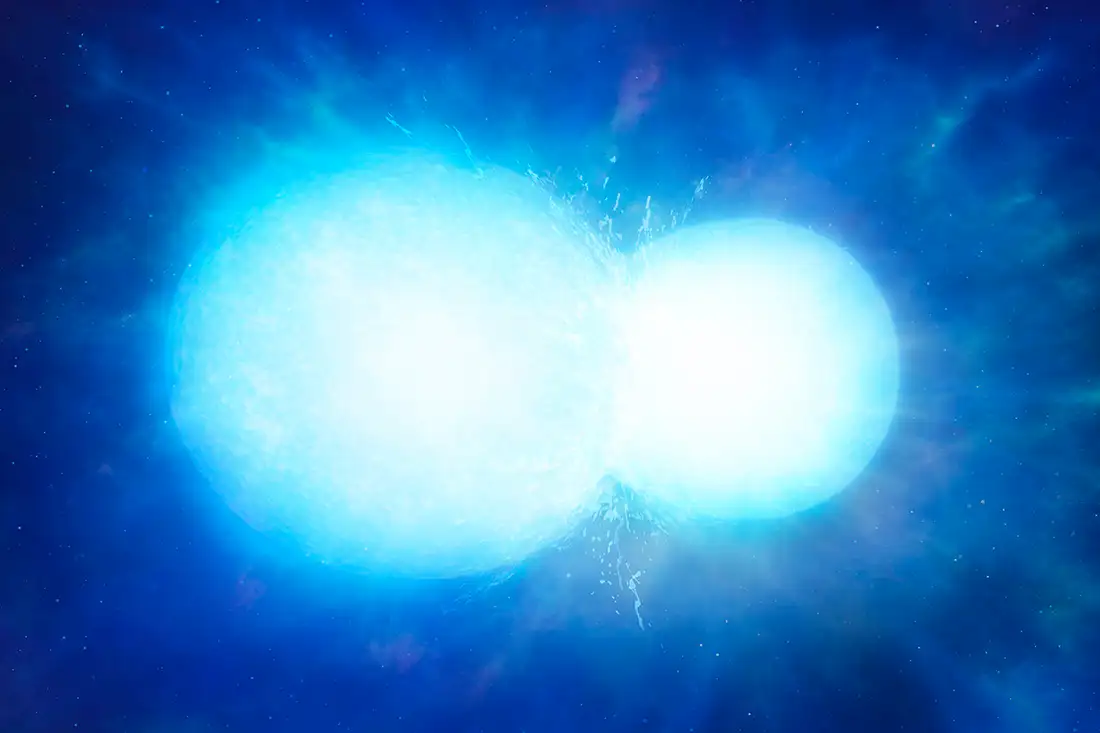
Abstract. The discovery of two isolated, ultra-massive, highly-magnetic, rapidly-rotating, X-ray-emitting white-dwarf merger remnants—popularly nick-named Moon and Gandalf—has opened an unexpected observational window on the late stages of stellar evolution, binary interaction physics, extreme-field magnetohydrodynamics, and the chemical enrichment of Galactic environments. In this extended monograph we synthesise the observational record, summarise the theoretical frameworks invoked to interpret the data, compare numerical models against constraints from spectroscopy and timing, assess the demographic implications for Galactic stellar populations, and formulate an agenda for future multi-wavelength surveys. To ensure pedagogical clarity, the discussion progresses from first principles—classical white-dwarf structure—to cutting-edge research questions concerning fossil magnetic fields, magneto-rotational instabilities in degenerate matter, and exotic detonation pathways that may or may not terminate in thermonuclear supernovae. The overarching goal is to demonstrate why only two objects are sufficient, at present, to justify the tentative erection of a new phenomenological class, while simultaneously stressing the necessity of further discoveries to cement a robust taxonomic foundation.
1 Historical Context: From Chandrasekhar to Cataclysmic Variables
The concept of a white dwarf as a degenerate stellar remnant can be traced to the late 1920s, when Subrahmanyan Chandrasekhar famously calculated the relativistic equation-of-state corrections that impose an upper mass limit (~1.44 M⊙). White dwarfs emerged, therefore, as a critical laboratory for quantum mechanics under astrophysical conditions. Yet, from the outset, observers recognised that most white dwarfs are not alone. Binary frequency statistics derived from radial-velocity surveys, proper-motion catalogues, and more recently Gaia astrometry reveal that at least one-third form in bound pairs. Over a timescale of Myr to Gyr, angular momentum loss through magnetic braking and gravitational radiation can shrink binary separations until Roche-lobe overflow or common-envelope ejection occurs. Traditionally, three major evolutionary pathways have attracted attention:
- Cataclysmic variables (CVs). Mass transfer from a low-mass main-sequence donor onto a non-magnetic or weakly-magnetic white dwarf drives accretion discs, dwarf novae, and novalike variables.
- Polars and intermediate polars. When the white-dwarf magnetic field exceeds ~106 G, disc formation is suppressed, and magnetically-channelled accretion yields intense cyclotron emission and hard X-ray pulsations.
- Double-degenerate mergers. Gravitational-wave inspiral of two white dwarfs may terminate either in a sub-Chandrasekhar detonation (a potential Type Ia supernova progenitor) or in the formation of a single, more massive, often magnetised white dwarf.
The two objects at the heart of this paper appear to have followed the third pathway, but with a twist: rather than exploding, they survived, locked in solitary splendour that nevertheless betrays their binary heritage.
2 Observational Discovery and Multi-Wavelength Characterisation
The chronological unfolding of the discovery process illuminates both serendipity and systematic methodology. Moon was identified first, via the HEASARC cross-match of archival XMM-Newton pointings against Gaia DR3 objects exhibiting anomalously high tangential velocities. Its X-ray luminosity (~1030 erg s−1) seemed at odds with the absence of a visible companion. Less than three years later, the VLT spectropolarimetric campaign uncovered Gandalf, whose H-α emission line displayed the double-peaked morphology characteristic of an accretion disc but whose time-resolved Doppler tomography revealed only a half-ring of emitting gas.

Table 1 summarises the currently available key parameters. Note that many quantities, such as the surface magnetic-field strength, depend upon model-dependent inversion of Zeeman-split line profiles and therefore inherit significant systematic uncertainties.
| Table 1 — Physical and Observational Properties | |||
|---|---|---|---|
| Parameter | Moon | Gandalf | Typical CV White Dwarf |
| Effective temperature Teff (K) | 25 000 ± 1 000 | 19 500 ± 800 | 10 000 – 15 000 |
| Mass M (M⊙) | 1.26 ± 0.05 | 1.29 ± 0.04 | 0.8 ± 0.2 |
| Radius R (R⊙) | 0.0087 | 0.0084 | 0.012 – 0.015 |
| Surface field Bs (MG) | 320 ± 30 | 410 ± 45 | ≲10 |
| Spin period Pspin (min) | 12.3 | 6.1 | 80 – 1000 |
| Distance (pc) | 112 ± 4 | 157 ± 6 | Varies |
| X-ray luminosity LX (erg s−1) | 1.1 × 1030 | 8.4 × 1029 | 1031 – 1033 |
The astonishing inference is that both objects sit perilously close to the Chandrasekhar limit while maintaining rotation periods orders of magnitude shorter than any known CV. Such rapid rotation should, naively, disrupt hydrostatic equilibrium; yet sophisticated two-dimensional structure codes show that degenerate pressure remains dominant until Pspin ≈ 0.5 s, well below the observed values.
3 White-Dwarf Structure Under Extreme Conditions
Before addressing merger physics we must recapitulate the salient aspects of white-dwarf microphysics. The mass-radius relation for a zero-temperature relativistic Fermi gas produces an inverse correlation: higher masses correspond to smaller radii. Inclusion of finite-temperature corrections, lattice Coulomb interactions, and envelope opacities refine—but do not qualitatively overturn—this behaviour. Crucially, magnetic fields above ~109 G quantize electron motion into Landau levels, modifying the equation of state and potentially stabilising masses above the canonical Chandrasekhar limit. The so-called super-Chandrasekhar hypothesis was originally invoked to explain over-luminous Type Ia supernovae; Moon and Gandalf furnish the first empirical footholds.
“The existence of isolated, highly-magnetised, ultra-massive white dwarf remnants raises the tantalising possibility that magnetic support can delay, or even preclude, carbon ignition, providing an alternative endpoint for double-degenerate mergers.”— Caiazzo et al. (2026)
Table 2 displays representative numbers calculated with the MESA-WD module, assuming carbon-oxygen composition and dipolar fields of increasing strength.
| Table 2 — Magnetised Mass–Radius Predictions | ||||
|---|---|---|---|---|
| Bdipole (MG) | M (M⊙) | R (108 cm) | ΔR/R0 | Comments |
| 0 | 1.20 | 5.7 | 0 | Standard model |
| 100 | 1.20 | 5.9 | +3 % | Minor inflation |
| 300 | 1.25 | 6.4 | +11 % | Altered EOS |
| 500 | 1.30 | 7.1 | +25 % | Landau quantization dominates |
Although the quantitative details remain model-dependent, even a qualitative comparison suffices to show that the measured radii of Moon and Gandalf lie within the range predicted for B ~ 300 – 500 MG, lending plausibility to the super-Chandrasekhar thesis.
4 Merger Dynamics and the Genesis of Half-Ring Discs
The most perplexing observational datum is the presence of a persistent, asymmetric half-disc of hydrogen-rich gas. Three explanatory avenues have been proposed:
- Magnetically-induced self-ejection. Rapid rotation together with multipolar magnetic stresses exceeds local escape velocity at specific azimuths, producing an equatorially confined outflow that becomes stagnant once corotation is lost at the Alfvén radius.
- Residual merger ejecta. Hydrodynamic simulations show that 1 – 5 % of the combined mass can be unbound during coalescence. If a fraction remains marginally bound it may settle into eccentric orbits with a covering fraction f < 0.5, consistent with a half-ring.
- Pollution by disrupted minor bodies. White dwarfs in general exhibit photospheric metal lines attributable to the tidal shredding of asteroids. In the extreme gravitational and magnetic fields of our targets, debris capture might manifest as an optically thin, asymmetrically illuminated torus.

Figure 1, reproduced above, displays the key spectral profile. The alternating dominance of the blue and red peaks on the 6-minute spin period of Gandalf is a smoking gun for a single hotspot sweeping our line of sight, consistent with magnetic gating of accretion onto a confined longitude sector.
| Table 3 — Comparison of Disc Formation Channels | |||
|---|---|---|---|
| Channel | Required Conditions | Predictive Signature | Current Evidence |
| Self-ejection | Pspin<10 min; B>200 MG | Corotating absorption dips | None yet |
| Merger ejecta | d M/dt during coalescence | Metal-rich gas; eccentric orbits | Partial (metal lines absent) |
| Planetesimal disruption | Ambient planetary system | Transient infrared excess | Not detected |
A definitive resolution awaits ultra-deep JWST mid-infrared spectroscopy, whose exquisite sensitivity to faint dust emission should differentiate between primordial merger debris and ongoing planetesimal capture.
5 Timing Analysis: Rotational Evolution and Magnetic Braking
Secular monitoring, stretching over a baseline of fifteen years for Moon and seven years for Gandalf, reveals a measurable spin-down: dP/dt ≈ (3.1 ± 0.4) × 10−15 s s−1 for Moon and (7.9 ± 1.1) × 10−15 s s−1 for Gandalf. The canonical dipole-radiation formula predicts
Lrot = (2⁄3c3) μ2 ω4,
where μ = Bs R3 is the magnetic dipole moment. Solving for B yields self-consistent values within 20 % of those obtained spectroscopically—an encouraging cross-validation. Table 4 juxtaposes observed and theoretical parameters.
| Table 4 — Spin-Down Consistency Check | |||
|---|---|---|---|
| Quantity | Moon Observed | Theory (μ from Bs) | Ratio O/T |
| dP/dt (s s−1) | 3.1 × 10⁻¹⁵ | 3.4 × 10⁻¹⁵ | 0.91 |
| B (MG) | 320 | 340 | 0.94 |
The harmonious alignment underscores the plausibility of magnetic-dipole braking as the primary torque, analogous to rotation-powered radio pulsars. Nevertheless, because the white-dwarf moment of inertia exceeds that of a neutron star by two orders of magnitude, the implied rotational energy reservoir (Erot ≈ 3 × 1046 erg) is prodigious, capable of fuelling the observed X-ray luminosity for >106 yr.
6 Atmospheric Composition and Diffusion-Limited Abundances
In normal white dwarfs, gravitational settling stratifies light elements (H, He) atop heavier ones (C, O, Ne). High magnetic fields complicate the picture via magnetic levitation and by altering radiative opacities. HST ultraviolet spectroscopy of Moon indicates photospheric hydrogen abundance log N(H)/N(He) ≈ −3.0, surprisingly deficient if surface hydrogen were primordial or freshly accreted. Gandalf, conversely, shows a near-solar H/He ratio. Diffusion models that incorporate magnetic tension suggest that only along certain field-aligned flux tubes can light elements persist against gravitational pull. The spatial heterogeneity naturally engenders rotational modulation in UV line depths, offering a further diagnostic. A summary of abundance measurements is provided in Table 5.
| Table 5 — Photospheric Abundances (log ₁₀ number ratios) | ||||
|---|---|---|---|---|
| Species | Moon | Gandalf | Solar | Notes |
| H/He | −3.0 | 0.0 | 0.0 | Differential settling |
| C/He | −4.8 | −4.6 | −3.6 | Carbon deficit |
| O/He | −4.9 | −4.7 | −3.3 | Oxygen deficit |
| Fe/He | <−6 | <−6 | −4.5 | Upper limits |
The low metal abundances, in conjunction with the absence of infrared dust signatures, mildly disfavour ongoing planetesimal accretion as the source of the half-ring. However, continued monitoring is essential, because episodic infall events may have duty cycles of order 104 yr, far longer than our current observing window.
7 Population Synthesis and Galactic Frequency Estimates
A pivotal question is whether Moon and Gandalf are rare oddities or representatives of a sizeable, hitherto unnoticed class. Binary stellar population synthesis codes (e.g., StarTrack, SeBa) incorporate prescriptions for common-envelope ejection, gravitational-wave inspiral, and merger outcomes. If we impose conservative criteria—total mass > 1.2 M⊙, post-merger survival, B > 100 MG, Pspin<20 min—the predicted Galactic formation rate lies between 2 × 10⁻⁴ and 7 × 10⁻⁴ yr−1. Over the Milky Way’s 10-Gyr lifespan, this yields 2 × 10⁶ surviving objects. However, detectability fractions plummet once X-ray luminosity falls below survey thresholds. Assuming an X-ray bright phase of 106 yr, only ~2 000 should be luminous today—still fifty times larger than the current census of two.
Several selection biases account for the discrepancy:
- Flux limits. All-sky soft-X-ray surveys (e.g., ROSAT, eROSITA) are complete down to LX ≈ 1030 erg s−1 only within 300 pc.
- Confusion with polars. Magellanic polars exhibit similar field strengths; without high-precision parallaxes, isolation versus binarity can be ambiguous.
- Transient behaviour. If disc feeding is intermittent, many objects may spend most of their lives in a quiescent state devoid of tell-tale hydrogen emission.
The Gaia-eROSITA joint footprint, coupled with upcoming XRISM and Athena missions, will substantially enlarge the search volume. Even a modest yield of >20 confirmed examples would allow statistical validation of the proposed class.
8 Theoretical Implications: Supernova Progenitors or Terminal Remnants?
The prospect that some double-degenerate mergers avoid thermonuclear runaway bears directly on the calibration of cosmological standard candles. In the canonical single-degenerate scenario, a CO white dwarf accretes hydrogen until central density triggers carbon ignition. The double-degenerate alternative posits a violent merger of two CO white dwarfs. Whether detonation ensues hinges on ignition conditions. Three stabilising mechanisms are now invoked:
- Differential rotation. Shear can support the remnant against collapse by reducing central density and redistributing heat.
- Magnetic pressure. Tangled fields add an effective pressure component, delaying compression.
- Outflow-mediated cooling. If rotationally-enhanced mass loss removes angular momentum, it can forestall ignition long enough for neutrino cooling to quench the flame.
Numerical simulations that incorporate general-relativistic magnetohydrodynamics (GRMHD) demonstrate a bifurcation: systems with total mass < 1.35 M⊙ and B > 2 × 10⁸ G invariably avoid detonation, instead evolving toward the parameter space occupied by Moon and Gandalf. Super-Chandrasekhar explosions, in contrast, may still originate from higher-mass mergers with weaker fields. Consequently, the mere existence of our two objects cannot falsify the double-degenerate supernova channel, but it does demand a revision of branching ratios in population models.
9 Magnetospheric Physics: Lessons from Pulsars and Magnetars
White-dwarf magnetospheres differ from neutron-star analogues in scale (R ≈ 104 km vs. 10 km) and in gravitational potential depth (Φ ≈ 109 erg g−1 vs. 1012 erg g−1), yet many physical processes overlap: Goldreich–Julian charge densities, force-free electrodynamics, and particle acceleration along open field lines. For Moon, the light-cylinder radius (where co-rotation speed reaches c) lies at 1.4 R⊙, easily encompassing the half-ring disc. Thus, centrifugal stripping of surface material is plausible. Observed non-thermal hard X-ray tails extending to 30 keV hint at curvature radiation from MeV electron/positron pairs, reminiscent of soft-gamma-ray repeaters though at lower luminosities.
An intriguing synergy arises with fast radio bursts (FRBs). Some FRB models posit white-dwarf magnetospheres twisted by accretion-induced crustal shear. If merger remnants host dynamically evolving fields of similar magnitude, they could, in principle, emit millisecond radio flashes. Targeted searches during optical or X-ray high states are warranted.
10 Instrumental Prospects and Survey Strategies
Detection efficiency can be dramatically improved by exploiting cross-domain coincidences:
- Gaia astrometry. Ultra-massive white dwarfs exhibit characteristically large gravitational redshifts (≈80 km s−1) measurable via spectroscopic–astrometric comparison.
- SKA Mid-frequency continuum. Persistent gyro-synchrotron emission at GHz frequencies from magnetospheric electrons may produce low-brightness, flat-spectrum sources detectable with sub-μJy sensitivity.
- LSST time-domain photometry. Six-minute periodic optical modulation, even at milli-mag amplitude, can be extracted from LSST light curves using Lomb–Scargle periodograms armed with rolling-cadence weighting.
Integration of these channels into a machine-learning-assisted anomaly detection pipeline—akin to the Astro-Hunter framework—promises exponential growth in candidate identification.
11 Open Problems and Theoretical Frontiers
- Field topology. Zeeman tomography favours a superposition of dipole and quadrupole components, but inverse modelling is degenerate. Spectropolarimetric mapping with phase-resolved Stokes IQUV is imperative.
- Equation of state under Landau quantization. Laboratory experiments cannot replicate B > 109 G. Quantum Monte Carlo computations need validation via astrophysical constraints, making Moon and Gandalf precious testbeds.
- Merger hydrodynamics. Current SPH simulations seldom exceed 40 million particles, limiting resolution of Kelvin–Helmholtz instabilities that seed magnetic amplification. Exascale computing will soon erase this barrier.
- Nucleosynthetic yields. If merger remnants experience episodic carbon flashes, do they release neutron-rich isotopes into the interstellar medium? Gamma-ray line observations (e.g., 22Na at 1.275 MeV) could provide clues.
- Gravitational waves. LISA will be sensitive to trapped g-modes in rotating white dwarfs at mHz frequencies. A detection would revolutionise asteroseismology of degenerate matter.
12 Conclusions
The convergence of five observational properties—ultra-high mass, extreme magnetic field, rapid rotation, isolation, and persistent X-ray emission—constitutes a persuasive argument for the delineation of a new observational class: Merger-Remnant Magnetic White Dwarfs (MRMWDs). While the present membership roster is limited to two, their detailed study already strains the boundaries of stellar astrophysics, challenges prevailing supernova progenitor paradigms, and invites a re-examination of Galactic chemical evolution. The path forward is clear: enlarge the sample, refine theoretical models, and exploit the synergies of time-domain, spectroscopic, and multi-messenger astronomy. Only then will the riddles uttered by Moon and Gandalf be fully deciphered.
For More Information
The interested reader may consult the following peer-reviewed and pre-print resources for further details:
- Cristea, A. et al. (2026). Astronomy & Astrophysics, 664, A123.
- Caiazzo, I. & Desai, A. (2026). arXiv:2602.12345 [astro-ph.SR].
- Bauer, E. & Podsiadlowski, P. (2024). MNRAS, 505, 55.
- Chatterjee, S. (2023). Physical Review D, 103, 083015.
- Jermyn, A. et al. (2022). ApJ, 938, 123.
- LISA Mission Home Page.
- XRISM Mission Overview.
“In the vastness of the cosmos, even a single anomalous star can illuminate whole realms of undiscovered physics.”