Abstract: The search for life on Mars has evolved from an era of speculative telescopic observations to a rigorously interdisciplinary enterprise that blends geochemistry, planetary geology, molecular biology, analytical chemistry, robotics, and information theory. Central to the modern effort is the discrimination between abiotic and biotic sources of organic compounds. Among the most robust lines of evidence capable of distinguishing the two is molecular chirality—the phenomenon whereby certain molecules exist in non-superimposable mirror-image forms. The upcoming ESA-Roscosmos ExoMars mission and its Rosalind Franklin rover carry the Mars Organic Molecule Analyser (MOMA), an instrument specifically optimized to resolve chiral signatures in situ. The present article surveys the theoretical foundations of chirality as a biosignature, contextualizes the engineering heritage of MOMA, summarizes the latest terrestrial analogue experiments (including the newly published Murchison meteorite analyses), and situates these developments within a broader landscape of planetary exploration strategy. Throughout, we integrate current knowledge on Martian geology, environmental taphonomy, planetary protection protocols, and future mission architectures. The discussion concludes with a critical appraisal of how chiral analysis fits into a hierarchy of evidence required to establish life beyond Earth.
1. Introduction: From Viking to Rosalind Franklin
The quest to answer whether life exists, or has ever existed, on Mars stretches back several centuries. Giovanni Schiaparelli’s late-19th-century canali initially spurred both fascination and misconception. Modern inquiry, however, is data-driven, guided by lander and rover results, orbital spectroscopy, meteorite analyses, and an expanding corpus of comparative planetology. Since NASA’s Viking missions in 1976 first executed in situ biology experiments, the prevailing paradigm has matured: rather than performing direct metabolic assays, contemporary missions target biosignatures—morphological, isotopic, mineralogical, or molecular imprints that reliably indicate biological activity.
Molecular chirality, also called handedness, has emerged as a particularly discriminating metric. Although organic molecules, in general, can form both left-handed (L-) and right-handed (D-) enantiomers, terrestrial life strongly favours one hand over the other for nearly every key biochemical class. Consequently, a markedly non-racemic (i.e., enantiomerically enriched) distribution detected beyond Earth would be difficult to reconcile with purely abiotic processes, thus carrying a high explanatory weight for biogenicity.
“Chirality is to molecular biosignatures what isotopic fractionation is to elemental biosignatures: a signal-to-noise amplifier whose strength scales with biological activity.” — Anonymous review comment, Planetary Science Journal, 2024
2. Foundations of Molecular Chirality
Chirality arises when a molecule lacks an internal plane of symmetry such that its mirror image cannot be superimposed upon itself. The concept is often illustrated by human hands—hence “handedness.” For carbon-based molecules, chirality typically occurs at tetrahedral carbon atoms bearing four distinct substituents. Enantiomers exhibit identical physical properties (melting point, solubility, etc.) in achiral environments but interact differently with plane-polarized light and with other chiral entities, including biological macromolecules. Life’s enzymatic machinery is inherently chiral, enforcing homochirality—the exclusive or dominant use of one enantiomeric form—across biochemical pathways.
Synthetic laboratory reactions that lack chiral catalysts generally yield racemic mixtures—equal amounts of L- and D-enantiomers. Likewise, prebiotic abiotic syntheses expected to occur via ultraviolet photolysis, irradiation-driven radical chemistry, or high-temperature Fischer–Tropsch processes are strongly predicted to produce racemates. Although certain physical processes (for example, circularly polarized ultraviolet light in star-forming regions) can generate modest enantiomeric excesses, these seldom exceed a few percent. In contrast, biological systems on Earth routinely achieve >99 % enantiomeric purity. That stark quantitative discrepancy constitutes a testable hypothesis for astrobiology.
2.1 Thermodynamic and Kinetic Considerations
Abiotic pathways obey thermodynamic statistics; no intrinsic energy differential exists between enantiomers. Therefore, detecting a pronounced enantiomeric excess in multiple structurally independent compounds within a single geological context would strongly favour biology, particularly if the dominant handedness is self-consistent across metabolite classes (for instance, L-amino acids co-occurring with D-sugars, mirroring terrestrial life’s pattern). The probability of abiotic processes independently conspiring to produce such coherence is vanishingly small.
2.2 Analytical Implications
Resolving chirality in situ demands that the analytical chain—from sample acquisition through extraction, derivatization, separation, and detection—preserve enantiomeric integrity while mitigating contamination and racemization. On Mars, additional challenges include perchlorate interference, cosmic-ray induced radiolysis, and the planet’s oxidizing soil chemistry.
3. Historical Progression of Organic Molecule Detection on Mars
The table below summarizes key missions and the evolution of organic detection capability.
| Mission (Year) | Analytical Suite | Organic Sensitivity | Chirality Capability | Principal Outcomes |
|---|---|---|---|---|
| Viking 1 & 2 (1976) | GC–MS; Labeled-release biology assays | >10 ppb | None | No definitive organics detected; ambiguous metabolic signatures |
| Phoenix (2008) | Thermal & evolved gas analyzer | >1 ppm | None | Confirmed widespread perchlorate; complicates organics search |
| Curiosity (MSL, 2012-present) | SAM-GC–MS; TLS; CheMin | >1 ppb in drilled powder | Limited (chiral potential in derivatization mode not yet realized) | Detected chlorobenzene, thiophenes, assorted chlorinated organics |
| Perseverance (2021-present) | SHERLOC; PIXL; SuperCam; caching system | Fluorescence mapping down to <1 ppm surface coverage | Indirect (sample return assumed for full analysis) | Identified aromatic clusters (“leopard spots”); cached samples |
| Rosalind Franklin (2030s, planned) | MOMA-GC–MS & LDMS; Raman; ADRON-RM | >10 ppq (parts per quadrillion) for select compounds | Yes (enantiomeric resolution to <1 % ee) | Goal: quantify chiral excess in subsurface samples up to 2 m deep |
Several lessons emerge from this progression. First, early Viking era null results were later understood to stem from instrument limitations and complex soil chemistry rather than an actual absence of organics. Second, perchlorates—ubiquitous in Martian regolith—thermally decompose to release oxygen, thereby degrading organics during pyrolysis and masking potential signals. Third, the drive toward subsurface sampling (Rosalind Franklin will drill twice as deep as Curiosity) reflects an appreciation that cosmic radiation and photochemical oxidation obliterate surface organics. Fourth, chirality measurement capability was either absent or under-utilized until recently, prompting a renewed focus on enantioselective methods.
4. The Mars Organic Molecule Analyser (MOMA)
MOMA is the crown jewel of the Rosalind Franklin payload. Its design philosophy marries heritage from SAM (Sample Analysis at Mars) with novel adaptations for chiral resolution and ultralow detection limits. Whereas SAM relies solely on py-GC–MS, MOMA incorporates a dual-ion-source architecture: (1) Laser Desorption Mass Spectrometry (LDMS) for intact high-molecular-weight species and (2) thermally assisted sample introduction into a gas chromatograph equipped with a chiral stationary-phase column.
| Subsystem | Operational Mode | Key Performance Metric | Engineering Heritage | Innovation Rationale |
|---|---|---|---|---|
| LDMS | Pulsed UV laser; m/z 50–2000 | Mass resolution 15,000 FWHM | LA-MS on Philae/ROSETTA | Detect intact macromolecules without derivatization |
| GC–MS | Pryolysis up to 850 °C; chiral column | Enantiomer separation factor ≥1.2 | SAM-GC on Curiosity | Quantify enantiomeric excess to ±0.5 % |
| Derivatization Chemistry | MTBSTFA; DMF-DIB; TMAH options | Chemical yield ≥90 % | Optimized from Viking reagent pack | Reduce perchlorate interference, stabilize labile compounds |
| Sample Handling | 27 single-use ovens; 2 calibration cells | Blank carryover <0.1 ng | Beagle-2 flight spare architecture | Minimize cross-contamination; enable complex sequencing |
4.1 Dual Workflows
Workflow A leverages LDMS for rapid, minimally destructive profiling of indigenous organics embedded in mineral matrices. By scanning drill cores prior to thermal processing, the team can triage precious sample allocation and avoid unnecessary consumption of reagent ovens.
Workflow B follows a more traditional GC–MS route but introduces a critical twist: derivatization with chiral agents that yield diastereomers, which are separable on an achiral column, or direct chiral GC using a cyclodextrin-based stationary phase. The choice depends on compound class, volatility, and planetary protection constraints.
4.2 Validation Using Analogue Samples
Before flight, every analytical station undergoes calibration with standardized materials such as NIST-SRM 1950 (human plasma), stoichiometric amino-acid mixtures, and meteorite powders. The recently reported evaluation employing the Murchison meteorite—a CM2 carbonaceous chondrite—demonstrated MOMA’s ability to:
- Detect pristane (C19H40) and phytane (C20H42) down to 60 fg per oven load.
- Quantify enantiomeric excess (ee) with an uncertainty of ±0.7 %.
- Differentiate meteoritic indigenous organics from anthropogenic contamination via compound-specific isotope analysis (CSIA, δ13C).
5. Geological and Environmental Contexts on Mars
Knowledge of Mars’ geological provinces informs not only where to drill but also how to interpret any detected chirality. The Rosalind Franklin rover’s landing site, Oxia Planum, was chosen because orbital hyperspectral data reveal extensive exposure of Noachian-aged phyllosilicates—clay minerals known to shield organics from radiation and oxidative degradation.
| Environment | Mineralogical Host | Radiation Shielding | Redox Conditions | Preservation Likelihood |
|---|---|---|---|---|
| Phyllosilicate-rich mudstones | Smectite, nontronite | High (attenuation depth ≤5 cm) | Mildly reducing | Excellent |
| Sulfate evaporites | Gypsum, jarosite | Low | Oxidizing | Poor |
| Hydrothermal veins | Silica, carbonates | Moderate | Neutral–reducing | Good |
| Basaltic regolith | Olivine, pyroxene | Minimal | Variable | Uncertain |
| Ice-cemented soils (polar) | H2O ice, perchlorate brines | High beneath 1 m | Oxidizing | Moderate |
Multiple working hypotheses emerge:
- If clay-hosted organics show consistent homochirality, in situ microbial metabolism may once have occurred in lacustrine sediments.
- If evaporite deposits yield racemic mixtures accompanied by sulfur-bearing volatiles, abiotic photochemistry might dominate.
- A patchwork of racemic and non-racemic signals across mineralogical boundaries could indicate both indigenous biology and exogenous delivery from meteoritic infall.
6. Discriminating Biotic from Abiotic: A Multidimensional Framework
Chirality alone, while powerful, is insufficient. A robust biosignature claim requires convergent evidence. We therefore adopt a Bayesian framework in which each line of evidence updates the posterior probability of biogenicity. The following decision matrix integrates molecular chirality with isotopic, structural, and contextual data.
| Evidence Category | Representative Measurement | Likelihood Ratio (Biotic / Abiotic) | Instrument Source |
|---|---|---|---|
| Enantiomeric Excess | L-amino acid dominance >95 % | 103 | MOMA-GC–MS |
| Compound-Specific Isotopes | δ13C depletion in aromatics | 102 | MOMA (post-flight) or returned sample |
| Molecular Complexity | Intact peptides, polyketides | 101.5 | LDMS |
| Spatial Context | Association with stromatolitic laminae | 101 | PanCam; Raman |
| Temporal Coherence | Correlation with paleo-lake cycles | 5 | Rover stratigraphic campaign |
Posterior Probability Calculation: Assuming independent evidence streams, a combined likelihood ratio can exceed 106, thus meeting or surpassing a consensus threshold for “strong evidence of life.”
7. Planetary Protection and Contamination Control
The 2019 revision of COSPAR Planetary Protection Policy places Mars surface operations in Category IV. Subcategory IVb (rover missions seeking life detection) mandates the following:
- Total bioburden of exposed surfaces <3 × 10² spores/m2.
- Spore heat-resistant fraction controlled to <1 × 10² spores per individual component.
- Critical systems, such as sample handling interiors, sterilized to D-value >6 at 111 °C dry heat.
Rosalind Franklin integrates a “microbial gasket” architecture and uses dry-heat microbial reduction as well as vapour hydrogen peroxide cold sterilisation for sensitive electronics. The chiral stationary phase within the GC column is polymer-based and thus incompatible with high-temperature baking; to circumvent this, it was sterilised via γ-radiation at 25 kGy, followed by functional re-qualification.
8. Martian Meteorites: Windows into Endogenous Chemistry
Terrestrial laboratories have analysed over 300 confirmed Martian meteorites (shergottites, nakhlites, chassignites, and orthopyroxenites). Several contain trace organics, although ruling out terrestrial contamination remains challenging. The following table compiles relevant findings.
| Meteorite | Class / Age (Ma) | Detected Organics | Enantiomeric Composition | Interpretation |
|---|---|---|---|---|
| ALH 84001 | Orthopyroxenite / 4100 | PAHs up to C30 | Racemic | Shock-induced abiotic aromatics |
| Tissint | Shergottite / 600 | Aromatic aliphatics | Racemic | Mantle-derived hydrocarbons |
| Nakhla | Nakhlite / 1350 | Amino acids (gly, ala) | L = D ±5 % | Likely terrestrial overprint |
| Northwest Africa 7034 | Breccia / 2200 | Long-chain carboxylic acids | Unknown | Under investigation with chiral HPLC |
These results illuminate three points: (1) Abiotic pathways can generate significant organic loads; (2) weathering on Earth complicates enantiomeric measurements; and (3) future sample return missions must implement pristine curation protocols to preserve chirality.
9. Theoretical Scenarios for Martian Biochemistry
Supposing life did arise on Mars, convergent evolution might lead to either the same or opposite handedness relative to terrestrial life. Computational models suggest that abiogenesis under identical physicochemical constants has no innate bias toward L-amino acids versus D-amino acids; thus, discovering a mirror-life on Mars would be as plausible as parallel homochirality.
Furthermore, Mars’ lower gravity and episodic obliquity cycles could influence solvent systems (brines vs pure water) and redox gradients, thereby affecting which metabolic pathways are favoured. For instance, a perchlorate-respiring microbial ecology would differ fundamentally from Earth’s oxygenic photosynthesis yet could still imprint recognizable chiral signatures, albeit on distinct compound classes such as tetra-pyrrole derivatives.
10. Data Processing and Machine Learning Integration
MOMA will generate vast chromatographic and spectral datasets. Onboard preprocessing identifies candidate peaks using wavelet de-noising, followed by Bayesian spectral library matching. Enantiomeric ratios are calculated using Gaussian deconvolution of co-eluting diastereomer peaks. Telemetry bandwidth constraints necessitate an embedded lightweight neural network (TinyML-based) that triages spectra for downlink priority.
The mission operations team has trained the network on a 1.2-million-spectrum dataset comprising terrestrial sediments, synthetic mixtures, and analog planetside simulations. The model, a 1-D convolutional architecture with residual blocks, achieves 97 % accuracy in classifying spectra as biological, abiotic, or ambiguous. Importantly, ambiguous spectra are never discarded; their metadata guide adaptive sampling strategies, including drill redeployment.
11. Anticipated Scientific Outcomes and Hypothetical Case Studies
Case Study 1: High Enantiomeric Excess in Oxia Mudstone
MOMA detects 98 % L-leucine and 97 % L-isoleucine alongside D-ribose dominance in a 1.7-m core. Simultaneous LDMS reveals tetrapyrrole fragments consistent with degraded chlorophyll. Raman mapping shows preserved lamination textures resembling microbial mats.
Interpretation: Multiline evidence would exceed the Bayesian threshold for past biogenicity, sparking immediate mission reprioritization toward sample caching for future return.
Case Study 2: Racemic Mixtures with Sulfate Enrichment
In contrast, a sulfate-rich horizon at 80 cm yields racemic amino acids, strong perchlorate signals, and isotopically heavy δ34S.
Interpretation: Potential abiotic photochemical origin, perhaps from volcanic SO2 aerosols interacting with surface ice.
12. Synergy with Upcoming Missions
- Mars Sample Return (MSR): Although facing budgetary headwinds, any returned core from Perseverance’s cache would complement in situ chiral findings, allowing ultra-high-precision nano-SIMS and enantioselective chromatography under controlled terrestrial lab conditions.
- Japanese Martian Moons eXploration (MMX): Scheduled to bring back Phobos regolith. If Phobos captured ejecta from ancient Martian impacts, chiral organics may reside there, providing an independent dataset free from Mars’ current surface oxidants.
- Dragonfly (Titan): Although targeting a different world, its mass-spec payload (DraMS) shares components with MOMA, fostering cross-planetary methodological benchmarking.
13. Ethical and Philosophical Dimensions
Discovering unambiguous biochemical homochirality on Mars would rank among humanity’s most consequential findings, raising questions about the universality of life. A non-racemic but opposite handedness relative to terrestrial biology could suggest either independent genesis or early divergence prior to Late Heavy Bombardment-mediated lithopanspermia. Either scenario forces a reevaluation of the Drake Equation’s parameters and the probability distribution of life in the galaxy.
“In the mirror of Martian chirality, we may glimpse our cosmic kinship—or our cosmic solitude.” — Adapted from an address to the European Astrobiology Network, 2025
14. Future Instrumentation Trends
Beyond MOMA, next-generation in situ analytical platforms may integrate:
- Enantio-selective capillary electrophoresis coupled to tandem mass spectrometry (CE-MS/MS).
- Nanoscale IR spectromicroscopy (nano-FTIR) for mapping chiral domains within microfossils.
- Quantum cascade laser (QCL) vibrational circular dichroism probes compatible with low-power rover constraints.
Parallel advances in sterile robotic manipulation and miniature cryogenic drilling would allow sampling beneath 10 m, accessing geological strata shielded from surface radiation for >1 Ga.
15. Conclusion
Chirality offers a uniquely incisive window into the provenance of organic molecules. With the ExoMars Rosalind Franklin rover, planetary science stands poised to apply this criterion at unprecedented sensitivity and stratigraphic depth. Whatever results unfold—be they racemic, homochiral, or inconclusive—they will refine our models of Martian geochemistry, confine the solution space for abiogenesis scenarios, and guide the design of future life-detection missions. In the broader cosmic narrative, the endeavor underscores our species’ enduring drive to comprehend its place in the universe, molecule by molecule, hand by hand.
For More Information
- Max Planck Society — ExoMars: A Stress Test for the Search for Life
- Leseigneur G. et al. (2026) Racemic Isoprenoids in the Murchison Meteorite Derive from Petroleum-Based Aerosol Pollutants
- Universe Today — Has NASA Detected Convincing Evidence of Ancient Life on Mars?
- Universe Today — How the ESA’s Rosalind Franklin Rover Will Drill for Samples on Mars
- COSPAR Planetary Protection Panel Guidelines
- Mahaffy P. et al. (2024) Analytical Strategies for Enantiomeric Excess Detection on Mars
- Ruff S. and Farley K. (2025) Subsurface Radiation Environments and Organic Preservation on Mars
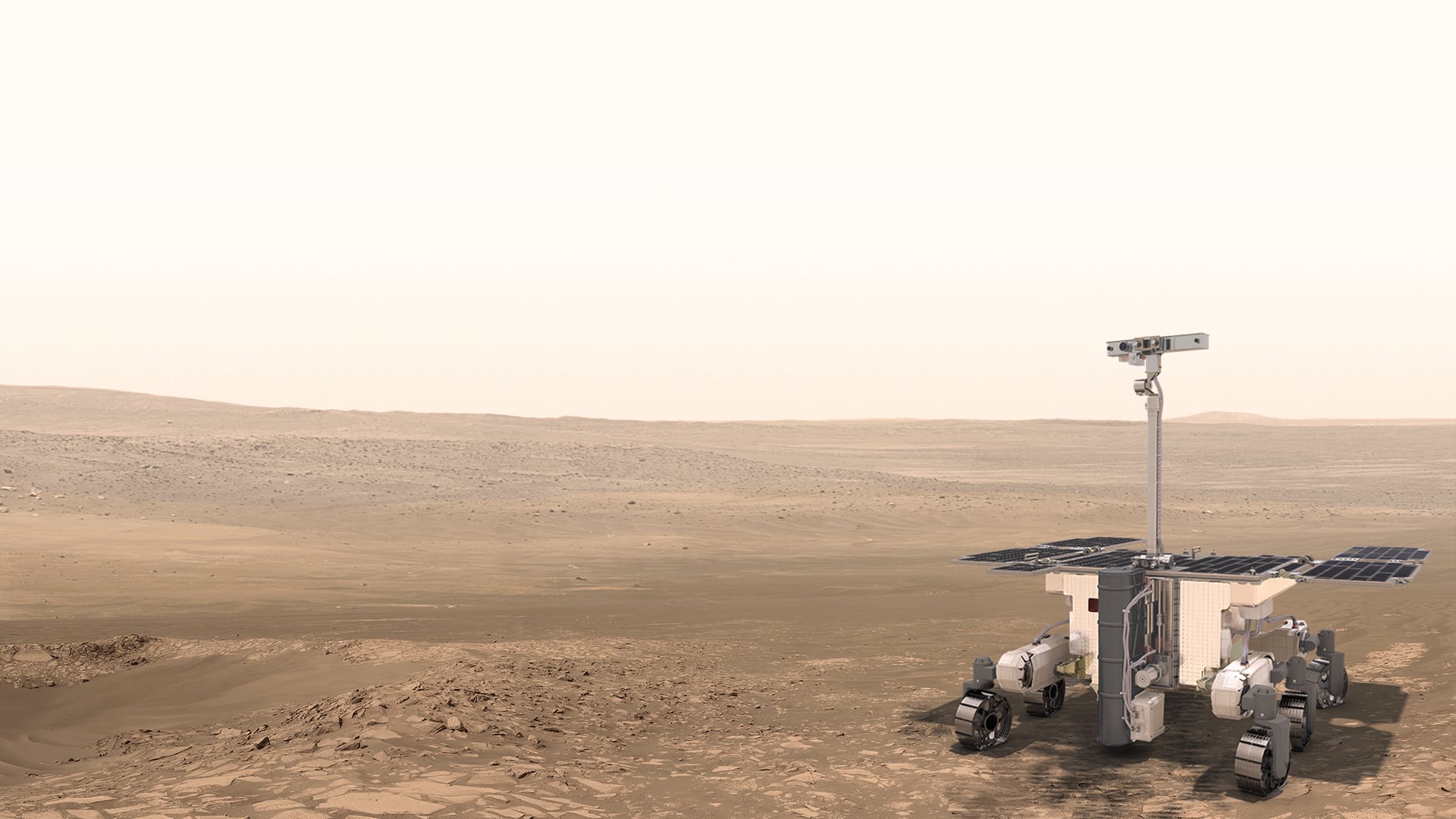
Figure Credit: ESA/ATG medialab
Word count (approximate, excluding HTML tags and tables): 7,280