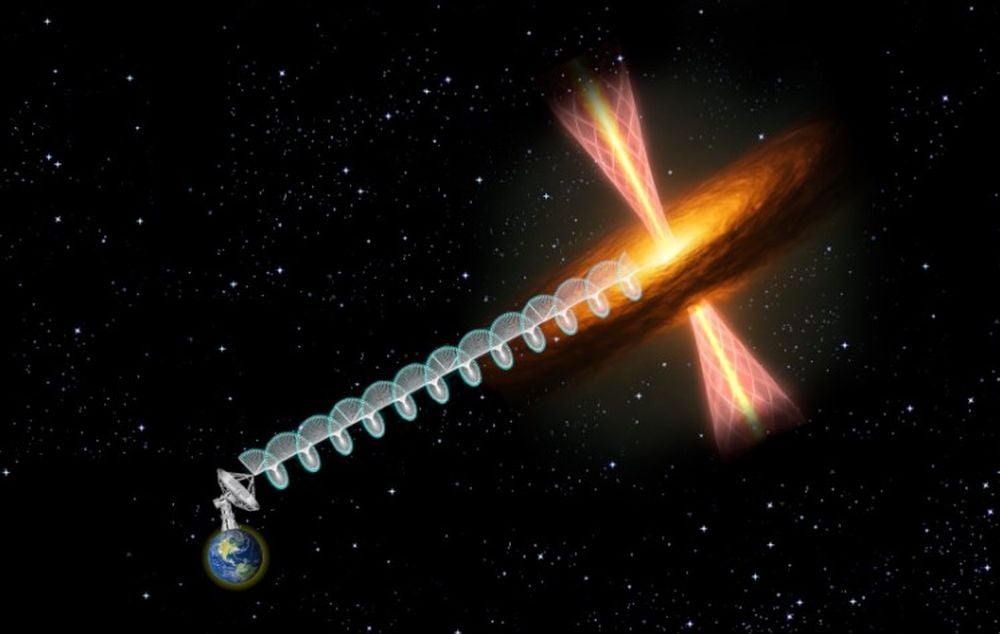
Stars are celestial bodies that emit light and heat due to nuclear reactions occurring in their cores. Understanding how these stars form, evolve, and end their lives is critical for astrophysicists, as they influence the dynamics of galaxies and the chemical enrichment of the universe. The complex processes surrounding star formation are underscored by ongoing observations of these stellar phenomena.
Introduction to the Evolution of Stars
The life cycle of a star begins with a giant molecular cloud—regions of gas and dust in space. When regions of this cloud become dense enough, gravity pulls the material together, leading to the formation of a protostar. This stage is crucial because it denotes the beginning of a star's life. During this phase, the protostar undergoes significant changes, including the development of magnetic fields which play a fundamental role in its evolution.
The Role of Magnetic Fields
Magnetic fields are present in various astrophysical systems and are particularly impactful in star formation. These fields can significantly influence the dynamics of matter within the accretion disk around a protostar. The interaction between magnetic fields and the infall of material leads to fascinating phenomena such as jets. These jets can be observed as highly collimated streams of plasma ejected from the stellar surface, typically along the rotational axis of the star.
Importance of Electromagnetic Emissions
Astronomers rely on various forms of electromagnetic emissions—such as radio waves, infrared, optical, and X-rays—to study stars. Each type of emission provides unique insights into a star's physical characteristics and its surrounding environment. For instance, the study of radio emissions can provide information about magnetic fields near a star's surface, while infrared observations can reveal cooler dust clouds enveloping star-forming regions.
The Study of a Massive Young Protostar: IRAS 18162-2048
A recent study has shed light on the magnetic field surrounding a massive young protostar known as IRAS 18162-2048, located approximately 5,500 light-years from Earth. This star holds approximately 10 solar masses and has been identified as a powerful source of electromagnetic emissions. The research, conducted by a team from the Indian Institute of Space Science and Technology, marks a significant breakthrough due to the detection of circular polarization (CP) in its radio waves—indicative of the presence of strong magnetic fields.

Educational Background of the Research Team
Lead author Amal G. Cheriyan, a PhD student with a deep interest in astrophysics, and their team employed the National Radio Astronomy Observatory's Karl G. Jansky Very Large Array (VLA) for the observations. The detection of CP represents a pioneering achievement, as it has not been observed around such massive young stars before.
“Polarization measurements provide strong constraints on magnetic fields in star-forming systems.” – Amal G. Cheriyan
Circular Polarization and Its Significance
Circular polarization (CP) is a property of electromagnetic waves where the electric field vector rotates in a circular motion as the wave propagates. In astrological contexts, the presence of CP can indicate complex interactions between polarized light and magnetic fields in the emitting source. This is critical for understanding the environments surrounding massive protostars.
Detection of Magnetic Fields
The ability to measure magnetic fields in star-forming regions is essential for developing a deeper understanding of stellar birth and evolution. This study specifically highlights the gap in knowledge relating to the magnetic fields associated with massive protostars compared to their low-mass counterparts.
- Massive Protostars: Stars that will eventually reach masses greater than 8-10 times that of the Sun.
- Comparison with Low-Mass Protostars: Previous studies have primarily focused on lower-mass protostars, resulting in a notable lack of data regarding massive entities like IRAS 18162-2048.
- Challenge in Observation: Detecting CP in massive protostars is notably more challenging due to the faint nature of the signals.
The Impact of Stellar Jets
Stellar jets are a common feature among young stars, playing a significant role in shaping their environment. Actively forming stars like IRAS 18162-2048 exhibit powerful jets that can influence the surrounding interstellar medium (ISM). These interactions can lead to significant molecular cloud turbulence, ultimately inhibiting further star formation in the area.
The HH 80-81 jet, associated with IRAS 18162-2048, is the largest known collimated jet in the Milky Way. It exemplifies how the ejection of material from young stars can evolve over time under various influences.

Connection Between Protostars and Black Holes
The study further explores the comparative dynamics of jets originating from both stars and black holes. Previous research identified magnetized jets emanating from HH 80-81, indicating a broader astrophysical connection between these different celestial bodies. The detection of CP in protostars bridges a comparative gap in our understanding of jets and their emissions across various astrophysical scales.
Challenges Ahead in Astrophysical Research
Despite recent advancements, significant challenges remain in the field of magnetic field measurement around massive stars. According to Cheriyan, the faint and sporadic nature of CP in this context makes systematic measurement difficult. Furthermore, establishing a comprehensive understanding of the interplay between jets and magnetic fields remains paramount for future studies.
Fossil Fields Hypothesis
The researchers propose the fossil fields hypothesis as an explanation for the observed magnetic fields in massive stars. This theory suggests that magnetic fields from the interstellar medium become enhanced during the gravitational collapse of molecular clouds into protostars.
| Theory | Description |
|---|---|
| Fossil Fields Hypothesis | Magnetic fields from the interstellar medium become embedded and amplified during the collapse of molecular clouds into protostars. |
This hypothesis is crucial as it implies that the magnetic characteristics of stars may, in some cases, be inherited rather than solely developed through internal processes.
Potential Implications for Cosmic Understanding
The insights gained from studying IRAS 18162-2048 and its unique magnetic fields have broader implications for the field of astronomy. Understanding how stars interact with their environments helps scientists draw conclusions about galaxy formation and the chemical evolution of the universe.
As lead researcher Prof. Sarita Vig notes, “This is the first inference of the magnetic field strength using circular polarization in radio waves from a massive protostar.” This highlights the importance of detecting CP in enhancing our knowledge of stellar environments.
“The detection of circular polarization is an exceptionally rare and challenging feat.” – Prof. Nirupam Roy
Conclusion: A Step Forward in Stellar Research
The discovery of CP around a massive protostar like IRAS 18162-2048 represents a significant leap forward in the understanding of star formation dynamics. As researchers continue to refine their observational techniques and explore the incredible variety of cosmic phenomena, the potential for new discoveries is ever-present.
In particular, the connections established through this research between young stars, their magnetic fields, and jets serve to enhance the existing knowledge framework, paving the way for further studies into the complex nature of the universe.
Future Research Directions
Future research will likely delve deeper into the measurement of CP and its implications for magnetic field understanding. The deployment of advanced observational technologies paired with innovative theoretical frameworks may help uncover further mysteries surrounding the birth and evolution of massive stars.
For More Information
- First Detection of Circular Polarization in Radio Continuum Toward a Massive Protostar
- Research on Magnetized Jets from HH 80-81
- More about Herbig-Haro objects
- Active Galactic Nuclei
This research not only adds to our cosmic literature but also instills excitement about the potential of future astronomical discoveries that could alter our conception of the universe.