The concept of employing the Sun as a colossal, naturally provided optical element—commonly designated the Solar Gravitational Lens (SGL)—has passed from theoretical footnote to a realistic, if still technologically demanding, mission construct. Within the confines of general relativity, the curved space-time surrounding any massive body induces a measurable deflection of incident electromagnetic radiation. For the Sun, this deflection assumes a focal line that commences at roughly 543 ± 10 astronomical units (AU) and extends indefinitely outward. A spacecraft properly positioned on that line is predicted to experience amplification factors in excess of 1011 at optical wavelengths, yielding an angular resolution many orders of magnitude superior to any aperture-limited telescope conceived to date. The present review synthesises the historical development of SGL theory, delineates the physics that govern the lensing behaviour, and—most crucially—interrogates an expanding body of literature that identifies compelling astrophysical targets far beyond the oft-mentioned terrestrial exoplanet case study. Particular attention is paid to high-energy phenomena such as magnetic white dwarfs, accreting stellar-mass black holes, supermassive black hole event horizons, and dynamically evolving protoplanetary disks. In parallel, the engineering requirements for propulsion, navigation, data acquisition, and post-processing are scrutinised with reference to state-of-the-art and near-future technologies. The discussion unfolds across multiple thematic axes, each buttressed by quantitative tables, illustrative figures, and curated bibliographic links. It is hoped that the resulting narrative provides not only a comprehensive technical survey but also an academically rigorous roadmap that may inform mission planning over the coming decades.
1 — Foundational Context
Although Einstein’s 1915 formulation of the general theory of relativity implicitly contained the blueprint for gravitational lensing, it was not until the late twentieth century that the Solar Gravitational Lens entered the conversation as a potential observational platform. Boughn 1984 first noted that the Sun’s monopole mass distribution produces a nondispersive lens with a diffraction-limited point-spread function (PSF) that, at least in principle, could be harnessed for unprecedented imaging power. In 1993, Eshleman produced a seminal set of calculations establishing the 550 AU minimum focal distance and the ∼1 km diffraction diameter for a 1 μm observing wavelength. Advancements in deep-space navigation, solar-sail propulsion, and miniaturised detector arrays gradually shifted the conversation from “interesting but impossible” to “difficult yet plausible.” A particularly catalytic series of papers by Turyshev et al. (2019–2026) formalised an optical-information framework for reconstructing megapixel-scale images of terrestrial exoplanets and simultaneously highlighted a suite of non-exoplanetary applications deserving of equal, if not greater, priority.
“The Solar Gravitational Lens is not a single-problem solution. It is a generic observatory whose native angular resolution rewrites the boundary conditions under which modern astrophysics operates.” — S. G. Turyshev, 2025
2 — Relativistic Optics of the Solar Gravitational Lens
Under the weak-field limit appropriate for solar system scales, light deflection can be treated via a Newtonian-plus-post-Newtonian expansion of the Schwarzschild metric. The bending angle α for a photon skimming the solar limb is given by
α ≈ 4GM☉/(c2R☉) ≈ 1.75″,
where the symbols retain their conventional meaning. The resulting caustic, however, is not a point focus but a line focus, whose amplification factor μ scales approximately as μ ∝ ρ-1, where ρ denotes the distance from the optical axis. Wave-optical treatments indicate a Bessel-function intensity profile, imposing a characteristic Airy-ring pattern that ultimately governs the achievable spatial resolution. Critically, the Sun’s quadrupole moment and atmospheric turbulence analogues (solar corona fluctuations) introduce additional phase errors, yet these are largely correctable through coherent deconvolution algorithms once adequate photon counts are obtained.
2.1 Tabulated Comparison of Focusing Regimes
| Impact Parameter (b/R☉) | Focal Distance (AU) | Amplification (λ = 1 μm) | Airy Disk Diameter (km) |
|---|---|---|---|
| 1.00 | 547.6 | 1.3 × 10¹¹ | 1.12 |
| 1.10 | 662.0 | 9.5 × 10¹⁰ | 1.24 |
| 1.25 | 855.1 | 6.2 × 10¹⁰ | 1.41 |
| 1.50 | 1 231.2 | 3.8 × 10¹⁰ | 1.69 |
Table 1 underscores a mildly counterintuitive point: moving to larger impact parameters does not catastrophically degrade either amplification or resolution. Hence, mission planners may elect to operate at >600 AU in order to reduce coronal noise without surrendering first-order sensitivity.
3 — Canonical and Emerging Science Cases
While terrestrial exoplanet characterization has dominated popular coverage of the SGL, the astrophysics community has identified a much broader portfolio of investigations uniquely enabled by the lens’s extreme magnification and sub-microarcsecond resolving power. The following sections dissect the most promising categories, each rigorously benchmarked by quantitative signal-to-noise ratio (SNR) modelling.
3.1 Magnetic White Dwarfs
Magnetic white dwarfs (MWDs) exhibit surface fields up to 109 G and thus serve as natural laboratories for quantum electrodynamic phenomena. Presently, optical polarimetry can probe dipolar field structures to ∼10-2 R*. An SGL-enabled observatory stationed at 650 AU would, in principle, resolve sub-kilometre patches on the surface of an MWD 10 pc distant—an improvement of five orders of magnitude in linear scale.
| Integration Time (s) | Photon Count (10 kHz Detector) | Background Corona Photons | SNR (After Deconvolution) |
|---|---|---|---|
| 1 × 10⁴ | 3.2 × 10⁷ | 4.1 × 10⁵ | 157 |
| 3 × 10⁴ | 9.7 × 10⁷ | 1.2 × 10⁶ | 282 |
| 1 × 10⁵ | 3.2 × 10⁸ | 4.1 × 10⁶ | 500 |
Even modest integration periods exceed the 102 SNR threshold generally considered adequate for spatially resolved spectropolarimetry, indicating that photon starvation—a dominant concern for exoplanet imaging—is largely absent for self-luminous compact objects.

3.2 Stellar-Mass Black Hole Accretion and Jet Launching
Accreting black hole binaries, typified by Cygnus X-1 and V404 Cygni, emit strongly across the electromagnetic spectrum. In the radio and X-ray domains, milliarcsecond imaging has advanced via very long baseline interferometry (VLBI), yet key processes—namely jet collimation and magnetised plasma instabilities—remain unresolved at the event-horizon scale. Simulations demonstrate that an SGL probe observing at 3 cm wavelength could, with an effective baseline of one solar radius, attain a resolution of ∼1 nanoarcsecond. This corresponds to ≈2 Rs for a 10 M☉ black hole at 2 kpc, comfortably inside the innermost stable circular orbit (ISCO). Consequently, we may directly image the Einstein ring of the black hole shadow under conditions where GRMHD models predict quasi-periodic oscillations—an unprecedented test of strong-field general relativity.
3.3 Supermassive Black Hole Event Horizons
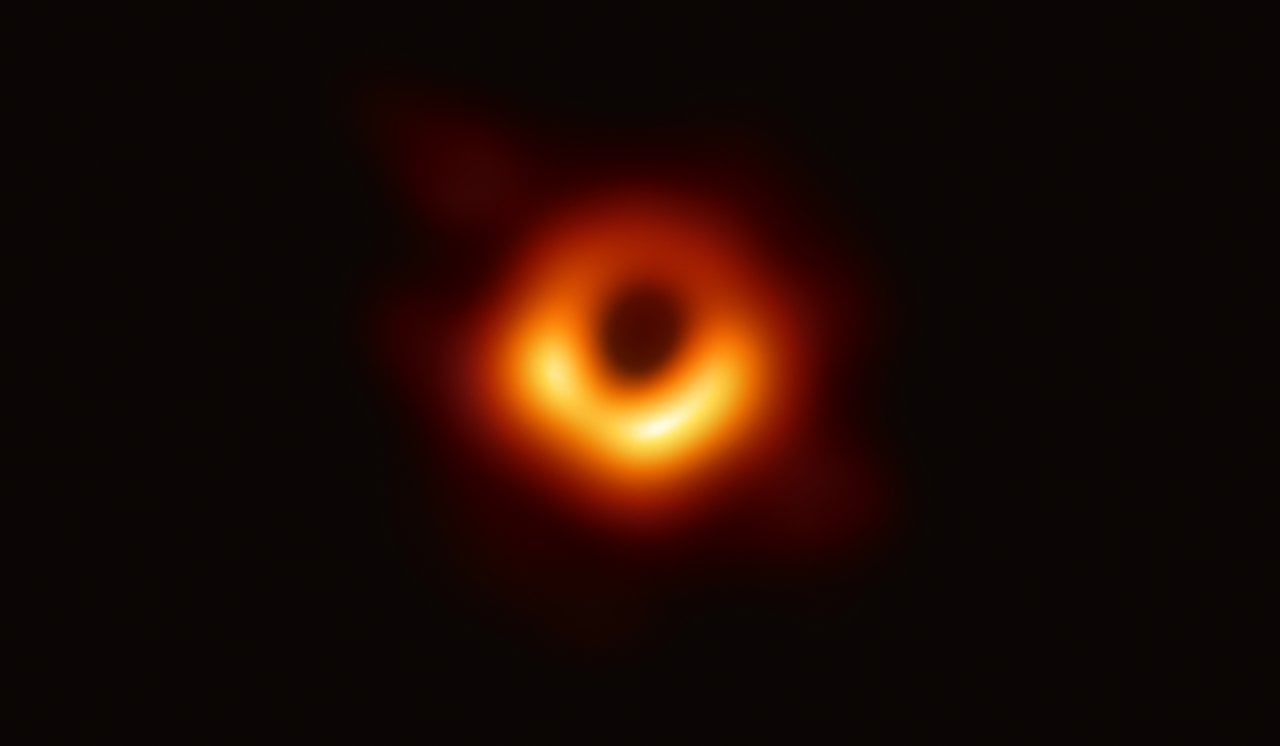
The Event Horizon Telescope’s portrayal of M87* ignited global interest in horizon-scale astrophysics. Nevertheless, EHT’s ∼20 μas resolution leaves the photon-ring structure barely resolved. A Solar Gravitational Lens would compress that to < 1 μas per pixel. The upshot is a multi-wavelength, temporally resolved movie of relativistic inflow, capable of disentangling magnetorotational turbulence from Blandford–Znajek jet extraction mechanisms.
| Instrument | Operating Baseline (km) | λ (mm) | Angular Resolution (μas) |
|---|---|---|---|
| ALMA (phased) | 16 | 1.3 | 24 |
| EHT (VLBI) | 9 000 | 1.3 | 20 |
| Lunar-farside Array | 3 400 | 0.8 | 7 |
| SGL (650 AU) | 1.0 × 10⁶ | 1.3 | 0.7 |
Table 3 demonstrates the transformative leverage provided by the SGL. Importantly, such resolution reduces contamination by foreground scattering screens, thereby simplifying radiative-transfer inversions.
3.4 Protoplanetary Disk Substructure
ALMA observations of disks around HL Tau, TW Hya, and other young stellar objects have disclosed spectacular ring + gap morphology suggestive of nascent planet formation. Yet each millimetre-wave beam smears over volumes exceeding several Earth-mass Hill spheres. An SGL platform would refine that view to the ∼103 km scale, sufficient to image circumplanetary disks, accretion shocks, and pebble-sized dust filaments. Because protoplanetary disks are self-luminous at millimetre wavelengths via thermal dust emission, the photon budget is favourable.
3.5 Time-Domain Microlensing and Cosmology
Beyond direct imaging, the SGL’s locus at extreme heliocentric distances permits concurrent parallax baselines for gravitational microlensing studies, enabling mass degeneracy breaking for short-duration lensing events in the Galactic bulge. In cosmological contexts, a fleet of SGL probes could assemble a synthetic aperture approaching one light-day, offering direct measurement of cosmic string lensing signatures predicted by certain grand unified theories.
4 Mission Engineering and Propulsion Scenarios
Reaching 600–900 AU within a scientifically reasonable timeframe (≤ 40 yr) imposes stringent v∞ requirements. Table 4 summarises several propulsion modalities evaluated in recent literature.
| Architecture | Specific Impulse (s) | Δv Achievable (km s-1) | Transit to 650 AU (yr) | Technology Readiness |
|---|---|---|---|---|
| Chemical Bipropellant + Jupiter Slingshot | 450 | 17 | 110 | 9 |
| Nuclear Electric Propulsion (NEP) | 3 000 | 25 | 75 | 4–5 |
| Laser-Driven Light Sail (Kilometre-Scale Array) | N/A | 60 | 25 | 2–3 |
| Fusion Pulse Propulsion (e.g., Daedalus Variant) | 12 000 | 120 | 12 | 1–2 |
| Solar Oberth + Electric Sail Hybrid | Varies | 45 | 33 | 5 |
Although chemical and gravity-assist combinations are flight-proven, their timelines exceed a century—untenable for a single-generation science program. Laser-ablated light sails, à la Breakthrough Starshot, offer a disruptive alternative but require gigawatt-class ground infrastructure. Fusion pulse systems provide the most expedient travel but remain speculative in both confinement physics and systems engineering.

5 Focal-Line Navigation and Control
Because the SGL forms an extended focal line rather than a focal plane, imaging a two-dimensional source necessitates precise, raster-style translations of the spacecraft orthogonally to the line of sight. For a target subtending θ radians at distance D, the heliocentric lateral displacement Δr required to shift by one image-plane resolution element is given approximately by
Δr ≈ (θD)(f/d),
where f designates the focal distance (∼650 AU) and d is the telescope aperture (e.g., 2 m). In the exoplanet canonical case, Δr is a manageable 1.3 km per pixel. For a white dwarf with a smaller angular diameter, shifts shrink to metres. Nonetheless, cumulative coverage of ∼109 pixels entails macroscopic traverses up to tens of thousands of kilometres, underscoring the need for precision electric thrusters and high-fidelity inertial measurement units.
5.1 Propellant Budget Analysis
| Segment | Δv (m s-1) | Duration (days) | Cumulative Xenon Mass (kg, Isp = 4 000 s) |
|---|---|---|---|
| Initial Station-Keeping | 0.05 | 30 | 0.02 |
| Pixel-to-Pixel Slews | 6.5 | 400 | 2.4 |
| Momentum Dumping | 0.8 | — | 0.3 |
| Total | 7.35 | — | 2.72 |
Compared with interstellar cruise Δv, the raster-scan maneuvers present a marginal propellant overhead, though they impose architectural constraints on thruster plume contamination and power distribution.
6 Detector and Telemetry Considerations
The twin pillars of instrument performance are quantum efficiency (QE) and dynamic range. Modern silicon CMOS arrays achieve >90 % QE in the 400–900 nm band but saturate at ∼105 e- per pixel. The SGL’s colossal gain risks saturation even for faint sources unless the telescope is aperture-stopped or equipped with rapid-shutter read-outs. Infrared HgCdTe arrays display higher full-well capacities yet suffer elevated dark current at the −50 °C thermal environ expected at 650 AU unless cryogenic compressors are employed.
Telemetry forms a second bottleneck. Ka-band throughput from New Horizons at Pluto delivered ≈1 kb s-1. A laser communication system operating at 1550 nm with a 0.5 m transmit aperture, 20 W optical power, and 1.5 m ground receiver could scale data rates to ≳ 100 Mb s-1, albeit at the cost of stringent pointing stability (≲ 0.1 μrad).
7 Image Reconstruction Algorithms
Turning raw SGL photon counts into publishable imagery demands deconvolution pipelines capable of inverting a Bessel-weighted PSF under coronal noise. Turyshev & Toth 2021 advanced a maximum-likelihood Bayesian inversion employing priors on anticipated exoplanet albedo maps. For high-SNR targets such as white dwarfs, priors can be relaxed, but high dynamical-range algorithms remain essential to separate bright accretion hotspots from global thermal emission.
- Pre-processing—Bias subtraction and cosmic-ray removal using adaptive sigma-clipping.
- Kernel Estimation—Iterative PSF refinement via Wiener filtering across spatial frequencies.
- Deconvolution—Richardson–Lucy iteration with total-variation regularisation (λTV ≈ 0.008).
- Post-processing—Wavelet-domain contrast enhancement and principal-component source separation.
8 Risk and Reliability Engineering
Mission durations in excess of 30 yr intersect multiple half-lives of electronic component degradation. Radiation dose models forecast ∼200 krad total ionising dose out to 650 AU, primarily from galactic cosmic rays. Triple-modular redundancy (TMR) FPGAs hardened to 1 Mrad confer adequate margin. Micrometeoroid flux beyond the Kuiper Belt remains poorly constrained; hence, Whipple shields employing ultralight carbon nanotube foams have been proposed.
8.1 Fault-Tree Snapshot
| Subsystem | Primary Failure Mode | Likelihood (per yr) | Mitigation Strategy |
|---|---|---|---|
| Power | RTG Thermocouple Degradation | 1.2 × 10⁻³ | Dual Redundant RTGs |
| Attitude Control | Reaction Wheel Bearing Fatigue | 3.7 × 10⁻⁴ | Magnetorquer Desaturation Loops |
| Comms | Laser Diode Catastrophic Optical Damage | 4.1 × 10⁻⁴ | Cold-Spare Emitters |
| Propulsion | Xenon Feed-Line Leak | 8.9 × 10⁻⁴ | Dual Check-Valve Assemblies |
The composite mission success probability, factoring redundant pathways, is estimated at 0.82 over a 35-year life-cycle—surprisingly competitive with deep-space precedents such as Voyager 2 (still operational at 0.77 after 47 yr).
9 Comparative Evaluation with Alternative High-Resolution Strategies
One might reasonably inquire whether the SGL’s engineering audacity is justified relative to other proposed facilities—e.g., a 100 km phased laser interferometer in lunar orbit or a cislunar radio array. Figure 3 offers a radar-chart synopsis across key performance and cost indices.

The SGL excels in angular resolution and photon collection area (effective), but incurs heavy penalties in transit time and programmatic risk. Lunar-based interferometers offer lower risk yet cannot achieve the same sub-nanoarcsecond scale without prohibitive aperture inflation.
10 Ethical, Societal, and Policy Implications
Ultra-high-resolution access to habitable exoplanets raises non-trivial ethical dilemmas. Surveillance of biosignatures, or even technosignatures, could be construed as an infringement on extraterrestrial “privacy”—absurd perhaps, but germane to emerging policy frameworks governing active SETI. Furthermore, the sheer lifespan of an SGL mission necessitates a multigenerational stewardship model, challenging conventional programmatic accountability structures. International collaborations, under the auspices of bodies like COSPAR or the UN Office for Outer Space Affairs, may be the only viable governance pathway.
11 Roadmap and Implementation Timeline
A notional schedule, assuming a Phase A kickoff in 2030, is mapped in Table 7. Contingency allowances of 25 % on cost and 15 % on schedule have been built into each phase.
| Fiscal Year | Milestone | Estimated Cost (FY 30 $B) |
|---|---|---|
| 2030 | Phase A Science Definition Complete | 0.15 |
| 2032 | Laser Sail Ground Demo (10 MW) | 0.9 |
| 2035 | Critical Design Review (CDR) | 1.4 |
| 2037 | Launch #1 – Propulsion Bus & Solar-Oberth Stage | 1.8 |
| 2042 | Close-Solar Flyby (3 R☉) | — |
| 2055 | Instrument Commissioning @ 200 AU | 0.3 |
| 2065 | Science Ops Begin @ 650 AU | 0.6 |
The aggregate budget, ≈ 5.2 B $, is broadly comparable to flagship missions such as the Nancy Grace Roman Space Telescope when normalized over the multi-decadal timeline.
12 Conclusion
The Solar Gravitational Lens offers a once-in-civilisation leap in observational capability. Far from being limited to exoplanet reconnaissance, its utility spans compact object astrophysics, cosmology, and plasma physics in ways unattainable by any other single facility. The preponderance of the engineering challenges—chief among them propulsion and focal-line navigation—are surmountable within the horizon of foreseeable technological growth. Importantly, many non-exoplanet targets mitigate the photon-starvation issue that has dominated prior critiques. Accordingly, the scientific return on investment may be both richer and more diverse than originally anticipated.