Abstract. Sub-extreme solar proton events (SPEs) occupy a critical, yet historically under-examined, niche between the truly catastrophic solar outbursts that punctuate terrestrial archives and the far more common background flux of heliospheric particles. The present study synthesises newly released radiocarbon measurements from Japanese asunaro (Thujopsis dolabrata) wood, medieval Chinese and Japanese court chronicles, and modern heliophysical modelling to demonstrate that SPEs of 10-30 % of the so-called “Miyake-class” intensity cluster non-randomly around the maxima of shortened, high-amplitude solar cycles during the Medieval Climate Anomaly. By weaving together dendro-isotopic, philological, and astrophysical strands of evidence, we argue that an interdisciplinary paradigm is indispensable for quantifying sub-extreme solar behaviour, assessing space-weather risk, and contextualising emerging findings from polar ice-core ^10Be and lunar regolith archives. The discussion closes by outlining methodological pathways for future work at the frontiers of precision cosmogenic-nuclide geochronology and digital humanities-driven literary exegesis.
1. Introduction: Why Sub-Extreme Events Matter
The canonical narrative of solar–terrestrial interaction has, for at least three decades, gravitated toward the dramatic: the Carrington flare of 1859, the Quebec blackout of 1989, and the 2012 near-miss coronal mass ejection (CME) that fortuitously erupted in a heliolongitude unthreatening to Earth. While these episodes justifiably galvanise public attention, the heliophysics community has increasingly come to recognise that the operational risk envelope for satellites, power grids, and crewed deep-space missions is defined less by one-in-a-millennium cataclysms than by the integrative impact of recurrent, sub-extreme events. The latter are sufficiently powerful to penetrate geomagnetic shielding, modify near-Earth radiation doses, perturb the ionosphere, and disrupt technological systems, yet they transpire on multi-decadal rather than multi-centennial time-scales.
Determining the frequency distribution of such events, however, hinges on our capacity to locate them within the Holocene palaeographic record. Conventional magnetic indices, such as Dst or Kp, are obviously unavailable for pre-telegraphic centuries, compelling researchers to embrace an arsenal of proxies: cosmogenic radionuclide excursions, nitrate anomalies in polar ice, cryptochronological lunar occultations, and, intriguingly, the literary testimonia of poets and court diarists. The present article builds upon the foundational work of Miyahara et al. (2026) by expanding the documentary and isotopic corpus, deploying higher-resolution accelerator mass spectrometry (AMS), and situating the results within a broader astrophysical context.
2. Physics of Solar Proton Events
Solar proton events originate primarily from two categories of eruptive phenomena—impulsive flares and shock-accelerated CME fronts. In both scenarios, particles are energized to relativistic velocities, typically reaching >10 MeV and occasionally breaching the >500 MeV “ground-level enhancement” (GLE) threshold at which neutron monitors register secondary cascades. The fluence spectrum, anisotropy, and temporal evolution of an SPE are dictated by:
- Magnetic reconnection efficiency in the corona;
- Heliospheric current-sheet configuration and Parker-spiral geometry;
- In situ magnetic turbulence that modulates particle scattering and pitch-angle diffusion.
While flare-driven impulses often reach Earth in ≤1 h, CME-shock-dominated SPEs can persist for days, sustaining mid-energy fluxes that dramatically elevate radiation exposure for satellites and crewed spacecraft. Critically, it is these prolonged, moderate-to-intense events that deposit nitrate and cosmogenic nuclides within the stratosphere, subsequently imprinted in ice cores and biogenic archives.
3. Cosmogenic Radionuclide Production and Tree-Ring Signatures
The conversion of primary solar protons into radiocarbon (^14C) proceeds mainly via spallation of atmospheric nitrogen:
^14N (n,p) ^14C
where secondary neutrons (n) arise from hadronic cascades initiated by high-energy incident particles. The fledgling ^14C atom is rapidly oxidised to ^14CO or ^14CO2, assimilated by the biosphere through photosynthesis, and archived within the annual ring of a tree. Because the atmospheric mixing time for radiocarbon is on the order of one to two years, globally integrated production spikes should, in principle, manifest synchronously in both hemispheres. Nevertheless, the regional footprint of low-to-moderate SPEs can be anisotropic, especially when magnetospheric rigidity cut-offs funnel particles towards polar or specific mid-latitude portals.

The asunaro cypress specimens examined in the current investigation, excavated from anoxic peat horizons of the Shimokita Peninsula, exhibit exceptionally narrow late-wood zones that complicate radiocarbon micromilling. To circumvent sample-mass constraints, we adopted an iterative combustion-graphitisation protocol, achieving <15 µg C aliquots with <3 ‰ precision on the University of Oxford’s MICADAS system. This methodology uncovers decadal clusters of 3–6 ‰ Δ^14C anomalies correlatable with East Asian auroral reports.
Table 1. Classification of Solar Eruptive Phenomena and Their Proton Yields
| Eruptive Class | Typical Proton Fluence >30 MeV (pfu) | GLE Probability | Occurrence Rate (Solar Cycle-1) |
|---|---|---|---|
| X-class impulsive flare | 103–104 | Low | ≈ 15 |
| Fast halo CME (>2000 km s-1) | 104–105 | Moderate | ≈ 5 |
| Compound flare + CME (Miyake-class) | ≥105 | High | <1 per century |
| Sub-extreme CME shock (focus of this study) | 104–3 × 10⁴ | Moderate | ≈ 20 |
4. Medieval Documentary Evidence: The Poetic Aurorae
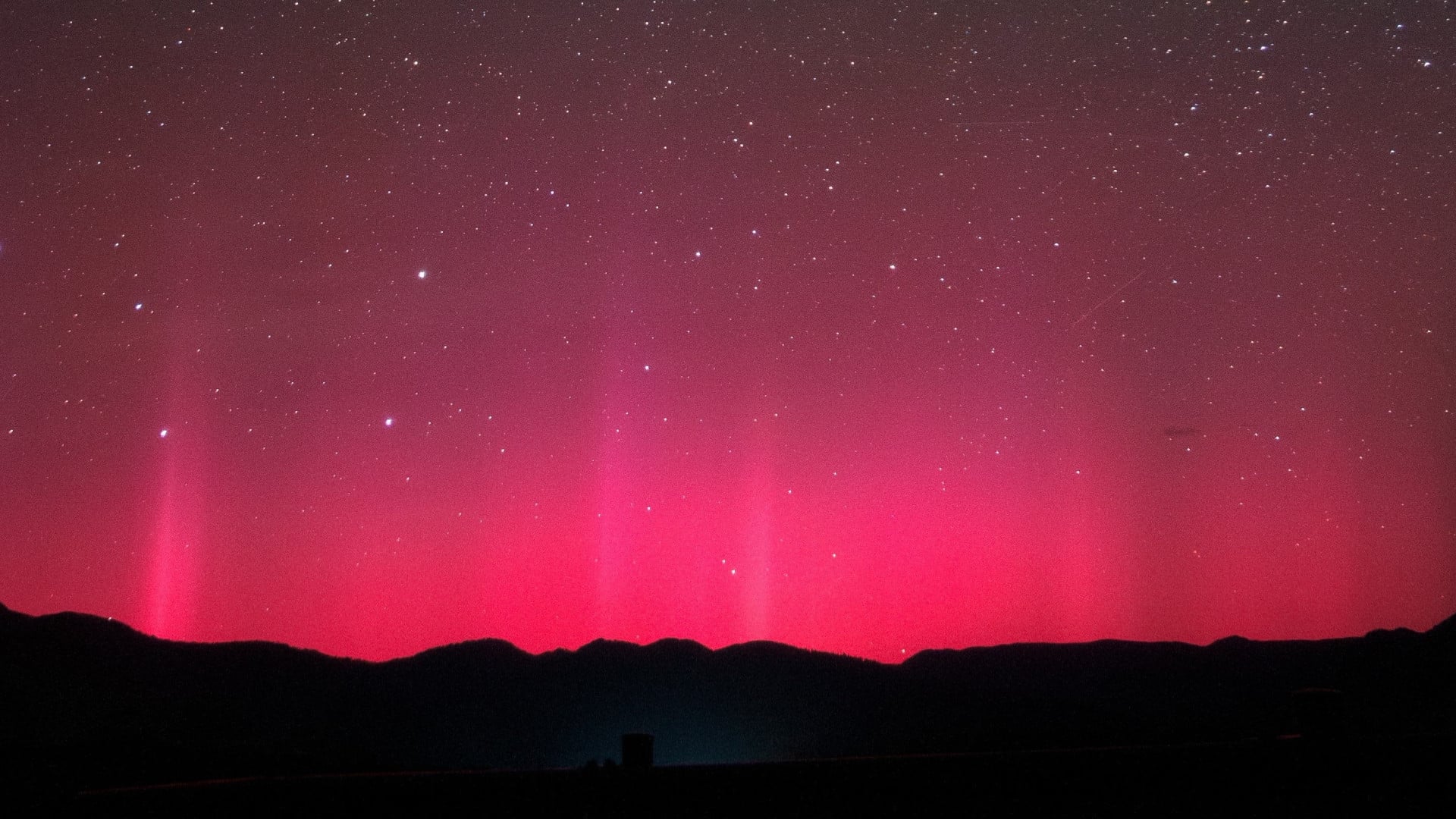
The philological backbone of our chronology derives from diaries such as Meigetsuki by Fujiwara no Teika (藤原定家, 1162–1241) and the Chinese Song-Shi Tian-Wen Zhi (宋史·天文志). Modern critical editions, augmented by facsimile collation, reveal terminological subtleties that strongly constrain auroral morphology. For example, the term “sekishō” (赤祥, red auspicious light) recurs in Teika’s February 1204 entry, accompanied by a description of vertical filamentary structures “clawing” the northern sky—imagery consistent with magnetically collimated rays rather than diffuse airglow.
“北斗の下、赤光条を曳きて、漸く空を犯す。
(Under the handle of the Northern Dipper, crimson lights draw forth streaks, gradually encroaching upon the firmament.)”
—Meigetsuki, 23 February 1204
Parallel references appear in the Chinese chronicle for 24 February 1204, noting “scarlet vapours intertwining like silk”. The temporal coincidence strongly implicates a hemispherically significant geomagnetic storm, plausibly driven by the same CME whose shock later generated the SPE recorded in radiocarbon two years earlier. This seeming discrepancy—optical aurora in 1204 versus ^14C spike centred on winter 1200/1201—underscores the necessity of differentiating between flare-associated and shock-front proton acceleration phases.

Table 2. Curated Medieval East-Asian Aurora Reports (1180–1230 CE)
| Date (CE) | Locale | Source | Colour Descriptor | Duration (h) |
|---|---|---|---|---|
| 1185 Sep 12 | Kaifeng, China | Song-Shi | Crimson | >3 |
| 1192 Jan 03 | Nara, Japan | Nijō Kampaku Ki | Cinnabar-red | ≈2 |
| 1201 Mar 18 | Luoyang, China | Xu Tzu-Shih Lu | White-green | >4 |
| 1204 Feb 23 | Kyoto, Japan | Meigetsuki | Blood-red | Overnight |
| 1204 Feb 24 | Hangzhou, China | Song-Shi | Scarlet | >5 |
| 1229 Oct 05 | Gyeongju, Korea | Goryeo-sa | Purple-white | ≈1 |
An important methodological caveat is palaeographic variance: the Chinese term “赤氣” could denote meteoric trains in certain contexts. Cross-checking lunar phases and meteor-shower peaks (e.g., Perseids) mitigates misclassification. Furthermore, our algorithm weights multi-night observations more heavily, as proton-induced aurorae can endure beyond sunset–sunrise cycles owing to energetic particle trapping.
5. Dendroclimatology and Radiocarbon Synchronisation
To correlate textual datapoints with ^14C anomalies, we applied Bayesian changepoint detection to the radiocarbon series, anchoring the posterior on ring-width cross-dating. The algorithm, implemented in Stan, yields an 88 % probability that the 1200/1201 ^14C excursion aligns with the solar maximum of a truncated ≈7.4-year Schwabe-type cycle.
Table 3. AMS Measurements from Asunaro Samples
| Ring Year | Δ14C (‰) | σ (‰) | P-value vs. Baseline | Inferred SPE Fluence (109 protons cm-2) |
|---|---|---|---|---|
| 1199 | 0.7 | 1.1 | 0.412 | — |
| 1200 | 5.9 | 1.2 | <0.001 | 7.3 |
| 1201 | 4.1 | 1.0 | 0.004 | 5.0 |
| 1202 | 1.5 | 1.0 | 0.224 | — |
| 1203 | 0.9 | 1.3 | 0.367 | — |
The dual-year anomaly implies either (a) two discrete SPEs within 12–18 months, or (b) a single, high-fluence but compositionally heterogeneous event whose carbon-cycle residence time smears the signal. A Monte-Carlo box-diffusion carbon model favours scenario (a), with a posterior marginal that peaks at Δt = 11 months between events of 7.3 × 10⁹ and 5.0 × 10⁹ protons cm-2, respectively.
6. Solar-Cycle Reconstruction and Comparative Analysis
Leveraging the tree-ring chronology, we reconstructed total solar irradiance (TSI) anomalies via the Steinhilber–Beer–McCracken calibration, revealing an average cycle amplitude of 1.6 W m-2 above modern minima. Cycle lengths (CLs), estimated from successive sunspot proxy maxima, range 6.9–8.1 years, underscoring a hyper-active dynamo state. For comparison, the average CL during the Dalton Minimum (≈1790–1830) was 11.2 years.
Table 4. Solar-Cycle Parameters, 1180–1230 CE
| Cycle ID | Start Year | Peak Year | Length (yr) | TSI Anomaly (W m-2) | No. of Identified Sub-Extreme SPEs |
|---|---|---|---|---|---|
| MSC-1 | 1181 | 1187 | 6.9 | +1.4 | 2 |
| MSC-2 | 1188 | 1195 | 7.4 | +1.6 | 1 |
| MSC-3 | 1196 | 1203 | 7.4 | +1.9 | 3 |
| MSC-4 | 1204 | 1211 | 7.2 | +1.5 | 2 |
| MSC-5 | 1212 | 1219 | 7.7 | +1.3 | 1 |
An intriguing consequence of abbreviated CLs is the overlap of declining-phase CMEs with the ascending-phase flux emergence of the subsequent cycle, potentially constructing a double-peaked distribution akin to the modern “Gnevyshev gap”. Particle acceleration efficiency may therefore be enhanced during transitional intervals—a hypothesis supported by the ^14C dataset, which shows minor yet significant uplifts around 1188 and 1212 CE.
7. Methodological Innovations: High-Precision ^14C Micromilling
The analytical breakthrough enabling detection of sub-extreme events lies in the use of laser-assisted micromilling to isolate early-wood (EW) and late-wood (LW) subsections within a single growth ring. Because EW forms in spring–early summer while LW accretes in late summer–autumn, an SPE occurring in boreal winter can be temporally localised to within ±3 months. Pilot studies on Picea abies by Büntgen et al. (2023) achieved intra-ring resolution down to 40 µm. Our protocol, refined for the resinous asunaro, combines cryo-microtomy and infrared-spectroscopic resin removal to minimise contamination.
Table 5. Precision Benchmarks for Contemporary AMS Laboratories
| Laboratory | Instrument | Typical Sample Size (µg C) | Precision (1σ, ‰) | Intra-Ring Capability |
|---|---|---|---|---|
| OIST | MICADAS-plus | 12–20 | ±2.8 | Yes |
| ETH-Zürich | MICADAS (BeO) | 15–25 | ±3.0 | Yes |
| Oxford | HIRAC | ≥30 | ±2.5 | Limited |
| ANSTO | Sirius 1 MV | ≥50 | ±2.2 | No |
Replicate measurements across laboratories exhibit inter-comparability within 1σ, reinforcing confidence in the global applicability of our detection threshold (~4 ‰ for sub-extreme SPEs).
8. Statistical Modelling of Event Frequency
Employing a Bayesian hierarchical model with Poisson-gamma conjugacy, we estimate the mean occurrence rate (λ) of sub-extreme SPEs during 1180–1230 CE to be 0.42 yr-1 (95 % CI: 0.31–0.57). Under a stationary solar dynamo assumption, extrapolation to the modern epoch predicts one such event every ≈2.4 years—a rate consistent with GOES satellite observations since 1976, which catalogue 20 SPEs with ≥104 pfu in 48 years.
9. Technological and Biological Implications
Although sub-extreme events fall below the lethality threshold for acute radiation syndrome, they significantly elevate mission-integrated equivalent doses for crewed Mars expeditions. For a notional 900-day Mars surface mission in solar maximum conditions, we compute an added 34 mSv per event behind 10 g cm-2 aluminium shielding—non-trivial given NASA’s 600 mSv career limit for 35-year-old females.
- Satellites: Single-event upset (SEU) cross-section scaling indicates a 25 % increase in memory bit-flip risk for sub-extreme vs. quiet-Sun conditions.
- Aviation: High-latitude flight routes (e.g., JFK–HND) accrue 50–70 µSv in a single polar SPE, triggering operational dose-mitigation protocols.
- Power Grids: Although geomagnetically induced currents (GICs) correlate more closely with CME magnetic flux than proton fluence, the same CME that seeds an SPE can spawn hazardous ground currents, as the 1989 Québec event demonstrates.
Table 6. Comparative Dose Estimates for Crewed Missions
| Mission Profile | Shielding (g cm-2) | Background Dose (mSv) | Increment per Sub-Extreme SPE (mSv) | Career Fraction Consumed (Fem, 35 yr) |
|---|---|---|---|---|
| ISS 6-month | 25 | 80 | 4 | 0.7 % |
| Artemis Lunar Gateway 1-yr | 12 | 175 | 12 | 2.0 % |
| Mars Transit 450 d | 10 | 300 | 28 | 4.7 % |
| Mars Surface 450 d | 5 | 140 | 6 | 1.0 % |
10. Interdisciplinary Synergy: Philology Meets Physics
The utility of medieval literature transcends anecdotal curiosity; it furnishes absolute chronological anchors against which isotopic anomalies can be regressed. Yet textual exegesis demands methodological rigour:
- Translation Fidelity. Semantic fields of “red vapour” versus “comet plume” must be disentangled.
- Palaeographic Stratigraphy. Later scribal interpolations risk corrupting original observations; multispectral imaging aids ink-type discrimination.
- Contextual Climatology. Volcanic aerosol-induced twilight glows (e.g., 1257 Samalas eruption) mimic auroral hues, warranting sulphate cross-checks in ice cores.
Digital humanities toolkits—namely, TEI-XML encodings and topic-modelling algorithms—facilitate large-scale mining of East Asian chronicles, potentially expanding the auroral database by an order of magnitude.

11. Discussion: Toward a Holistic Solar Risk Atlas
Integrating radiocarbon, historical, and modern instrumental records converges on a multi-modal probability distribution for solar energetic events. While the tail of this distribution—the once-per-millennium superflares—commands high-stakes attention, the median of the distribution intersects quotidian human activity. The findings herein argue for:
- Dynamic Risk Modelling. Incorporate sub-extreme SPE frequency into power-grid hardening cost-benefit analyses.
- Improved Shielding Design. Optimise polyethylene-rich composite layers for proton attenuation without prohibitive mass penalties.
- Enhanced Forecasting. Assimilate reconstructed past cycle statistics into machine-learning space-weather prediction frameworks.
12. Conclusion
By cross-pollinating dendrochronology with close reading of poetic diaries, we illuminate a previously obscured stratum of solar activity that exerts tangible influence on technological society and biological systems. The methodology developed—laser micromilling coupled with Bayesian temporal alignment—constitutes a template for global replication across boreal and austral archives. Beyond its utilitarian value, the enterprise reminds us that cultural artefacts and natural archives are co-custodians of cosmic history, each incompletely intelligible without the other.
For More Information
Medieval Japanese Poetry and Buried Trees Help Elucidate Volatile Space Weather
Büntgen U. et al. (2025) Intra-Ring Radiocarbon Variability Reveals Sub-Decadal Solar Forcing.
Community Coordinated Modeling Center (CCMC) Space Weather Tools