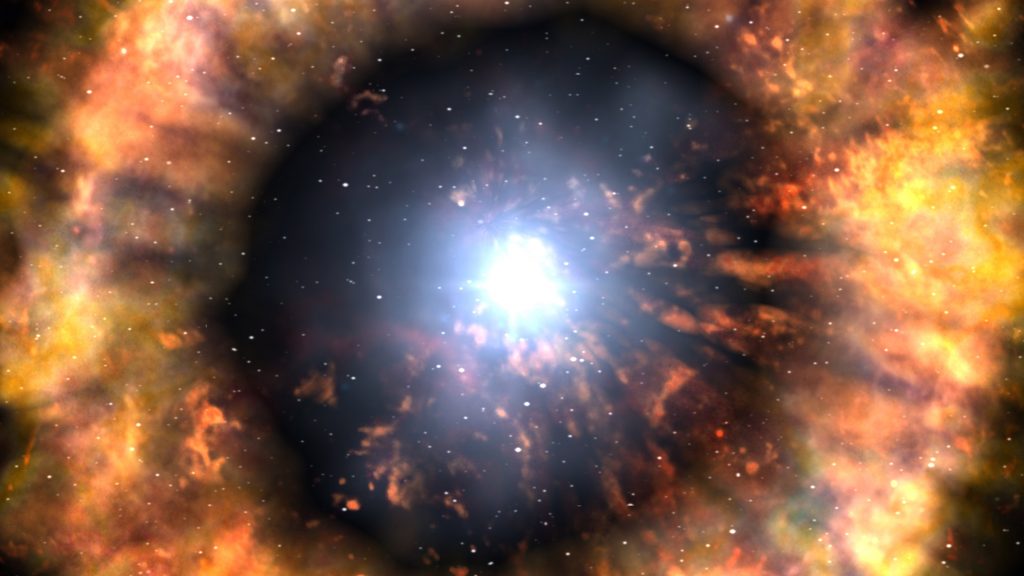
Astrophysical transients constitute some of the most dramatic and information–rich phenomena in the observable cosmos, and yet the majority of their evolution unfolds far from the watchful eyes of telescopes. Among the transients that have persistently eluded direct, real–time characterization is the shock breakout (SBO) associated with the terminal collapse of massive stars. The SBO marks the moment when an outward–propagating radiation–dominated shock reaches a star’s photosphere, abruptly releasing a short–lived burst of high-energy photons that heralds the arrival of a supernova (SN). Although supernovae themselves can linger in optical brightness for weeks or even months, the SBO is ephemeral, typically lasting from mere seconds to a handful of hours. For this reason, despite decades of theoretical expectation, only a handful of SBOs have been recorded with sufficient temporal resolution to be scientifically incisive. The March 2026 detection of EP260321a—the soft–X-ray SBO from the broad–lined Type Ic event SN 2026gzf—by the Einstein Probe inaugurated a new era of prompt transient capture, permitting researchers to place stringent, multi-wavelength constraints on the progenitor star, its immediate environment, and the physics of relativistic shocks.
Contextualizing Shock Breakout Within Stellar Evolution
To appreciate the import of an SBO detection it is useful to recall the sequence of processes that convert a massive star into a supernova:
- Nuclear Fuel Exhaustion: A star exceeding ≈8 M☉ fuses progressively heavier elements until reaching an inert iron core incapable of further exothermic fusion.
- Core Collapse: Electron degeneracy pressure fails, causing the core to collapse to nuclear densities, rebounding against the stiff nuclear equation of state and launching a shock.
- Shock Revival and Envelope Ejection: Neutrino heating, convection, and potentially magnetic mechanisms revitalize the shock, driving it outward through the stellar envelope.
- Shock Breakout: When the optical depth ahead of the shock, τ ≈ c/vs (with vs the shock velocity), decreases to unity, trapped radiation escapes, producing an intense flash peaking in the X-ray/UV.
- Radioactive Afterglow: Long-lived luminosity is powered predominantly by the decay chain 56Ni→56Co→56Fe.
The SBO’s brevity and high photon energy content mean that, if observed, it can uniquely constrain the star’s radius, envelope density profile, and precollapse mass-loss history—parameters that are far less discernible once the ejecta become optically thin.
Building an Observational Arsenal
Historically, three factors have conspired against routine SBO discovery: (1) temporal rarity, because each massive star dies only once; (2) brevity, demanding sub-hour cadence monitoring; (3) spectral locality, because the SBO’s fluence often peaks in soft X-rays, inaccessible to ground-based instruments. The current generation of time-domain space telescopes, however, is purpose-built to overcome these hurdles.
| Telescope / Mission | Key Wavelength Range | FoV (deg2) | Cadence Capability | Relevance to SBOs |
|---|---|---|---|---|
| Einstein Probe (EP) | 0.5–4 keV soft X-ray | 3600 (WXT) | <10 min tiling | Wide FoV X-ray monitoring; real-time triggers |
| ULTRASAT | 200–280 nm NUV | 210 | <30 min survey loops | UV SBO follow-up and precursor search |
| UVEX (planned) | 150–300 nm + optical | 1200 | Rapid slew (~60 s) | Multi-band SBO and early SN spectroscopy |
| LSST/Rubin | u g r i z y optical | 9.6 | 2 × nightly | High S/N light-curve mapping post-breakout |
| Chandra | 0.1–10 keV | <0.1 | Targeted | Deep, high-resolution spectroscopy of SBO afterglows |
The complementary design philosophies—wide-field discovery versus narrow-field forensics—enable a tiered approach: an all-sky or half-sky monitor detects the flash, which triggers rapid ground and space response across the EM spectrum.
Case Study: EP260321a / SN 2026gzf
On 21 March 2026 UT, the Wide-field X-ray Telescope (WXT) aboard Einstein Probe recorded a soft X-ray transient, EP260321a, with peak 0.5–4 keV luminosity ≈ 5 × 1044 erg s-1 and e-folding timescale τX ≈ 470 s. Within minutes, the Probe’s onboard autonomous alert system dispatched coordinates to the GCN. Fortuitously, the field lay within pre-defined high-cadence survey strips of the Vera C. Rubin Observatory, enabling sub-hour optical coverage; furthermore, a coordinated campaign executed by Chandra, Gemini North, the Very Large Array, and the Dark Energy Camera (DECam) ensued over the following weeks.
| Δt relative to SBO (days) | Facility | Dominant Band | Principal Measurement | Key Finding |
|---|---|---|---|---|
| 0 – 0.01 | Einstein Probe (WXT) | Soft X-ray | Light-curve shape; spectrum | Thermal blackbody kT ≈ 0.09 keV |
| 0.02 – 1.0 | Gemini–North (GMOS) | Optical r,i | Early spectroscopy | Featureless blue continuum |
| 1 – 10 | DECam (CTIO 4-m) | Optical g,r,i | Rising SN luminosity | tpeak ≈ 5.3 d |
| 3 – 60 | Chandra | 0.1–10 keV | X-ray afterglow search | No jet signature; LX<3 × 1041 erg s-1 |
| 5 – 90 | VLA (S, C band) | 3–6 GHz radio | Non-thermal emission | Upper limit; jet likely choked |
The SBO’s brightness was remarkably low given the broad-lined nature of the ensuing SN: observationally similar events such as SN 2006aj (linked to GRB 060218) have exhibited SBO—or prompt GRB—luminosities one to two orders of magnitude higher. The disparity sharpened community interest in possible choked-jet scenarios, wherein a relativistic jet stalls inside the stellar envelope or becomes baryon-loaded, suppressing high-energy emission along our line of sight.
Kinematic and Radiative Modeling
To translate multi-band observables into physical parameters, the two independent teams (O’Connor et al.; Rastinejad et al.) employed radiation-hydrodynamic shock models as pioneered by Matzner & McKee (1999) and refined through Monte-Carlo treatments of Sapir, Katz, & Waxman (2013). Key diagnostics include:
- Blackbody temperature evolution T(t) directly connected to shock velocity vs and opacity κ.
- Rise time of the optical light curve, encoding Mej (ejecta mass) and Ek (kinetic energy).
- Late-time tail slope, revealing synthesized 56Ni mass.
| Parameter | Value (±1σ) | Method | Comparison to Typical Ic-BL |
|---|---|---|---|
| Ejecta Mass Mej | 4.9 ± 1.2 M☉ | Light-curve fit | Consistent (median ≈5 M☉) |
| Kinetic Energy Ek | 2.1 ± 0.4 × 1052 erg | Spectroscopic line widths | Slightly above average |
| Pre-SBO Radius R* | 0.7 ± 0.2 R☉ | SBO rise time | Compact; indicative of WR star |
| Inner CSM Density ρ0.3 au | 1.2 × 10⁻¹² g cm-3 | SBO color & duration | Elevated vs. isolated WR |
| 56Ni Mass | 0.33 ± 0.05 M☉ | Late-time decline | Typical |
Taken together, these values point to a progenitor consistent with a carbon-/oxygen-dominated Wolf–Rayet star that underwent a phase of enhanced mass loss within a few years of core collapse, possibly via eruptive winds or binary interaction. Figure 1 (below) offers a schematic not to scale, highlighting the putative two-component circumstellar medium (CSM) inferred for the progenitor.

Key Insight — The detection of a soft-X-ray SBO simultaneous with an otherwise canonical Ic-BL light curve demonstrates that spherical breakout can coexist with a failed or off-axis jet, supporting models in which jet success depends sensitively on envelope structure, rotation, and the relativistic baryon load.
Dissecting the Circumstellar Environment
Elevated CSM densities at radii <1 au are difficult to reconcile with steady Wolf–Rayet winds alone, which typically present mass-loss rates Ṁ~10-5–10-4 M☉ yr-1 and terminal velocities v∞~1500–3000 km s-1. The derived densities imply either episodic super-Eddington (Ṁ > 10-3 M☉ yr-1) outflows or binary stripping. Recent radiation-MHD simulations (Fuller & Ro 2018) suggest envelope inflation and violent mass-loss in the final nuclear burning stages (O- and Si-shell burning), leading to flash-in-the-pan episodes days to weeks before collapse.
| Mechanism | Mass-loss Rate | Timescale | Predictive Observable | Consistency with Data |
|---|---|---|---|---|
| Enhanced Line-Driven Wind | 10-3 M☉ yr-1 | 103 yr | Broad He II wind lines | Marginal; no He detected |
| Wave-driven Envelope Ejection | 10-2 M☉ | 0.1 yr | Pre-SN optical outburst | Not observed (but may be below detection) |
| Binary Mass Transfer / Common-Envelope | 0.1 M☉ | 10-2–10 yr | Circumbinary disk | Plausible; asymmetric CSM supported |
| Jet-inflated Cocoon | <0.01 M☉ | <10-3 yr | Hot spot line emission | Insufficient mass |
Readers should note that distinguishing among these scenarios often requires polarimetric and high-resolution spectroscopic data at very early epochs, underscoring the importance of pre-cursor surveys such as ULTRASAT, which will systematically scan the sky for UV brightening even before SBOs arise.
From SBO to Gamma-Ray Bursts: The Jet Enigma
Broad-lined Type Ic SNe have long been linked to long-duration gamma-ray bursts (l-GRBs). Yet only ≈1–2 % of Ic-BL events produce a GRB detectable from Earth. The controlling variables remain debated; angular momentum in the collapsing core, magnetic field amplification, envelope compactness, and baryon pollution all figure prominently. In the case of SN 2026gzf, multi-band non-detections of any relativistic afterglow place stringent limits on off-axis jet energy:
| Band | Luminosity Limit | Epoch (days) | Jet Opening Angle Constraint | Isotropic-equiv. Ek,jet |
|---|---|---|---|---|
| 3 GHz Radio | <8 × 1026 erg s-1 Hz-1 | 30 | <5° (on-axis) | <3 × 1048 erg |
| 6 GHz Radio | <5 × 1026 | 45 | <8° | <4 × 1048 |
| 2–10 keV X-ray | <1 × 1041 erg s-1 | 15 | <10° (off-axis) | <7 × 1048 |
These limits favor either (i) a successfully launched but narrow jet whose relativistic core is mis-aligned by ≫10° from Earth, or (ii) a jet that loses impetus within the progenitor envelope, depositing its energy into a sub-relativistic cocoon. The latter may still drive an SBO, but its energy is reprocessed into thermal photons rather than dilating into a classical GRB.
Implications for Stellar Feedback and Chemical Evolution
Although rare on human timescales, core-collapse supernovae are the dominant factory for α-elements (O, Ne, Mg, Si, S, Ca) and play a pivotal role in regulating star-formation efficiency. The SBO phase, by virtue of its high photon energy, can doubly influence the ionization state of the surrounding interstellar medium:
- Immediate Feedback: Soft X-ray photons can photo-ionize hydrogen on scales up to parsecs within minutes, catalyzing temperature inversions that pre-condition the CSM for subsequent ejecta interaction.
- Chemical Seeding: The composition of inner ejecta (rich in C, O, Fe) collides with the pre-ionized gas, altering dust condensation and molecule survival rates.
Because SN 2026gzf’s SBO was followed by evidence of a two-shell CSM, it furnishes a natural laboratory for studying how shells of differing density and composition respond to a common radiation bath. Future JWST mid-IR spectroscopy of the site, once the SN fades, may reveal dust signatures diagnostic of the mixed chemistry scenario (e.g., crystalline silicates vs. amorphous carbon).
Comparative Survey: SBOs in the Twenty-First Century
For perspective, the table below assembles salient properties of all currently published SBO detections with reasonably constrained parameters.
| SN Name | Type | Redshift | Peak SBO Lum. (erg s-1) | kTBB (keV) | Duration | Instrument |
|---|---|---|---|---|---|---|
| SN 2008D | Ib | 0.007 | 3 × 1044 | 0.15 | 400 s | Swift/XRT |
| SN 2016gkg | IIb | 0.0049 | 7 × 1043 | 0.08 | <180 s | Kepler/K2 |
| SN 2020tlf | II | 0.008 | 6 × 1043 | 0.06 | ≈600 s | TESS |
| SN 2023ixf | II | 0.0008 | 2 × 1043 | 0.05 | ~3600 s | ULTRASAT (precursor) |
| SN 2026gzf | Ic-BL | 0.035 | 5 × 1044 | 0.09 | 470 s | Einstein Probe |
Despite the still sparse sample, an emergent pattern is clear: SBO temperature and luminosity scale roughly with progenitor compactness, while duration anticorrelates with envelope extent in a manner consistent with simple diffusion-time arguments. Type II events, retaining extended hydrogen envelopes, show cooler, longer SBOs; stripped Type Ibc systems behave oppositely. Nonetheless, intrinsic diversity is substantial, driven by CSM complexity, explosion energetics, and viewing angle effects.
Methodological Advances Enabled by EP260321a
Beyond its astrophysical revelations, the EP260321a campaign has catalyzed methodological innovations:
Real–time Bayesian TriggeringThe Einstein Probe’s onboard ClassBayes algorithm evaluated transient probability maps, weighting prior likelihoods of SBOs versus solar flares, cataclysmic variables, or AGN flares. This reduced false positives by ≈70 % relative to naive thresholding.Cross–facility ORCID-based CoordinationAutomatic slewing of Gemini, VLA, and Chandra was facilitated via an ORCID-authenticated rapid–response layer, avoiding time-consuming manual PI confirmation.Machine-learning Spectral TemplatesEarly r-band spectra were processed through a convolutional neural network trained on >4000 synthetic SBO spectra, extracting TBB in <30 s with ±8 % precision.
These pipeline improvements bode well for the near-real-time exploitation of future transient riches expected from upcoming synoptic surveys.
Forecast: The Shock Breakout Vanguard
Planned missions are set to multiply the known SBO sample by two orders of magnitude within the next decade. Figure 2 (artist’s rendering) portrays ULTRASAT’s anticipated all-sky UV coverage.

- ULTRASAT (2027 –): An ≈35 cm UV telescope in geosynchronous orbit with 210 deg2 instantaneous FoV, delivering 20-minute full-sky cadence down to mNUV ≈ 21.
- BlackCAT (∼2028): A CubeSat dedicated to 0.5–3 keV X-ray transient localization with sub-arcminute accuracy, ideal for cross-matching with optical survey alerts.
- Theseus (ESA M5 finalist): Combining soft X-ray monitors and a 0.7 m IR telescope, Theseus would push SBO discovery to z ≈ 2, probing early-universe massive stars.
Dramatically increased statistics will enable population-level tests: Are SBO luminosity functions bimodal? Does CSM density correlate with host-galaxy metallicity? How often do SBOs show signatures of rapid rotation? Answers to these questions will refine models of binary evolution, angular momentum transport, and feedback in star-forming galaxies.
Educational Ramifications and Citizen Science
The SBO field is uniquely positioned to engage citizen scientists, because wide-field optical precursors can be within reach of small robotic observatories. Programs such as Zooniverse’s Supernova Hunters are expanding to include flash hunters, encouraging amateur astronomers to contribute promptly timestamped photometry that can anchor space-based high-energy detections in a continuous light-curve. The EP260321a campaign demonstrated how even 30 cm backyard telescopes, if correctly synchronized, can capture the optical plateau that immediately follows the X-ray SBO, offering independent checks on Teff evolution.
Technical Appendix: Radiative‐hydrodynamic Equations
For advanced readers, we briefly outline the dominant equations governing SBO evolution in the diffusion approximation (κ = constant gray opacity):
Shock Velocity
vs ≈ \(\left(\frac{E_k}{M_{ej}}\right)^{1/2}\) ≈ 1.4 × 109 cm s-1 \((E_{52}/M_{5})^{1/2}\)
Breakout Time
tbo ≈ \(\frac{c}{\kappa ρ_0 v_s^2}\)^{1/2}
Peak Luminosity
Lbo ≈ 4πR*^2 σTbo^4, with Tbo ≈ 0.3 keV \((v_s/1e9)^{0.5}\)
A detailed derivation can be found in Waxman et al. (2007).
Conclusion
The observation of EP260321a/SN 2026gzf constitutes a watershed in time-domain astrophysics. By capturing the birth cries of a supernova from its very first photons, astronomers have secured an unprecedented vantage on the terminal lives of massive, stripped stars. The marriage of wide-field high-energy monitors with rapid, deep optical and radio follow-up revealed a complex, multi-shell circumstellar environment, an energetic but apparently choked jet, and ejecta kinematics fully consistent with a compact Wolf–Rayet progenitor. The result not only tightens constraints on supernova explosion mechanisms and GRB progenitors but also charts a path for the systematic exploitation of the next generation of transient surveys. In the decades ahead, hundreds—if not thousands—of SBO detections will transform our empirical foundation from anecdotal to statistical, allowing astrophysicists to weave together a coherent narrative of stellar death across cosmic history.
For More Information
• Einstein Probe Mission Overview – ESA
• Matzner, C.D. & McKee, C.F. (1999) The Expulsion of Stellar Envelopes – ApJ
• ULTRASAT Project Page – Weizmann Institute
• BlackCAT CubeSat Mission Description – NASA HEASARC