Saturn’s enigmatic moon Enceladus has long fascinated planetary scientists, astrobiologists, and mission architects alike. Once considered an unremarkable member of the Saturnian system, Enceladus burst onto the scientific scene after the Cassini spacecraft revealed powerful cryovolcanic plumes, intricate tectonic fissures, and compelling signatures of a subsurface ocean enriched with salts and organics. These findings catalyzed an explosion of interdisciplinary research, triggered an overhaul of planetary protection guidelines for icy moons, and galvanized a global push to develop the next generation of space missions capable of directly probing the oceanic interior. In 2025 the European Space Agency (ESA) formally outlined an ambitious L-class Flagship concept—designated “L4” under the Voyage 2050 program—that would deploy a synergistic orbiter–lander architecture to Enceladus around the middle of the century. The proposed suite of high-heritage and novel instruments seeks to perform a definitive assessment of habitability and, crucially, to conduct rigorous in situ searches for biosignatures. The present article provides an extensive academic review and critical appraisal of the scientific context, technological landscape, mission design, and expected outcomes of the 2050 Enceladus Flagship. By integrating knowledge from geophysics, chemistry, astrobiology, engineering, and policy studies, this work aims to furnish a holistic narrative of why Enceladus matters, how the forthcoming ESA mission intends to interrogate its mysteries, and what far-reaching implications such endeavors may hold for the broader quest to understand life in the cosmos.
1. Historical Trajectory of Enceladus Exploration
The historical arc of Enceladus exploration exemplifies the dynamic interplay between discovery, technological capability, and scientific curiosity. From its optical detection in the late eighteenth century to the present day, each incremental leap in observational prowess has profoundly reshaped prevailing conceptions of the moon’s geophysical and astrobiological status.
1.1 The Telescopic Era
Discovered by William Herschel in 1789, Enceladus remained little more than a point of light for nearly two centuries. Ground-based telescopes, constrained by atmospheric distortion and limited detector sensitivity, were insufficient to resolve morphological detail or detect planetary-scale phenomena such as plumes or global tectonics. With no indication of uniqueness, Enceladus drew scant attention next to massive Titan or the visually striking ring system of Saturn.
1.2 Voyager Flybys and the First Hints of Activity
NASA’s Voyager 1 and Voyager 2 spacecraft offered humanity its first tantalizing glimpses of Enceladean surface features during brief flybys in 1980 and 1981. Though flyby distances were large and imaging resolution coarse by modern standards, mission scientists nevertheless identified anomalously bright albedo patterns and a surprising relative paucity of impact craters in the south polar region. These observations hinted at geologically young terrain but stopped short of implying ongoing cryovolcanism or an extant ocean.
1.3 The Cassini–Huygens Revolution
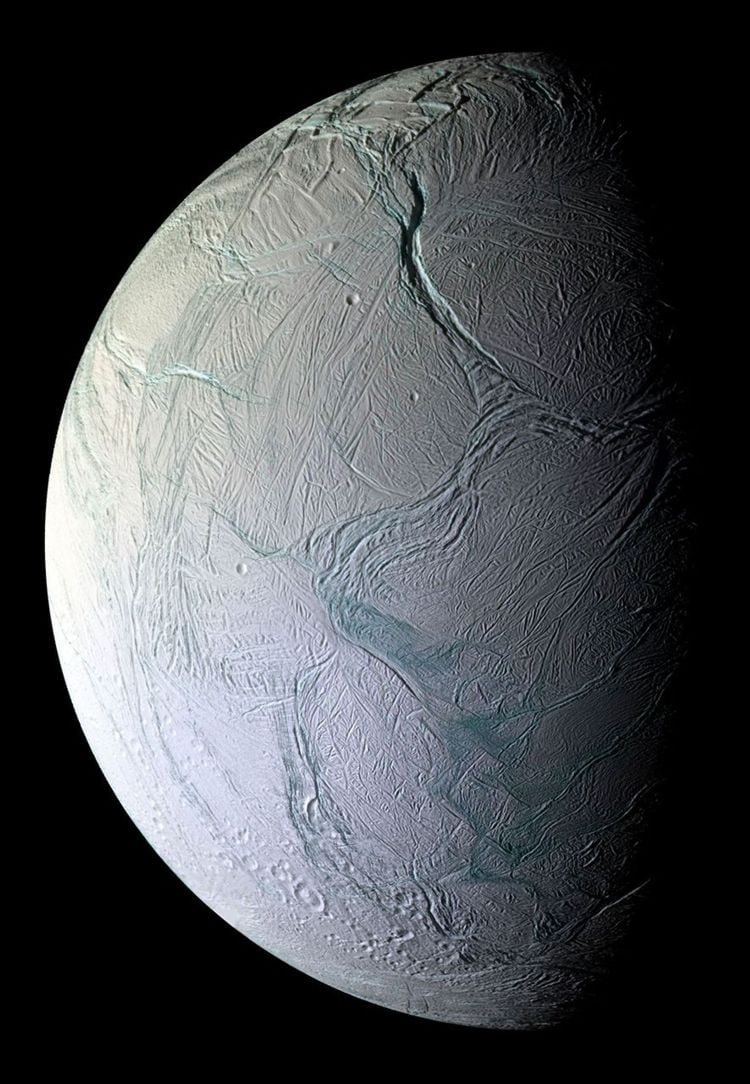
Cassini’s orbital insertion into the Saturnian system in July 2004 signified the dawn of a new epoch in outer Solar System exploration. During repeated close flybys of Enceladus—some reaching periapses as low as 25 km—Cassini’s instruments detected high-velocity water vapor, ice grains, simple organics, and complex macromolecular clusters erupting from so-called “tiger stripe” fractures at the south pole. The Cassini Ion and Neutral Mass Spectrometer (INMS), the Cosmic Dust Analyzer (CDA), and the Composite Infrared Spectrometer (CIRS) collectively provided persuasive, multi-modal evidence that a global liquid ocean, interacting with a rocky core, underpins the moon’s current geochemical vigor.
“Cassini transformed Enceladus from a nondescript iceball into perhaps the premier locale for empirical astrobiology beyond Earth.” — Dr. Carol Cotrell, ESA Directorate of Science, keynote at EPSC-DPS 2025
1.4 Post-Cassini Landscape and the Rationale for an ESA Flagship
Despite Cassini’s unprecedented achievements, its sampling methodology was necessarily indirect, limited by orbital dynamics and instrument constraints devised decades earlier. Fundamental questions—including the presence of amino acids, lipidic membranes, or even cell-sized morphological structures in plume particles—remained unresolved. Concurrently, ESA’s own scientific community emphasized the strategic importance of European leadership in outer Solar System exploration, culminating in the selection of an Enceladus Flagship as the fourth Large-Class (L4) mission under the Voyage 2050 umbrella.
| Year(s) | Mission / Instrument | Principal Discovery | Relevance to 2050 Flagship |
|---|---|---|---|
| 1789 | Telescope Observation (Herschel) | Discovery of Enceladus | Baseline orbital data |
| 1980–1981 | Voyager 1 & 2 Imaging | Young surface, bright albedo | Suggested resurfacing processes |
| 2005–2017 | Cassini INMS, CDA, CIRS | Active plumes, subsurface ocean | Primary impetus for habitability studies |
| 2020s | Earth-based ALMA Spectroscopy | Trace organics in plume-fed ringlets | Motivated high-resolution compositional mapping |
| 2050s (planned) | ESA L4 Orbiter & Lander | Direct detection of biosignatures | Potential paradigm shift in astrobiology |
2. Geophysical and Chemical Properties of Enceladus
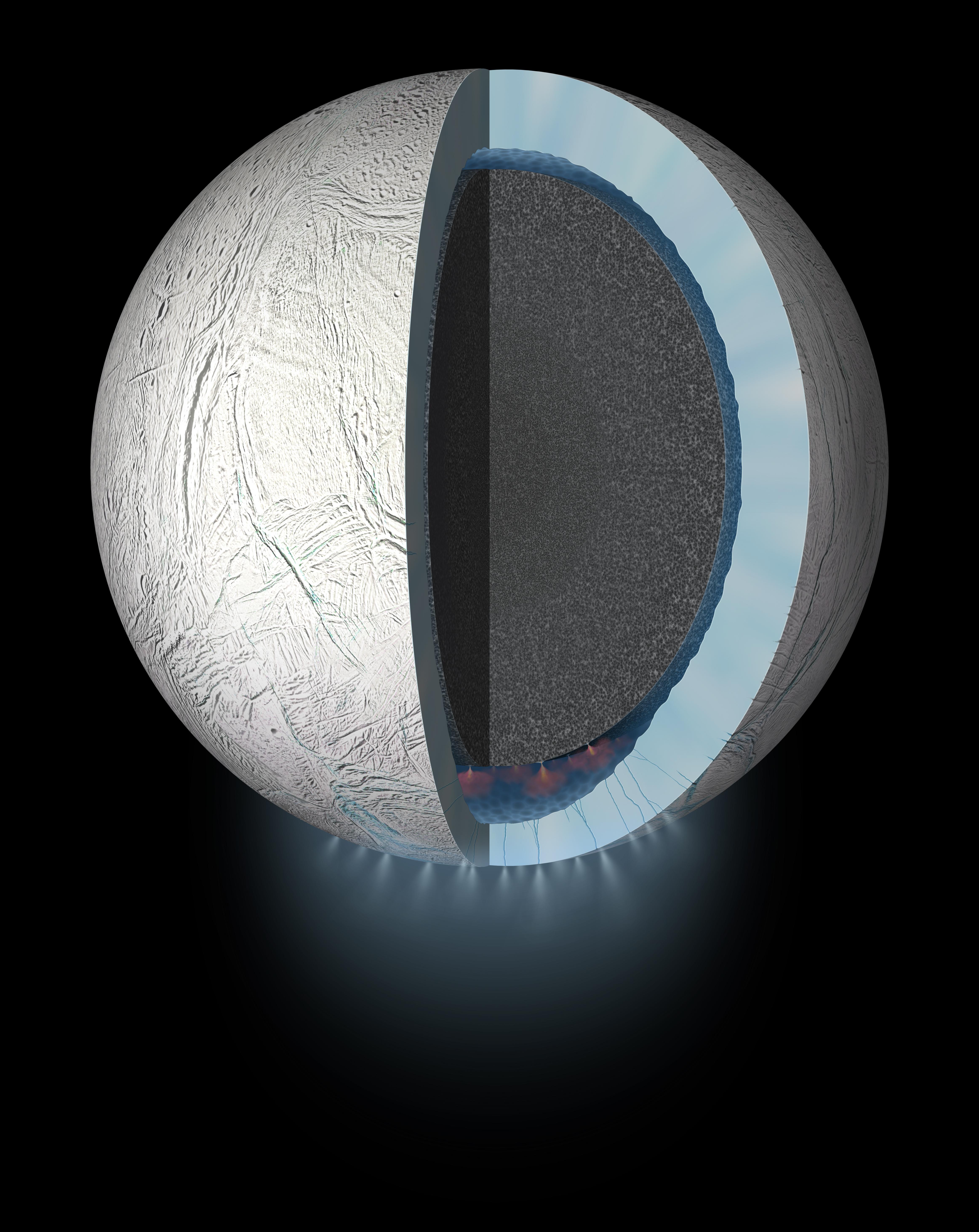
Any mission concept predicated on life detection must begin with a robust geophysical and geochemical framework. Enceladus boasts a diameter of approximately 504 km, rendering it just 15 % as wide as Earth’s Moon, yet its scientific allure vastly exceeds its modest scale. The moon’s surface is dominated by water-ice, with localized exposures of amorphous and crystalline phases, while the interior hosts a saline ocean interfacing with silicate rock. This ocean is believed to be global, sustained by tidal dissipation driven by an orbital 2:1 resonance with Dione.
| Parameter | Value | Measurement Source |
|---|---|---|
| Mean Radius | 252.1 ± 0.1 km | Cassini Radio Science |
| Bulk Density | 1608 ± 35 kg m−3 | Flyby Gravimetry |
| Global Ocean Thickness | ≈ 20–35 km (model-dependent) | Ice-shell flexure analyses |
| Surface Temperature (Polar) | ~ 75–90 K | CIRS Thermal Mapping |
| Plume Mass Flux | 150–300 kg s−1 | INMS & CDA data synthesis |
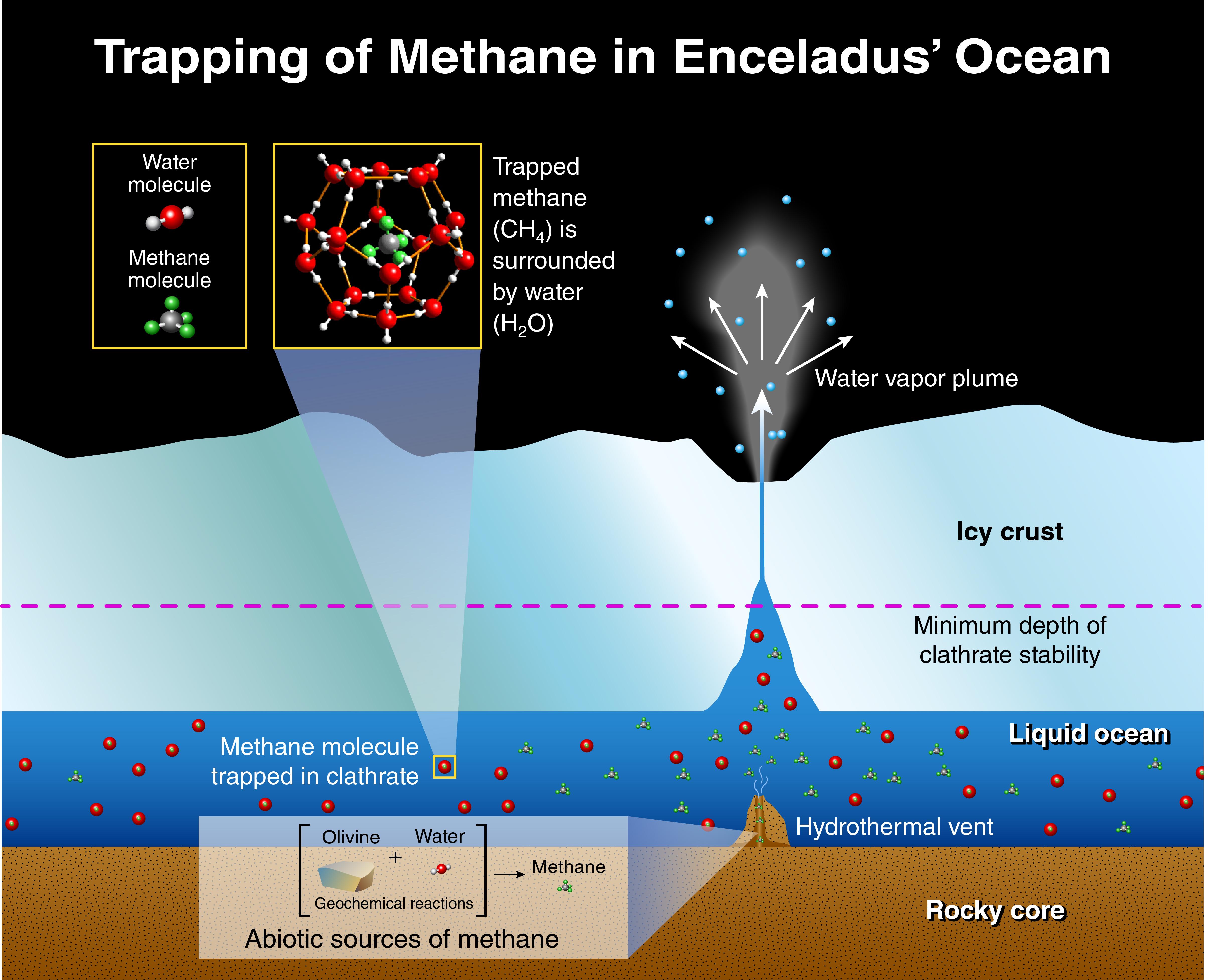
Compositional analyses of ejected plume particles reveal a bewildering array of substances, including sodium chloride, potassium salts, silica nanoparticles, molecular hydrogen, methane, carbon dioxide, and complex organics exceeding 200 atomic mass units. Critically, the detection of silica and molecular hydrogen—both indicative of water–rock interactions at temperatures > 90 °C—suggests ongoing hydrothermal activity analogous to terrestrial deep-sea vents, environments widely recognized as crucibles of abiotic chemistry and microbial life.
2.1 Ice Shell Dynamics and Tectonics
The south polar “tiger stripes,” formally termed sulci, are a set of parallel, quasi-linear fractures extending hundreds of kilometers in length and exhibiting endogenic heat fluxes up to 20 GW. The episodic opening and closing of these fissures, modulated by orbital tidal stresses, govern the injection of oceanic water into near-vacuum, where it explosively vaporizes. The interplay between shell thickness, fracture mechanics, and pressure differentials constitutes a primary objective for geophysical instrumentation aboard the orbiter, specifically the Ice-Penetrating Radar (IPR) and Laser Altimeter.
2.2 Ocean Chemistry and Redox Disequilibria
Redox gradients are essential energy sources for chemolithoautotrophic life. Cassini data indicate that oxidants such as O2 and H2O2 generated by radiolysis near the surface may be transported to the ocean, where they interact with reducing agents (H2, CH4) produced in hydrothermal systems. Characterizing this balance informs the energetic viability of potential ecosystems and, by extension, the interpretive framework for biosignature detection.
3. Astrobiological Imperatives
The habitability of a planetary environment is framed by four canonical pillars: (1) liquid water, (2) essential elements, (3) energy sources, and (4) temporal stability. Enceladus unequivocally satisfies the first criterion. Elemental abundance measurements suggest that CHNOPS elements—carbon, hydrogen, nitrogen, oxygen, phosphorus, sulfur—are present, albeit the detection of phosphorus remains elusive but plausible via serpentinization pathways. Energy sources, as previously noted, derive from tidal heating and hydrothermal gradients. Concerning temporal stability, geophysical models indicate that tidal forcing and orbital resonances will persist on timescales of tens to hundreds of millions of years, affording ample evolutionary windows.
| Indicator | Enceladus Status (2025) | Measurement Gap | Proposed L4 Instrument(s) |
|---|---|---|---|
| Liquid Water | Confirmed Global Ocean | Spatial extent & stratification | IPR, Gravimetry |
| Essential Elements | CHNOS observed; P inferred | Quantitative P measurement |
Lander Mass Spectrometer, Laser-Induced Breakdown Spectroscopy (LIBS) |
| Energy Source | Hydrothermal H2 & CH4 | Spatial distribution, flux calibration |
Orbiter Neutral Gas Analyser, Plume Fly-through Mass Spectrometer |
| Stability | Tidal heat models favorable | Long-term thermal evolution | Orbiter Radiometer, Geodetic Tracking |
From an astrobiological standpoint the decisive factor is not merely the presence of habitable conditions but whether life has arisen. The ESA L4 mission therefore dedicates significant payload mass and power to laboratories capable of molecular, isotopic, morphological, and chiral analyses with detection thresholds commensurate to analog terrestrial bioloads in low-biomass environments (≈ 102 cells mL−1).
4. Overview of the ESA L4 Mission Architecture
The proposed mission adopts a dual-element configuration: an Enceladus Orbiter (EO) and an Enceladus Surface Lander (ESL). The orbiter would perform global reconnaissance, plume fly-through sampling, and provide telecommunications relay for the lander, which targets a geologically informed site proximal to the tiger stripes yet tectonically stable enough to guarantee lander survivability.
4.1 Launch Vehicle and Transfer Trajectory
Current baseline analyses co-opt a modified Ariane 6 Heavy with an enhanced upper stage to insert the spacecraft stack into an Earth-escape trajectory of ≈ 7.5 km s−1. A powered Earth gravity assist (EGA) followed by Venus–Earth–Earth gravitational slingshots reduces propellant requirements, achieving Saturnian capture roughly 9.5 years post‐launch. Electric propulsion using high-thrust Hall-effect thrusters accelerates cruise maneuverability, enabled by large deployable solar array wings similar to those flight-proven on JUICE.
4.2 Saturnian Tour and Enceladus Orbit Insertion
Upon Saturn arrival, a sequence of Titan flybys provides additional gravity assists, lowering the apoapsis with minimal Δv expenditure. Final insertion into a 200 × 500 km Enceladus orbit occurs after approximately 18 months. The lander separates shortly thereafter, executing a deorbit burn to place itself on a near-vertical descent trajectory aimed at the Falga Regio transition zone, where surface regolith is hypothesized to contain fresh plume deposits.
5. Instrumentation Suite: Orbiter and Lander
The L4 payload portfolio results from iterative trade studies balancing scientific return, mass/power budgets, heritage reliability, and contamination control. The final manifest, summarized in Table 4, meets critical science traceability matrix (STM) requirements as ratified by the ESA Science Programme Committee in 2025.
| Instrument | Platform | Primary Science Objective | Mass (kg) | Heritage |
|---|---|---|---|---|
| High-Resolution Mass Spectrometer (HRMS) | Lander | Organic molecular inventory & isotopic ratios | 18.0 | Rosetta ROSINA, ExoMars MOMA |
| Pan-Spectral Imager (PSI) 50–1100 nm | Orbiter | Surface composition, plume morphology | 12.4 | Cassini ISS, JUICE JANUS |
| Ice-Penetrating Radar (IPR) | Orbiter | Sub-ice ocean mapping, shell thickness | 25.5 | MRO SHARAD, JUICE RIME |
| Seismometer Array (Enceladus Geophysical Package, EGP) | Lander | Interior structure, fracture dynamics | 8.6 | InSight SEIS |
| Biomarker Detection Laboratory (BioDL) | Lander | Search for lipids, amino-acid chirality, cell-like structures | 22.3 | New design—EU Horizon FP10 grant |
| Magnetometer (MAG-3D) | Orbiter | Induced magnetic fields & ocean conductivity | 4.7 | Solar Orbiter MAG |
| Thermal Infrared Radiometer + Camera (TIRC) | Orbiter | Heat flux mapping, plume vent energetics | 10.9 | Cassini CIRS, OSIRIS-REx OTES |
| Dust Analyzer (e-CDA-II) | Orbiter | Mineralogy of plume grains & ring particles | 15.2 | Cassini CDA |
| Gravimetry & Radio Science Subsystem | Orbiter | Interior mass distribution, tidal response | 6.8 | BepiColombo MORE |
To minimize contamination, both the orbiter and lander undergo stringent cleaning processes, including low‐outgassing materials selection, in situ UV C-band irradiation chambers, and seatbelt-strap covers over sampling ports that open only once the vehicle is on the surface. The mission adopts a Category IV-S planetary protection classification, requiring a maximum bioburden of ≤ 300 spores m−2 on exposed surfaces likely to encounter subsurface water.
6. Lander Operations and Surface Science
The ESL lander is engineered for 90 sols of prime operations, extendable to 180+, leveraging radioisotope heater units (RHUs) and Li-S batteries for thermal management and power. A 2-m robotic coring arm collects pristine samples from depths down to 1 m to mitigate space weathering and potential human-derived contaminants accumulated from plume fallback.
6.1 Sample Acquisition and Transfer
The corer employs an annular drill that extrudes cylindrical ice cores (Ø 35 mm) into a hermetically sealed carousel. Robotic transfer within a 0.01 mbar N2 glovebox feeds sub-samples to HRMS and BioDL chambers. A twin sample path directs material to a microscopic imager with selectable bright-field, dark-field, and fluorescence modes. This dual-path design safeguards against single-point failure during critical biosignature measurements.
6.2 Analytical Protocols for Biosignature Verification
The BioDL module executes a predefined sequence: (1) solvent extraction (water and methanol), (2) fluorescent staining using SYBR Gold and Nile Red to differentiate nucleic-acid-like and lipidic moieties, (3) capillary electrophoresis to assess chirality of amino acid analogs, and (4) ATP-luminescence assay to detect metabolic signatures. Positive results exceeding 5σ above blank thresholds automatically trigger higher-resolution HRMS scans for corroboration.
6.3 Environmental Monitoring and Geophysics
Four triaxial seismometers are deployed via a spring-loaded “petal” system that unfurls after touchdown, establishing a > 3 m baseline seismic network. These sensors monitor icequakes, plume rumble, and tidal flexure, yielding crucial constraints on internal layering and mechanical properties. Concurrently, a miniature meteorological station measures pressure (noting rarefied atmosphere), thermal gradients, and plasma environment variations induced by Saturnian magnetospheric interactions.
7. Orbiter Campaigns: Mapping, Sampling, and Relay
The EO orbiter employs a nested campaign structure over a nominal two-year orbital phase: Global Context Mapping (GCM), Targeted Plume Fly-throughs (TPF), Heat Flux Characterization (HFC), and Radio-Relay & Coordinated Landed Operations (RR-CLO).
- GCM: Polar orbits at 250 km permit multi-spectral mosaics, radar transects, and gravity field inversions.
- TPF: 25 km periapsis passes penetrate active plume columns for time-resolved sampling by e-CDA-II and NGAs.
- HFC: TIRC collects synchronized thermal maps over 12 Enceladus rotational periods, exposing vent periodicity.
- RR-CLO: Dedicated 3-hour windows supply UHF band downlinks from ESL while continuing passive science.
“The mother-daughter synergy is absolutely pivotal. Real-time orbital context enriches every landed dataset, while the lander’s ground truth refines orbital interpretation.” — Prof. Elena Martínez, Principal Investigator, BioDL
8. Technological Enablers and Development Pathways
Delivering this Flagship mission hinges on several key technology pillars that ESA and European industry partners have already begun maturing.
| Challenge | Risk Level | Mitigation Strategy | Current TRL |
|---|---|---|---|
| Long-life electric propulsion beyond 15 kECLW | High | Extended qualification of Hall thrusters with xenon–krypton mixtures | 5 → 7 by 2032 |
| Planetary protection sterilization for cold-class ices | Medium | Dry-heat microbial reduction & low-temperature plasma treatments | 4 → 6 by 2030 |
| Ultra-miniaturized BioDL microfluidics | Medium | 3-D printed glass microchannels, European Space Microfluidics Platform | 3 → 6 by 2035 |
| Deep-space optical communication for high-volume data | Low | Leverage ESA EDRS-E optical terminals | 6 → 8 by mission launch |
| Low-temperature battery survivability | Medium | Li-S cells with solid-state electrolyte; active RHU coupling | 4 → 6 by 2033 |
8.1 Miniaturization and Resource Optimization
ESA’s Directorate of Technology, Engineering and Quality (D/TEC) has spearheaded the Micro-Iconic Payload Initiative, incentivizing European universities and SMEs to submit miniaturized instrument prototypes < 5 kg. Several such designs—e.g., a UV Raman microscope no bigger than a shoebox—are slated for parabolic-flight validation campaigns in 2028.
8.2 Contamination Control and False Positive Prevention
Recognizing the sui generis importance of any potential life detection, the mission employs redundant contamination witnessing: flight blanks, witness plates, and ex situ DNA barcoding of pre-launch cleanroom microbiota. Lander sample chambers feature single-use indium gaskets to preserve ultra-high vacuum and to preclude back-diffusion of terrestrial volatiles.
9. Comparative Landscape: How the ESA Flagship Distinguishes Itself
Although NASA’s Europa Clipper and JPL-APL’s Dragonfly will broaden our understanding of ocean worlds and prebiotic chemistry, the ESA Flagship uniquely amalgamates orbital reconnaissance, direct plume sampling, and landed biology laboratories in one holistic mission. Unlike Europa Clipper, which forgoes a lander due to intense radiation, or Dragonfly, which targets Titan’s hydrocarbon dunes rather than liquid water, the ESA mission zeroes in on a well-ventilated ocean body where subsurface material is accessible without kilometer-scale drilling.
- Sampling Modality: Enceladus offers natural material ejection; Europa requires complex melt probes or tunnelers.
- Radiation Environment: Enceladus’s orbit inside Saturn’s E-ring considerably attenuates particle flux compared with Jovian radiation belts, facilitating longer surface operations.
- Mission Tempo: The synergy of plume fly-throughs and landed analyses accelerates hypothesis testing loops relative to serial mission architectures.
10. Anticipated Scientific Payoffs
The primary deliverables of the ESA L4 mission can be classified into four thematic strata: (1) Life Detection, (2) Ocean System Science, (3) Comparative Planetology, and (4) Enabling Science for Future Human Exploration.
10.1 Life Detection
Should Biosignature Tier-1 (unambiguous) or Tier-2 (highly suggestive) evidence emerge—e.g., homochiral excesses of L-amino acids or recurring structures within micrographs matching cellular morphologies—the ramifications for biology, philosophy, and society are immeasurable. Even null results refine Drake-equation terms and encourage reassessment of life’s boundary conditions.
10.2 Ocean System Science
Detailed maps of ocean salinity gradients, heat flow distribution, and core composition inform models of icy moon evolution, magnetohydrodynamics, and chemical energy budgets. Such data enhance exoplanet science, enabling remote spectral interpretation of icy exomoons detected in transit timing variation surveys.
10.3 Comparative Planetology
By juxtaposing Enceladus with Europa, Ganymede, Titan, and dwarf planets like Ceres, researchers can unravel the primordial volatile inventories delivered during planet formation. Comparative studies also elucidate the role of tidal forcing versus radiogenic heat in sustaining long-term oceans.
10.4 Enabling Science for Human Exploration
Understanding surface cohesion, regolith properties, and radiation shielding informs the design of potential future robotic or crewed sample return landers. While crewed Saturn missions remain speculative, propellant depots using in-situ water resources could one day transform ambitious exploration architectures.
11. Data Management, Open Science, and Public Engagement
The mission adopts the FAIR principles (Findable, Accessible, Interoperable, Reusable) with a 12-month proprietary period for instrument teams. Thereafter, all data products—raw, calibrated, and derived—will reside in the European Planetary Archive for Icy Worlds (EPA-IW), a new repository integrating ESA’s Planetary Science Archive with the NASA Planetary Data System via a common DOI schema.
Citizen science portals—modeled on Zooniverse—will enlist volunteers to classify vent morphology and annotate transient plume phenomena. Augmented-reality educational modules are slated for release in high-school curricula across ESA member states, fostering early interest in STEM fields.
12. Societal, Ethical, and Legal Considerations
The milestone of detecting extant life beyond Earth demands robust ethical frameworks. ESA, in concert with COSPAR, is drafting contingency protocols addressing issues such as data transparency, potential biohazard containment, and intellectual property surrounding novel biochemical pathways. Concurrently, international legal scholars explore extensions to the Outer Space Treaty, considering sovereign claims, environmental stewardship, and in situ resource utilization (ISRU) rights.
“If life is found on Enceladus, we must ask: Do we have the moral mandate to protect it? The echoes of Earth’s own ecological crises should counsel humility.” — Dr. Faridah al-Rashid, Space Ethics Council
13. Conclusion and Forward Look
The ESA 2050 Enceladus Flagship mission stands at the confluence of multi-decadal scientific curiosity, technological maturation, and international collaboration. By interweaving high-fidelity orbital reconnaissance with cutting-edge landed laboratories, the mission promises to interrogate the age-old question of whether we are alone with unprecedented rigor. Beyond its primary scientific objectives, the Flagship will catalyze new engineering innovations, energize public imagination, and potentially redefine humanity’s understanding of life’s pervasiveness. As proposals transition to Phase A studies and hardware prototypes materialize, the larger scientific community is called upon to contribute ideas, critique methodologies, and cultivate the interdisciplinary skill sets required for success. Whether Enceladus ultimately yields a second genesis or merely enriches our grasp of abiotic complexity, the enterprise will indubitably propel planetary science into a transformative new chapter.
For More Information
Readers interested in deeper technical or conceptual aspects are encouraged to explore the following open-access resources:
- EPSC-DPS 2025 Abstract: ESA Enceladus L4 Payload Roadmap
- ESA Voyage 2050 Science Programme
- NASA Cassini Mission Archive
- COSPAR Planetary Protection Guidelines
- Europa Clipper Mission Overview
- Dragonfly: Aerial Exploration of Titan
- ESA Technology Development Activities
Additional peer-reviewed literature cited throughout this article can be found via the NASA ADS database under keywords Enceladus, astrobiology, cryovolcanism.