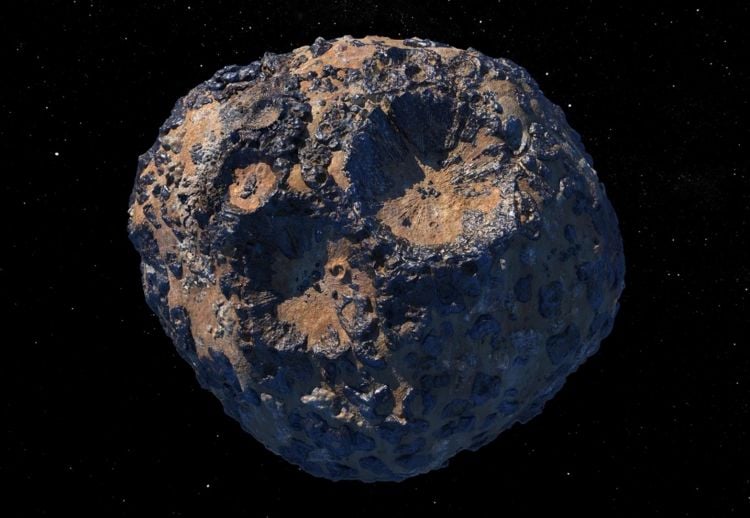
In the final decades of the twentieth century, planetary scientists came to regard the Main Asteroid Belt as a relatively tranquil relic of Solar System formation—a cold-storage museum of mineralogical exhibits that had remained largely unchanged for 4.5 billion years. Yet the discovery and subsequent spectroscopic characterization of 16 Psyche shattered that neat narrative, revealing an object whose spectral signature pointed not to the silicate-dominated crusts and mantles typical of small bodies, but to an exposed metallic interior. Since then, Psyche has evolved from an astronomical curiosity into a natural laboratory for studying accretion, differentiation, catastrophic disruption, and metal–silicate segregation. The present article synthesizes five decades of ground-based telescopic observations, radar polarimetry, meteoritic analog studies, hydrocode impact simulations, and mission planning documentation to construct a holistic picture of Psyche’s origin, evolution, and significance. Particular attention is devoted to the role of its two largest impact basins—immense cavities whose morphology and geophysical context promise to disclose whether the asteroid truly is the naked core of a lost proto-planetary embryo.
1. Historical Overview of 16 Psyche Research
16 Psyche was discovered on 17 March 1852 by the Italian astronomer Annibale de Gasparis, becoming the sixteenth asteroid to be catalogued and the first whose name derived from Greek mythology rather than Roman divinity. Early light-curve photometry suggested an irregularly shaped body rotating with a period of approximately 4.2 hours, but it was not until the 1950s, when broadband polarimetry became routine, that astronomers realized Psyche’s surface reflectance did not match the S-type or C-type asteroids that dominate the inner and middle belt. The hypothesis of a metal-rich surface gained momentum during the radar renaissance of the 1980s, as the Arecibo Observatory measured a radar albedo an order of magnitude higher than that of typical rocky asteroids. Subsequent mid-infrared spectroscopy identified subtle absorption near 0.9 µm, interpretable as low-Fe orthopyroxene mixed with metallic iron–nickel. The cumulative data stream forced taxonomists to coin a new spectral class—the M-types—for objects like Psyche that occupy the “bright but featureless” region in reflectance parameter space.
1.1. From Curiosity to Cornerstone
The mere existence of a roughly 225-km-by-173-km metallic body demanded an evolutionary pathway divergent from that of the chondritic swarm populating most of the belt. Two broad scenarios emerged. The Core Fragment Scenario posits that Psyche is the central core of a differentiated planetesimal that lost its silicate mantle through multiple hypervelocity collisions. By contrast, the Hit-and-Run Scenario envisions Psyche as an iron volcano, a previously undifferentiated body onto whose surface metallic melts were splashed and later cooled as regmaglypt-like plates. Distinguishing between these hypotheses requires knowledge of both global composition and localized crater structure—a motivation that ultimately crystallized into NASA’s Psyche Discovery-class mission, launched in October 2023 and slated to enter orbit in August 2029.

2. Orbital and Physical Parameters
Quantitative appraisal of Psyche begins with its orbital elements and bulk properties, summarized below. These metrics not only contextualize Psyche within the dynamical architecture of the asteroid belt but also constrain thermal and collisional models used to simulate differentiation and subsequent disruption.
| Table 1. Fundamental Parameters of 16 Psyche | ||
|---|---|---|
| Category | Parameter | Value (±1σ) |
| Orbital Elements | Semi-major axis, a | 2.919 AU |
| Eccentricity, e | 0.138 | |
| Inclination, i | 3.10° | |
| Orbital period | 4.992 y | |
| Bulk Properties | Mean dimensions | 225 × 173 × 144 km |
| Dynamical mass | (2.4 ± 0.2) × 1019 kg | |
| Bulk density | 3.99 ± 0.26 g cm−3 | |
| Rotational State | Sidereal period | 4.196 h |
| Obliquity | ~95° (retrograde) | |
| Spin axis (J2000) | λ = 32°, β = −7° | |
3. Planetary Differentiation and the Enigma of Exposed Cores
Differentiation is the process by which a body converts gravitational potential energy and radiogenic heat into chemical stratification, segregating dense metallic melts downward while lighter silicates float upward to generate a basaltic crust. In objects >200 km in diameter, melting temperatures are achieved within a few million years if heat sources include 26Al and 60Fe. Numerical models indicate that efficient separation of molten Fe-Ni-S alloys can produce metallic cores with radii constituting 30–50 % of the parent radius. Psyche, sitting at roughly 110 km in mean radius, therefore straddles the theoretical threshold between fully differentiated embryos and partially metamorphosed chondrites. Whether its present metal-dominated surface is primordial or the consequence of later stripping events remains a central uncertainty.
“Exposed planetary cores offer geologists the only opportunity to examine the products of metal–silicate separation without drilling thousands of kilometres through lithosphere.”—L.S. Elkins-Tanton et al., Nature, 2023
4. Large Impact Basins as Windows into the Interior
Imaging obtained via adaptive-optics (AO) systems on 8- to 10-m telescopes has revealed two conspicuous depressions near Psyche’s northwestern hemisphere. These “giant craters,” each exceeding 70 km in diameter, puncture a surface otherwise sculpted by regolith gardening and space weathering. Their elliptical outlines and subdued rims signal high-angle, high-velocity collisions. Because crater excavation depths scale roughly with one-fifth of the transient cavity diameter, such basins likely exhumed material from 10–15 km beneath the pre-impact surface—potentially sampling the boundary between residual silicate mantle and the upper core.
| Table 2. Geometric Characterization of Psyche’s Two Principal Basins | |||
|---|---|---|---|
| Basin | Long. (°E) | Lat. (°N) | Apparent Diameter (km) |
| NP-A (north-polar A) | 294 | +65 | 76 ± 4 |
| NW-B (north-west B) | 250 | +32 | 68 ± 5 |
The morphology of such basins is governed by target strength, porosity, gravitational acceleration, and the rheology of any subsurface stratigraphy. Hydrocode simulations employing varying porosity fields therefore act as computational experiments to assess whether Psyche comprises (i) a monolithic Fe-Ni interior with patchy silicate veneers, or (ii) a mechanically layered structure akin to the lunar crust–mantle dichotomy, albeit with inverted density stratification.
4.1. Simulation Framework
To interrogate basin genesis, Baijal et al. (2025) implemented the iSALE-3D shock-physics code, specifying a 14 km s−1 impactor striking a target pre-defined with Voronoi-distributed void spaces representing 10, 20, or 30 % macroporosity. Material models included ANEOS equations of state for Fe-Ni metal and forsteritic olivine, with strain-rate-dependent yield strength parameters derived from triaxial compression experiments. The numerical grid contained 200 cells per projectile radius, ensuring resolution of sub-kilometre shear bands. Outputs encompassed pressure-time histories, peak shock temperatures, and post-shock particle displacements used to calculate transient cavity depth.
| Table 3. Principal Initial Conditions Explored in iSALE-3D Runs | ||||
|---|---|---|---|---|
| Run ID | Bulk Porosity (%) | Layering | Impactor Size (km) | Incidence Angle (°) |
| H-10-L | 10 | Homogeneous metal | 15 | 45 |
| H-30-L | 30 | Homogeneous metal | 15 | 45 |
| S-20-C | 20 | Silicate crust / metal core | 18 | 30 |
| S-30-C | 30 | Silicate crust / metal core | 20 | 15 |
| M-20-M | 20 | Metal cap / silicate core | 14 | 60 |
The simulations revealed that porosity exerts a first-order control on the final depth-to-diameter ratio (D:d). In low-porosity targets, shock waves propagate with minimal attenuation, promoting deep excavation and central peak formation; conversely, high-porosity matrices dissipate energy, collapsing transient craters and flattening their profiles. Layering effects were more nuanced: when a rigid metal layer overlaid weaker silicate substrate, slumping produced concentric terraces reminiscent of multiring basins observed on icy satellites. These morphological predictions form testable hypotheses for the Psyche mission’s imagers and laser altimeter.
5. Petrologic and Spectroscopic Clues
Spectroscopy conducted across ultraviolet, visible, and infrared wavelengths has yielded seemingly paradoxical results. Radar and thermal data advocate for a largely metallic surface, yet modest silicate signatures persist in the 0.9 µm and 1.9 µm bands. Laboratory mixtures of 60 % meteoritic iron and 40 % low-Ca pyroxene produce an optical match within 2 % root-square error, implying a regolith composed of macroscopic metal–silicate conglomerates. Thermal inertia measurements (~115 J m−2 K−1 s−1/2) are lower than would be expected for bare iron plates (~2,500 J m−2 K−1 s−1/2), pointing to a fine-grained regolith layer tens of centimetres thick. Such incongruities suggest weathering and impact gardening continuously churn interior material toward the surface, counterbalancing sputtering that would otherwise etch volatile components away.
5.1. Meteoritic Analogs
Mesosiderites, a rare stony-iron meteorite group, provide a potential analog. Their brecciated texture entangles eucritic (basaltic) fragments in an Fe-Ni matrix, testifying to complex collisional histories. Yet mesosiderites represent only ~0.8 % of witnessed falls, whereas IAB complex iron meteorites dominate the non-magmatic iron category. The scarcity of mesosiderites may reflect the rarity of parent bodies experiencing both differentiation and subsequent major reassembly—a process Psyche may have endured. The Psyche mission will resolve whether mesosiderites indeed mirror the asteroid’s bulk composition or whether alternative pathways produced its hybrid signature.
| Table 4. Compositional Comparison of Relevant Meteorite Classes | |||
|---|---|---|---|
| Class | Metal (%) | Silicate (%) | Ni/Fe (wt %) |
| Meteorite Iron (IIAB) | ~98 | <2 | 9–12 |
| Mesosiderite | 45–60 | 40–55 | 5–7 |
| Pallasite | 60–70 | 30–40 (olivine) | 10–13 |
| Chondritic OC | 10–12 (Fe-Ni + FeS) | 88–90 | ~5 |
| Psyche (spectral) | ≥60 | ≤40 | 7–11 (model) |
6. Mission Architecture and Instrument Payload
NASA’s Psyche spacecraft was selected under the Discovery Program—an initiative premised on cost-capped, focused science objectives. Launched on a SpaceX Falcon Heavy on 13 October 2023, the craft employs Hall-effect ion thrusters powered by twin 7.3 m2 solar arrays. A Mars gravity assist in May 2026 imparts the ΔV necessary to rendezvous, after which the vehicle will successively occupy four orbital phases designated A (700 km), B1 (290 km), B2 (170 km), and C (85 km). Each phase is optimized for distinct investigative priorities, from global topography in the higher altitudes to high-resolution elemental mapping in the lower circuits.
- Multispectral Imager — A dual-camera system with 10 narrowband filters (400–1050 nm) for morphology and mineralogy.
- Gamma-Ray and Neutron Spectrometer (GRNS) — Derived from the Mars Odyssey heritage, GRNS will probe elemental abundances to depths of ~30 cm.
- Magnetometer — Twin fluxgate sensors positioned on an 2.1 m boom to detect remanent or induced magnetic fields, crucial for testing the core hypothesis.
- KSAT Laser Altimeter — A stereo hardware-in-the-loop experiment to annotate gravity anomalies with sub-meter vertical precision.
| Table 5. Anticipated Science Products per Orbital Phase | ||||
|---|---|---|---|---|
| Phase | Altitude (km) | Duration (days) | Spatial Resolution (Imager) | Key Objectives |
| A | 700 | 56 | 80 m px−1 | Shape model, spin state |
| B1 | 290 | 96 | 34 m px−1 | Gravity field harmonic coefficients |
| B2 | 170 | 100 | 20 m px−1 | Global composition (GRNS) |
| C | 85 | 180 | 10 m px−1 | High-detail crater morphometry |

7. Porosity as the Hidden Architect of Crater Morphology
Porosity serves as a sink for shock energy. When a high-velocity projectile strikes a porous target, initial pore collapse absorbs incident momentum, lowering peak pressures transmitted to deeper strata. In Psyche’s case, macroporosity likely originates from two sources: (1) incomplete compaction during primary accretion, leaving voids between unresolved melt droplets; (2) subsequent fracturing and dilational strain triggered by catastrophic collisions that stripped its mantle. The iSALE runs undertaken by Baijal et al. (2025) systematically varied porosity and revealed a near-linear dependence of D:d on void volume fraction, at least up to 35 % porosity:
D:d ≈ 10.7 − 0.212 φ, 0 < φ < 35 %—Baijal et al., JGR-Planets, 2025 (derived fit)
Applied to observed crater diameters, the equation predicts excavation depths between 11 km (φ = 5 %) and 7 km (φ = 25 %), highlighting that even modest uncertainties in porosity propagate to kilometre-scale variations in inferred stratigraphy. Consequently, laser altimetry and gravity inversions from the Psyche mission will provide complementary constraints essential for deconvolving porosity from compositional heterogeneity.
8. Magnetic Remanence and the Case for a Dynamo
Should Psyche be an exposed core, it once resided at the centre of a body large enough (>500 km) to sustain a convecting metallic interior. In the early Solar System, such cores likely generated transient dynamos, imprinting crustal materials with remanent magnetization exceeding tens of microtesla. If vestigial magnetization remains encoded in Psyche’s metallic matrix, the spacecraft’s magnetometer should detect consistent field intensities correlating with basin topography. Alternatively, a null result would support the hit-and-run scenario, in which metallic splashes cooled too rapidly to record strong fields.
8.1. Anticipated Magnetic Signatures
- Scenario A — Core Fragment (dynamo): Global dipole moment of 3 × 10¹⁵ A m2, yielding surface fields of 150–180 nT.
- Scenario B — Hit-and-Run (quench): Patchy, crust-confined remanence <10 nT, likely below instrument sensitivity except at lowest orbital altitudes.
The contrast between these scenarios imposes stringent calibration demands on the twin fluxgate sensors, necessitating continuous spacecraft manoeuvre-induced spin for background subtraction.
9. Implications for Planet Formation Across the Galaxy
The astrophysical significance of Psyche extends well beyond the asteroid belt. Exoplanet surveys have identified sub-Mercury-sized bodies orbiting within fractions of an astronomical unit from their host stars, where intense stellar irradiation and tidal ablation may strip primordial mantles, leaving desiccated iron cores colloquially dubbed “super-Mercuries.” By studying Psyche, researchers can calibrate spectral and mass–radius relationships used to diagnose such bodies in transit photometry data. Moreover, understanding metal distribution within differentiated embryos aids nucleosynthetic models of siderophile element partitioning, thereby refining chronologies of planetary core formation gleaned from 182Hf–182W isotopic systems.
10. Future Observations and Laboratory Synergy
The arrival of NASA’s spacecraft in 2029 will inaugurate at least 21 months of proximate operations. Simultaneously, ground-based radar facilities such as Arecibo’s successor arrays and NASA’s Goldstone 70-m dish will conduct bi-static radar experiments, exploiting the spacecraft as a transponder to boost signal-to-noise ratios. Parallel laboratory campaigns will melt synthetic Fe–Ni–S alloys under variable sulfur fugacity, documenting density cross-over pressures that may inform core convection models. Mesosiderite analyses via atom-probe tomography will interrogate cooling rates to disentangle collisional history, feeding back into iSALE parameterizations.
Upon mission completion, the data archive will comprise at least 15 Tb of raw telemetry, 26 Tb of calibrated products, and 100 Tb of higher-level derived maps. Archival fields will adhere to NASA’s Planetary Data System (PDS4) standards, facilitating future machine-learning applications. For example, convolutional neural networks trained on Psyche’s crater catalog could automate basin detection on other metallic candidates such as 216 Kleopatra or 6178 1986 DA, expediting meta-analyses of collisional histories across the main belt.
11. Conclusion
Psyche embodies a cosmic palimpsest, its scarred, metal-rich surface recording both cataclysmic impacts and primordial differentiation. The confluence of observational astronomy, numerical simulation, meteoritic petrology, and in-situ spacecraft exploration renders it a linchpin for testing theories of planet formation and evolutionary divergence. Ultimately, the asteroid’s giant craters stand as gaping interrogatives: did they excavate the lost heart of a fragmented embryo, or merely pockmark an agglomerated shard of solar iron rain? The answer will reverberate across planetary science, informing models that stretch from Mercury’s enigmatic core to exoplanets orbiting distant suns. With every kilometre the Psyche spacecraft closes over the next three years, the resolution of that answer sharpens—and with it our understanding of how worlds, and their hearts, are forged.
For More Information
- Baijal, N. et al. (2025) “Porosity-Driven Variation in Crater Morphology on 16 Psyche.” Journal of Geophysical Research: Planets.
- NASA Jet Propulsion Laboratory: Psyche Mission Overview
- Raymond, S.N. & Izidoro, A. (2024) “Hit-and-Run Collisions and the Diversity of Planetary Cores.” Icarus.
- Elkins-Tanton, L.S. et al. (2023) “Differentiation Pathways of Early Planetary Embryos.” Nature.
- Psyche Mission Science Definition Team (2025) “Psyche Data Management and Archiving Plan”