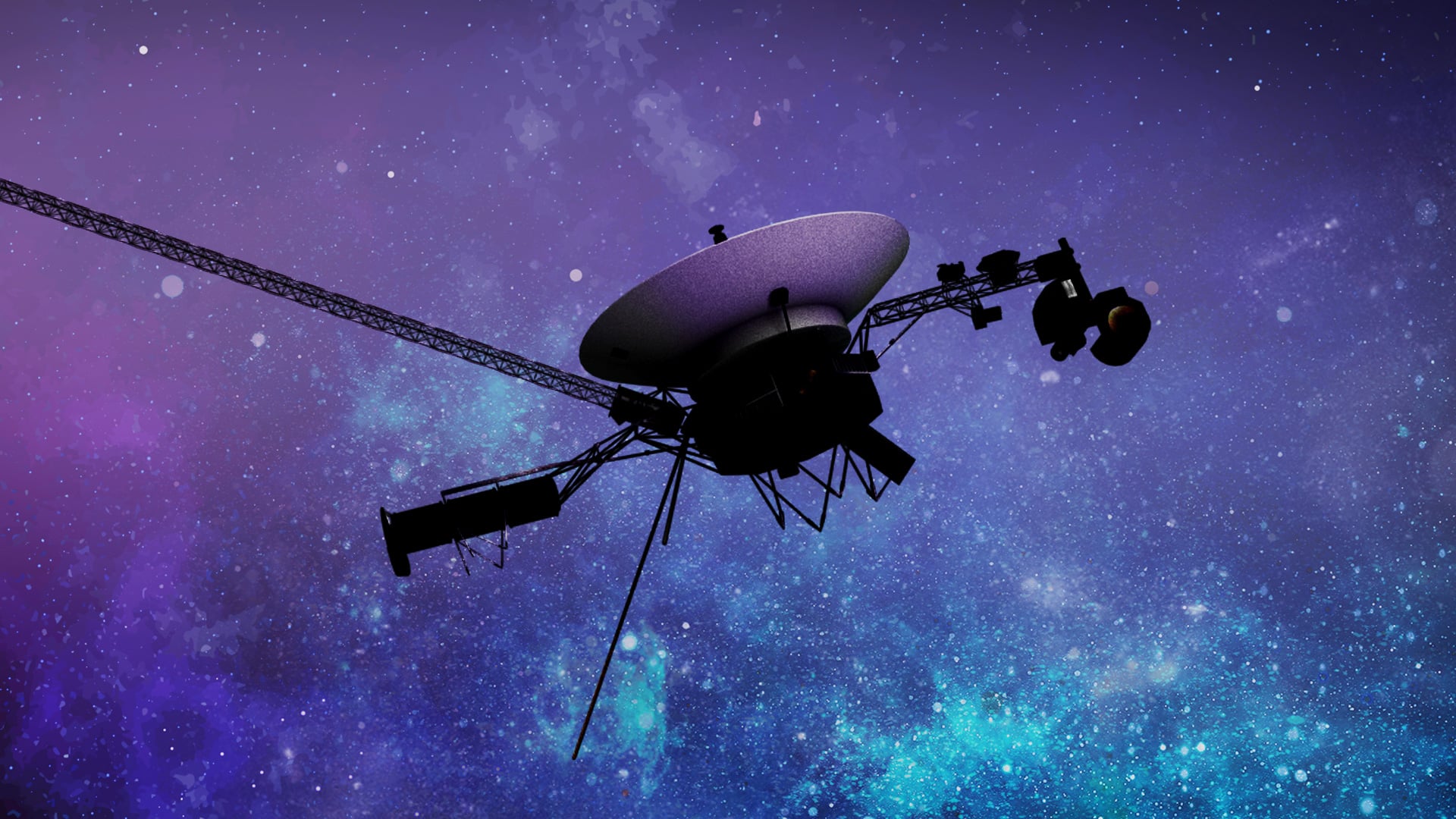
In the dim cold beyond the heliopause the twin Voyager spacecraft continue to whisper across nearly unfathomable gulfs of space, returning scientific treasures that no other human-made object can yet rival. Their messages arrive after a nearly day-long propagation delay and a second day’s round trip for any response, but each bit is a priceless probe of a region that, for the moment, can be studied in only one way: by actually being there. On 17 April 2026 the Low-energy Charged Particles experiment (LECP) aboard Voyager 1 was powered down to conserve the dwindling electrical reserve generated by three aging radioisotope thermoelectric generators (RTGs). The decision, while technically expected, symbolically marked the beginning of a new operational epoch in which the needs of basic spacecraft survival must increasingly outrank the desire for comprehensive scientific sampling.
Contextualising the Historic Decision
The power budget aboard Voyager 1 is shrinking by roughly four watts per year as the plutonium-238 fuel isotopes in the RTGs decay. Even the most efficient energy custodianship cannot outpace the laws of nuclear physics; consequently, instrument-by-instrument triage has been under way for more than a decade. Earlier suspensions included the ultraviolet spectrometer, the imaging sensors, and in 2025 the Cosmic Ray Subsystem (CRS). By terminating LECP operations in 2026 the mission team gained an additional three to four watts—barely more than the electrical appetite of a modern LED bulb, yet enough to keep heaters or guidance electronics alive through future winters of the interstellar night.

Historical Foundations of the Voyager Programme
Launched during the Carter administration in 1977, Voyager 1 and Voyager 2 exploited a fortuitous Grand Planetary Alignment that occurs roughly once every 176 years. Their so-called gravity-assist tour stitched together multiple planetary encounters—Jupiter, Saturn for both craft, and additionally Uranus and Neptune for Voyager 2—achieving within a dozen years what would otherwise have required orders of magnitude more propellant. After the Neptune fly-by in 1989 both probes embarked on an Interstellar Mission extension, transitioning from planetary explorers to heliophysics sentinels. Decades of heliosheath plumbing later, they found the edge of the Sun’s magnetic influence: Voyager 1 crossed the heliopause in August 2012 and Voyager 2 did likewise in November 2018.
“We sent twin emissaries of Earth beyond the borders of our home star’s cocoon, and they taught us that the Solar System is not an island but a peninsula reaching into a galactic ocean.” — Edward C. Stone, Voyager Project Scientist, 1972–2022
RTG Technology: A Thermoelectric Lifeline
All spacecraft operations depend on energy. For deep-space missions, solar array performance collapses with the inverse square of distance, rendering photovoltaics impractical beyond the jovian orbit. RTGs therefore remain a mainstay of outer-Solar-System exploration. In a typical RTG, thermocouples convert the heat released by alpha-decaying 238Pu into direct current electricity. The conversion efficiency is low—only ~6.5% for the General Purpose Heat Source-RTG model used by the Voyagers—but the devices are extremely reliable, vibration-free, and maintenance-free, enabling multidecadal operation. The half-life of 238Pu is 87.7 years, so the total heat production has fallen by roughly 21% since launch, and the thermocouple junctions have likewise suffered thermoelectric degradation.
| Parameter | 1977 | 2026 | Percentage Change |
|---|---|---|---|
| Thermal Power (W) | ~12,000 | ~9,500 | ‒21% |
| Electrical Power (W) | 470 ±10 | ~160 | ‒66% |
| Conversion Efficiency | 6.5% | ≈4.2% | ‒2.3 pp |
| Heat Dissipation Surface Temp (°C) | ~300 | ~250 | ‒17% |
The RTG decay rate is effectively the mission’s master clock; it dictates the annual budget revision cycle during which engineers select which loads to curtail. The LECP sacrifice therefore represents not an isolated event but a predictable entry on a long-term calendar that leads inexorably to the moment when even core spacecraft subsystems fall silent.
Scientific Instrumentation: From Planetary Fly-bys to Heliopause Crossings
Both Voyager spacecraft were initially equipped with eleven principal instruments, many of which were designed in the early 1970s with more analog circuitry than any modern engineer would countenance. Some payloads, such as the vidicon cameras, fulfilled planetary-encounter objectives and were switched off permanently after the Neptune or Saturn encounters. Others—including the magnetometer (MAG), plasma wave subsystem (PWS), cosmic ray subsystem (CRS), and LECP—were explicitly conceived for interplanetary plasma diagnostics that would remain germane far beyond the planetary phase. LECP’s retirement thus narrows but does not extinguish the mission’s heliophysics observatory capabilities.
| Instrument | Primary Science Domain | Operational Status (2026) | Year Deactivated |
|---|---|---|---|
| Imaging Science (ISS) | Planetary Atmosphere & Surfaces | Off | 1990 |
| Infrared Interferometer Spectrometer (IRIS) | Thermal IR Spectroscopy | Off | 1990 |
| Ultraviolet Spectrometer (UVS) | UV Emission Profiles | Off | 1998 |
| Planetary Radio Astronomy (PRA) | Jovian Decametric Bursts | Off | 2002 |
| Photopolarimeter (PPS) | Ring Particle Scattering | Off | 1990 |
| Cosmic Ray Subsystem (CRS) | High-Energy Particle Spectra | Off | 2025 |
| Low-energy Charged Particles (LECP) | Ion Composition & Anisotropy | Off | 2026 |
| Plasma Wave Subsystem (PWS) | Electron Density via Plasma Oscillations | On | — |
| Magnetometer (MAG) | Vector Magnetic Field | On | — |
| Plasma Science (PLS) | Bulk Flow & Thermal Plasma | Off | 2014* |
*PLS is off on Voyager 1 because its heater failed; it is still on for Voyager 2.
The LECP: A Brief Technical Synopsis
The LECP consists of a solid-state detector stack mounted on a stepper-motor–driven platform that sweeps through 32 discrete look angles, thereby enabling full sky coverage over one spacecraft roll period. Its energy coverage spans ~30 keV to ~30 MeV for ions and down to ~15 keV for electrons. The instrument can discriminate particle species via differential energy thresholds, silicon wafer thicknesses, and time-of-flight plots. Unlike the CRS, which focuses on high-energy galactic cosmic rays, LECP excels at mapping suprathermal particle anisotropies associated with heliospheric current sheets and interstellar turbulence.
Energetic Trade-offs: The Power Budget Chessboard
Balancing the spacecraft’s electrical ledger is akin to playing multidimensional chess whilst peering through a fog of one-day communications latency. Not only must the mission team decide what to deactivate but also when, for how long, and whether to retain reversible pathways. Critical heaters that protect the hydrazine propulsion lines from freezing, backup attitude control gyros, and the telecommunications transponder all demand guaranteed amperage. The risk calculus must weigh the marginal science yield of an individual sensor against the existential risk of a systemic failure should heaters brown out.
| Subsystem | Allocation (W) | Percentage of Total |
|---|---|---|
| Telecommunications (X-band) | 45 | 28% |
| Command & Data Handling | 22 | 14% |
| Attitude & Articulation Control | 18 | 11% |
| Thermal Heaters | 30 | 19% |
| Science Instruments (MAG + PWS) | 12 | 7% |
| RTG Cover Heaters & Misc. | 15 | 9% |
| Reserve Margin | 18 | 12% |
The slim 12 % margin illustrated above is essential for transient loads during maneuvers or unanticipated temperature gradients. Without it, even minor anomalies could cascade into fault-protection routines that shut down large swaths of electronics, complicating recovery.
The “Big Bang” Strategy
The mission’s engineering cohort refers to the next sweeping step as the “Big Bang”: a deliberate, pre-planned multicomponent shutoff intended to stabilise power consumption at the expense of noncritical redundancies. The methodology parallels triage protocols aboard nuclear submarines—another tightly coupled system constrained by thermal and electrical interdependencies. By switching off dormant tape recorders, backup regulators, and part-time heaters in a single carefully orchestrated command sequence, operators hope to eke out an additional two to three years of uptime for the remaining science suite. If thermal modeling indicates that the core bus will drop below ‑45 °C for more than a few hours, various contingency relays can re-energise partial heaters or cycle thruster-cluster warmers.

Communication Links: Whispering Across the Void
Data return is ultimately limited by telecommunications geometry and antenna gain. Both Voyagers employ a 3.7-m parabolic high-gain antenna transmitting right-hand-circularly-polarised X-band carriers at 8.4 GHz. With an equivalent isotropic radiated power of only ~20 W, link margin dwindles with distance as 1/R2. At 160 au, the received carrier strength at the 70-m Deep Space Network (DSN) stations in Canberra, Madrid, and Goldstone is less than ‑160 dBm—far weaker than the cosmic microwave background. Sophisticated coding gain via turbo-convolutional forward-error-correction and block interleaving is therefore indispensable.
| Parameter | Value |
|---|---|
| Downlink Frequency | 8.415 GHz |
| Typical Data Rate | ~160 bps |
| Round-Trip Light Time | ≈46 h |
| Modulation | Binary Phase-Shift Keying |
| Coding | Golay + Reed-Solomon + Convolutional |
| Expected Link Closure Year* | ≈2032–2035 |
*Assuming no DSN arraying upgrades and RTG decay per baseline models.
Ongoing DSN arraying experiments aim to phase-lock multiple 34-m dishes to emulate a synthetic aperture and reclaim several decibels of link margin. Even if the spacecraft were technically functional after 2035, link failure could become the new mission-ending bottleneck.
Knowledge Harvested from the Heliosheath and Beyond
The prime legacy of the LECP and companion instruments is the empirical mapping of heliospheric architecture. Prior to Voyager the heliopause, termination shock, and bow wave were theoretical constructs inferred from cosmic-ray anisotropies and solar-wind extrapolations. In 2004 Voyager 1 detected a termination shock crossing at ~94 au, characterised by abrupt changes in particle speed and magnetic topology. The heliopause crossing in 2012 manifested as an increase in galactic cosmic-ray flux, a near-disappearance of solar wind particles, and a rotation in magnetic field vector orientation.
LECP’s angular coverage revealed that the heliosheath is turbulent rather than laminar; charged particles are buffeted by magnetic field kinks that scatter energy spectra. This discovery upended the earlier Parker-spiral expectation of a smooth gradient and forced modelers to incorporate magnetohydrodynamic (MHD) turbulence into global heliosphere codes.
Plasma Waves as a Density Gauge
Although LECP is gone, the Plasma Wave Subsystem (PWS) remains operational and, intriguingly, requires less than 2 W. PWS detects the local plasma oscillation frequency, fpe, which scales with the square root of electron number density, ne. By intermittently triggering after solar transients disturb the heliopause, PWS has measured ne ≈ 0.055 cm-3, significantly lower than early Voyager-era assumptions of ~0.2 cm-3. This density revision factors directly into estimates of interstellar ram pressure and, by extension, the shape and extent of the heliotail.
Comparing the Twin Trajectories
The two Voyagers provide a natural control experiment in latitude and energy flux. Voyager 1 exited the ecliptic plane by +35° after the 1979 Jupiter encounter, whereas Voyager 2 pursued a steeper south-ward spiral due to its additional planetary assists. Consequently, the interstellar penetration occurs at different magnetic polarities and neutral hydrogen inflow angles, affording researchers a 3-D picture that a single probe could not supply.
| Metric | Voyager 1 | Voyager 2 |
|---|---|---|
| Heliopause Crossing | 25 Aug 2012 | 5 Nov 2018 |
| Current Distance (Apr 2026) | ~160 au | ~134 au |
| Ecliptic Latitude | +35° | −30° |
| Active Instruments | MAG, PWS | MAG, PWS, CRS, LECP |
| RTG Power Available | ~160 W | ~168 W |
The superior residual power on Voyager 2 underpins its candidacy for first implementation of the Big Bang protocol. If successful, lessons learned will inform a mirror procedure on Voyager 1, albeit tuned for a colder, older bus.
Scientific Implications of LECP’s Silence
The loss of LECP diminishes the mission’s ability to characterise suprathermal ion composition gradients, especially the pickup ions originating as interstellar neutrals that become ionised inside the heliosphere. Such ions have long been hypothesised as seed populations for anomalous cosmic rays (ACRs). Without LECP, researchers must infer pickup ion spectra indirectly from residual CRS channels and PWS-derived plasma dynamics, injecting additional uncertainties into global models.

Lessons for Future Interstellar Precursor Missions
The Voyager experience writes a sobering rulebook for next-generation interstellar probes such as the Interstellar Probe concept under study at the Johns Hopkins Applied Physics Laboratory. Chief among the lessons is the primacy of lifetime power scaling. Designers must select energy systems that retain a survivable margin after half-a-century of decay. Novel alternatives include Stirling radioisotope generators (SRGs), which triple conversion efficiency by exploiting moving pistons, or lightweight photovoltaic-nuclear hybrids that leverage reflective concentrators for Sun-blazing perihelion boosts.
Another lesson is software autonomy. Voyager’s command computers use 68-kB of memory—a fraction of a modern wristwatch’s firmware storage. The after-the-fact insertion of sophisticated fault-management routines is constrained by archaic assembler instruction sets. Future craft will require modular, radiation-hardened FPGAs and machine-learning anomaly detectors capable of years of untended decision-making.
Cultural Resonances and the Golden Records
No technical retrospective is complete without acknowledging the profound cultural echo of the Golden Records. Engraved with analog audio and image signals, the records encapsulate 116 pictures, 55 languages of greeting, natural sounds of Earth, and musical selections ranging from Bach’s Brandenburg Concerto No. 2 to Chuck Berry’s “Johnny B. Goode.” Though the shutdown of LECP does not affect record survivability, the milestone nevertheless reignites public attention to the dual scientific and humanistic legacy embedded within each spacecraft. These copper disks will likely outlive every monument on Earth, circling the Milky Way for millions of years.
Risk Landscape and Contingency Matrices
From 2026 onward, the mission’s risk portfolio is dominated by thermal redundancy loss, attitude control propellant depletion, and communication link collapse. The hydrazine monopropellant lines are nearing super-cooling thresholds. Should the fuel freeze, attitude correction via thrusters would fail, potentially slewing the high-gain antenna away from Earth and dooming downlink. Magnetorquers could in principle re-orient the craft relative to the interstellar magnetic field, but their torque authority at 160 au is minuscule.
| Risk Factor | Likelihood | Impact Severity | Mitigation |
|---|---|---|---|
| Frozen Hydrazine Lines | Medium | Catastrophic | Prioritise line heaters; cycle thrusters to generate heat |
| RTG Power Crawl Below 110 W | High | High | Big Bang load shedding; DSN array gain |
| High-Gain Antenna Mis-pointing | Low | High | Autonomous gyro-bias correction |
| EEPROM Bit Rot in C&DH | Low | Medium | Redundant code images; cyclic memory refresh |
| Deep Space Network Budget Cuts | Medium | Medium | International cross-support (ESA, JAXA) |
Synthesis and Forward Outlook
The cessation of LECP operations is a poignant but scientifically palatable concession in the grand calculus of longevity. Two active instruments may seem scant, yet those sensors occupy an observational niche utterly unattainable by Earth-based observatories or even future spacecraft for at least two more decades. The upcoming implementation of the Big Bang will test the resilience of fifty-year-old avionics and the ingenuity of a new generation of mission engineers who were not yet born when the Voyagers left Earth.
If all goes well, Voyager 1 and Voyager 2 will continue transmitting carrier waves—perhaps unmodulated by telemetry—into the early 2040s. Long after the last bit of scientific data, their carrier beacons themselves will offer meta-experiments in deep-space propagation, gravitational lensing, and possibly SETI signal discrimination.